Introduction
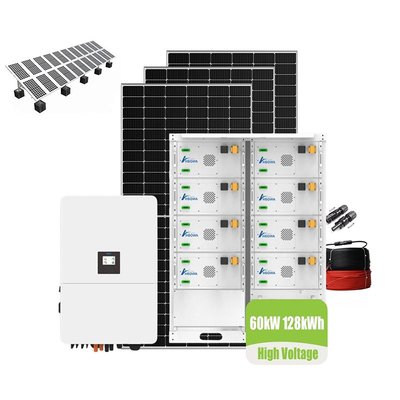
A barn with solar panels will ideally need conditions such as a suitable rooftop, structure, electrical system, and energy usage to use solar panels to generate electricity. The kind of system used depends on how much useful roof space is available, the kind of local sunlight, the patterns of consumption, and the installation costs. To determine if a rooftop solar panel is practicable, a site assessment is done.
What Are the Benefits and Limitations of Solar Panels on a Barn?
How Barn Solar Can Support Farm Operations
The solar panels in a barn will use the existing roof space to generate electricity for the farm equipment. A solar power system for the barn will reduce the purchase of grid electricity if the solar production is consumed at the same time. The worth of the savings depends on how much electricity is consumed, how much money is charged for the purchasable electricity, and how the exported electricity is compensated.
What Can Limit the Benefits?
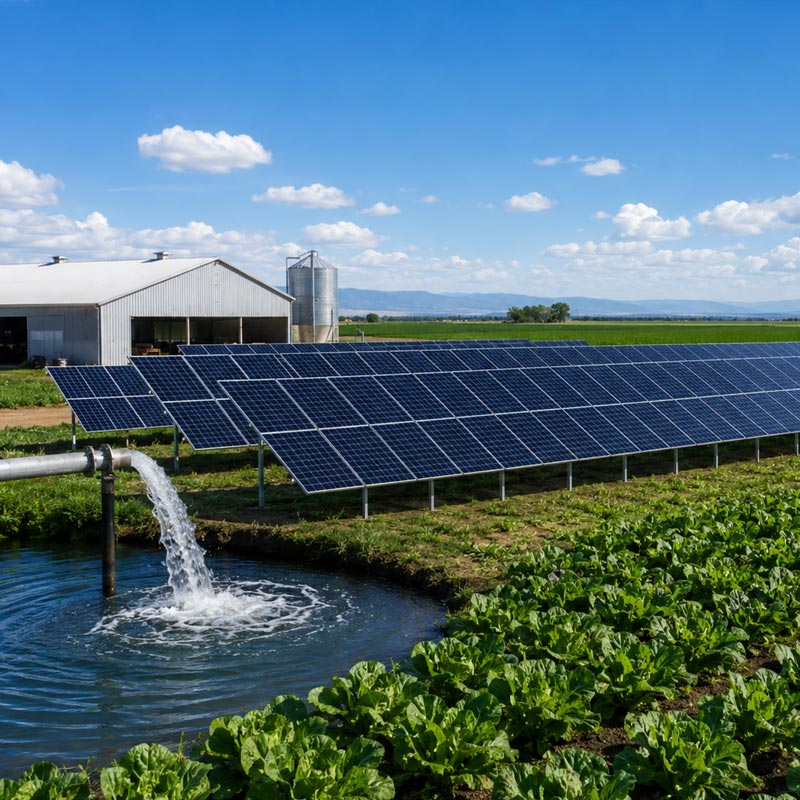
Roof repairs, structural reinforcement, shading, and electrical upgrades increase project costs. Also, seasonal operations or low daytime demand can reduce the amount of solar electricity consumed directly.
| Potential benefit | What needs checking |
|---|---|
| On-site electricity generation | Whether production matches farm demand |
| Use of existing roof space | Roof condition and usable area |
| Lower grid electricity purchases | Tariffs and export compensation |
| Backup with battery storage | Compatible equipment and backup design |
There is no universal savings percentage for solar panels for farm use. It depends on the individual site. Also, note that the Rooftop systems differ from ground-mounted projects covered in HBOWA’s solar farm profitability guide.
Is Your Barn Roof Suitable for Solar Panels?
Check Roof Condition, Age and Structural Capacity
To support the proposed array and mounting system, the barn roof should be strong enough. Inspect for leaks, corrosion, damaged sheeting, and any decline in bolting. If the need for any significant repair, fixing it is a good idea before installing panels to prevent the removal of panels later.
The age of a roof alone does not decide suitability. Hire a good technician to inspect roofs for degradation or failing bolts and nuts, available life expectancy, strength of structure, and wind and weather loads experienced in that area.
Assess Roof Material, Slope, Orientation and Shading
The barn roofs, like metal, tilted, etc., require mounting solutions befitting their construction. The angle and the inclination of the roof, the presence of trees or buildings around, and the usable area must be assessed before designing the system for capacity.
Roof size is an essential factor in determining usable panel area, shading, orientation, tilt, and roof construction, as outlined in US Department of Energy guidelines for rooftop solar power. Read their guidelines for useful information regarding “solar rooftop potential”.
Account for Agricultural Operating Conditions
Increased dust in dry conditions may increase the requirements for cleaning, while moisture or corrosive substances at some livestock facility locations may affect the selection or placement of equipment. These risks vary with the type of facility. Ventilation, drainage, location of electrical equipment, and accessibility for maintenance should be considered in the design of a solar electric system.
Complete a Roof Readiness Assessment
Note that prior to installation, the condition of a roof, its structural capacity, shading, available area, electrical infrastructure, and necessary repairs, in addition to local approvals, must be recorded. This check is particularly important for solar panels mounted on pole barns, as the installation of the structural designs also varies widely.
Please look at HBOWA’s guide to mounting solar panels onto metal roofs for mounting methods and installations.
How Do You Size a Solar System for a Barn?
Start With Actual Farm Electricity Consumption
The amount of solar power required for a barn system will depend on the electricity demand and available roof space. Take a look at electricity bills, operating schemes, and seasonal consumption. The major power loads of a dairy farm might be refrigeration, milking equipment, ventilation, pumps, lighting, grain handling, workshops, etc.
Interval data allows the establishment of when electricity is used and whether there is a coincidence with solar.
Calculate the Usable Roof Area
The usable solar area and gross roof area are different. Obstacles on the roof, shading, access routes, structural restrictions, and necessary clearances reduce panel space.
You should also take the panel dimensions and the layout into account. Do not apply the same number of panels per square metre without considering other dimensions and clearances.
Estimate Expected Solar Electricity Generation
A solar power system’s production ability depends upon its location, shading, capacity, orientation, and losses. PVWatts gives preliminary estimates for grid-connected photovoltaic systems. The results are based on assumptions and uncertainties and should not be seen as guaranteed output or a substitute for a design specific to the site.
Match Solar Generation With Farm Demand
Just because a farm generates the same amount of solar energy as it consumes electricity annually doesn’t mean it is off the grid. At different times of the day and year, the products produced are different. The time of year and day demand for machines differ.
| Sizing step | Information required |
|---|---|
| Measure demand | -Bills -Operating Hours -Seasonal Usage |
| Assess the site | -Usable Roof Area -Shading -Location |
| Model production | -Capacity -Orientation -System Losses |
| Compare outcomes | -Self-Consumption -Grid Imports/Exports |
Rooftop Solar vs Ground-Mounted Solar for Farms
When Does Barn Rooftop Solar Make Sense?
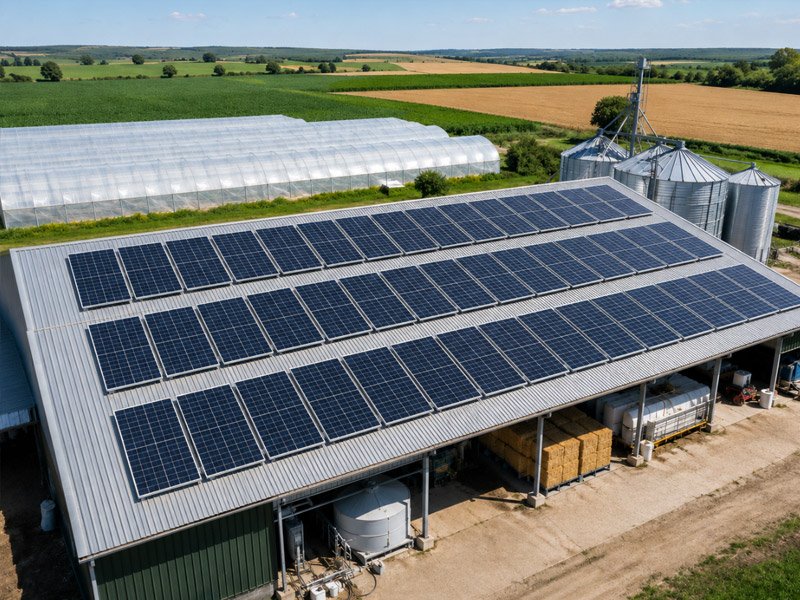
Rooftop solar doesn’t require additional land, as it uses existing buildings. It can be realistic when the roof has enough usable area and is reasonably close to the electrical loads on the farm.
Roof repairs or strengthening will affect project economics. If a roof is not fit for solar, an alternative installation site may be easier.
When Is Ground-Mounted Solar Worth Considering?
A ground-mounted system is more flexible in terms of where the arrays may be located, but requires suitable land, a suitable layout, and assessment of foundation, site preparation, and electrical connection requirements. The arrangement should not interfere with agricultural activity and should remain accessible.
| Consideration | Barn rooftop solar | Ground-mounted solar |
|---|---|---|
| Space used | -Existing roof | -Available Land |
| Main constraint | -Roof -Structural condition | -Land Suitability -Layout |
| Site preparation | -Roof repair(needed maybe) | -Foundations -Grading(required in some cases) |
| First assessment | -Inspect Roof -Usable area | -Assess Land -Connection Route |
How Agrivoltaics Differs From Barn Solar
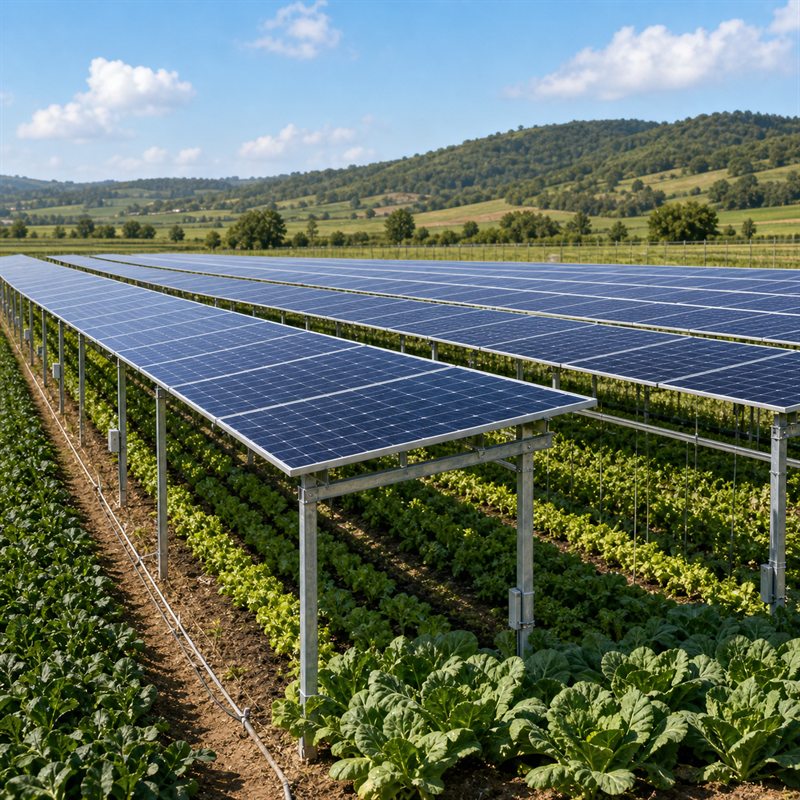
Solar panels in fields might take place in an agrivoltaic project where electricity generation is combined with farming activity. In contrast to setting up panels on a barn roof, this necessitates a different consideration of land use and farm operations.
Which Solar Panels Are Best for a Barn?
Comparing TOPCon, BC, HJT and PERC Technologies
Choosing solar panels for agriculture depends on how much roof space is available, what kind of panels can be installed, how much the farmer is keen on spending, and the working temperature. N-type TOPCon, back-contact (BC), heterojunction (HJT), and PERC are the types of panels and are different on the basis of cell design and performance. No single technology is the best for building automatically.
| Technology | What to compare |
|---|---|
| N-type TOPCon | -Efficiency -Temperature Coefficient -Degradation -Warranty |
| BC (back-contact) | -Efficiency -Module Dimensions -Warranty/Manufacturer -Cost/Usable roof-area |
| HJT (heterojunction) | -Temperature Characteristics -Rated Output -Installed Cost |
| PERC | -Rated Power -Efficiency -Product Condition -Overall Project Economics |
What Should Buyers Check Before Choosing?
Examine the rated power, module dimensions, efficiency, temperature coefficient, mechanical-load ratings, certificates, and warranty conditions through individual product datasheets. Examine the physical appearance, test record, warranty period, and batch uniformity of the second-hand panels
The Photovoltaics Report by Fraunhofer ISE provides wider information on PV technology and market developments. Product-specific comparisons shouldn’t be substituted for its industry-level findings.
HBOWA stocks both brand-new and second-hand panels from manufacturers including LONGi, Jinko, Trina, and others. Buyers should check the real products available instead of just opting for the brand or technology label.
How Much Do Solar Panels for a Barn Cost?
What Determines the Installed Cost?
The price for solar panels for an agri-shed depends upon the equipment, shed condition, and other installation requirements. The estimate may cover modules, mounting structure, inverter, AC protection, cables, monitoring, labour, and grid connection. Further costs may arise due to shed repairs, structurally reinforcing a shed, access difficulty, and if electrical upgrades are required.
The cost of investing in a battery installation in addition to the above will vary depending on battery capacity, power output, controls, and backup. Each agri-shed’s solar arrangements should be assessed for this separately rather than a battery being assumed for every barn solar proposal.
How Should a Farm Assess Financial Returns?
The estimated return on investment will depend upon the units of electricity consumed directly, the rate of grid electricity, the feed-in rate, maintenance cost, and the system’s production. These should be considered while calculating the payback period, including additional costs of financing. A cheaper equipment rate may not result in profitable expenditure.
NREL costs to analyse solar technology for the manufacture of solar panels, cost of installation, and system economics: the Aggregated benchmarks are determined based on an average study provided by NREL and not a quotation for a particular agri-shed.
What Should a Solar Quotation Include?
Generate a quote for the same scope of work. Both should give anticipated yearly generation, gear specs, establishment costs, guarantee, upkeep plan, grid-export unresponsiveness, barring, allowances, assessments, and so forth. Different territories will have distinctive prerequisites, and expenses could shift with these. The US Department of Energy’s guidance on permitting can be found online for rooftop solar.
For American ranches, check the current qualification and reserve status straightforwardly with the USDA Rural Energy for America Program; availability of the program will change, and U.S. plots don’t naturally mean they’re pertinent to ranches on different continents.
Installation, Electrical Safety and Maintenance
What Happens Before Installation?
To set up a barn with solar panels, the project team first needs to do a site inspection. Next, they need to design the system, and then the team requires some structural and electrical assessments. According to the local rules, one may need permits and grid approval. So arrangements can be made accordingly. When the farm staff is installing the solar panels, farm operations should also be taken care of so that it doesn’t interrupt the process of farming.
What Requires Extra Attention on Agricultural Buildings?
The site-specific environmental issues, such as dust and moisture, should be considered during equipment placement. The wiring, the electrical equipment, ventilation, and access for emergencies should be in accordance with the designs and safety measures. One should call professionals to do the evaluations and the electrical work.
What Maintenance Should Owners Plan For?
A person needs to monitor the production of energy. A person is also responsible for noticing any kind of change in performance that is not understandable. A person should arrange regular services and tests for all types of damage, escape devices, waste remains, and damage caused by water. It all depends on the rate of soiling, location, weather, and access to clean water.The US Department of Energy has given instructions about operating and maintaining devices to increase production and performance.
Worked Example: How to Evaluate a Barn Solar Project
From Initial Assessment to a Comparable Quotation
Suppose there is a farm and the farmer wants to install rooftop solar in order to power its equipment in the daytime. The farmer has yet to determine the size of the solar power required. So, the particular thing shown above is just an example and not proof of an installation.
At first, the owner looks into the electricity bills and the operational schedules in order to know the demand of the day and the season. A specialized professional examines the suitability of the roof and measures the area that is available for the panels.
Development of the proposed system requires details about the type of panel and the area required for the house. The power loss of the system decreases over time. Then a quotation is requested. After getting the quotation, the farmer can look into the difference between the prices and projected performance.
Furthermore, battery storage should be considered separately if the farmer or the farm needs to use energy at night or at any time required. And the final decision should be made on the basis of the farm’s requirements and not the biggest possible array that fits the roof.
Conclusion
Solar panels on a barn can be a feasible investment if your roof, power demand, and energy savings inventory are in agreement. To choose equipment for your barn, it is important to measure roof solidity, run the model calculation, and compare the quotations and the maintenance assessment. A site-specific assessment is much more reliable than your savings or payback per device.
Frequently Asked Questions
Permission for barn solar panels is applicable based on the building location, property type, shielded status, and the plan of the installation. Some projects fall under the class of delegated development, while others need formal endorsement. Check the local rules and the requirements for grid connection prior to requesting the hardware or fixing an installation date.
When a barn with a solar panel generates more electricity than the total consumption of the farm, the surplus power may be incorporated into the grid if the system and connection allow. The owner receives payment or gets bill credits between markets for electricity, export agreements, tariffs, requirements of the utility, and local policy.
Generally, a conventional grid-connected solar system installed on a barn shuts down during a power cut to ensure the safety of utility workers and to prevent electricity from back-feeding into the distribution lines. For having power backup, a barn solar panel project requires the right backup equipment of good quality and better electrical design. This may include more than one battery and a backup-enabled inverter, surrounded by the loads.
Before starting the work, it’s important to have a specialist assessment done for the installation of solar on an asbestos-containing cement roof. These sheets can be very weak, and drilling, cutting, or any kind of work on them can release hazardous fibres and may be harmful. Also, this does not mean that no conventional ways can be used for mounting. We need to check the local asbestos regulations and also the safe ways for the current roof from a qualified person.
The time needed for the installation varies according to the size of the solar system, current roof conditions, availability of the structural assessments, permitting, grid approval, weather, equipment, etc.
Yes. Consult your farm insurer prior to the construction of solar panels in a barn to clarify whether your arrangement impacts coverage in the building or requires any assessment and policy coverage changes. Preserve the record of installation documents, the equipment specifications, their warranty cards, and the records of inspection for claiming it in the future.