1. Introdução
It is not necessary to be equipped with a new inverter if you are Adding battery to solar system. A unidade atual(hardware) may stay when the retrofit architecture, bateria, electrical equipment and operating requirements are compatible. If the inverter is incompatible, undersized, failing, or cannot support the required battery or backup function, replacement is more relevant.
2. Can You Add a Battery to an Existing Solar System?
The appropriate battery can be added to an existing solar installation without changing the PV inverter. An AC-side battery can restore the already existing grid-tied inverter, making the facility a practical upgrade is noted by NREL. No entanto, it depends on the equipment you already have and the operating mode you would like the system to have.
It may make sense to install an AC-side battery system if you have a healthy inverter and a non-integrated battery system. Or it may be the best option to install a compatible battery onto an inverter that is already battery-ready. Em alguns casos, it becomes a necessity to replace it with a suitable hybrid inverter if the installed inverter is going backward, incompatible, or not appropriate for operation. Even commercial projects can pair the present PV with a PCS and BESS.
Então, can I add batteries to my solar system? Mostly yes. It is essential to estimate the equipment that you have fixed before you choose the appropriate battery or a add battery to solar system. The choice of equipment is as important as, if not more important than, the battery itself.
3. O 7 Checks to Make Before Buying a Battery
Before buying a battery, instead of assessing the storage capacity first, you have to take a look at the existing system first. And you have to check whether it’s on the path rather than those to choose before. Here are some checks that need to be made.
1. Check the existing inverter model. Take the name of the manufacturer, name and exact model of the inverter, rated power of the inverter, date of installation, garantia, and operating the inverter. The model number is more crucial than the age for which the existing inverter can be investigated. Even NREL has found that equipment compatibility is one of the top reasons to consider when adding storage to an existing PV array.
2. Check battery voltage compatibility. Check whether the battery’s operating voltage is well matched with the inverter or battery inverter. The battery inverter or even the inverter may not support any high-voltage battery. Even the voltage must meet current limits, approved configurations, and match.
3. Check BMS communication. Communication between the inverter’s battery management system and the battery integrator has been dependent. There is taken to check protocols like CAN or RS485 with the UL-approved battery list, firmware requirements, and communication settings. The battery, inversor, and BMS compatibility is checked before combining such components.
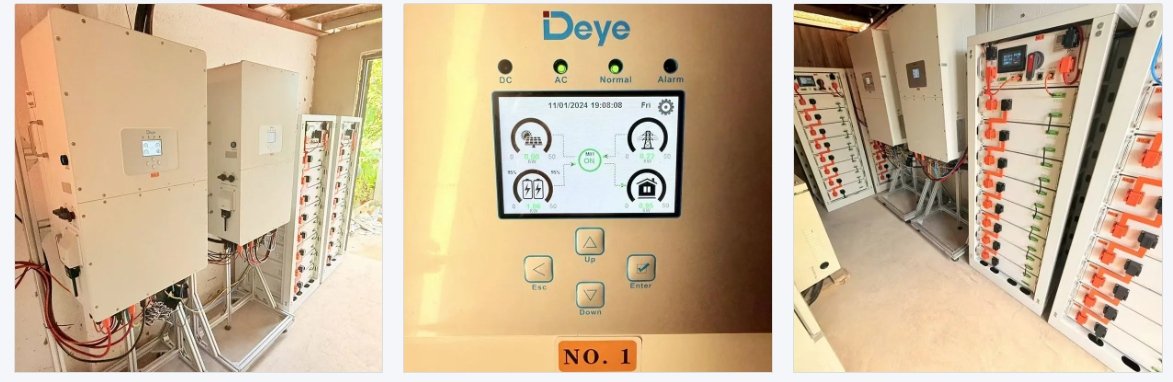
4. Check battery power and capacity. kWh is the stored energy, and kw for charge and discharge power. Although the battery has enough energy, it still lacks power for the loads we want.
5. Check the existing PV system. This includes the painéis solares, Capacidade fotovoltaica, classificação do inversor, recent generation data, consumo de eletricidade, and the surplus available. This information will give you an idea of how much extra solar can be generated and stored without basically sizing up a separate new solar system for the retrofit.
6. Check the electrical configuration. By this step, you will know if it is single phase / three phase systems. Other things to be confirmed here are metering, CTs, equipamento de proteção, main distribution board, grid link, and the backup circuits. All these details will further help in understanding how best the new storage equipment can be integrated within the existing setup.
7. Define the battery’s purpose. Decide the battery for higher self-consumption, lower grid purchase, TOU shifting, poder de backup, peak–demand lopping, or more energy resilience. The architecture should then follow this objective and the on-site operational requirements. This avoids equipment replacements that would otherwise be required.
4. Three Retrofit Scenarios: Which One Matches Your System?
There are three practical scenarios for retrofitting with storage, though the choice depends mostly on the existing inverter and its capabilities, not simply the desire to add storage.
Cenário 1: Keep the Existing Solar Inverter
If the PV inverter is healthy and storage can be integrated through additional equipment that is compatible with the installed inverter, there is no need to replace the existing inverter. An AC side battery inverter or energy storage system (PCS) can operate in parallel with the existing PV inverter. NREL gives this architecture “good” ratings for retrofit. Link to HBOWA’s existing comparison for the technical differences between Acoplamento CA e CC instead of repeating that explanation here.
Cenário 2: Use an Existing Battery-Ready Hybrid Inverter
If the installed and existing inverter already supports storage, the need does not arise to replace it. The only criterion to keep in mind is the matching battery voltage range, battery models, communication requirements, capacity limits, limites de carga e descarga, firmware, or backup functions. Link to HBOWAs existing batteries along with their compatibility factors instead of repeating that explanation here.
Cenário 3: Replace the Existing Inverter
If the existing inverter is failing or not compatible with the desired battery, cannot provide enough power, or does not support the desired backup architecture, it is advisable to replace the existing inverter with a new hybrid inverter. Também, while retrofitting, replacement makes sense when keeping the old inverter would require several additional devices or would require complicated controls. There is no universal age threshold, though for most systems, the decision is based on its condition, compatibilidade, capacidade, economics of the retrofit, and functionality.
5. How to Decide Whether Your Existing Inverter Should Stay
Apart from the age of an existing inverter, many people also consider its compatibility and health. A slightly old inverter can work brilliantly if it is fit, compatible, adequately rated, is supported, and makes economic sense. Por outro lado, if a new unit doesn’t work with the intended battery or operating mode, then it too might need a replacement.
| Verificar | Se sim | If no |
|---|---|---|
| Inverter healthy? | Assess further | Substituir |
| Battery support? | Keep may work | Review alternatives |
| Battery compatible? | Continue | Select compatible system |
| Enough power? | Continue | Add equipment or replace |
| Backup capable? | Keep may work | Review architecture |
| Warranty reasonable? | Keeping may make sense | Compare replacement |
The most robust decision rule to help a person decide on the inverter replacement is doença + compatibilidade + capacidade + funcionalidade + economics. A healthy inverter, which is technically clear, can often be continued into use. De acordo com o NREL, the communication and compatibility of existing and battery-side equipment play a critical role when adding storage to an existing PV system.
Muitas vezes, people try to replace the inverter just because they are adding a battery, increasing the total project cost without solving the technical limitation. The better question is, could the existing inverter safely and effectively perform the required role?
6. Battery Sizing for a Retrofit: O que muda?
The retrofit battery’s size depends on the energy that the system is already producing and consuming to date. It’s not about the biggest battery that needs to be installed. The battery needs to match the surplus solar power available for charging, match the electricity consumption during the evening, and match any loads that need to be supported in case of an outage.
When you are adding a battery for solar, you need to think about not only the kWh capacity to be used but also the highest kW to charge and discharge it. The battery may have enough kWh, but not enough kW to load the desired devices.
Before doing so, review the PV generation and consumption data and the current sizes of the system before adding a battery. This can lead to a better design than just relying on panel capacity thereof. Link to how to size the whole solar system, and not just the battery, with HBOWA’s solar system sizing guide.
7. Adding a Battery Does Not Automatically Mean Whole-Home Backup
Battery backup will allow a solar system to store electricity but won’t power every circuit during grid outages. An architecture must be created when adding battery backup to a solar system to safely isolate the location from the grid while supplying the loads that are required.
The inverter must be able to provide the backup operation that is needed. The transfer or isolation equipment may be required also. The critical-load configuration, the battery power available, and the state of charge should be designed. The U.S. Department of Energy states that inverters and storage must be configured when adding battery backup to solar systems to function independently during outages.
The same applies when adding battery backup to an existing solar system instalação. The backup coverage should be designed when the system is designed rather than once the battery is installed.
8. What Does Adding a Battery Actually Change in the Existing System?
The change in physical form is dependent on the retrofit architecture. Without storage, a typical grid-connected system has a simple path of solar panels → existing PV inverter → loads/grid. With a battery, there is another energy path introduced rather than just having the battery replace the original PV equipment.
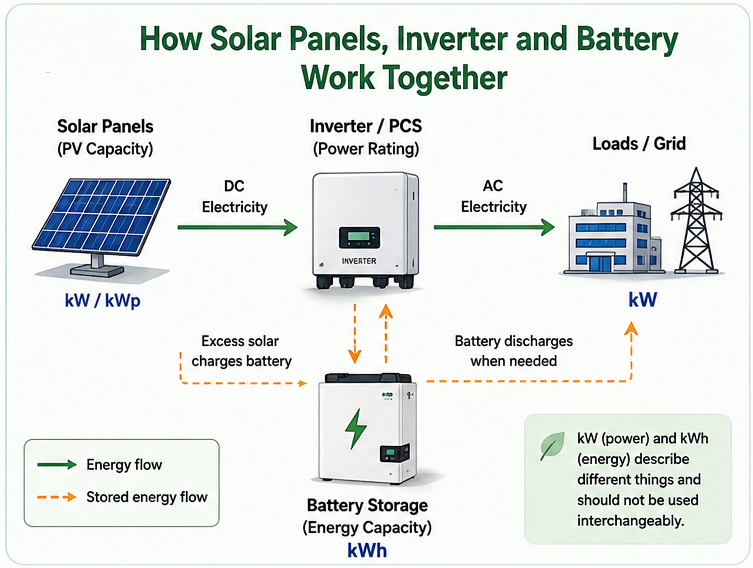
In an AC-side retrofit, the existing PV inverter can stay, but a battery inverter or PCS will connect the battery to the AC system. Portanto, the revised path is solar panels → existing PV inverter → AC system for the original setup, with the battery ↔ battery inverter/PCS ↔ AC system setup with it. The division of the two paths is a practical feature in the AC-coupled retrofits, according to NREL.
With a compatible inversor híbrido, the path can be painéis solares + battery ↔ hybrid inverter → loads/grid. Depending on the architecture, there can be changes to the metering or CTs, equipamento de proteção, monitoring and control hardware, e equipamentos de backup.
9. What Does Adding a Battery to an Existing Solar System Cost?
The cost of a retrofit depends on the equipment that is already in place and the architecture chosen. The battery is only one part of the project. The AC-side retrofit is necessary because the battery inverter or the PCS needs to be included, and the inverter replacement needs to account for the cost of the new hybrid unit and the associated electrical installation to be installed.
| Cost factor | Main impact |
|---|---|
| Bateria | Capacity and power |
| Battery inverter/PCS | AC-side integration |
| Inversor híbrido | Replacement cases |
| Electrical work | Site complexity |
| Metering/CTs | Monitoring and control |
| Proteção | Electrical design |
| Backup equipment | Outage coverage |
| Instalação | Project complexity |
| Licenças | Local requirements |
The lowest initial quotation is not necessarily the low-cost solution over the life of the system. An incompatible inverter can cause integration issues, while replacing a healthy unit without a technical reason adds unnecessary costs. NREL also notes that retrofit architecture can affect equipment, fiação, instalação, and interconnection requirements.
10. Commercial Retrofit: When Existing PV Is Paired With BESS
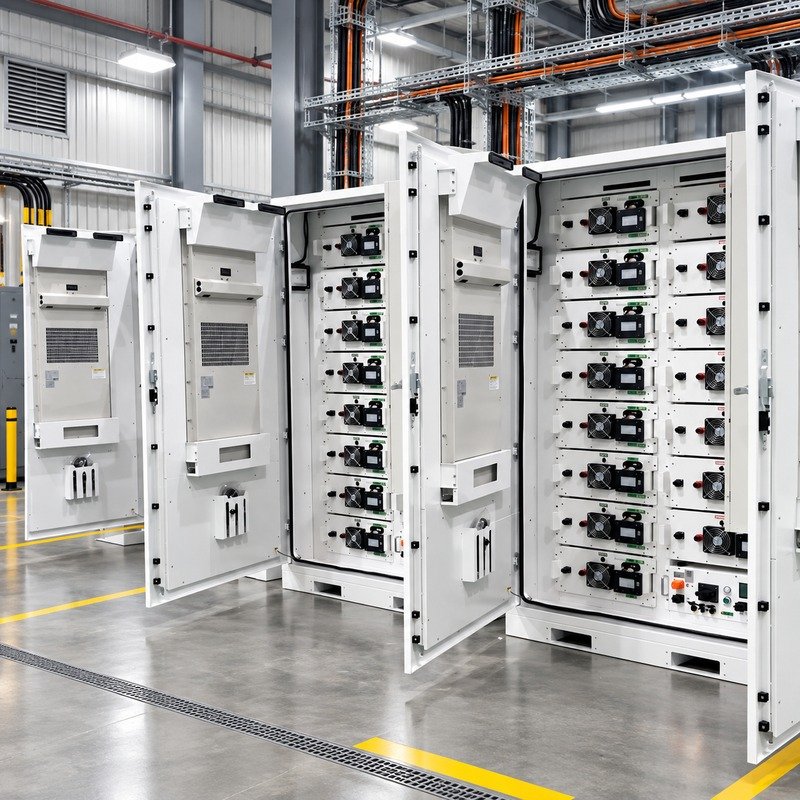
You don’t have to replace the existing PV system at commercial or industrial locations when you want to use a battery with the solar system. Based on the compatibility and requirements of a project, a Power Conversion System (PCS) and BESS can be attached to an existing solar array and inverter to provide energy storage, gerenciamento de carga, and backup operation.
The same upgrade principle can be used on a bigger scale. Appraise the original PV equipment and see if you can add the necessary storage function to it without replacing it. The commercial storage setup at HBOWA 100 kW + 200 kWh MPS project in Romania exhibited how a storage system was specified by the site. Para projetos maiores, the storage side could use a MPS de Megarevo, armário de armazenamento de bateria, ou battery storage container based on power, capacidade, condições do local, and project architecture.
11. Retrofit Decision Matrix
Battery retrofitting to solar systems: the difficulty of determining the right retrofit path depends on what equipment is in place and what the battery is being retrofitted for. A matrix is provided here, is for quick distillation before a high-level technical assessment.
| Existing system | Main requirement | Likely retrofit direction |
|---|---|---|
| Healthy string inverter | Add battery storage | AC-side battery system |
| Battery-ready inverter | Add compatible battery | Keep existing inverter |
| Old or incompatible inverter | Storage plus new functionality | Hybrid inverter replacement |
| Microinverter PV system | Add battery storage | AC-side battery architecture |
| Commercial PV system | Storage and energy management | PCS + Bess |
NREL calls the AC-coupled storage retrofit a practical retrofit approach. The advantage here is that the old PV system would remain as such, while the battery would be independently added.
13. Conclusão
Adding battery to solar system does not always mean that you have to add an inverter. It is essential to begin with the inverter you have and then check if it is compatible with both the battery and its requirements. If the requirements are met, then it would be easier just to add the battery. But if it is not possible, then a new inverter may be needed in the long term.
Perguntas frequentes
Even an older solar system can support a battery retrofit if its existing gear and electrical installation are still alright. An assessment should be performed for inverter condition, available documentation, fiação, equipamento de proteção, configuração do sistema, and local requirements before battery or retrofit type selection.
Sim. It is not always necessary to have a dedicated battery input for a retrofit. Depending on the system design, storage can be added on the AC side with a separate battery inverter or Power Conversion System, whereas the existing PV inverter will continue to operate. Compatibility and electrical design have to be checked first.
Sim. A PV system of microinverter-based type is compatible with the battery storage. But integrations are different in this case compared to when using a central string inverter-based system. Since each panel is already power-converted, battery storage is typically considered on the AC side. The final design should suit the existing electrical configuration.
Might be. Active expansion requirements are subject to battery manufacturer specifications, inverter or PCS constraints, the battery communication architecture, the maximum capacity supported, and the applicable installation rules. For a planned future expansion, it is better to select the initial system with enough technical headroom in place of always thinking that extra battery could be added later.
Geralmente, an installer requires the existing inverter model, the PV capacity, the recent energy consumption, the electric phase, the aim of battery installation, the required capacity of the reserve, and the accessibility of the system documentation, e assim por diante. Providing these details before the site visit helps the installer inspect the retrofit contour and note prospective compatibility or installation glitches.
Sim, pode. Having a battery makes an extra home for excess solar power created. Depending on the control approach and operational conditions, the excess generation acquired can be used to store power in the battery instead of immediately releasing it, with respect to battery power constraints, the rate of battery charging, the usage outline, and the availability of the grid.