Três fase: kVA = (√3 × H × D) ÷ 1000
Introdução
AMPs para a conversão de KVA é fundamental para considerar os cálculos precisos. Se você não sabe qual usar sobre conexões elétricas, Pode levar a muitos problemas tanto em projetos de circuitos quanto em seleções de equipamentos, ou mesmo o excesso de consumo de energia. Engenheiros, Eletricistas, e os gerentes de instalações precisam converter amplificadores em KVA para distribuir energia entre os sistemas corretamente. Máquinas e equipamentos, energia, e os geradores de backup distribuem a energia com base na quantidade de energia consumida e no poder real em KW consumido. Para tornar as coisas um pouco mais simples, Use este amplificador para calculadora de KVA entre o poder atual e aparente em fases simples e três para obter resultados precisos.
Quais são as fórmulas para converter amplificadores em KVA
A fórmula AMP para KVA depende do tipo de sistema elétrico. Os circuitos monofásicos e trifásicos precisam de cálculos diferentes devido à disparidade nas relações de tensão e fase. Usando a fórmula certa permite conversões precisas de energia para dimensionamento de equipamentos elétricos.
Em um ssistema de fase ingle, Os amplificadores convertidos em fórmula KVA é o seguinte:

Por exemplo, Um aparelho doméstico em execução em 220V e desenho 10A exige:
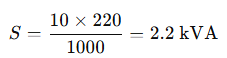
Este cálculo é muito importante para determinar a necessidade real de energia para as cargas elétricas residenciais.
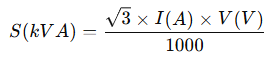
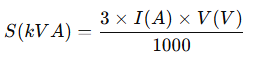
Por um sistema trifásico, A fórmula difere dependendo do tipo de tensão:
- Tensão de linha a linha:
- Tensão de linha para neutra:
Se um motor industrial funcionar em 50a e 400V (linha a linha), O poder aparente é:

Em aplicativos do mundo real, AMPs para cálculos trifásicos da KVA são usados e muito úteis para cargas elétricas em larga escala.
O fator de potência (Pf) afeta a conversão. Diferentes tipos de cargas - resistentes (Aquecedores), indutivo (motores), e capacitivo (Sistemas de correção de energia)- Afeto os valores de PF.
Em iluminação comercial, um fator de potência de 0.9 significa que um sistema 100A a 230V requer um ajuste de KVA:

Compreender a conversão de AMPs em KVA com PF garante que os sistemas elétricos operem com eficiência sem sobrecarregar circuitos.
O que é amplificador para a tabela de conversão KVA?
Uma tabela de conversão AMP para KVA cria uma referência conveniente para os valores elétricos mais usados. Isso é útil para engenheiros e eletricistas que estão estimando seus requisitos de energia sem passar por inúmeros cálculos tediosos. De forma similar, Esta tabela também contém os valores de conversão para diferentes níveis de tensão e fatores de energia, que são essenciais no KVA para amperagem de conversão para sistemas monofásicos e trifásicos.
Exemplos de conversão de amperes para kva & Casos
Para sistema monofásico, a tensão é 240V, converter 100 amperes para kVA:
Kva=100×240/1000 = 24 KVA
Para sistema monofásico, a tensão é 240V, converter 200 amperes para kVA:
Kva = 200×240/1000 = 48 KVA
Para sistema trifásico, a tensão é 480V, converter 100 amperes para kVA:
Kva = 100x480x√3 /1000= 83,14kVA
Para sistema trifásico, a tensão é 480V, converter 200 amperes para kVA:
Kva = 200x480x√3 /1000 = 166,27kVA
AMPs para a tabela de conversão KVA: Monofásico 230V e 240V
| Atual (A) | 230V kVA | 230Em kW (PF=0,8) | 240V kVA | 240Em kW (PF=0,8) | Uso típico |
|---|---|---|---|---|---|
| 5A | 1.15 KVA | 0.92 kW | 1.20 KVA | 0.96 kW | Pequeno eletrodoméstico ou carga de iluminação |
| 10A | 2.30 KVA | 1.84 kW | 2.40 KVA | 1.92 kW | Carga CA pequena ou dispositivo único |
| 15A | 3.45 KVA | 2.76 kW | 3.60 KVA | 2.88 kW | Circuito de pequenos equipamentos |
| 20A | 4.60 KVA | 3.68 kW | 4.80 KVA | 3.84 kW | Ferramentas de oficina ou pequena carga do inversor |
| 25A | 5.75 KVA | 4.60 kW | 6.00 KVA | 4.80 kW | Pequeno circuito comercial |
| 30A | 6.90 KVA | 5.52 kW | 7.20 KVA | 5.76 kW | Potência de reserva pequena ou dimensionamento do inversor |
| 40A | 9.20 KVA | 7.36 kW | 9.60 KVA | 7.68 kW | Loja de varejo ou pequeno escritório |
| 50A | 11.50 KVA | 9.20 kW | 12.00 KVA | 9.60 kW | Sistema de energia comercial pequeno |
| 60A | 13.80 KVA | 11.04 kW | 14.40 KVA | 11.52 kW | Carga de backup comercial |
| 80A | 18.40 KVA | 14.72 kW | 19.20 KVA | 15.36 kW | Painel elétrico para pequenas empresas |
| 100A | 23.00 KVA | 18.40 kW | 24.00 KVA | 19.20 kW | Edifício comercial ou carga de backup maior |
| 125A | 28.75 KVA | 23.00 kW | 30.00 KVA | 24.00 kW | Cálculo de potência de pequenas instalações |
| 150A | 34.50 KVA | 27.60 kW | 36.00 KVA | 28.80 kW | Carga comercial média |
| 200A | 46.00 KVA | 36.80 kW | 48.00 KVA | 38.40 kW | Serviço elétrico comercial |
| 250A | 57.50 KVA | 46.00 kW | 60.00 KVA | 48.00 kW | Grande estimativa de carga monofásica |
AMPs para a tabela de conversão KVA: Trifásico 400V e 480V
| Atual (A) | 400V kVA | 400Em kW (PF=0,85) | 480V kVA | 480Em kW (PF=0,85) | Uso típico |
|---|---|---|---|---|---|
| 5A | 3.46 KVA | 2.94 kW | 4.16 KVA | 3.53 kW | Equipamento trifásico pequeno |
| 10A | 6.93 KVA | 5.89 kW | 8.31 KVA | 7.07 kW | Motor pequeno ou bomba |
| 15A | 10.39 KVA | 8.83 kW | 12.47 KVA | 10.60 kW | Circuito de equipamentos comerciais |
| 20A | 13.86 KVA | 11.78 kW | 16.63 KVA | 14.13 kW | Bombear, Hvac, ou pequenas máquinas |
| 25A | 17.32 KVA | 14.72 kW | 20.78 KVA | 17.67 kW | Máquinas de oficina |
| 30A | 20.78 KVA | 17.67 kW | 24.94 KVA | 21.20 kW | Carga de fábrica pequena |
| 40A | 27.71 KVA | 23.56 kW | 33.26 KVA | 28.27 kW | HVAC comercial ou carga de produção |
| 50A | 34.64 KVA | 29.44 kW | 41.57 KVA | 35.33 kW | Equipamento de fabricação |
| 60A | 41.57 KVA | 35.33 kW | 49.88 KVA | 42.40 kW | Bomba ou compressor industrial |
| 80A | 55.43 KVA | 47.11 kW | 66.51 KVA | 56.53 kW | Sistema de energia comercial médio |
| 100A | 69.28 KVA | 58.89 kW | 83.14 KVA | 70.67 kW | Fábrica, armazém, ou maior C&eu carrego |
| 125A | 86.60 KVA | 73.61 kW | 103.92 KVA | 88.33 kW | Distribuição elétrica comercial |
| 150A | 103.92 KVA | 88.33 kW | 124.71 KVA | 106.00 kW | Grandes máquinas ou carga industrial |
| 200A | 138.56 KVA | 117.78 kW | 166.28 KVA | 141.34 kW | Grande C&Eu sistema de energia |
| 250A | 173.21 KVA | 147.22 kW | 207.85 KVA | 176.67 kW | Distribuição industrial ou dimensionamento de energia de reserva |
| 400A | 277.13 KVA | 235.56 kW | 332.55 KVA | 282.67 kW | Grande instalação industrial |
| 500A | 346.41 KVA | 294.45 kW | 415.69 KVA | 353.34 kW | Sistema de backup industrial pesado ou grande |
Esses valores são essenciais ao selecionar equipamentos elétricos, como transformadores, geradores, e máquinas industriais. Como a conversão de KVA para amperagem varia com o fator de potência e o tipo de tensão, O uso de uma tabela de referência precisa ajuda a aumentar a eficiência no planejamento de distribuição de energia.
Exemplos de cálculo de amperes comuns para kVA
| Exemplo | Tipo de sistema | Cálculo | Resultado | O que isso significa |
|---|---|---|---|---|
| 20A em 230V | Monofásico | 230 × 20 ÷ 1,000 | 4.60 KVA | Estimativa de carga comercial monofásica pequena |
| 50A em 240V | Monofásico | 240 × 50 ÷ 1,000 | 12.00 KVA | Útil para pequena potência de reserva ou dimensionamento de inversor |
| 100A em 230V | Monofásico | 230 × 100 ÷ 1,000 | 23.00 KVA | Painel comercial ou estimativa de carga |
| 30A em 400V | Trifásico | √3 × 400 × 30 ÷ 1,000 | 20.78 KVA | Máquinas trifásicas pequenas ou carga de oficina |
| 50A em 400V | Trifásico | √3 × 400 × 50 ÷ 1,000 | 34.64 KVA | Motores, bombas, compressores, e pequenas cargas de fábrica |
| 100A em 400V | Trifásico | √3 × 400 × 100 ÷ 1,000 | 69.28 KVA | Planejamento de sistemas elétricos comerciais e industriais |
| 100A em 480V | Trifásico | √3 × 480 × 100 ÷ 1,000 | 83.14 KVA | Sistemas industriais que utilizam alimentação trifásica de 480V |
| 250A em 480V | Trifásico | √3 × 480 × 250 ÷ 1,000 | 207.85 KVA | Cargas industriais maiores ou dimensionamento de energia de reserva |
Calculadora de conversão de Ampères para kVA: Como funciona
AMPs para a calculadora KVA pode converter corrente elétrica em energia aparente. Há grandes chances de erro humano e resultados incorretos quando realizamos os cálculos manualmente. A calculadora precisa de valores de entrada dos amplificadores, Tensão, e seu fator de poder (Pf) Para te dar uma resposta. A calculadora reverte para sua resposta imediatamente. Se você tem um sistema monofásico, Use uma fórmula diferente, Considerando que se você estiver olhando para um sistema trifásico, Use uma fórmula diferente. Isso é importante para garantir que você classificou o poder corretamente para tirar o máximo proveito do sistema. Então, para isso, simplificando amplificadores para a conversão do KVA, essas calculadoras aumentam a velocidade e a precisão.
Entendendo amplificadores e KVA: O que é um ampere (A) E kilovolt -AMPere (KVA)?
O fluxo da corrente elétrica em um circuito é medido em ampere (A). O princípio por trás da medição da ampere é a taxa da carga elétrica transportada através de um determinado circuito. Uma amperagem mais alta significa uma corrente elétrica mais alta através de um sistema elétrico. Isso leva a uma diferença significativa na eficiência e segurança dos sistemas elétricos. Por exemplo, em famílias, aparelhos diferentes, como geladeiras, Ar condicionado, e microondas, Use uma quantidade diferente de corrente com base em seu consumo de energia.
O microondas pode utilizar aproximadamente 10 Amperes. A unidade de ar condicionado central, por outro lado, pode exigir desenho mais do que 30 Amperes. Por isso, A capacidade de converter de amperes para KVA é vital ao considerar a fiação, Disjuntores de circuitos, e transformadores necessários para diferentes aplicações.
Kilovolt -ampere (KVA) A medição é usada para medir a energia aparente ou a energia total que inclui energia ativa e reativa em um sistema elétrico. Em contraste com watts (C) que medem o consumo real de energia, KVA Amperes Valor considere a energia total fornecida e o poder perdido devido à ineficiência. A diferença se torna profunda em aplicações industriais.
Por exemplo, uma máquina em execução de fábrica ou qualquer dispositivo tem uma demanda total de energia de 100 KVA. No entanto, A verdadeira demanda de energia é igual a 80 quilowatts (kW) Devido a um fator de poder de 0.8. A distinção é crítica ao decidir as dimensões certas para ferramentas e dispositivos elétricos usar. Além disso, O uso excessivo de classificação de KVA e Amperes pode levar ao superaquecimento e ineficiência. Portanto, entender o que são os amplificadores de kilovolt e como eles interagem com a amperagem garante que o planejamento preciso da distribuição de energia e a seleção de equipamentos.
Por que converter amperes em KVA e quais os benefícios que isso oferece?
A conversão de amplificadores para KVA é importante no projeto elétrico para garantir circuitos, transformadores, e os geradores são dimensionados corretamente para suas cargas. Diferentes sistemas elétricos são executados em diferentes níveis de corrente.
O nível atual varia de miliampes a milhares de amplificadores. Por exemplo, Ao usar um multímetro, a corrente confinada no fio pode ser de 0 para 2 Millipts. De forma similar, O nível de corrente usado em um fogão elétrico pode variar até aproximadamente 30,000 Amperes. A conversão de energia entre AMPs e KVA dá elevações à uniformidade das medições de energia.
AMPs para KVA é importante na distribuição em larga escala da eletricidade. Em larga escala, A distribuição uniforme e segura de energia precisa de cálculos precisos de energia, e também é importante para garantir a eficiência energética. O requisito mais significativo na conversão de amplificadores em KVA é o fator de potência entre a carga e a oferta. O fator de potência é a proporção entre o poder real (conhecido como kw) e poder aparente (Designado como KVA).
O principal motivo para a conversão de amplificadores em KVA é devido ao fator de potência. Qual é a proporção entre o poder real (kW) e poder aparente (KVA). A maioria comercial e industrial opera com um fator de potência (Pf) < 1 e falha em produzir poder ideal. Um fator crucial de trabalhar com motores movidos a energia elétrica é o seu fator de potência. O fator de potência pode ser <1 Devido a cargas indutivas como motores e transformadores.
Se o fator de potência for baixo, Então a aparente demanda de energia é alta, O que significa que mais KVA é necessário para fornecer o mesmo poder real. AMPs para a conversão de KVA é fundamental para determinar a seleção do gerador de tamanho certo em um ambiente industrial. Se uma fábrica possui um grande número de máquinas que desenham 200 amplificadores em 400V com um fator de potência de 0.8. Então a capacidade do gerador necessária é 110 KVA.
Se alguém escolher um gerador de um número menor de KVA, Então seu gerador será subdimensionado. Isso eventualmente leva a excesso de carga, ineficiência, e gotas de tensão. As principais desvantagens da falta de conversão de KVA e dimensionamento correto dos geradores são os seguintes:
- Se o gerador for subdimensionado e não conseguir fornecer a energia solicitada; A questão principal é que o gerador não começa, ou só é capaz de carregar uma parte da carga que resulta em tropeçar.
- Pode causar um atraso no processo devido à quebra da máquina.
- Isso leva ao aumento dos custos devido ao consumo de desgaste extra de diesel e gerador.
- Falha de energia e flutuações de tensão.
- A conversão de KVA ajuda na distribuição máxima de energia e na formação de todo o sistema para ser estável.
Quais são as aplicações da vida real dos amplificadores para a conversão do KVA?
Existem muitos aplicativos do mundo real para entender a conversão de amplificadores em KVA. Quando falamos sobre gerenciamento de energia doméstica, Os proprietários são obrigados a estimar a quantidade de poder de que precisariam e esse requisito é útil se os proprietários estiverem selecionando um inversor solar.
Como todos os sistemas solares vêm com cargas variadas, Ajuda se um proprietário entender o cálculo do KVA 3 fase para distribuir a quantidade de energia com eficiência. Também, Caso um proprietário administre eletricidade em vários aparelhos, Alterar os amplificadores para KVA ajuda a escolher a capacidade correta do inversor. Pode -se evitar escassez de energia se eles tiverem um KVA adequado.
As empresas dependem de amplificadores para a conversão de KVA ao dimensionar geradores. A classificação de energia de um gerador é sempre classificada em KVA, E as empresas precisam fazer um cálculo de corrente preciso para encontrar o tamanho correto.
Por exemplo, Se um edifício comercial é executado em energia de 400V e tem um fator de potência de 0.9, Então a sobrecarga pode ser uma situação negativa. Se uma empresa não conseguir corresponder à classificação KVA correta, então sua distribuição de energia pode executar sobrecarga ou pode ser ineficiente.
Durante o grande processo de fabricação, cálculo de KVA ou computação 3 A fase é muito crucial. Cada máquina como motores, transportadores, e os compressores opera com diferentes condições de carga, resultando no sorteio de diferentes correntes. Um engenheiro deve sempre calcular os amplificadores necessários no KVA para garantir que todos os sistemas de distribuição de energia e transformadores possam ser executados na carga máxima.
Quais são os erros comuns em amplificadores para a conversão de KVA?
Cometer erros em amplificadores convertidos em KVA pode levar ao gerenciamento ineficiente do poder. Assim, para reduzir as falhas, os erros comuns são os seguintes:
- Um erro é esquecer o fator de poder. inclui poder aparente. Portanto, deixar o fator de energia para fora leva a uma previsão incorreta.
- Outro erro é o uso de níveis de tensão errados que acontecem tanto em transformadores quanto. Os sistemas monofásicos e trifásicos requerem fórmulas diferentes para calcular o KVA. E usar a fórmula incorreta para o erro de cálculo pode levar a equipamentos que são muito pequenos ou muito grandes.
- Entendendo mal o poder aparente vs. Poder real também é um problema. KVA é a potência total fornecida. A energia utilizável é a potência real fornecida ao sistema e depende do poder reativo, ou seja, a eficiência do sistema.
Portanto, é importante saber como calcular a ampere do KVA para fazer uma avaliação precisa das cargas ou para um projeto elétrico adequado.
Conclusão
Para garantir um gerenciamento preciso de energia para vários sistemas elétricos, a compreensão da conversão de amperes em kva é extremamente necessária. Ajuda engenheiros e espaços comerciais a escolher o equipamento certo e as maneiras certas de distribuir energia. A conversão de amplificadores para a ferramenta KVA facilitou muito o processo para espaços comerciais. Aplicando a maneira correta de conversão, O melhor desempenho pode ser ganho sem causar cobranças desnecessárias. O desempenho elétrico eficaz e otimizado pode ser alcançado em residências ou indústrias ou dimensionamento de geradores, sabendo como converter amplificadores em KVA.
Produtos solares para o seu projeto
 Painéis Solares |  Sistema solar Sistema solar |  C&Armazenamento de bateria |