Introdução
A 100Sistema de energia solar KW é um tamanho médio sistema de energia solar comercial adequado para uma empresa com elevadas necessidades energéticas diurnas. Os governos estaduais e locais estão adotando sistemas deste porte para ajudar a gerenciar os custos de energia e melhorar a resiliência energética. Este guia analisa a saída do sistema, requisitos de espaço, e preço de instalação, bem como fatores que influenciam o retorno financeiro a longo prazo.
O que é um sistema solar de 100KW, e quem usa este sistema?
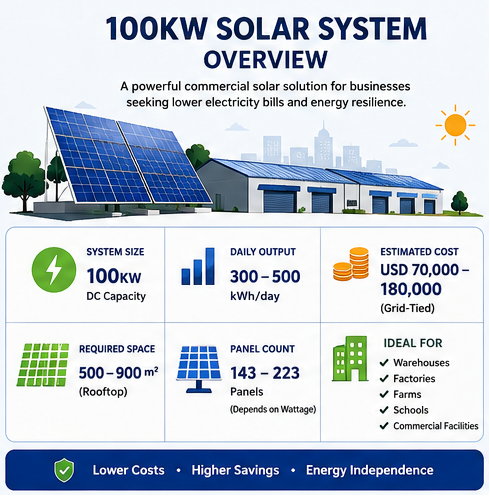
A 100Sistema solar KW é um sistema fotovoltaico solar tendo uma capacidade de 100kw. Um sistema deste tamanho é projetado principalmente para uso comercial e industrial que consome muita energia diariamente, ao contrário da instalação residencial de 5kW a 15kW.
Residencial e sistemas solares comerciais diferem na demanda de energia, qual é a principal diferença. Adequação solar de instalações comerciais que fazem uso extensivo de equipamentos, muitas vezes refrigeradores walk-in, unidades de ar condicionado ou aquecimento, unidades de refrigeração ou máquinas de produção, torna a instalação de painéis solares maiores economicamente atraente.
Exemplos comuns de empresas que utilizam uma instalação de 100 kW são armazéns de fábricas, escolas, fazendas, centros comerciais, e armazenamento refrigerado. Geralmente, organizações que consomem centenas de quilowatts-hora ou mais por dia.
Aplicações típicas de um sistema solar de 100KW
| Tipo de negócio | Consumo Diário Típico | Adequação |
| Armazém | 300–600 kWh | Alto |
| Fábrica | 400–1.500 kWh | Alto |
| Escola | 250–500 kWh | Alto |
| Fazenda | 250–800 kWh | Moderado a alto |
| Centro comercial | 500–1.200 kWh | Alto |
| Instalação de armazenamento refrigerado | 600–2.000 kWh | Muito alto |
Quanta energia produz um sistema solar de 100KW?
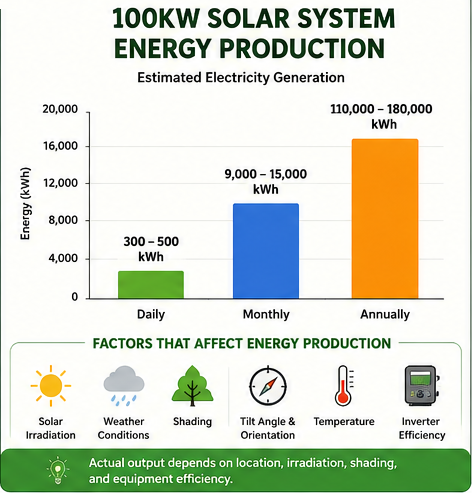
Não existe um número fixo; uma faixa segura fica entre 300 e 500 kWh de energia todos os dias, mas isso não é tão simples, e pode ser diferente. A produção real do sistema é determinada pela produção de irradiância, condições ambientais, perdas no sistema, orientação dos módulos, e eficiência do equipamento.
Diário, Mensal, e produção anual de energia
Uma pergunta frequente é, ““Quanto é a produção de energia do sistema solar de 100 kW?”Sua resposta pode variar de acordo com o local. Com base em informações de eficácia disponibilizadas pelos EUA. De acordo com o NREL e AIE, sistemas fotovoltaicos comerciais geralmente têm taxas de desempenho entre 75% e 85%, o que significa que nem toda a energia teórica é convertida em eletricidade.
Então, idealmente, um 100-Sistema solar Kilowatt pode gerar entre 9,000 kWh e 15,000 kWh por mês, e a produção anual é de cerca de 110,000-180,000 kWh.
Produção estimada de energia
| Período de produção | Resultado estimado |
| Diário | 300–500 kWh |
| Mensal | 9,000–15.000 kWh |
| Anualmente | 110,000–180.000 kWh |
Fatores que afetam a produção de energia
Existem vários fatores que afetam quanto um sistema solar de 100 kW produz ao longo de sua vida. A irradiação solar é a variável mais importante, já que mais luz solar significa maior geração de eletricidade. Quando as cordas estão conectadas, sombreamento de edifícios próximos, árvores, ou estruturas de telhado reduz drasticamente saída do painel solar.
O ângulo de inclinação e a orientação afetam a produção, também. No Hemisfério Norte, matrizes voltadas para o sul, e no Hemisfério Sul, matrizes voltadas para o norte geralmente produzem os rendimentos mais altos. Calor e altas temperaturas reduzem a eficiência do painel. Os módulos fotovoltaicos funcionam bem sob condições operacionais moderadas. Os inversores comerciais disponíveis nos mercados hoje estão em sua maioria esgotados 98% eficiente.
A localização da produção afeta significativamente a produção. No Arizona, um sistema de 100kW, que tem irradiação solar anual superior a 2,100 KWh/m², normalmente gera muito mais eletricidade do que um sistema alemão semelhante, onde a irradiação média mensal é menor.
Qual o tamanho de um sistema solar de 100 kW? Espaço, Contagem de painéis, e requisitos de telhado
Muitas empresas costumam questionar “quão grande é um sistema solar de 100 kW?” A resposta depende em grande parte da potência do módulo, projeto de montagem, e layout do site. Geralmente, a área física ocupada pelos projetos comerciais foi drasticamente reduzida com o uso da nova tecnologia dos painéis solares Tier-1, como Longi, Subiu, ou qualquer outro.
O número de painéis solares depende da capacidade de cada módulo, o que significa que o uso de módulos de maior potência reduz o número total de painéis usados e também pode reduzir os requisitos de mão de obra de instalação e vice-versa. Moderno Módulos TOPCon tipo N normalmente são avaliados em 550C para 700C, enquanto muitos sistemas comerciais existentes empregam 450C painéis.
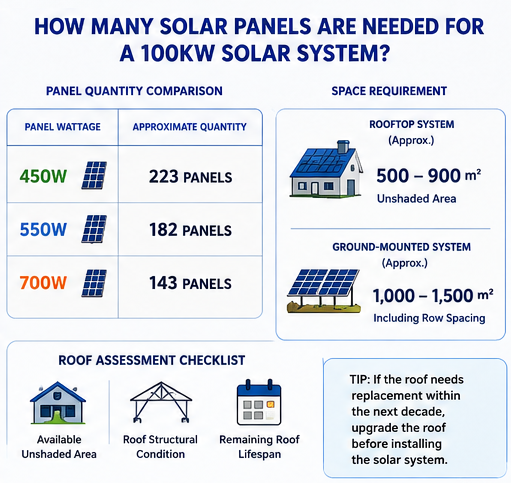
Quantos painéis solares são necessários para um 100 kW Sistema Solar?
O número de painéis solares depende da capacidade de cada módulo, o que significa que o uso de módulos de maior potência reduz o número total de painéis usados e também pode reduzir os requisitos de mão de obra de instalação e vice-versa. Os módulos TOPCon modernos do tipo N são normalmente classificados em 550W a 700W, enquanto muitos sistemas comerciais existentes empregam painéis de 450 W.
Comparação de quantidade de painel
| Potência do painel | Quantidade Aproximada |
| 450C | 223 painéis |
| 550C | 182 painéis |
| 700C | 143 painéis |
Requisitos de telhado e área de terreno
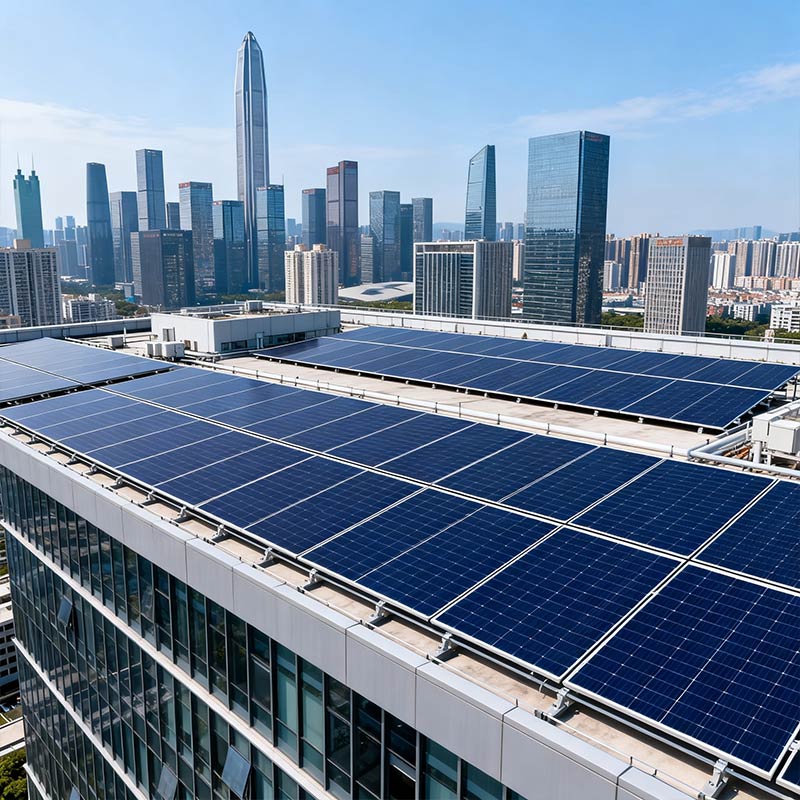
A 100Sistema solar KW no telhado precisa de pelo menos 500 para 900 metros quadrados expostos ao sol. A área do telhado dependerá da eficiência do painel do fabricante, espaçamento entre linhas, e revés de incêndio local. Os sistemas montados no solo geralmente requerem terreno extra para manter o acesso e o espaçamento entre as fileiras de maneira ideal.
Dica de especialista da HBOWA
As empresas podem realizar uma avaliação preliminar do seu telhado analisando três fatores diferentes. Esta é a quantidade de área não sombreada disponível, a condição da estrutura do telhado, e a vida restante do telhado. Se o telhado precisar ser substituído nos próximos dez anos, muitos instaladores sugerem atualizações de telhado antes de instalar o painel solar.
Quanto custa um sistema solar de 100KW?
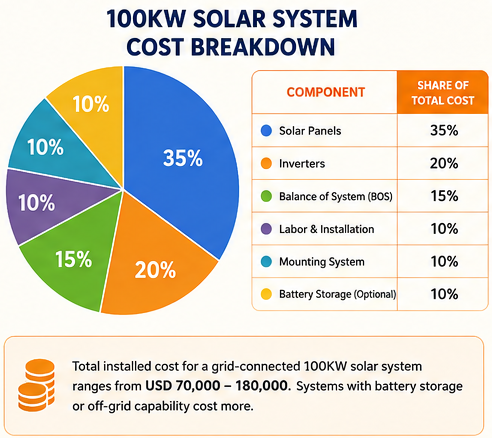
O custo estimado de um sistema solar de 100KW em um local de projeto na cobertura pode estar por perto $70000 acabar $180,000, dependendo da tecnologia e marca do módulo fotovoltaico usada, imposto de importação, e outros fatores. O custo de sistemas com grande armazenamento de bateria ou funcionalidade fora da rede pode ser substancial.
Estrutura de Custo Médio
Os fatores sobre os quais sistema solar comercial depende da política do país, taxas trabalhistas, escolha do equipamento, e complexidade do projeto. Os benchmarks de custos publicados pelo NREL mostram que o hardware é responsável pela grande maioria das despesas de capital, com trabalho e equilíbrio do sistema também significativos.
100Análise de custos do sistema solar KW
| Componente | Participação no custo total |
| Painéis solares | 25–35% |
| Inversores | 10–15% |
| Sistema de montagem | 10–15% |
| chefe (cabeamento, proteção, monitoramento) | 15–20% |
| Trabalho e engenharia | 15–25% |
| Armazenamento de bateria (opcional) | 20–50% adicional |
Fatores que influenciam o custo do sistema
Quando se trata de custo do sistema solar de 100kw, a qualidade dos materiais conta. Os fabricantes de nível 1 financiáveis são escolhidos por compradores comerciais porque o desempenho de longo prazo e o suporte de garantia são importantes para a economia do projeto. Vários projetos comerciais em todo o mundo adotaram Topcon do tipo n e Módulos PERC de Longi, Jinko, Trina, Solar Canadense, Subiu, JA Solar, Tongwei, GCL, e muitos outros fabricantes.
O preço final também é afetado pela dificuldade de instalação. Reforço do telhado, acesso ao guindaste, melhoria do quadro de distribuição, e interfaces elétricas problemáticas podem aumentar os custos. Outra variável importante é o tipo de montagem, uma vez que os sistemas montados no solo geralmente requerem materiais estruturais adicionais e preparação do local.
Qual sistema solar funciona melhor para você?
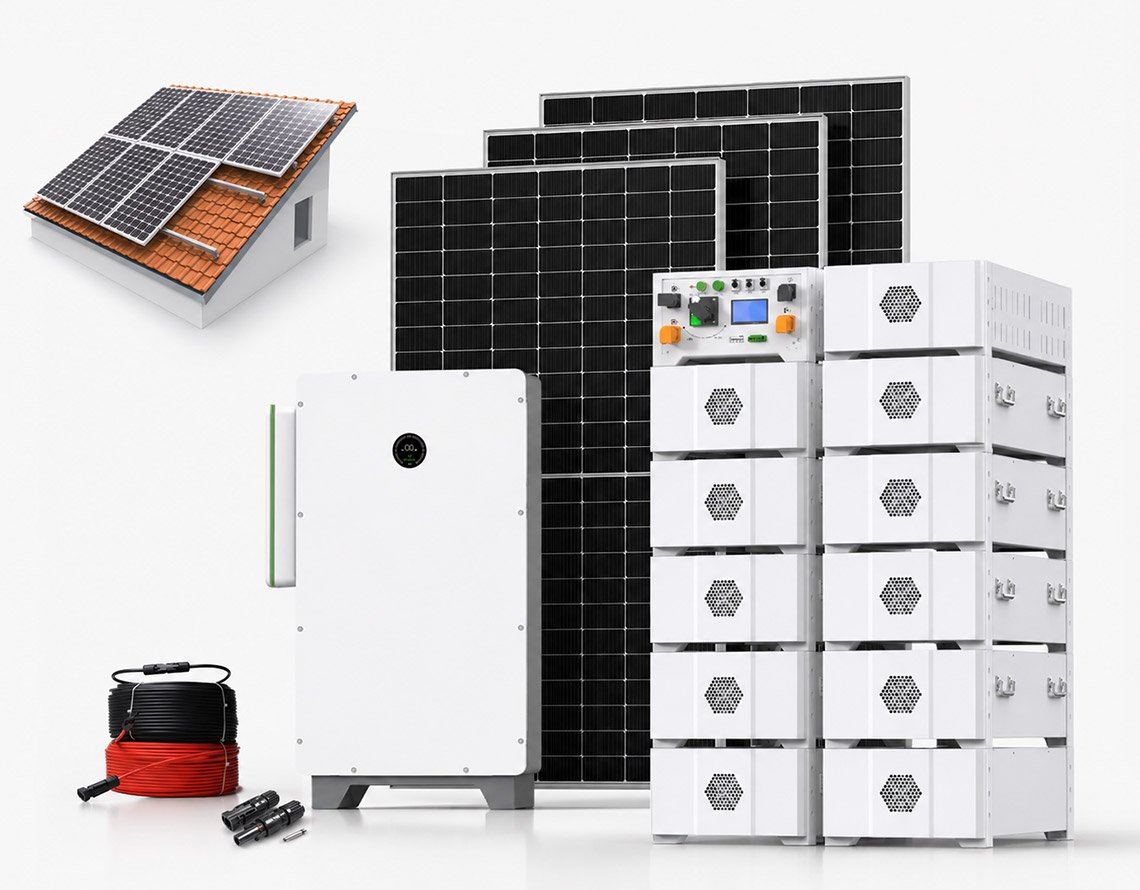
Optar pela configuração correta é tão importante quanto escolher o tamanho certo do sistema. A 100Sistema de energia solar KW pode funcionar como um sistema de energia solar na rede, um sistema híbrido de energia solar, ou um sistema de energia solar fora da rede. Cada configuração tem vários níveis de independência, resiliência, e requisitos de investimento.
Comparação de tipos de sistema
| Recurso | Na rede | Híbrido | Fora da rede |
| Dependência de grade | Alto | Moderado | Nenhum |
| Bateria necessária | Não | Opcional/Sim | Sim |
| Capacidade de backup | Não | Sim | Sim |
| Custo | Mais baixo | Médio | Mais alto |
| Melhor para | Negócios urbanos | Empresas que precisam de backup | Locais remotos |
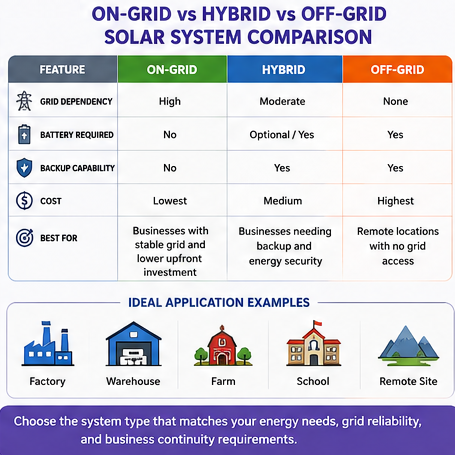
Um sistema solar na rede não armazena eletricidade. Este sistema está conectado à rede da concessionária, e opta-se por reduzir o custo da fatura mensal de eletricidade. A sistema solar híbrido combina produção de energia solar com armazenamento em bateria, e é optado pela empresa que deseja armazenar o excesso de energia e utilizá-la em períodos de indisponibilidade ou pico tarifário. Por último, um Sistema solar fora da grade usa Módulos fotovoltaicos e baterias (e muitas vezes geradores) desconectar-se completamente da rede e tornar-se independente da rede, geralmente usado por empresas (fábricas e armazéns) que são colocados em áreas remotas.
Quais empresas se beneficiam mais com cada tipo de sistema?
A configuração ideal depende principalmente dos padrões de uso de energia e da confiabilidade da rede. Maioria sistemas conectados à rede fornecer autoconsumo máximo com custos iniciais mínimos quando usado em armazéns, centros comerciais, e fábricas em áreas urbanas e industriais.
Em aplicações essenciais como armazéns frigoríficos, instalações de saúde, e centros de dados, onde o tempo de inatividade pode ser caro e causar perdas, um sistema solar híbrido é frequentemente recomendado; o armazenamento da bateria oferece energia de reserva ao mesmo tempo que suporta Pico de barbear. Na maioria dos casos, frequência de interrupção, tarifas de eletricidade, e o custo da interrupção do negócio permitir-lhe-á responder à pergunta, “Vale a pena um sistema solar híbrido para usuários comerciais?”
Atividades agrícolas remotas, locais de mineração, e a infra-estrutura de comunicação muitas vezes exigem sistema fora da rede porque não está disponível ou é muito caro.
Qual tamanho de bateria é necessário para um sistema solar de 100KW?
Não há número ou tamanho específico de bateria necessária em um sistema solar de 100KW.
É falsamente assumido que todos os sistemas de 100 kW requerem a mesma quantidade de armazenamento. Duas instalações com a mesma capacidade solar podem não precisar do mesmo tamanho de bancos de baterias porque consomem energia de forma diferente.
Para instalações comerciais nesta escala, um armário de armazenamento de energia ao ar livre pode combinar a capacidade da bateria selecionada com PCS, BMS, EMS, gerenciamento térmico, e proteção.
Recomendações típicas de capacidade da bateria
Os projetos de armazenamento comercial são projetados em torno de objetivos operacionais específicos, como:
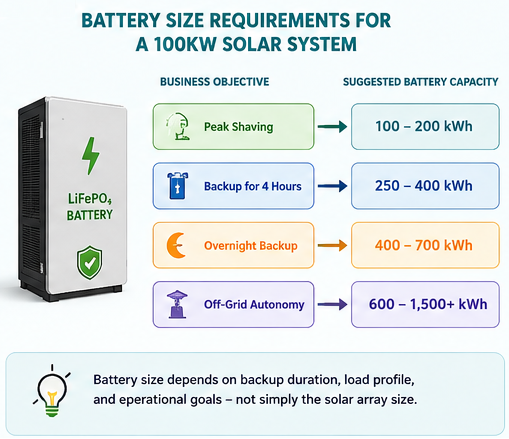
Estrutura de dimensionamento de bateria
| Objetivo de backup | Capacidade sugerida da bateria |
| Corte de pico | 100–200 kWh |
| 4-backup de hora | 261–400 kWh |
| Backup noturno | 400–700 kWh |
| Autonomia fora da rede | 600–1.500+ kWh |
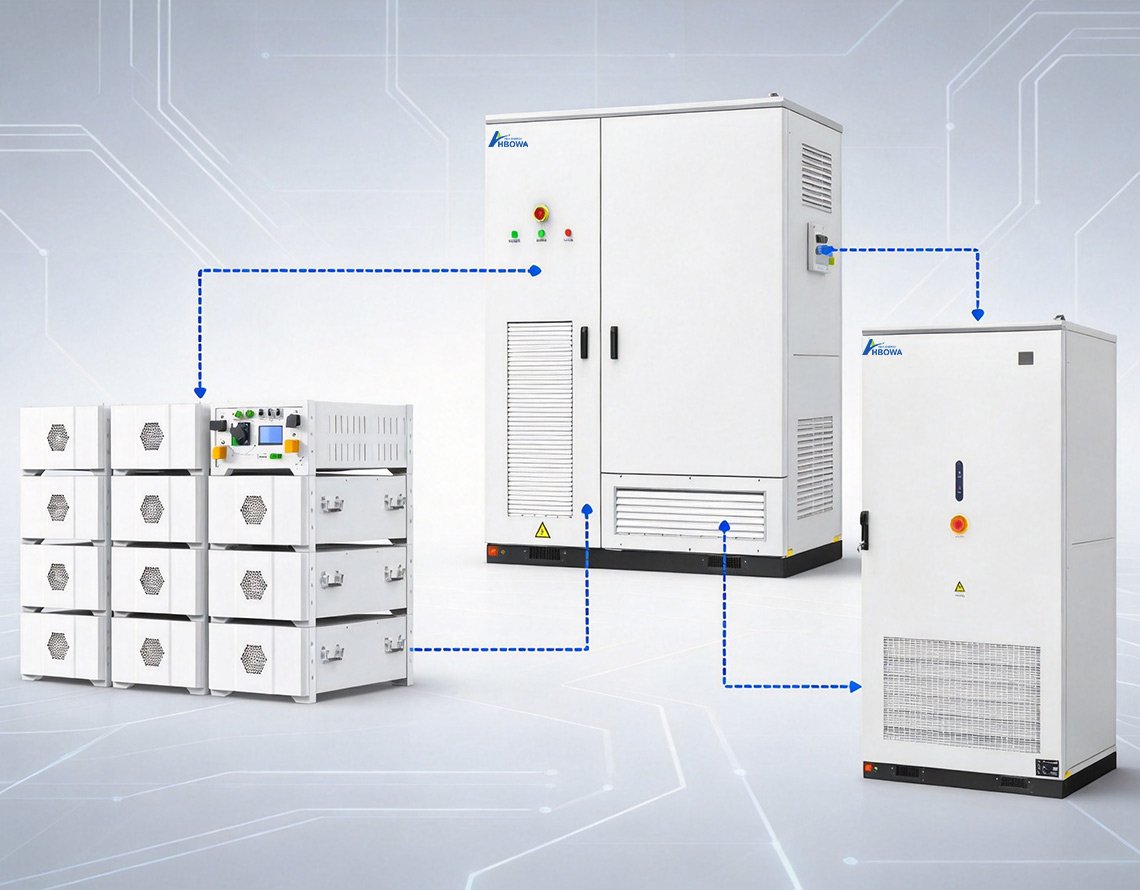
Na vida real, um armazém que consome mais eletricidade durante o horário comercial pode exigir apenas 150–200 kWh de armazenamento para redução da carga de demanda, E ao mesmo tempo, uma instalação agrícola deseja backup noturno, que exige mais do que 500 kWh de capacidade de armazenamento.
Por que as baterias LiFePO4 dominam o armazenamento comercial
A tecnologia de bateria LiFePO4 está sendo cada vez mais adotada em projetos comerciais como resultado de sua segurança e longa vida útil. A Agência Internacional de Energia Renovável (Irena) publicou análises sobre armazenamento em escala de utilidade, que apontam para que a química do fosfato de ferro-lítio se torne uma das tecnologias predominantes para aplicações estacionárias de armazenamento de energia.
Um grande número de compradores B2B está optando por sistemas comerciais de baterias LiFePO4, pois o menor custo operacional vitalício pode compensar o maior investimento inicial. Estes sistemas melhoram a segurança energética e reduzem as tarifas de pico de demanda quando combinados com um inversor solar híbrido do tamanho adequado.
ROI, Poupança, e período de retorno de um sistema solar de 100KW
Um projeto adequadamente projetado e instalado 100Sistema solar KW pode economizar mais dinheiro durante sua vida. Períodos de retorno solar para projetos comerciais são geralmente positivos.
Geralmente, os melhores retornos são alcançados quando as empresas consomem a maior parte da sua geração solar no local e não exportam eletricidade de volta para a rede.
Exemplos de cenários de ROI
| Negócios | Consumo Anual | Padrão de Poupança Potencial |
| Armazém | 120,000–180.000 kWh | Alto autoconsumo diurno |
| Fábrica | 250,000–500.000 kWh | Carga de produção consistente melhora o ROI |
| Instalação Agrícola | 100,000–300.000 kWh | Economia sazonal dependendo dos horários de irrigação |
Fatores que afetam o ROI
O desempenho financeiro é influenciado por múltiplas variáveis. Os preços da electricidade continuam a ser um dos factores mais importantes porque as taxas elevadas dos serviços públicos geralmente melhoram a economia do projecto..
Os retornos em alguns mercados podem ser melhorados ainda mais com incentivos governamentais, benefícios fiscais e depreciação acelerada. Usar sua bateria para redução de pico e mudança de carga pode aumentar a economia se as cobranças de demanda forem aplicáveis em sua área. A economia geral do projeto é influenciada por acordos de financiamento, como empréstimos ou acordos de compra de energia..
Como escolher painéis solares e inversores para um projeto solar de 100KW
O que procurar em painéis solares
Devido ao histórico comprovado, grandes capacidades de produção, e estabilidade financeira, muitos projetos comerciais agora utilizam painéis solares Tier-1.
A tecnologia TOPCon tipo N conquistou milhares de megawatts de participação de mercado em 2026. Esta tecnologia geralmente oferece maior eficiência e menores taxas de degradação anual do que as tecnologias mais antigas. Os módulos PERC ainda são amplamente implantados porque oferecem um bom equilíbrio entre desempenho e custo.
Você também deve examinar minuciosamente as garantias do painel. Hoje em dia, a maioria dos fabricantes líderes oferece uma garantia de produto de 12 para 25 anos e uma garantia de desempenho de até 30 anos. As garantias de degradação comparam-se às prioridades, já que menor degradação significa maior produção de energia durante a vida útil.
Escolhendo o inversor comercial certo
Os sistemas solares comerciais são projetados com vários inversores de string ou sistemas de inversores centralizados.
Escolhendo o direito inversor solar híbrido torna-se essencial ao planejar a integração da bateria. Antes de comprar, os compradores devem verificar a eficiência do inversor, suas capacidades de monitoramento, capacidades de diagnóstico remoto, e o número de MPPT entradas.
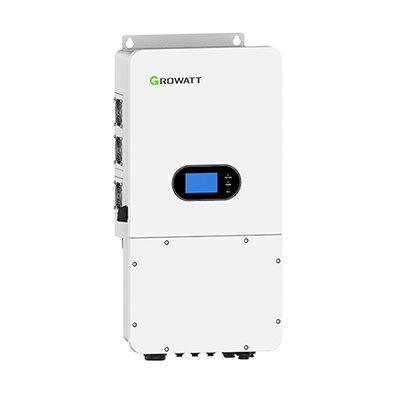
Instaladores comerciais em todo o mundo muitas vezes utilizam soluções de fabricantes estabelecidos, com Inversor Growatt produtos sendo um exemplo proeminente usado em aplicações comerciais e industriais devido ao seu suporte de monitoramento avançado e designs escaláveis.
Erros comuns que as empresas cometem ao planejar um sistema solar de 100 kW
Erros comuns e soluções recomendadas
| Erro | Conseqüência | Solução recomendada |
| Ignorando perfil de carga | Menor autoconsumo e redução de poupança | Realize uma auditoria energética antes do projeto do sistema |
| Subestimando a estrutura do telhado | Custos adicionais de engenharia ou atrasos na instalação | Realizar avaliação estrutural antes da aquisição |
| Superdimensionamento de baterias | Despesas de capital desnecessárias | Dimensione o armazenamento de acordo com as necessidades reais de backup |
| Escolhendo apenas equipamentos de menor custo | Maiores custos de degradação e manutenção | Priorize o comprovado, fabricantes financiáveis |
| Negligenciando a expansão futura | Modificações dispendiosas do sistema posteriormente | Projete com capacidade de expansão em mente |
Estudo de caso:
Um armazém de distribuição consome cerca de 450 kWh de eletricidade diariamente. A demanda ocorre principalmente em 8 sou. Entre as horas de 6 sou. e 6 tarde, sistemas de iluminação, equipamento transportador, ventilação, e as operações de escritório estão operacionais.
Os engenheiros recomendaram um 100Sistema solar híbrido KW, em vez de um conectado à rede, depois de verificar o perfil de carga da instalação. Cada ano, o armazém sofreu várias interrupções curtas na energia elétrica, causando atrasos e problemas de estoque.
O projeto final consistiu em um painel solar de 100kW juntamente com um sistema de armazenamento de energia da bateria de ~250 kWh capacidade. As baterias foram dimensionadas para suportar cargas críticas durante interrupções e para diminuir os picos de demanda no final da tarde.
Após a instalação, o negócio aumentou seu autoconsumo solar, resiliência energética, e reduziu seu custo de compras em períodos de pico. O sistema foi projetado com capacidade extra de inversor para ampliações posteriores com as atividades do armazém.
Conclusão
A 100 O sistema solar kW funciona melhor quando o projeto corresponde à sua carga, Espaço no telhado, tarifa, e alvo de energia de backup. Para um orçamento confiável, compartilhe suas contas de eletricidade, fotos do site, e requisitos de bateria com HBOWA.
Produtos solares para o seu projeto
 Painéis Solares |  Sistema solar Sistema solar |  C&Armazenamento de bateria |
Perguntas frequentes
Certamente. Um sistema solar bem estruturado com tamanho de 100KW pode reduzir efetivamente os encargos de demanda comercial, controlando a quantidade de eletricidade proveniente da rede.. As empresas com alto consumo diurno podem ganhar mais, com geração solar com armazenamento de bateria complementando-o para um barbear máximo.
Em projetos comerciais, sim! Uma avaliação estrutural confirma que o telhado pode suportar com segurança o peso dos painéis solares, estruturas de montagem, assim como o vento, neve, e outras cargas externas. Edifícios industriais e armazéns mais antigos exigirão esta avaliação.
Certamente. Várias empresas criaram um sistema solar de 100 kW para compensar a eletricidade que utilizam para carregar veículos elétricos. Reunir tecnologia solar com carregadores EV pode ajudar a reduzir custos operacionais e cumprir metas de sustentabilidade.
Não, de jeito nenhum! O tamanho do sistema deve refletir o consumo real e projetado de eletricidade, espaço de instalação, e código de grade.
Sim, com algumas condições óbvias, eles são adequados para projetos sensíveis ao orçamento se tiverem sido submetidos a testes profissionais e verificação de desempenho, e os compradores devem sempre revisar a cobertura restante da garantia dos módulos, níveis de degradação, e documentação de certificação antes de comprar para aplicações comerciais.
Painéis solares comerciais geralmente têm garantias de desempenho de 25-30 anos. Inversores e baterias podem precisar de substituição mais cedo, dependendo da qualidade do produto, temperatura operacional, ciclismo e manutenção.
Planeje por cerca 500-900 m2, ou 5,400-9,700 sq ft, de área útil de telhado sem sombra. O layout final depende do tamanho do painel, contratempos, caminhos de acesso e código local.
O retorno geralmente varia de vários anos a mais de dez anos. Preço da eletricidade, autoconsumo, custo instalado, incentivos, poupança e financiamento sob demanda determinam o resultado final.