Introdução
A decisão mais importante que você tomará no caso do projeto do seu sistema de energia solar é escolher a tensão correta do inversor.; escolhendo entre um 12V inversor, um 24V inversor, ou um inversor de 48V determinará a eficiência, tamanhos de fio, custos, e segurança. Em 2025, fazer uma comparação de tensão do inversor é vital para descobrir quais inversores oferecem desempenho confiável como sistemas solares tornar-se cada vez maior e integrado com soluções cada vez mais avançadas de armazenamento de energia LiFePO4. Exploraremos quais são as diferenças entre cada tipo de inversor, usando dados comprovados, insights de especialistas, e a experiência da HBOWA no fornecimento Dizer e Inversores Growatt em todo o mundo.
Noções básicas de tensão do inversor
Todo sistema solar começa com corrente contínua(CC) energia fornecida pelos painéis solares e baterias. A corrente alternada (AC) pode ser utilizado para seus equipamentos domésticos e industriais. Os números: 12V, 24V, 48V indique o tensão do banco de baterias em que o inversor deve funcionar e não a tensão CA fornecida aos nossos aparelhos.
Poder(C) = Tensão(V) × Atual(A) é o que define o poder, tensão, e atual. Sistemas de baixa tensão como 12Inversores V vs 24V geralmente são vistos em menores Sistemas solares fora da rede aplicações como RVs e barcos. Outros inversores utilizados na maioria dos casos são bombas de calor solar de 48 volts em residências., comercial, e sistemas industriais que exigem maior eficiência e fluxo de corrente reduzido com cargas mais altas.
Tensão mais alta permitirá reduzir a corrente e será mais fácil transmitir a mesma potência com menos perda de energia. Os avançados sistemas de bateria LiFePO4 da HBOWA podem suportar 12V, 24V, e 48V. Então, eles são compatíveis com Dizer e Inversor Growatt soluções para suas necessidades energéticas.
Como 12V, 24V, e inversores de 48 V funcionam em sistemas solares
O inversor é um produto de quatro componentes que formam o sistema completo: painéis solares, um controlador de carga, um banco de baterias, e o inversor que transforma a corrente contínua (CC) energia armazenada nas baterias em corrente alternada (AC) energia que alimenta cargas. A conexão normalmente é feita na seguinte ordem: Painel solar → Controlador de carga → Bateria → Inversor → Carga.
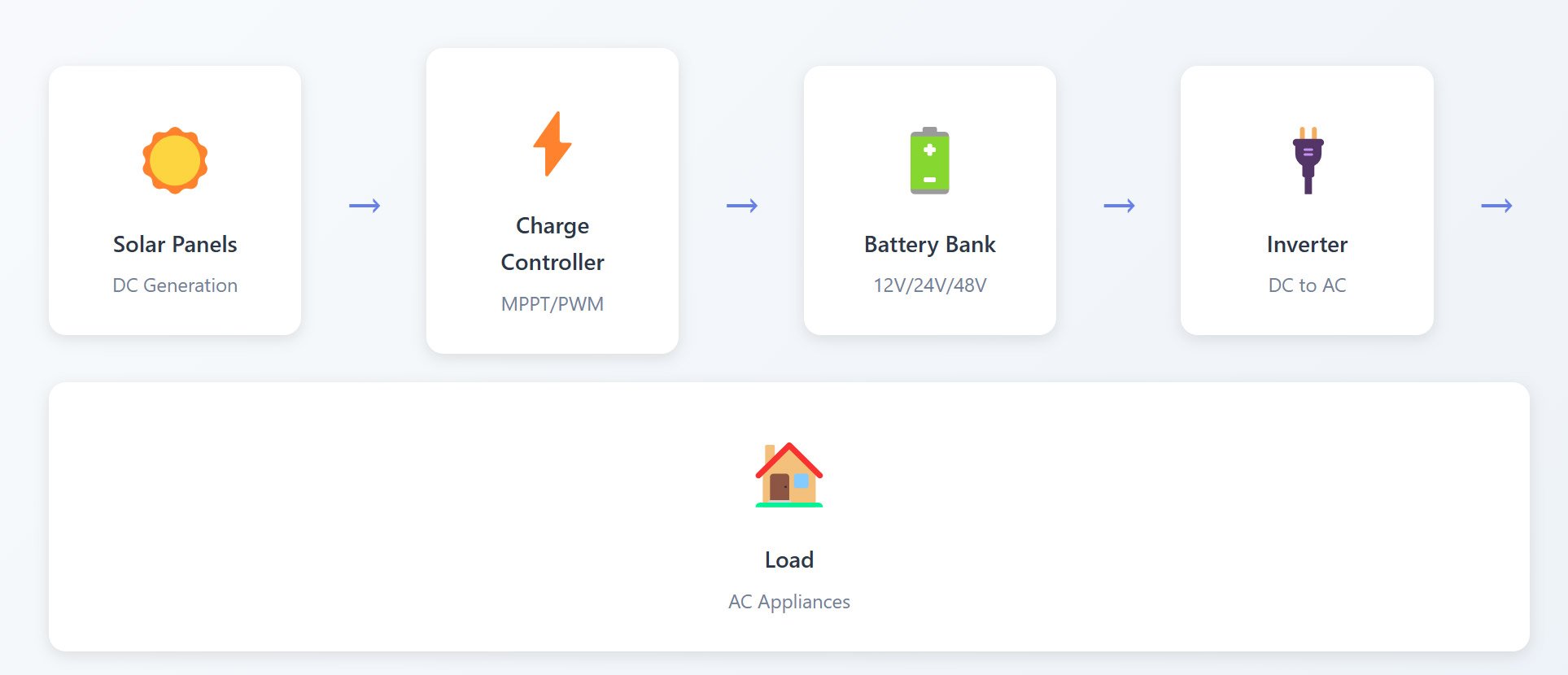
Os diferentes tipos de sistemas solares utilizados de acordo com a tensão incluem:
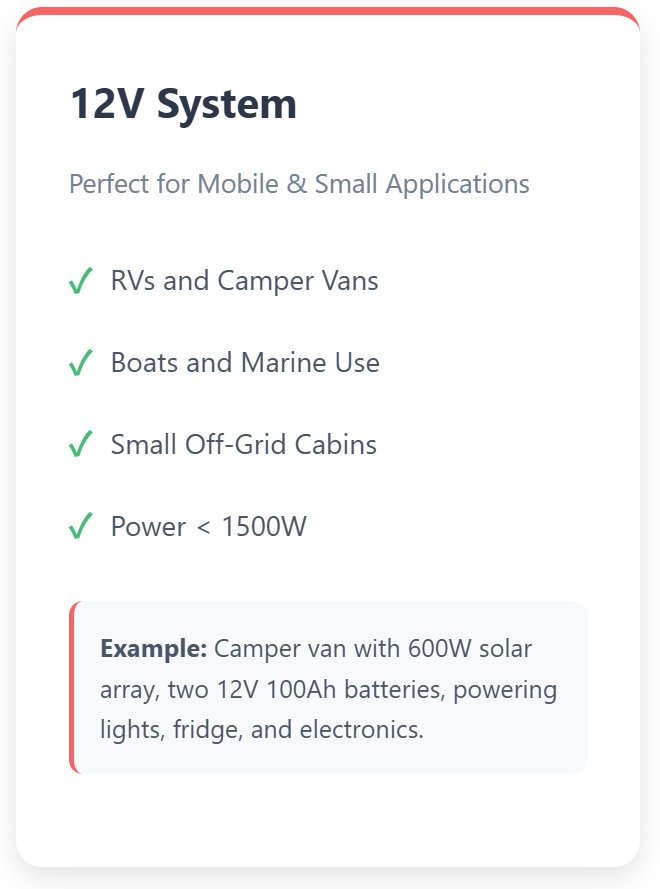
- 12V Sistema Solar: Um sistema solar de 12 V é usado para pequenas aplicações, como um RV, barco, ou uma cabana remota. Este sistema solar é fácil de configurar, é econômico, mas tem uma capacidade menor, portanto, não pode ser usado para alimentar aparelhos de alta potência.
- 24Inversor V: Um inversor de 24 V é usado para sistemas de tamanho moderado, como uma casa fora da rede, uma fazenda, um armazém, uma oficina, um pequeno edifício comercial, etc.. Este sistema minimiza a perda de energia presente em um 12V System e também auxilia em ligações mais longas com queda de tensão reduzida.
- 48V Inversor Solar: Um inversor solar de 48 V é altamente utilizado em aplicações de grande uso, como fazendas, fábricas, grandes sistemas solares residenciais, etc.. Esse 48V Sistema solar é preferido porque é eficiente com cargas maiores e requer menos corrente, portanto, é mais confiável e tem melhor desempenho.
As marcas de inversores solares usadas nesses tipos de inversores avançados incluem Dizer, Growatt. As baterias do HBOWA são usadas junto com inversores solares e, assim, fornecem Baterias LiFePO4 que trabalham com tecnologias avançadas de energia solar/inversora. A marca continua sendo o fator de conexão para fornecer escalabilidade HBOWA para residências movidas a energia solar, comercial, e saídas industriais dos mercados globais.
Eficiência Energética e Transmissão de Energia Explicada
Os sistemas solares eficientes e a transmissão de energia dependem de um nível de tensão, onde existe uma ligação direta entre os dois. Se a corrente aumentar, as perdas de energia também aumentam exponencialmente devido à resistência. O princípio básico da eficiência energética é dado por P_perda = I²R. Quanto maior a corrente, causa mais do que calor, e assim, é um desperdício de energia.
A característica importante que o 48Inversor de energia V DC para AC possui é, ele opera em uma tensão mais alta para produzir corrente mais baixa, o que diminui as perdas. A diferença que o sistema de energia solar de 5.000 W demonstra explicitamente é,
Por exemplo, enquanto trabalhava em um sistema de energia solar de 5.000 W, ;
- No 12V, aproximadamente 416Aa corrente pode passar;
- No 24V, a corrente é quase 208A, e assim
- No 48V, apenas 104A é permitido fluir.
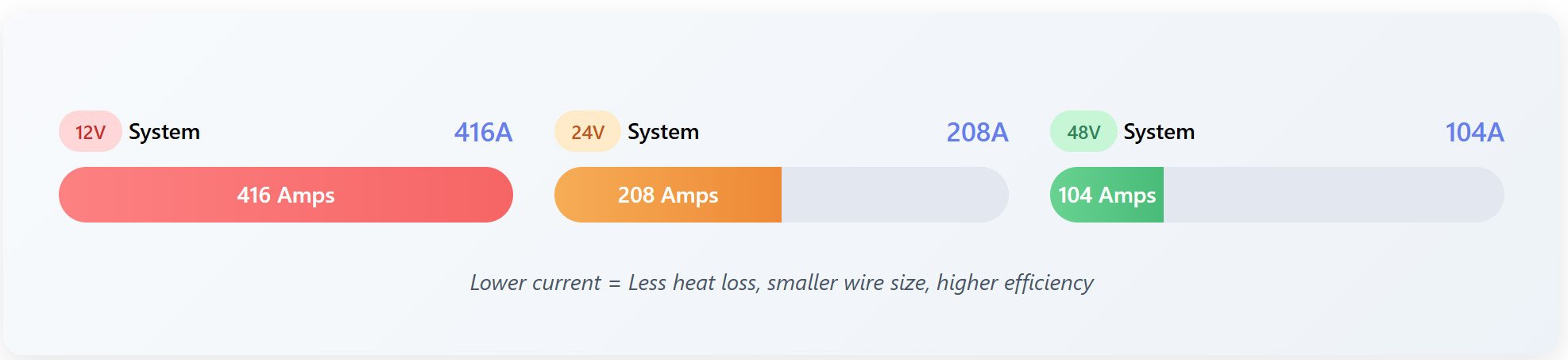
Então pode-se entender que quanto menor a corrente, quanto menor o tamanho do fio, e assim a perda de energia térmica diminui.
Os sistemas maiores que fazem uso de um 48V Sistema de energia solar mostram uma grande mudança em um cabo mais longo. Não só o 48-sistema de energia solar volts diminuir as perdas transmitidas, mas também melhora o desempenho do inversor. Também prolonga a vida útil dos componentes utilizados. Por isso, 48V sistemas de energia solar são os 2025 padrão para instalações solares médias e grandes como o 48V Sistemas de energia solar são menos caros, mais seguro, e manter confiabilidade superior em prazos mais longos para os usuários comerciais e residenciais.
Comparação Técnica
A tabela abaixo resume as principais diferenças entre 12V, 24V, e 48V sistemas baseados na eficiência de tensão, fiação, e escalabilidade.

Tensão é a eficácia dos sistemas que lidam com a movimentação de energia. À medida que a tensão aumenta, a eficiência também. Em um 12Bateria V vs 24V, o usuário está consumindo menos corrente. A corrente é reduzida pela metade, e para a mesma potência, o tamanho do fio pode ser menor, e o mesmo pode acontecer com o poder perdido. Painéis solares de um sistema 48V mostraram melhor estabilidade sob carga pesada e também fiação de longa distância. 24V painéis solares parece uma forma econômica, que fornece energia suficiente.
Qual tensão do inversor atende às suas necessidades?
A tensão do inversor é muito importante para os usuários do inversor e da energia solar. Escolha a voltagem depois de compreender cuidadosamente suas necessidades de energia e a escalabilidade da configuração que você planejou. O 12Inversor V vs 24V a comparação nos diz que inversores solares de diferentes valores de tensão são preferidos para diferentes tipos de usuários e sistemas.
Um usuário com um painel solar de 600 W em sua van prefere um 12V sistema de painéis solares porque escolher um inversor de 12 V evita problemas complexos de fiação e instalação. Pode-se usar um par de baterias LiFePO4 de 12 V para alimentar a iluminação, uma geladeira, e pequenos aparelhos eletrônicos com facilidade.
24V sistemas solares pode ser útil para residências fora da rede ou configurações de oficina, ou pequenos dispositivos solares. O usuário pode instalar uma bateria LiFePO4 24V 200Ah em conjunto com painéis solares e um 3kW Inversor deye em seu telhado para garantir a máxima produtividade.
É por isso que o fabricante HBOWA construiu a bateria para ser compatível com o inversor Deye. O inversor Deye possui uma unidade de potência de 3kW. 24A configuração V solar fornece uma entrada estável e é moderadamente eficiente na alimentação de dispositivos.
A 48V configuração solar é para usuários de energia solar que planejam fazer um sistema solar comercial ou agrícola em grande escala. 48Inversor híbrido V Growatt & 215kWh de bateria LiFePO4 são a combinação perfeita para armazenamento de energia e economia a longo prazo.


Hbowa fez com que o LiFePO4 modular se adaptasse a um sistema de 12V ou 24V, e o usuário pode mudar para um sistema solar de 48V sem fazer grandes alterações no hardware.
Custo, Eficiência, e Tabela de Comparação de Desempenho
A tabela a seguir mostra as tendências gerais de desempenho para 2025, com base nas previsões globais do mercado de inversores e na análise de custos do sistema solar.
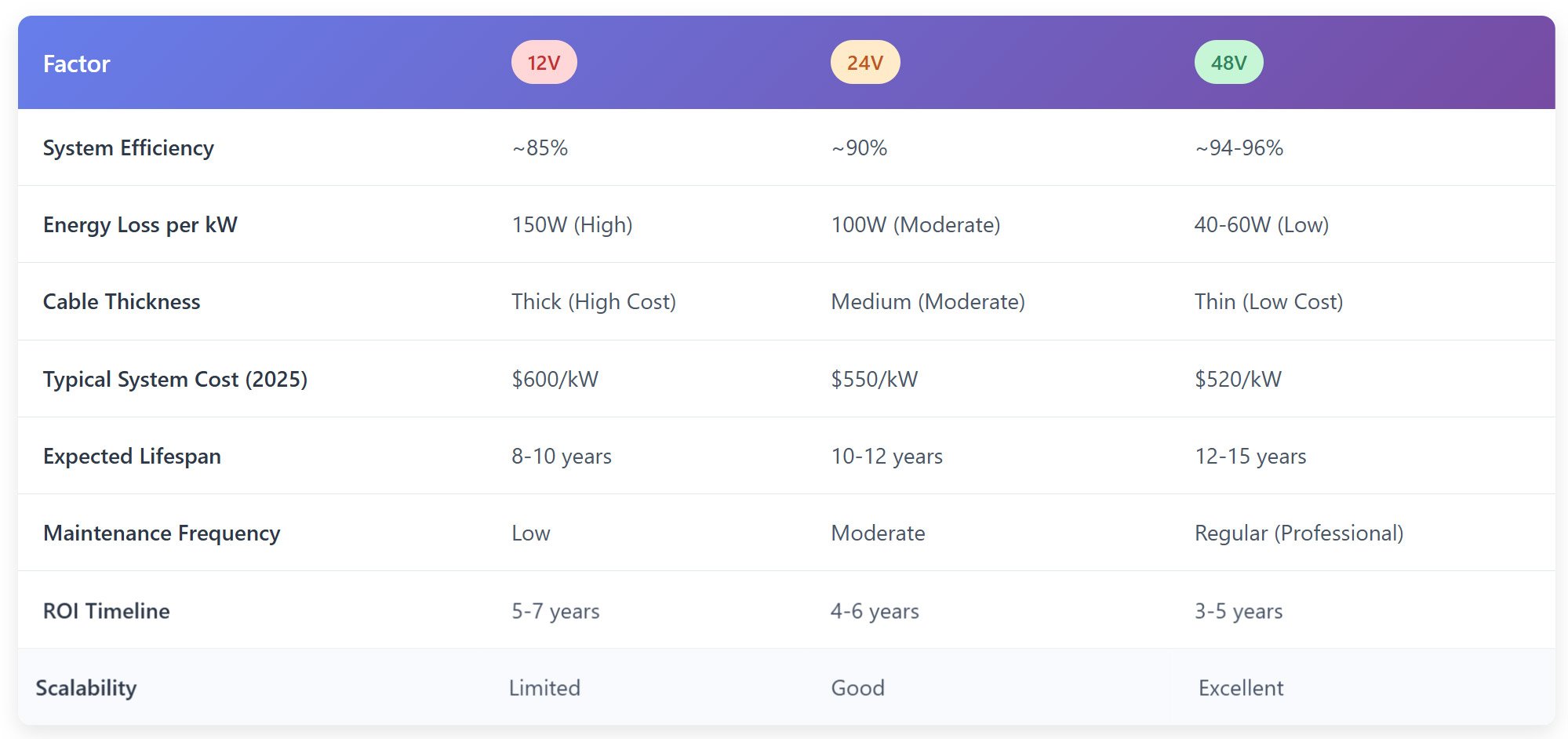

Sistemas de alta tensão, especialmente aqueles que usam um 48-tinha um inversor solar, tornaram-se cada vez mais populares. As perdas reduzidas na transmissão podem ser justificadas. Em comparação com 24-inversores de volts e 12-configurações de volts, 48Inversores V espera-se que sejam a opção dominante de dispositivos solares de médio e grande porte até 2025, com o maior rendimento do investimento.
Como a tensão afeta o dimensionamento da bateria e do painel solar
A tensão de um inversor decide a configuração de baterias e painéis solares em um sistema. A tensão do inversor deve corresponder à configuração do painel solar e da bateria para funcionar corretamente. Por um 12V inversor, a bateria e os painéis solares são de 12V. Os painéis solares são conectados à bateria através de um controlador de carga PWM.
O 48V bateria solar a configuração é melhor, pois garante um carregamento mais eficiente e também reduz drasticamente a transferência de calor durante a descarga em alta corrente. Esses sistemas usam 48V baterias LiFePO4, que carregam e duram mais.
De acordo com o AIE (PVPS) relatório, o mercado global de energia solar fotovoltaica, junto com o armazenamento correspondente, aumentou muito. O custo da eletricidade aumentou, o que aumenta a necessidade de energia solar para todos os nossos propósitos. O crescimento global do mercado solar fotovoltaico. O mercado de armazenamento residencial continua se padronizando por um 48V Sistema solar.
O 48V painel solar, quando emparelhado com o 48V híbrido ou inteligente inversores, como os de Dizer ou Growatt, atua como um sistema ideal emparelhado com tensão. HBOWA projetou o modular Baterias LiFePO4, garantindo a compatibilidade de sistemas 48V e inversores de qualquer tensão. A HBOWA está fabricando esses sistemas de bateria para os setores residencial e industrial. Eles não requerem controladores adicionais e não há necessidade de religação ao alterar a tensão da bateria.
2025 Insights de mercado e previsão de tecnologia
Por 2025, a perspectiva global mudou para sistemas solares de alta tensão. Pesquisadores e profissionais de mercado sugerem que o 48V sistemas solares capturaram grandes vendas de novos inversores em mais de 5 instalações de kW no início deste ano. Expansão de veículos elétricos, configurações de energia fora da rede, tais recipientes escaláveis de armazenamento de energia são as razões para este aumento na demanda.
Há uma necessidade de menores perdas de transmissão e desempenho consistente com sistemas cada vez maiores de tensão mais alta. Com os painéis solares de 48 volts e os inversores, é essencial igualar a eficiência do rastreador MPPT. Houve muito avanço tecnológico.
A plataforma do inversor híbrido será integrada com excelentes controladores MPPT, e além disso, a próxima geração Painéis solares da Topcon do tipo n, o que ajudará a aumentar o rendimento em 3-5% anualmente. Dizer, Growatt são as marcas mais populares de 48Inversores V, que são altamente eficientes e também disponíveis a preços acessíveis para fins residenciais e comerciais. HBOWA fornece módulos Baterias LiFePO4 e Painéis solares de nível 1 de Longo, Longo, Trina, e Jinko. Todos esses suprimentos fornecem painéis solares e baterias, que são compatíveis com o sistema híbrido e ligado à rede.
Estudos de caso da vida real
Nas Filipinas, uma casa rural fica totalmente fora da rede elétrica 3 kW-Growatt 24 V inversor junto com um HBOWA 10 Bateria LiFePO4 kWh. Tem necessidades diárias de energia, como uma área fora da rede. Por causa desta solução completa fora da rede, tem um 40% custo mensal de energia mais barato para esta casa.
Em um hotel australiano, um 48Inversor híbrido V Deye é usado, juntamente com um 215 Unidade de armazenamento de energia kWh HBOWA e Painéis solares ressuscitados. Conseguiu até 95% autossuficiência no poder, e eles reduziram a dependência da rede e reduziram enormemente as contas de serviços públicos.
Na África, um projeto agrícola foi realizado exclusivamente fora da rede, usando um 50Inversor solar KW conectado a um 215 Sistema de armazenamento de energia kWh HBOWA. Esta instalação ajudou a fornecer energia a várias bombas de irrigação e armazenamento frigorífico com a ajuda desta solução off-grid. Isso reduziu o consumo de diesel e diminuiu a poluição do ar devido a tantos geradores a diesel funcionando continuamente. Esses estudos de caso mostram quanto lucro e melhor implementação poderiam ser obtidos usando um sistema moderno 48V inversor em residencial, comercial, e áreas industriais em todo o mundo.
Escolhendo o inversor e a marca certa de bateria
Quando você escolhe um inversor, você simplesmente não olha o preço, mas também no desempenho técnico. Os fatores mais importantes são a classificação de eficiência, carga contínua, MPPT faixa de tensão, e escalabilidade do sistema. Um produto de alta qualidade 48Inversor de potência V ou 48Inversor de energia V DC para AC significa que a conversão é mais estável, e funciona melhor sob uma carga pesada.
Deye possui fortes recursos de controle híbrido e suporte global, tornando-o perfeito para projetos comerciais e de rede. Growatt tem alta eficiência de rastreamento MPPT e é altamente confiável para projetos residenciais e comerciais leves. Ambos os fabricantes têm confiabilidade comprovada para 48Inversores V e são altamente compatíveis com sistemas solares.
Combine-os com uma bateria HBOWA LiFePO4 para um sistema duradouro, enquanto Longi, Trina, e painéis solares Risen fornecem geração de energia consistente. Empresas e instaladores podem adquirir produtos HBOWA diretamente a preço de atacado e obter configurações profissionais para garantir uma configuração grande e eficiente.
Conclusão
A decisão final de comprar um 12V inversor, 24V inversor, ou 48V inversor depende dos requisitos do usuário para carga, custo, e eficiência. Geralmente, as pessoas usam 12 V para sistemas menores que você pode carregar em seus trailers e unidades de 24 V para sistemas domésticos em um ponto ideal entre desempenho e custo. Para sistemas maiores, o sistema 48V é melhor, pois fornece a solução mais econômica e eficiente para grandes projetos. HBOWA suporta instalações em todas as configurações com baterias LiFePO4 de qualidade, Deye e Inversores Growatt, e nível 1 painéis solares para sistemas completos que funcionam de forma eficiente e geram economia e retorno por muito tempo.