

Calculadora de densidade de energia da bateria
Use valores medidos ou de folha de dados para o mesmo limite de bateria. Este resultado suporta comparação e estimativas preliminares de embalagem.
Introdução:
Densidade de energia da bateria indica quanta energia uma bateria pode conter em relação ao seu “peso(kg)” e “volume(eu)”. Geralmente, expressamos em Wh/Kg ou Wh/L. A métrica ajudará a esclarecer quanto armazenamento pode ser contido em uma massa. Só porque uma bateria tem maior densidade de energia não significa que seja melhor.
O que é densidade de energia da bateria?
O definição de densidade de energia da bateria é bastante simples: descreve a quantidade de energia elétrica armazenada disponível dentro de uma bateria em relação à sua massa. O termo é usado em sentido amplo, mas dois deles são particularmente úteis: a energia específica em Wh/kg, e a densidade de energia volumétrica em Wh/L. A Agência Internacional de Energia refere-se à densidade de energia como um termo geral para a energia armazenada por unidade de massa ou volume e distingue entre estas duas medidas na sua análise de bateria.
A medição inicial é de energia gravimétrica ou específica. Indica a quantidade de energia que pode ser armazenada por cada kg de bateria. Quando o peso é uma restrição importante, como em veículos elétricos ou outros equipamentos móveis, isso é importante.
O segundo valor é uma densidade de energia volumétrica, o que explica quanta energia é armazenada no volume da bateria, geralmente medido em watt-hora por litro (Wh/l). É mais preocupante quando há espaço limitado para instalação.
Duas baterias podem fornecer a mesma energia nominal, mas ocupar espaços diferentes ou ter massas diferentes. Embora pudessem ter a mesma capacidade, deles significado para densidade energética é diferente. Em termos de armazenamento solar, comparar projetos físicos de baterias pode ajudar a compreender a densidade de energia pode ajudar, embora deva sempre ser tomado em combinação com a capacidade, capacidade de energia, segurança, ciclo de vida, e outros requisitos de aplicação
Fórmula de densidade de energia da bateria: Como calcular
O fórmula para a densidade de energia da bateria depende se a comparação é sobre a massa ou sobre o volume. Para densidade de energia gravimétrica, a energia armazenada na bateria é dividida pela massa da bateria. É expresso em Wh/kg. Para densidade de energia volumétrica, a energia armazenada é dividida pelo volume correspondente da bateria. É expresso em Wh/L.
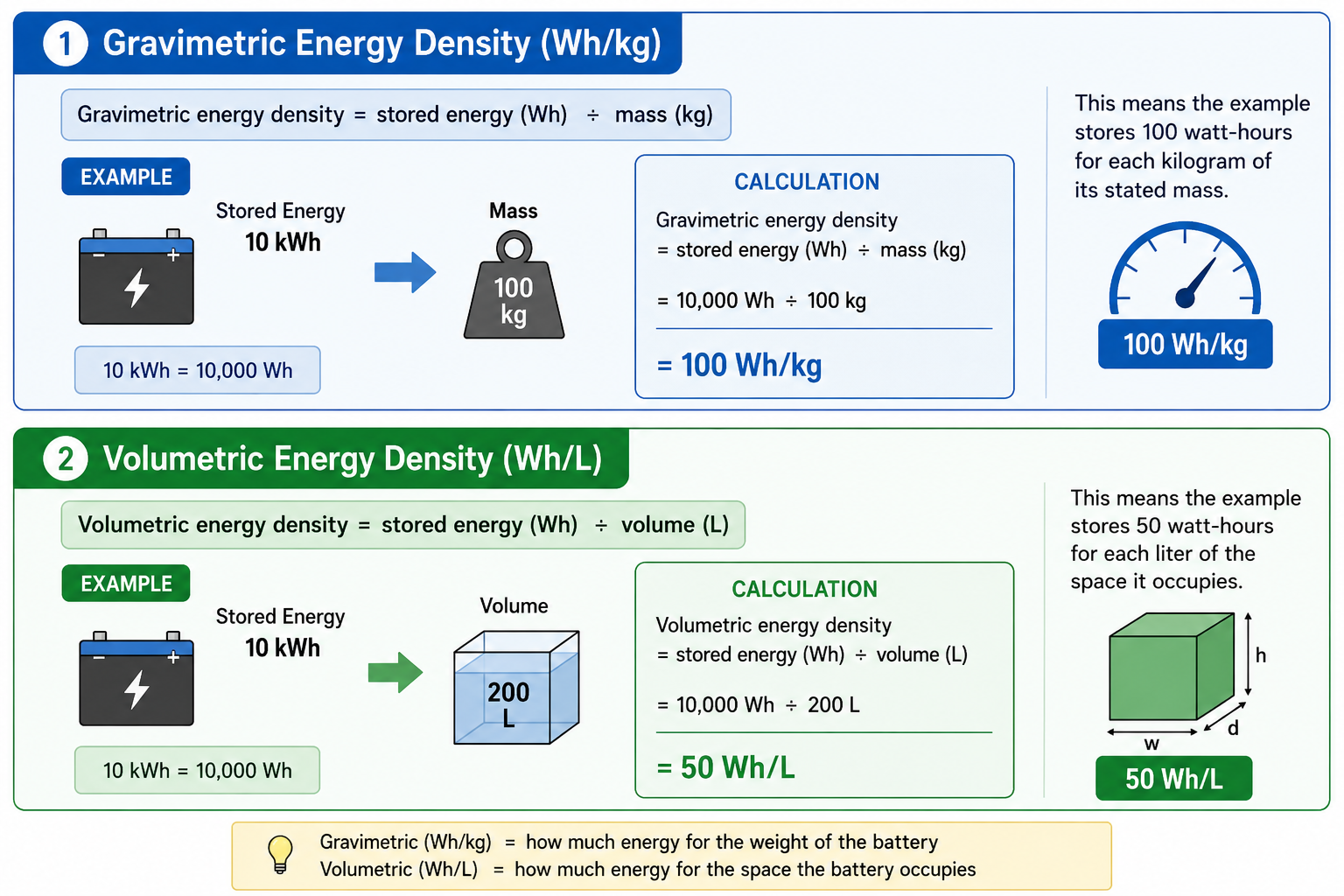
Gravimétrico vs.. Densidade de Energia Volumétrica
Densidade de energia gravimétrica e densidade de energia volumétrica são duas maneiras de expressar o mesmo conceito. Eles são a razão entre a quantidade de energia armazenada em um sistema e sua massa e volume., respectivamente. Como podemos ver, o numerador de ambos os indicadores é o mesmo, no entanto, a diferença é como expressamos o denominador.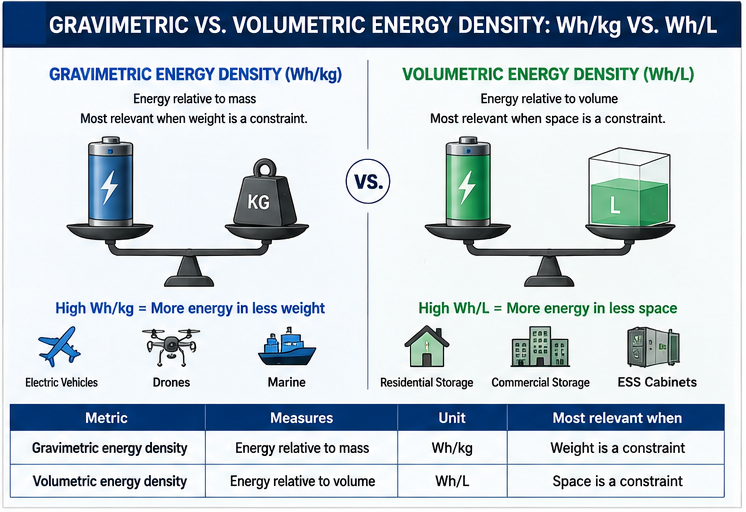
Densidade energética é expresso como W/kg assim como Wh/l. Uma bateria com alta densidade de energia Wh/kg pode ser útil quando houver necessidade de reduzir o peso de uma bateria. Uma bateria com alta densidade de energia Wh/L pode ser mais útil onde há falta de espaço para instalar uma bateria.
Algumas instalações solares podem preferir quanto espaço físico uma bateria ocupa em vez de seu peso. Em alguns aplicativos móveis, no entanto, sua massa é mais importante. Observe que baterias com alta densidade de energia Wh/kWh ou densidade de energia Wh/m3 são desejadas.
Por que a densidade de energia da bateria é importante?
O densidade de energia da bateria é significativo porque determina quanta energia pode ser armazenada em um determinado peso ou espaço físico. Quando existem tamanhos ou pesos fixos, maior densidade de energia permite armazenar mais independentemente da massa ou volume, que foram aumentados na proporção correspondente.
Em veículos elétricos, a menor massa da bateria pode suportar melhor eficiência do veículo e carga útil. Em instalações com restrições de espaço, o aumento da densidade volumétrica nos permite obter mais capacidade de armazenamento em um espaço menor.
Quando o equipamento precisa se adequar a uma restrição física ou estrutural específica, essa preocupação é importante ter. Mas a densidade energética não deve ser tomada isoladamente como medida da qualidade da bateria bateria de alta densidade de energia pode não ser o pneu certo para muitas circunstâncias. O comprador também deve considerar a energia utilizável, capacidade de energia, ciclo de vida, segurança, desempenho térmico, condições de operação, custo, e requisitos do sistema.
Maior densidade de energia é uma vantagem, mas não uma bateria melhor, para ter certeza. Um sistema estacionário de armazenamento de energia pode aceitar uma pegada física maior se outro, a química da bateria mais adequada pode sustentar mais ciclos de carga-descarga ou possui características operacionais que melhor se adequam ao projeto.
A densidade de energia também não indica quanto tempo uma bateria leva para descarregar. Isso é afetado pela energia armazenada e pela energia consumida. A densidade de energia é simplesmente o quão compacta é a energia armazenada em massa ou volume.
Densidade de energia da bateria por química: LFP, NMC e outros
Densidade de energia da bateria depende da química da bateria. Uma das outras propriedades que determinam a escolha da química é a densidade de energia. A química do fosfato de ferro-lítio ainda tem uma densidade de energia mais baixa em comparação ao níquel, manganês, e química do cobalto. A IEA relata exemplos que incluem um quinto menor densidade de energia gravimétrica e cerca de um terço menor densidade de energia volumétrica no caso das baterias LFP em comparação com as baterias NMC.
No entanto, LFP tem presença significativa em armazenamento estacionário. Para 2025, a IEA relata ainda que a LFP compôs sobre 90% da capacidade global de armazenamento de baterias estacionárias. A LFP não pode, por isso, ser relegado a um segundo plano, apesar de sua baixa densidade de energia, quando outras propriedades e necessidades do sistema são importantes.
Comparar os números de química com química também requer uma linguagem cuidadosa devido aos números atuais no nível da célula. As novas células LFP podem atingir 205 W/kg em comparação com células NMC, que alcança até 265 W/kg, e células de íon sódio alcançam 175 Wh/kg máximo. Esses números são números de células em nível de tecnologia e não números universais para uma bateria inteira ou sistema de armazenamento de energia.
Portanto, Densidade de energia LiFePO4, Densidade de energia NMC, e outros números químicos só devem ser comparados quando o nível de medição e a base de teste forem os mesmos. Um número no nível da célula não deve ser apresentado como a densidade de energia de um sistema de bateria completo.
Densidade de Energia vs.. Capacidade, Densidade de potência e energia utilizável
Densidade de energia da bateria é comumente confundido com capacidade ou energia da bateria. Estas especificações descrevem diferentes recursos que não devem ser trocados. Capacidade da bateria é a quantidade de energia que ele armazena, normalmente medido em kWh. A densidade de energia explica quanta energia é armazenada em relação à massa ou volume.
Por exemplo, duas baterias podem ser classificadas em 10 capacidade kWh, mas têm tamanho físico ou peso diferente. Embora ambos sejam capazes de reter a mesma quantidade de energia, eles fazem isso com diferentes densidades de energia.
Potência é a rapidez com que a energia pode ser entregue. Geralmente é expresso em quilowatts. A distinção entre densidade de energia e densidade de potência é importante. Densidade de energia é a razão entre energia armazenada e massa ou volume, enquanto a densidade de potência se refere à produção de potência por unidade de massa ou volume.
A energia utilizável é uma métrica diferente. A capacidade nominal de uma bateria não é necessariamente a que está disponível para uso normal. A parcela que pode ser utilizada é função do DoD, limites operacionais, controles do sistema, e outras considerações.
| Especificação | Diz a você | Não te conta |
| kWh | Energia armazenada | Compacidade física |
| kW | Capacidade de energia | Energia armazenada |
| W/kg | Energia em relação à massa | Somente capacidade total |
| Wh/l | Energia em relação ao volume | Capacidade de energia |
| Departamento de Defesa | Parte utilizável da capacidade | Densidade energética |
Densidade de energia da bateria em baterias solares, Armários ESS e BESS
À medida que passamos de uma bateria para um sistema completo de armazenamento de energia, densidade de energia da bateria assume maior importância. O tamanho físico e o peso de um bateria solar doméstica pode limitar a colocação da unidade, enquanto a capacidade de uma bateria residencial determina quanto armazenamento o sistema possui.
Quando visto no nível do sistema, é mais complicado. Um sistema de armazenamento de energia pode compreender células e módulos de bateria juntamente com um BMS, recinto, Conexões elétricas, equipamento de refrigeração, dispositivos de proteção, e outros componentes. Por isso, a densidade de energia no nível da célula não deve ser tratada como a densidade de energia de todo o sistema.
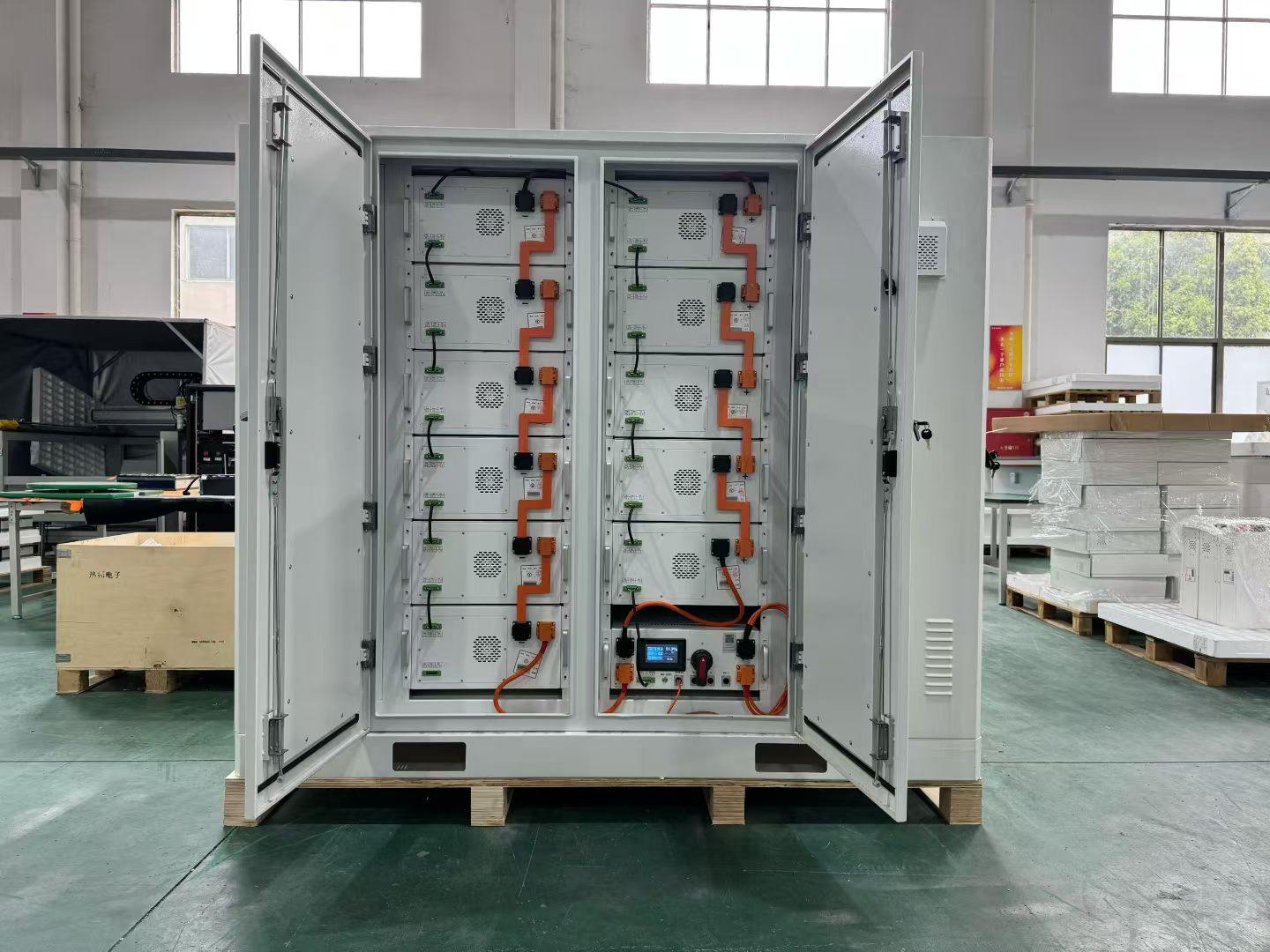
O mesmo princípio se aplica a um armário de armazenamento de energia. A capacidade de armazenamento utilizável deve ser considerada juntamente com as dimensões físicas, massa, arranjo de resfriamento, equipamento de proteção, e outros componentes integrados do gabinete. Para um maior sistema de armazenamento de energia da bateria (Bess), o limite de medição pode incluir racks, equipamento de gerenciamento térmico, equipamento elétrico, equipamento de segurança, e o recipiente.
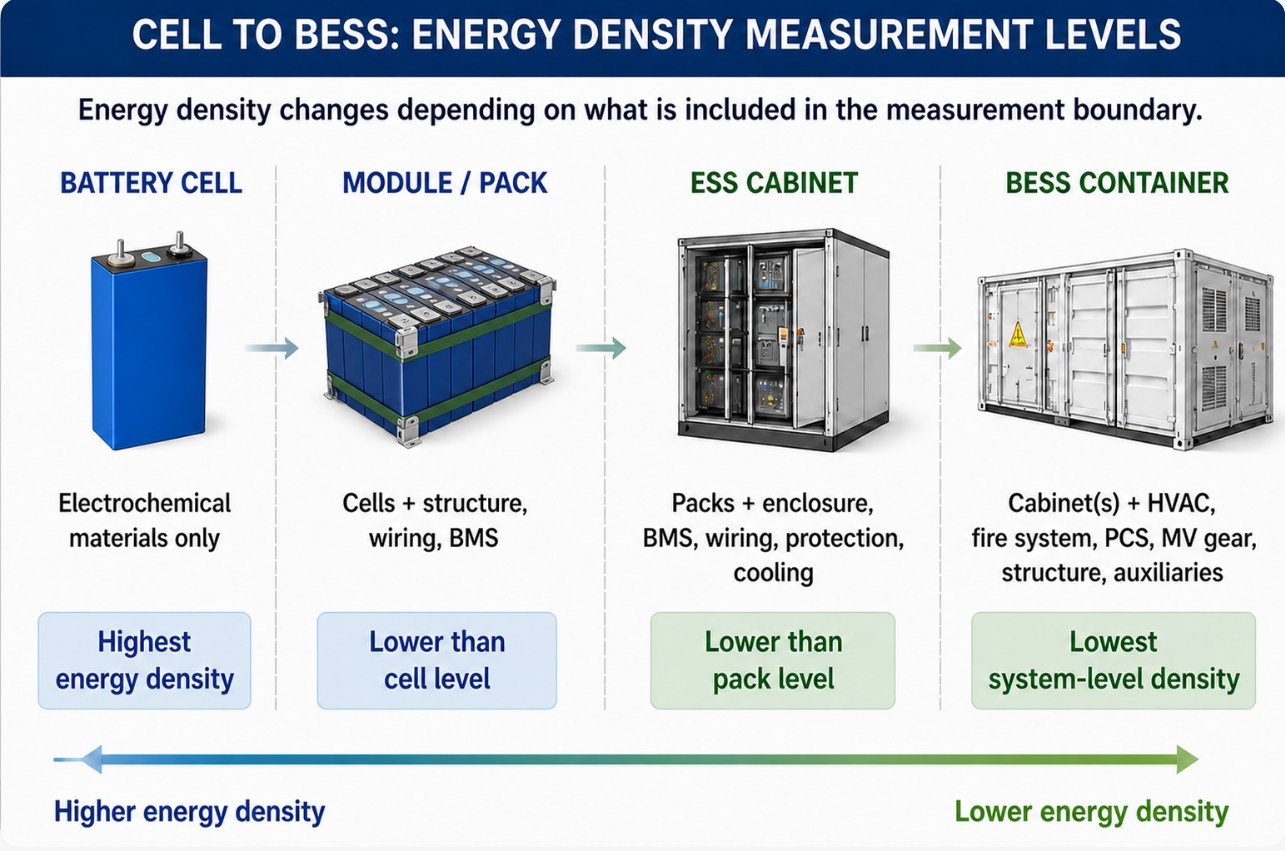
Ao avaliar um completo Sistema de energia solar, isso é importante. Uma bateria com alta densidade de energia no nível da célula pode levar a um sistema instalado com uma relação massa-capacidade ou volume-capacidade diferente.
Exemplo de HBOWA do mundo real: Por que 576 kWh não significa 576 W/kg
Um grande projeto comercial explica por que densidade energética e capacidade de armazenamento não significam a mesma coisa. O sistema de armazenamento de energia utilizado pela HBOWA para um projeto na Malásia é um 200 kW / 576 kWh LiFePO₄ sistema. Este sistema está sendo implantado para uso comercial e industrial Pico de barbear. De acordo com as informações publicadas do projeto, um 200 inversor híbrido kW, resfriamento de ar, proteção contra incêndio, e um sistema EMS fazem parte do projeto, que inclui 36 16 baterias kWh.
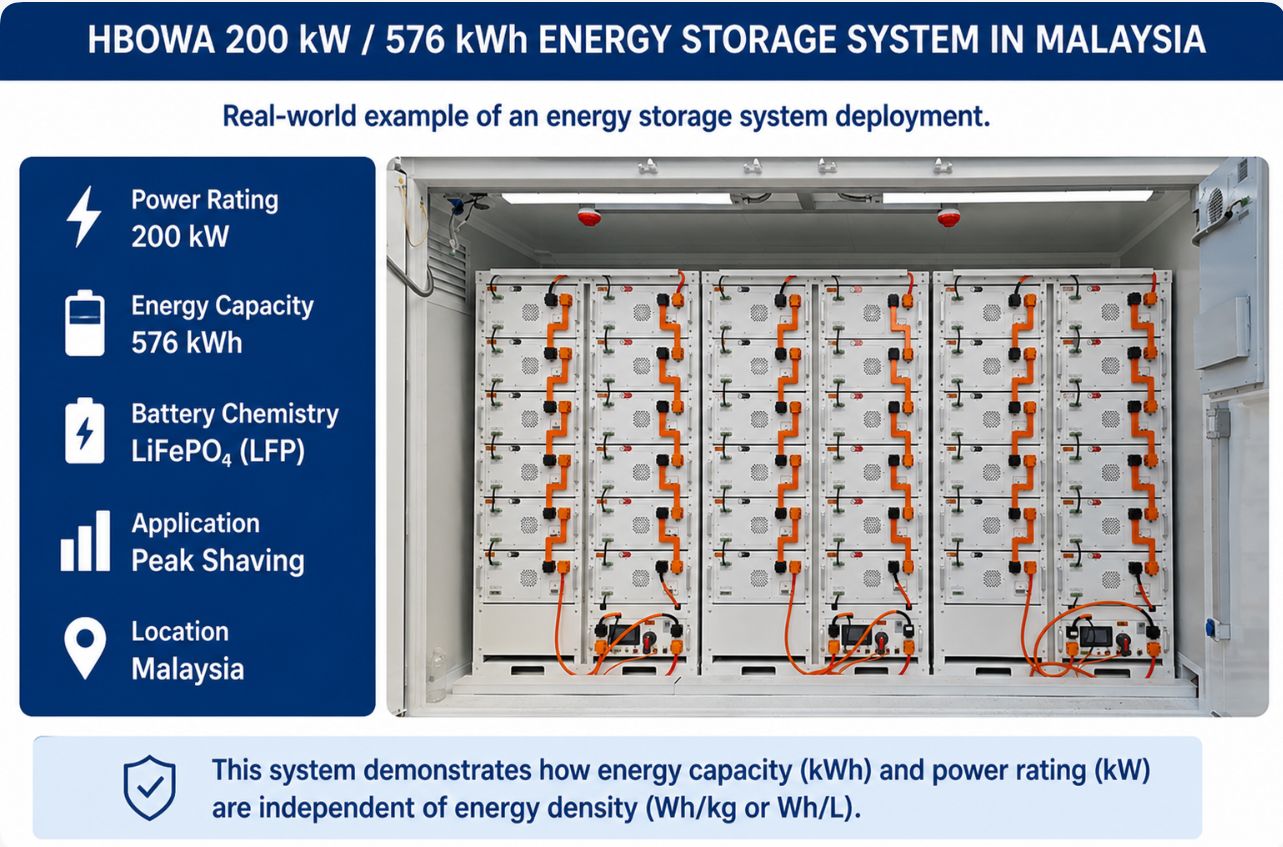
O que importa é que o 576 kWh refere-se à capacidade de energia especificamente, não densidade de energia. Indica a energia elétrica sobre a qual o mecanismo do circuito é construído. Não nos informa a energia armazenada por quilo ou por litro ou algo parecido.
A determinação de Wh/kg no nível do sistema requer a massa relevante do sistema. Para calcular Wh/L, também precisaríamos definir o volume do sistema. Esses limites deverão abranger os elementos pertinentes à comparação.
Este exemplo segue uma regra simples. O kWh informa quanta energia o sistema pode armazenar. O Wh/kg ou Wh/L informa o quão compacta é a energia armazenada, por massa ou volume. Um BESS mais massivo não é inerentemente mais denso em energia.
Um segundo exemplo do mundo real: Capacidade, Poder e aplicação são diferentes
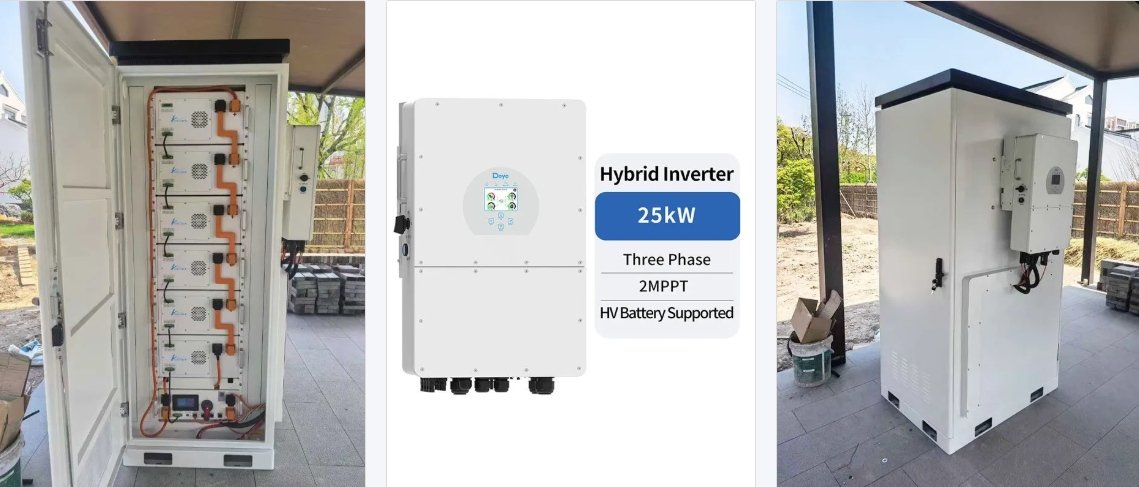
Outro projeto da HBOWA em Espanha exemplifica a distinção entre capacidade de armazenamento e energia. O sistema de armazenamento de energia apresenta uma capacidade projetada de 96 kWh com um inversor Deye de 25 kW para autoconsumo e backup. O 96 kWh é a energia “armazenada”; 25 kW é a potência nominal do inversor. Densidade de energia da bateria não pode ser descrito por nenhum deles sozinho. Requer que uma massa ou volume seja definido.
Como avaliar uma reivindicação de densidade de energia da bateria
Quando se trata de comparar um bateria de alta densidade energética, o número, em vez da classificação de desempenho, deve ser visto no contexto. Inicialmente, determinar se a especificação se destina a uma célula, módulo, bateria, ou sistema. Verifique se é fornecido em Wh/kg ou Wh/L, e que massa ou volume inclui no cálculo.
A comparação deve usar produtos químicos de bateria e condições operacionais semelhantes. Verifique se a capacidade indicada é nominal ou utilizável, e se tem capacidade de energia e ciclo de vida, junto com a segurança, custo, e uso pretendido do aplicativo.
O que é considerado uma boa densidade de energia da bateria? Nenhum valor é universalmente aceitável. O nível certo dependerá se a aplicação tem peso, espaço-, capacidade de armazenamento-, poder-, custo-, robustez-, segurança-, ou outros requisitos relacionados ao design. Uma comparação significativa de densidades de energia da bateria envolve mais do que comparar apenas um número.
Conclusão
O Densidade de energia da bateria indica sua capacidade de armazenamento em relação à massa ou volume. As respostas às questões de projeto feitas por Wh/kg e Wh/L diferem. Os valores alcançáveis são afetados pela química. Quando se trata de armazenamento solar, a medida de densidade de energia não deve ser considerada isoladamente; também incorpora capacidade, poder, energia utilizável, segurança, ciclo de vida, custo, e o sistema completo.
Perguntas frequentes
Duas baterias podem armazenar um total de 10 kWh, mas têm densidades de energia diferentes. Isto pode ser porque o 10 Bateria kWh com menor densidade de energia pode ter mais massa ou volume físico do que as outras. A densidade de energia refere-se à quantidade de energia armazenada por peso ou volume, enquanto a capacidade se refere apenas à energia total armazenada.
Nem um único valor de densidade de energia é ideal para cada bateria solar. residencial, sistemas comerciais e industriais precisam de espaço diferente, peso, capacidade, poder, requisitos de custo e operação. De acordo, a consideração de uma bateria adequada deve ser feita em relação a toda a aplicação e não apenas à densidade de energia.
A vida útil da bateria não é determinada diretamente pela densidade de energia. O ciclo de vida depende da química da bateria, o design da célula, a temperatura durante a operação, e as condições de carga e descarga. Também é afetado pela profundidade da descarga e pelos controles de gerenciamento da bateria. Uma bateria com maior densidade de energia pode, portanto, ter uma vida útil diferente de outro tipo, dependendo do seu design e condições de operação..
A densidade de energia no nível celular pertence apenas às células, enquanto um sistema de bateria completo consiste em um módulo, BMS, recinto, fios, resfriamento, e equipamentos de segurança. Com essas adições, eles aumentam a massa ou volume do sistema, de tal forma que a densidade de energia no nível do sistema pode ser menor do que no nível da célula.
Para ter certeza, mas apenas quando as especificações são medidas na mesma base. Examine a química da bateria, nível de célula ou sistema, Wh/kg ou Wh/L unidade de definição de capacidade, limite de massa ou volume, e condições de teste. Avaliar medições feitas através de diferentes métodos pode ser enganoso.

