Introdução
How many acres of solar panels to generate 1 megawatt? Uma fazenda de energia solar geralmente requer vários hectares de terra para um megawatt de energia. O land required for a 1 MW solar power plant depends on the efficiency of the panel, sistema de instalação, type of land where it is being installed, geographical and solar aspects, and spacing between panels.
How Many Acres Are Needed for a 1 MW Solar Farm?
A questão de how many acres of solar panels are required to generate 1 megawatt cannot have a single universal answer. Na maioria dos projetos comerciais, it typically falls within a range rather than a fixed figure because every site has different engineering requirements.
Geral, solar farm land requirement depends on the type of mounting system, the efficiency of the solar panels, local planning laws, and how much space is left for future maintenance access and electrical equipment.
Projects using fixed tilt structures usually require less land, unlike single-axis trackers that double the amount of space required to generate the same power. Irregular terrain, mandatory setbacks, and internal service roads also add to the total project footprint.
Instead of working on a fixed acreage, the developer should get a site assessment that includes module selection, solar resource availability, and layout optimization to come up with an accurate estimate and eliminate redesigns during permitting or construction.
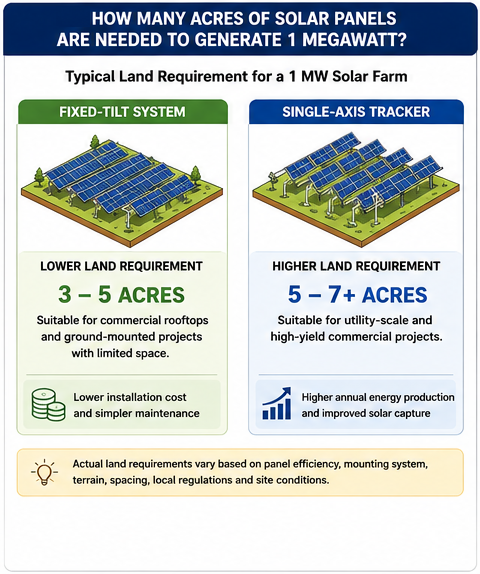
Typical Land Requirement for a 1 MW Solar Farm
| Tipo de sistema | Typical Land Requirement | Aplicação adequada | Vantagens |
| Fixed-Tilt Ground Mount | Lower land requirement | Commercial rooftops and ground-mounted projects with limited space | Lower installation cost and simpler maintenance |
| Rastreador de eixo único | Higher land requirement | Utility-scale and high-yield commercial projects | Higher annual energy production and improved solar capture |
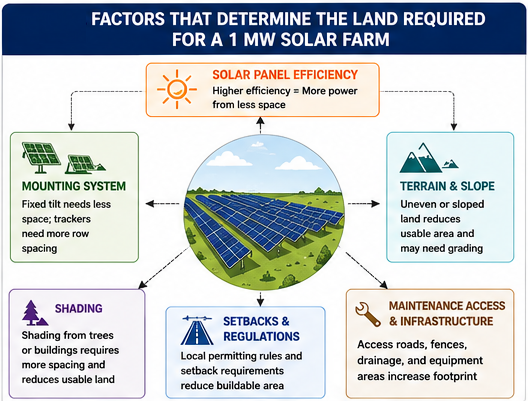
What Determines the Land Required for a 1 MW Solar Power Plant?
The size of a 1 MW solar power plant is dictated by engineering choices instead of simply counting panels. Employing appropriate equipment and creating an effective layout allows for efficient land use and sustained energy performance over time.
Solar Panel Efficiency
The amount of land needed for a 1 MW solar panel capacity is directly related to its efficiency. When solar panels are more efficient, fewer panels are required to generate the same output. Hoje Painéis TOPCon tipo N, por exemplo, tend to be more efficient with lower degradation compared to ordinary PERC technology.
Além disso, bifacial modules will also facilitate the capture of reflected sunlight to boost energy generation if conditions on site are suitable. Consequentemente, many commercial developers utilize high-performance ‘Tier-1’ solar panels to maximize energy density with limited land availability.
Estrutura de montagem
The site area requirements are also influenced by options for a fixed tilt solar system and a single-axis tracker. A nearer arrangement of fixed tilt arrays occupies less land. Single-axis trackers increase energy generation significantly as they follow the sun throughout the day. No entanto, greater space is required to prevent row-to-row shading, thus increasing the footprint of the project.
Site Conditions
Characteristics of a site are also very important. Nearby trees or buildings may shade the array, while sloping ground may need additional grading. The installation area gets limited by drainage channels, roads for maintenance access, equipamento elétrico, cerca, and setbacks that may be prescribed locally. Before selecting the solar photovoltaic panels of ground-mounted solar panel plantas, these conditions need to be examined.
Factors That Affect Land Requirements
| Fator | Impact on Land Use | Por que é importante |
| Solar panel efficiency | Alto | Higher-efficiency modules require fewer panels for the same capacity. |
| Sistema de montagem | Alto | Tracker systems require additional row spacing. |
| Terrain and slope | Médio a alto | Uneven ground may reduce usable installation space. |
| Sombreamento | Médio | Greater spacing may be needed to minimize energy losses. |
| Setbacks and regulations | Médio | Local permitting requirements reduce available buildable land. |
| Maintenance access | Médio | Roads and service areas improve operation but increase land requirements. |
How Many Solar Panels Are Needed to Generate 1 Megawatt?
The next step after assessing the project footprint is determining how many solar panels for 1 PM are necessary. The calculation is simple.
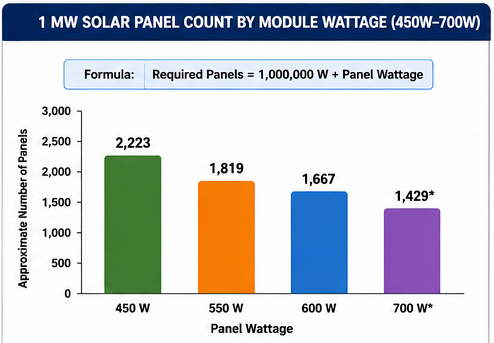
Required panels = 1,000,000 W ÷ Panel Wattage
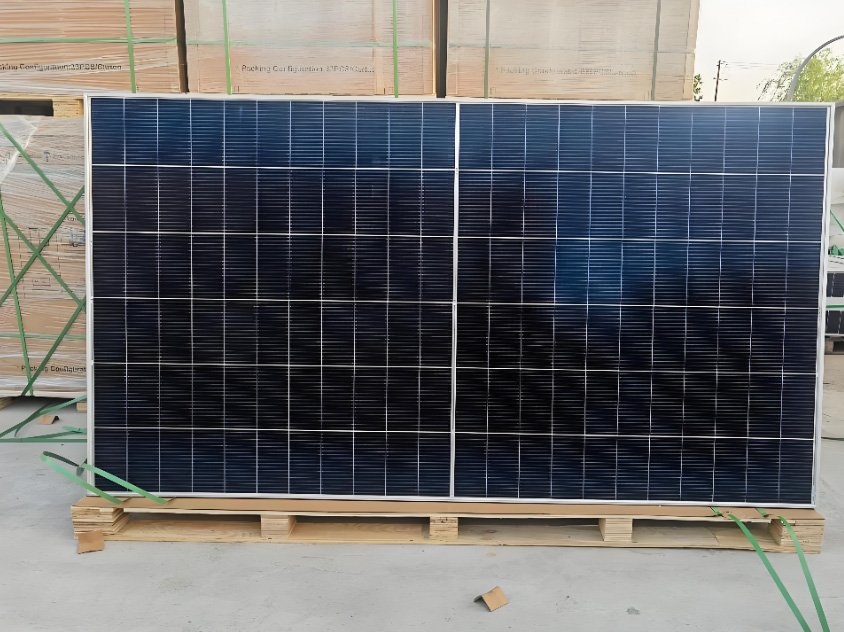
The number of panels will depend on the rated power of each module. If you want a lower number of modules to generate the same energy output, simply get bigger modules. That is why a number of utility-scale and commercial projects are now preferring higher-output painéis solares comerciais as they simplify installation and allow for more efficient site layouts.
| Potência do painel | Approximate Panels Needed | Typical Commercial Use |
| 450 C | Sobre 2,223 painéis | Small commercial and institutional projects |
| 550 C | Sobre 1,819 painéis | Commercial ground-mounted systems |
| 600 C | Sobre 1,667 painéis | Large commercial and industrial installations |
| 700 W* | Sobre 1,429 painéis | Selected utility-scale applications where suitable modules are available |
*Availability depends on manufacturer specifications and project design.

Even though the maths is simple, actual procurement usually has extra modules to cater for system design, electrical configuration, future maintenance, etc.. Moderno Painéis solares TOPCon are some of the most popular models on the market. With their positive power ratings and improved efficiency, these panels save on module quantities while offering strong and stable performance over the long-term.
Commercial buyers prioritize choosing certified Painéis solares de nível 1 made by established manufacturers, such as Risen, Longo, Jinko, Trina, JA Solar, Solar Canadense, Tongwei, e GCL, rather than the number of panels. Options for modules for projects of different technical and procurement requirements are provided by suppliers such as HBOWA.
How Much Electricity Can a 1 MW Solar Farm Produce?
The electricity generated by a 1 MW solar power plant depends more on local operating conditions than its installed capacity. O horas de pico do sol, irradiância solar, perdas do sistema, and capacity factor are the most important.
O fator de capacidade is how much electricity the solar system produces vs. the maximum in time. As per the US National Renewable Energy Laboratory NREL PV solar production varies widely due to weather, variações sazonais, e design do sistema.
Look at three imagined sites (A, B and C) that have an identical 1 MW system. Project “A” has a high peak sun hour throughout the year and experiences little shading, so it has more yield. Site “B” recorded a net annual loss of energy, outputting a balanced level of energy annually. Site “C” has less sunlight than Site B. Além disso, this area faces more cloudy days. Consequentemente, it generates less annually. The site uses the same equipment, so its annual generation capacity is expected to be the same. This comparison outlines why solar developers must assess local solar resources before assessing financial returns or project viability.
Factors Affecting Annual Energy Production
| Fator | Effect on Energy Production |
| Horário de pico do sol | More sunlight generally increases annual electricity generation. |
| Irradiância solar | Higher solar radiation improves overall energy yield. |
| Capacity factor | Reflects the system’s long-term operating performance. |
| System losses | Fiação, inversor, temperatura, and soiling losses reduce usable output. |
| Clima | Cloud cover, pó, neve, and temperature influence annual production. |
Example Site Layout: What Does a 1 MW Solar Farm Look Like?
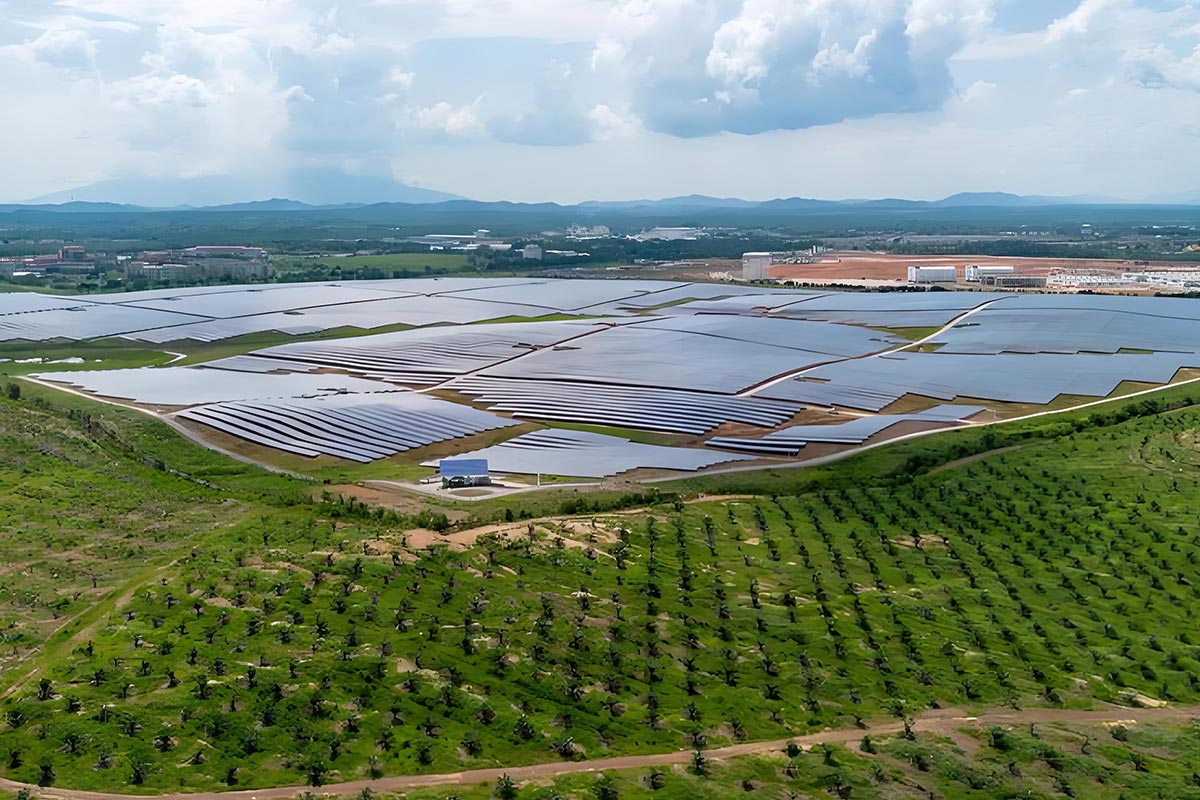
Um eficaz fazenda solar layout demonstrates a balance between energy production, manutenção, e escalabilidade. To make the project easier to manage, engineers do not install panels continuously across a site but instead break it into PV array blocks separated by maintenance corridors. By making the equipment with the arrangements, inspection becomes easy, which also ensures replacement with the appropriate parts without affecting the entire system.
In addition to solar panels, um ground-mounted solar project will have certain components. Electricity is fed from PV arrays into one or more inverter stations, where direct current is transformed into alternating current. Depois disso, the electricity will connect to the local distribution or transmission network via a transformer.
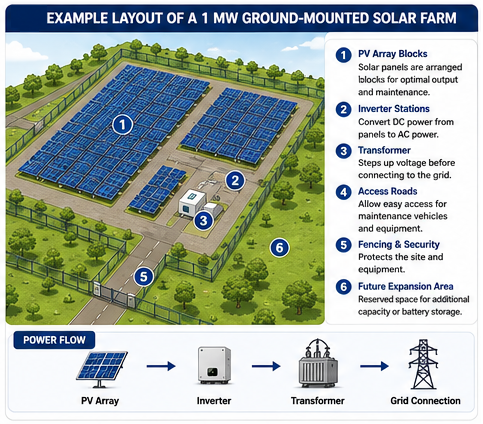
Installation and maintenance vehicles can easily access the site through an access road. While fencing will protect the equipment and improve the overall security of the site. Proper distance is also maintained between electrical fittings to meet safety requirements and for future maintenance.
Commercial solar installation e utility-scale solar projects often choose this type of organized design because of its ease of use for long-term operation and reduced maintenance costs. While doing project planning, developers should also set aside space in case further capacity expansion is anticipated, if additional solar arrays and battery storage may be installed later.
Should You Add Battery Storage to a 1 MW Solar System?
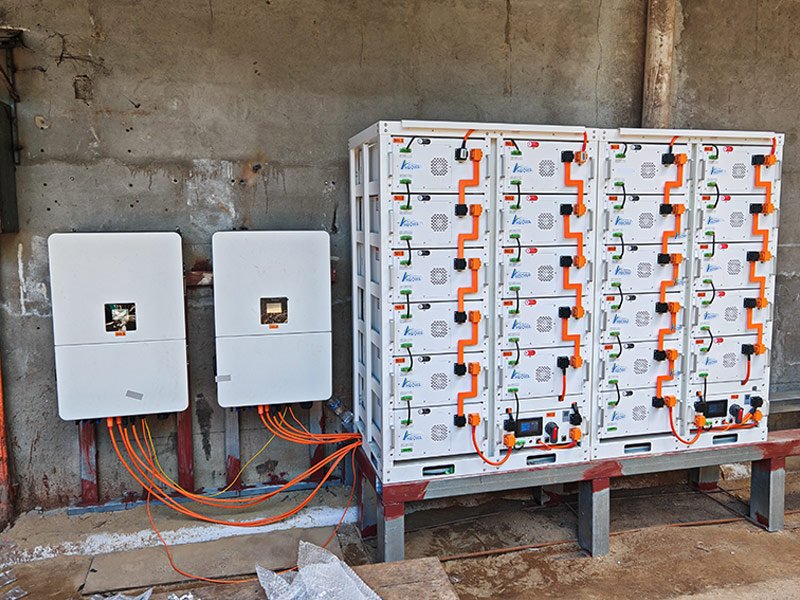
Not all projects require battery storage, but it can offer increased flexibility in line with operational objectives. A grid-connected solar farm that exports power right away may not require batteries, but facilities looking to back up their electrical supply, manage demand, and reduce costs for electricity during peak times don’t usually benefit from a Bess.
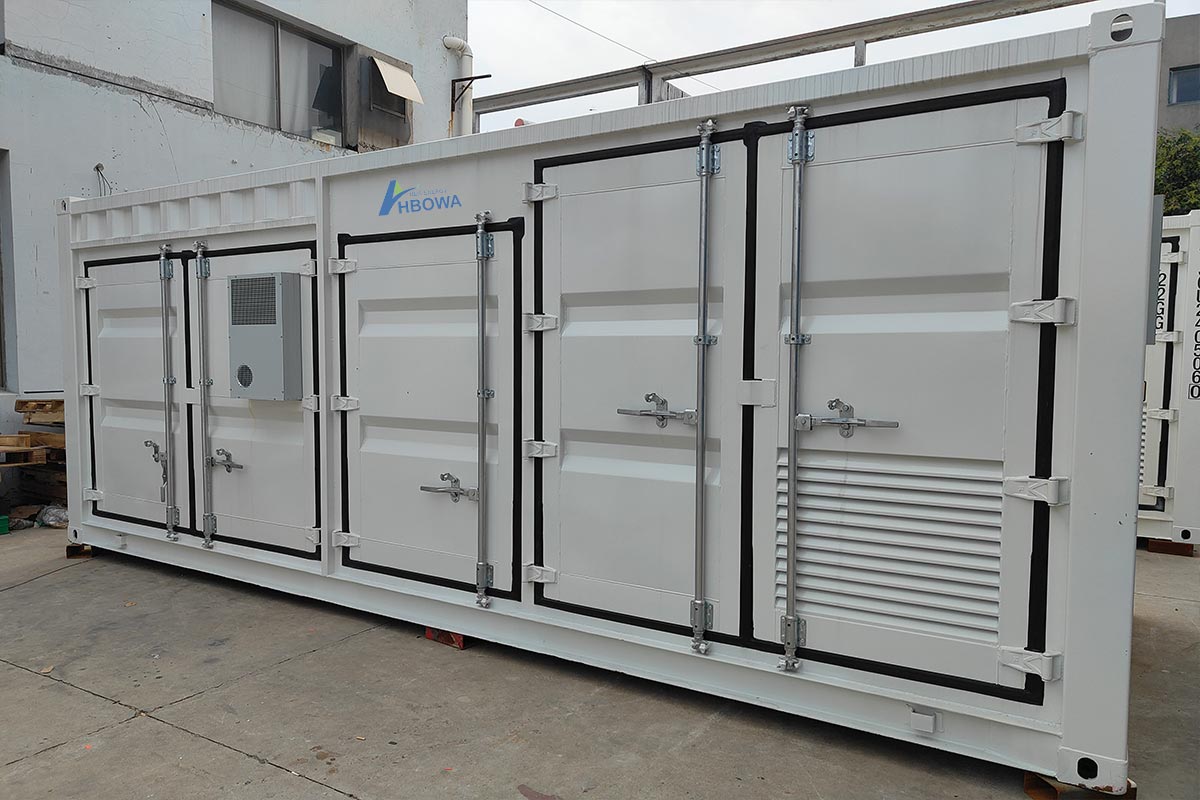
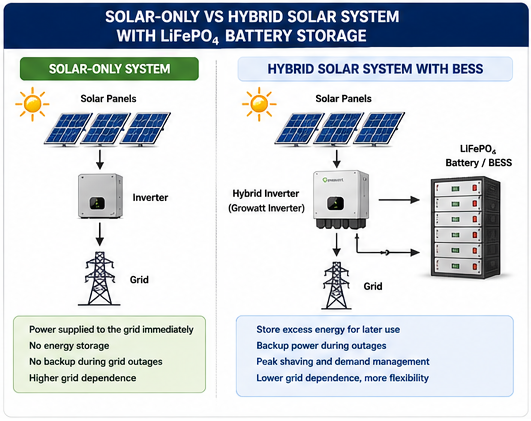
A Sistema Solar Híbrido is where you generate your electricity and then store it. It works by absorbing and then storing any excess energy into a battery when you generate more power than you use.
When the solar generation drops down, or your usage increases, the battery will then discharge. Commercial and industrial facilities can benefit from Pico de barbear, enhanced reliability, and increased self-consumption with this solution.
O moderno Bateria de LifePO4 technology is rapidly finding use in commercial energy storage owing to its long cycle life, alta estabilidade térmica, and low maintenance. When it’s coupled with battery storage, um inversor solar híbrido, like selected Inversor Growatt soluções, manages the flow of energy from the PV system to the batteries and the grid.
Solar Only vs Solar + Armazenamento de bateria
| Recurso | Apenas solar | Solar + Armazenamento de bateria |
| Poder de backup | Limitado | Available when properly designed |
| Corte de pico | Não | Sim |
| Demand management | Limitado | Improved |
| Armazenamento de energia | Não | Sim |
| Grid dependence | Mais alto | Lower during battery discharge |

Common Planning Mistakes That Increase Land Requirements
Planning Solar Farms begins well in advance of construction. Common oversight includes missing local setback requirements, which may limit the usable installation area during and after the completion of the design.
Another common problem involves utilizing excessively large gaps between the rows of panels, which causes land to be wasted without enhancing generation.
Ineffective analysis of a site can lead to problems that could otherwise be avoided. If nearby vegetation or structures are underestimated to shade the array, the array layout must be redesigned later.
Poor drainage planning can restrict usable land and raise long-term maintenance costs, particularly on sites with uneven topography. Not factoring in the availability of land in opting for lower-efficiency modules can also increase the footprint of a commercial solar project.
Muitas vezes, many developers miss the future expansion while planning land usar. When we allow enough space for future PV arrays, capacidade do inversor, or storage ahead of time, costs will be lower, and disruption greater.
How to Choose the Right Solar Panels for a 1 MW Project
There’s much more to choosing the right commercial solar panels than just wattage. Eficiência do módulo, annual degradation rates, product and performance warranties, certificações globais, and stability of the manufacturer should be assessed.
Usando BloombergNEF’s Nível 1 methodology to assess manufacturer bankability enables developers to choose a supplier based on proven production output and history of project financing rather than product quality alone. Commercial developers increasingly favor high-performance Painéis solares TOPCon. They deliver enhanced energy performance, in addition to lower levels of degradation.
O Nível 1 empresas that generally meet the criteria of Bloombergnef include manufacturers such as Risen, Longo, Jinko, Trina, JA Solar, Solar Canadense, Tongwei, and GCl. To allow more procurement flexibility, HBOWA supplies new and second-hand Tier-1 solar panels for commercial and industrial projects. This allows buyers the flexibility to select which modules match their technical specifications and project budget the best.
| Não. | Item da lista de verificação | Descrição |
|---|---|---|
| 1 | Land Assessment | Evaluate site size, shape, slope, soil conditions, and overall land suitability. |
| 2 | Solar Resource Evaluation | Analyze solar irradiance, horas de pico do sol, and local climate data. |
| 3 | Projeto do sistema & Panel Selection | Select high-efficiency, Tier-1 solar modules appropriate for the project. |
| 4 | Layout Planning | Design array layout, equipment spacing, access roads, and equipment placement. |
| 5 | Permitir & Regulamentos | Review zoning requirements, contratempos, environmental regulations, and grid interconnection codes. |
| 6 | Battery Storage Consideration | Determine whether a Battery Energy Storage System (Bess) is required for backup power, Pico de barbear, or demand management. |
| 7 | Future Expansion Planning | Reserve sufficient space and infrastructure for future system capacity expansion. |
| 8 | Financeiro & Análise de desempenho | Estimate project costs, retorno do investimento (ROI), and long-term energy production. |
Conclusão
How much surface area is utilised for a 1MW solar farm? The figure will depend on engineering decisions rather than a single fixed acreage. The final footprint is impacted by panel technology, condições do local, e design do sistema. These factors can inform and enhance project performance as early as possible and allow an experienced supplier to assist with planning for commercial-scale solar.
Perguntas frequentes
Certamente. A lot of commercial projects were built on uneven land. Yet steep slopes may make it necessary to grade, use specialized mounting systems, and revise the array layout, which increases the cost of construction and decreases the usable installation area.
Indirectly, Bifacial modules increase electricity generation by utilizing reflected sunlight. The greater energy output of their developers may achieve production targets at a faster pace. No entanto, the overall land requirement would still vary based on the design of the project as a whole.
The rows of panels in a single-axis tracker will typically require larger spacings due to shading caused by the rotation of the modules. Even though it increases land use, it may enhance annual energy production relative to fixed-tilt systems.
Claro, if the initial design is made considering expansion. By keeping the space free for additional array installation, equipamento elétrico, and cable routes for new capacity that can be built with less hassle and cost.
The amount of space required varies by project, equipment layout, and local regulation. Site design should incorporate maintenance road, inverter access, safety clearances, and operational corridors right from the beginning.
Certamente. Electricity from solar energy will vary based on plant location, temporada, and meteorological phenomena. These factors can influence system design decisions and the entire project.
Setbacks from a road, property boundaries, waterways, or nearby buildings may be specified. Prior to estimating the project’s overall footprint, you need to take into account the restrictions that limit the buildable area.
In case of backup power, Pico de barbear, demand management, or increased energy independence, um Sistema de armazenamento de energia de bateria (Bess) may be a relevant consideration. The determination of the system’s size should depend on operational objectives, electric pricing, and the economics of the project.