

Introdução
A 50Sistema solar KW é uma solução de energia solar em escala comercial que pode gerar aproximadamente 150-250 kWh de eletricidade por dia. A produção diária depende da localização e do clima. Tais sistemas são normalmente instalados em armazéns, oficinas, escolas, fábricas, e fazendas para reduzir custos comerciais de eletricidade. Antes de comprar um 50 Sistema solar KW, a maioria das empresas precisa saber o custo, produção diária, quantidade de painéis, Espaço no telhado, tamanho da bateria, e período de retorno. Este guia explica esses pontos-chave para que você possa tomar uma decisão informada.

O que é um sistema solar de 50 kW e suas aplicações?
O que significa um sistema solar de 50 kW?
A 50Sistema solar KW, muitas vezes conhecido como 50 Sistema solar Kilowatt, é aquele que tem uma capacidade nominal total de 50 quilowatts após teste em condições padrão. Na prática, a capacidade é muito grande, pois a instalação doméstica típica varia de cerca de 5 kW para 15 kW. Por isso, 50Os sistemas kW são feitos principalmente para uso comercial & aplicações industriais leves.
Um painel solar DC combinado com um cadeia trifásica ou inversor híbrido é padrão na maioria dos sistemas modernos. O conjunto CC pode ser superdimensionado em relação à capacidade do inversor para um determinado projeto para melhorar a energia anual colhida. Muitos projetos comerciais têm configurações que variam entre 1.1:1 e 1.3:1, mas a configuração final depende apenas das diretrizes locais/regionais, condições do local, e os objetivos do projeto.

Aplicações comuns para um sistema de energia solar de 50 kW
A 50sistema de energia solar kW é comumente adequado para armazéns, pequenas fábricas, hotéis, escolas, edifícios de escritórios, centros comerciais, e fazendas. Um armazém frigorífico que consuma cerca de 180-220 kWh/d pode compensar grande parte da sua procura diurna de electricidade com um sistema devidamente concebido e reduzir a dependência da electricidade da rede, cujo custo está a aumentar..
Quanto custa um sistema solar de 50 kW em 2026?
Um sistema solar comercial de 50 kW conectado à rede pode custar cerca de US$ 35.000 a 80.000, que exclui o custo de armazenamento da bateria. Mas o custo real do seu sistema pode variar de região para região, país para país, e até mesmo de estado para estado.
Quais fatores afetam o custo de um sistema solar de 50 kW?
A final preço de um 50Sistema solar KW depende de muitos fatores. A escolha de um módulo solar é um dos parâmetros principais. Painéis solares de nível 1 pode ser mais caro do que opções básicas; no entanto, eles tendem a ter mais eficiência, melhor garantia, e menor degradação.
Escolher o inversor certo influencia nos gastos. O inversor string padrão geralmente tem um custo inicial mais baixo, enquanto um inversor híbrido com a capacidade dos futuros sistemas de baterias requer um maior investimento. De acordo com o método de estimativa selecionado, os custos totais de instalação podem aumentar e diminuir devido às características do telhado, estruturas de montagem, reforço estrutural, atualizações elétricas, requisitos de interconexão de rede, e taxas de trabalho locais.

Empreendimentos comerciais utilizando armazenamento de bateria para fins comerciais, ou a sistema de armazenamento de energia da bateria, normalmente incluem equipamentos adicionais, como racks de baterias e dispositivos de proteção.
Custos indicativos globais de instalação para um sistema solar de 50kW
| País/Região | Faixa de preço típica instalada (USD) | Principais fatores de custo |
| Estados Unidos | $55,000–$ 80.000 | Trabalho, permitindo, atualizações elétricas |
| Austrália | $28,000–$ 45.000 | Trabalho, conexão de rede, seleção de equipamentos |
| Reino Unido | $40,000–$ 65.000 | Complexidade de instalação, sistemas de montagem |
| Emirados Árabes Unidos | $30,000–US$ 50.000 | Estrutura do telhado, equipamento importado |
| Índia | $22,000–$ 40.000 | Qualidade do equipamento, escopo de instalação |
| África do Sul | $30,000–US$ 55.000 | Requisitos de backup, integração de bateria |
Fontes: Nrel, PVPS da AIE, Relatórios de mercado IRENA, estudos regionais de mercado solar comercial.
Quanta eletricidade produz um sistema solar de 50 kW?
Um bom sistema solar de 50 kW é capaz de produzir 150 para 250 kWh por dia, ou sobre 54,000 para 91, 000 kWh por ano. A quantidade real de eletricidade depende dos recursos solares locais, Design do sistema, sombreamento, temperatura, e taxa de desempenho. A produção pode ser superior a esta faixa em regiões muito ensolaradas no verão.
Fórmula para estimar a produção solar
Um método amplamente aceito para estimar a geração é:
Produção diária (kWh/dia) = Tamanho do sistema (kW) × Horário de pico do sol × Taxa de desempenho
Exemplo: 50kW × 4.5 horas de pico do sol × 0.8 taxa de desempenho = 180 kWh/dia.
A relação de desempenho trata das perdas causadas pela temperatura, conversão de inversor, fiação, pó, etc., ocorrido durante a operação. Conforme declarado pelas práticas de modelagem NREL e PVsyst, sistemas comerciais freqüentemente têm taxas de desempenho que variam de 0.75 para 0.85.
Fatores que influenciam a produção solar
O 50kW de saída do sistema solar depende de vários fatores. A irradiância solar desempenha o papel mais crítico, já que as áreas com maior luz solar anual produzem mais energia naturalmente. O ângulo de inclinação e a orientação dos painéis também são importantes. No Norte, painéis virados a sul otimizam a produção, enquanto no Sul, painéis voltados para o norte são preferidos.
Altas temperaturas de operação podem prejudicar a eficiência do módulo no verão. Edifícios próximos, árvores, ou equipamentos de telhado que projetam sombra também reduzem a produção. Conversão do inversor, resistência do cabo, acúmulo de poeira, e incompatibilidade de módulo levam a mais perdas.
Produção estimada de energia por zona climática
| Zona Climática | Produção diária estimada | Produção Anual Estimada |
| Regiões com alto sol | 220–275kWh | 80,000–100.000 kWh |
| Climas moderados | 180–220kWh | 62,000–80.000 kWh |
| Regiões com baixo sol | 150–180kWh | 51,000–62.000 kWh |

Essas diferenças podem ser ilustradas com uma comparação no mundo real. Na Austrália, uma instalação de 50kW poderia produzir mais 80,000 kWh de energia por ano; em portugal, um sistema semelhante produziria 70.000–80.000 kWh. No contexto da Alemanha e no caso real, a menor irradiância solar limita a geração anual a 50.000–60.000 kWh aproximadamente.
Quantos painéis solares são necessários para um sistema solar de 50 kW?
Um sistema solar de 50 kW geralmente precisa de cerca de 77-125 painéis solares, dependendo da potência do módulo, e hoje em dia, a eficiência do painel melhorou, o que reduziu o número de painéis solares em geral. Para a maioria dos projetos comerciais de telhados, as pessoas geralmente escolhem painéis solares de 550W-650W, e a contagem de painéis necessária é de cerca 77-90 painéis.
Contagem de painéis com base na potência do painel solar
Cada vez mais projetos comerciais estão adotando painéis solares de alta eficiência, que incluem Painéis solares TOPCon e avançado Painéis solares PERC, para maximizar a geração de energia em espaço limitado no telhado.

O cálculo básico é:
Número de painéis = 50.000 W ÷ Potência do painel solar
Muitas empresas agora preferem instalar sistemas de alta eficiência Painéis solares de nível 1 de Longi, Jinko, Trina, JA Solar, Solar Canadense, Tongwei, Subiu, etc.. Esses módulos exigem menos área de instalação e oferecem forte desempenho a longo prazo.

Quanto espaço no telhado um sistema solar de 50 kW precisa?
Um painel solar comercial tem uma área de em volta 2.0-2.4 metros quadrados, dependendo da marca e tecnologia que utiliza. A maioria das instalações de 50 kW requer cerca de 300-450 metros quadrados de área útil do telhado após contabilização das passarelas, contratempos de incêndio, e acesso para manutenção, mais espaçamento entre linhas do módulo.
Os requisitos reais de espaço dependem da configuração de montagem, geometria do telhado, e tamanhos de painel selecionados. A planicidade dos telhados comerciais permite maior flexibilidade nos projetos de telhados do que os telhados inclinados que restringem o layout e limitam as instalações.
Qual sistema solar de 50 kW você deve escolher: Amarrado à rede, Híbrido, ou fora da rede?
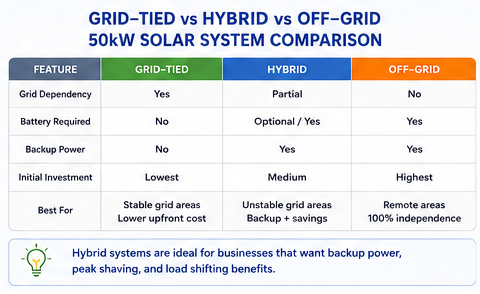
A 50Sistema solar KW a configuração depende da confiabilidade da rede, energia, e fatores orçamentários. A escolha mais comum é uma sistema vinculado à rede porque tem o menor custo inicial. Com os preços da electricidade a subir para novos patamares e a rede a tornar-se cada vez mais instável, várias empresas agora procuram investir no Sistema Solar Híbrido ou Sistema solar fora da grade.
Comparação de configurações do sistema solar de 50kW
| Recurso | Amarrado à rede | Híbrido | Fora da rede |
| Dependência de grade | Totalmente dependente | Dependência parcial | Sem dependência |
| Capacidade de backup | Nenhum backup durante interrupções | Backup disponível | Capacidade de backup completa |
| Requisito de bateria | Não obrigatório | Opcional/Recomendado | Obrigatório |
| Nível de investimento | Mais baixo | Médio a alto | Mais alto |
| Melhores aplicativos | Áreas de utilidades estáveis | Áreas com interrupções ou tarifas altas | Locais remotos |
Quando considerar um sistema solar híbrido?
A sistema solar híbrido é capaz de gerar eletricidade, armazenar bateria, e conectando-se à rede. Isto é frequentemente escolhido quando as empresas sofrem com uma oferta não confiável de serviços públicos ou com altas taxas de demanda.. Através de sistemas híbridos, o excesso de energia solar gerada durante o dia pode ser armazenado e usado posteriormente, permitindo mudança de carga e reduzindo a compra de energia elétrica nos períodos tarifários de ponta.
O armazenamento da bateria também é usado por muitas instalações comerciais para pico de demanda de barbear cobranças; eles reduzem picos curtos no uso muito alto de eletricidade.
Por exemplo, uma empresa localizada em uma área onde as quedas de energia são frequentes pode inversor solar híbrido & baterias para que a produção não seja interrompida. Este método permite sustentar operações e tornar-se independente de energia.
Qual tamanho de bateria você deve usar para um sistema solar de 50 kW?
As empresas que necessitam de proteção de backup por um curto período exigirão significativamente menos armazenamento do que as empresas que gostariam de operar durante a noite ou fora da rede.
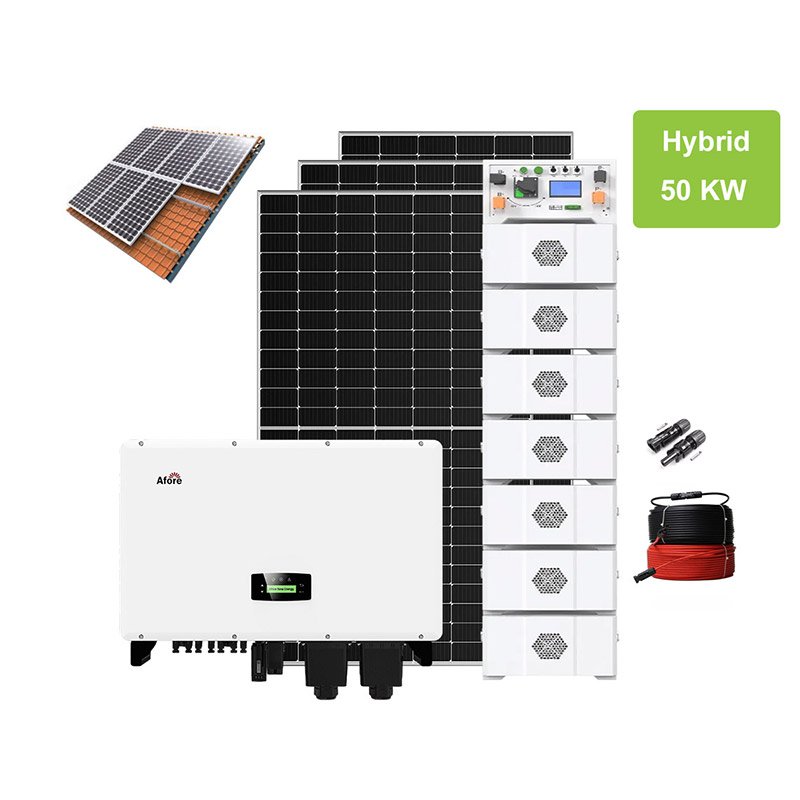
Para um projeto solar comercial de 50kW, um armário de armazenamento de bateria comercial deve ser selecionado a partir da capacidade de armazenamento necessária, duração da descarga, e objetivo operacional – não apenas energia solar.
Fatores que determinam o tamanho da bateria
O dimensionamento da bateria começa pela compreensão do consumo de energia elétrica. A primeira coisa a considerar é a duração do backup. Uma instalação que precisa de energia de emergência por uma única hora pode precisar de um sistema relativamente pequeno. No entanto, locais que operam equipamentos de importância crítica exigem continuamente capacidades de armazenamento muito maiores.
O uso de energia à noite também é importante. Baterias maiores são necessárias principalmente para empresas que operam à noite. As tarifas de eletricidade por tempo de uso podem afetar ainda mais o dimensionamento do sistema, dado que carregar com energia solar durante o dia para uso noturno pode reduzir os custos operacionais.
Capacidades de bateria recomendadas para aplicações comerciais
| Meta de negócios | Tamanho de bateria sugerido |
| Backup curto | 50kWh |
| Mudança de carga | 100kWh |
| Corte de pico | 100–200 kWh |
| Backup noturno | 200kWh+ |
| Operação quase fora da rede | 500kWh+ |
Para muitos sistemas solares comerciais de 50KW, 100kWh é um ponto de partida comum, mas o tamanho final da bateria será calculado a partir da carga de backup, horas de backup necessárias, e consumo de energia noturno.
Por que as baterias LiFePO4 são populares em ESS comerciais
A maioria dos projetos comerciais de suporte de serviço estendido emprega Bateria de LifePO4 tecnologia hoje. A química do fosfato de ferro-lítio continua a ganhar participação de mercado crescente, pois oferece ciclo de vida longo, alta estabilidade térmica, e baixos requisitos de manutenção, de acordo com a Agência Internacional de Energia.
Em condições ideais, mais do que 6,000 ciclos de carga e descarga podem ser completados por um sistema de armazenamento de energia da bateria feito com Células LiFePO4. Um armário de armazenamento de energia abrigar sistemas modulares permite que as empresas expandam suas capacidades de armazenamento de energia à medida que a demanda cresce.
Um armazém que funciona a partir de 8 sou. até 10 tarde. Se a energia solar for gerada principalmente durante o dia, uma empresa pode armazenar energia em um 100 ou 200 kWh armazenamento de bateria solar e usar a energia solar armazenada para administrar o negócio à noite, em vez de comprar eletricidade nas tarifas de pico.
Um sistema solar de 50 kW vale financeiramente a pena? ROI, Poupança, e retorno
Em uma variedade de áreas, uma instalação solar de 50 kW pode fornecer um ROI solar comercial atraente, especialmente onde a maior parte da energia solar é usada no local. Preços da eletricidade, padrões de consumo, acordos de financiamento, e os regulamentos locais ditam o resultado económico.
As empresas que otimizam o seu próprio uso normalmente têm o desempenho financeiro mais forte porque cada kWh gerado substitui a eletricidade comprada. Preços de eletricidade mais elevados conduzem frequentemente a poupanças anuais mais elevadas e a um período de retorno mais curto.
Os clientes comerciais também devem considerar cobranças à vista. A instalação de tais sistemas ajuda as instalações com pico de demanda a reduzir as contas de eletricidade, compensando as importações da rede durante o dia.
Cenários Indicativos de Poupança
| Taxa média de eletricidade | Potencial economia anual | Tendência típica de retorno |
| Preços baixos de eletricidade | Moderado | 6–8 anos |
| Preços médios da eletricidade | Alto | 4–6 anos |
| Altos preços da eletricidade | Muito alto | 3–5 anos |
O retorno também é influenciado pela estrutura do financiamento. As empresas que utilizam empréstimos ou leasing podem salvaguardar o capital e, ao mesmo tempo, beneficiar imediatamente de contas de electricidade reduzidas.
Um exemplo é uma instalação comercial que consome a maior parte da eletricidade durante o horário comercial e é capaz de reduzir as compras de serviços públicos durante o dia., resultando em períodos de retorno mais curtos do que outras instalações que operam principalmente à noite.
Componentes principais de um sistema confiável de energia solar de 50 kW
O desempenho de um 50sistema de energia solar kW no longo prazo depende da qualidade do equipamento e da integração adequada do sistema, além do tamanho.
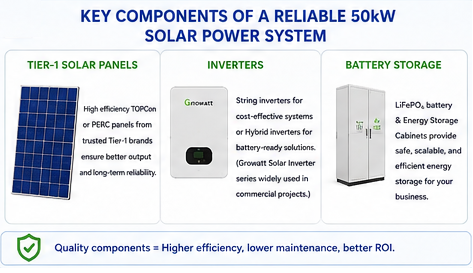
Painéis solares de nível 1:
Muitos desenvolvedores comerciais priorizam Painéis solares de nível 1 porque esses fabricantes demonstram forte capacidade financeira, capacidade de produção em grande escala, e presença estabelecida no mercado. Painéis solares da Topcon do tipo n geralmente têm maior eficiência em comparação com os tradicionais Painéis solares PERC, embora ambas as tecnologias continuem amplamente utilizadas em projetos comerciais.

Inversores:
Os sistemas comerciais normalmente usam inversores string trifásicos devido à sua alta eficiência e facilidade de manutenção. As empresas que planejam a integração futura de baterias geralmente escolhem um inversor solar híbrido, enquanto os sistemas on-grid só precisam de inversores do tipo grid-tie. Marcas bem estabelecidas, como a Inversor Solar Growatt gama são frequentemente especificados em aplicações comerciais devido à sua compatibilidade com sistemas de armazenamento de energia.

Integrando armazenamento de bateria
A integração da bateria está sendo cada vez mais utilizada em projetos comerciais. Com a ajuda de um Plataforma ESS comercial, um bem projetado Sistema de bateria LiFePO4 pode fazer backup de energia para suportar mudança de carga e redução de carga de demanda, ao mesmo tempo que fornece flexibilidade de expansão do sistema.
Erros comuns a evitar ao comprar um sistema solar de 50 kW
Selecionando um 50Sistema solar KW basear-se apenas no preço inicial é um dos erros de compra mais comuns. Equipamentos de baixo custo podem reduzir as despesas iniciais, mas podem aumentar os custos de manutenção e reduzir o desempenho a longo prazo..
Escolher um sistema solar de 50 kW sem considerar as necessidades comerciais de longo prazo pode aumentar os custos operacionais, reduzir a poupança de energia, e levar a atualizações dispendiosas.
| Erro comum | Impacto potencial |
| Escolha com base apenas no preço inicial | Menor eficiência, custos de manutenção mais elevados, e ROI reduzido a longo prazo |
| Subestimar a procura futura de electricidade | O sistema pode ficar subdimensionado à medida que as operações comerciais se expandem |
| Superestimando o espaço útil do telhado | Redesenho da instalação, custos adicionais, ou capacidade reduzida do sistema |
| Ignorando a disponibilidade da bateria | Atualizações de bateria mais caras e complexas no futuro |
| Ignorando regulamentações locais e limites de exportação | Atrasos nas aprovações, custos inesperados, ou operação restrita do sistema |
| Seleção de equipamentos não certificados | Aumento dos riscos de desempenho e possíveis problemas de garantia ou conformidade |
A maioria desses desafios acontece na fase de planejamento e não durante a instalação, portanto, as empresas devem verificar o seu consumo histórico de eletricidade; eles devem verificar o espaço útil do telhado; e verificar os requisitos de interconexão da rede local antes de decidir sobre o projeto final do sistema. Você pode garantir alguma confiabilidade e expansão futura planejando de maneira ideal a integração da bateria, selecionando equipamentos de acordo com os padrões internacionais, que terá o melhor ROI.
Lista de verificação do comprador
- Verifique dados históricos de consumo de eletricidade.
- Confirme o espaço útil real do telhado em vez da área total do telhado.
- Avalie planos futuros de expansão de negócios.
- Compare garantias de produto e desempenho.
- Revise os requisitos de interconexão local e permissão.
Conclusão
A 50Sistema solar KW pode economizar dinheiro substancial para o usuário comercial em eletricidade quando é projetado com base em dados de carga reais. Para projetos comerciais, A HBOWA pode ajudá-lo a comparar opções de sistemas solares híbridos e conectados à rede de 50 kW com base em suas condições e necessidades de backup.
Produtos solares para o seu projeto
 Painéis Solares |  50KW Sistema solar 50KW Sistema solar |  C&Armazenamento de bateria |
Perguntas frequentes
Certamente, um 50 Sistema solar KW pode administrar uma série de fábricas de pequeno e médio porte, especialmente aqueles que trabalham principalmente durante o dia. Apesar disso, a adequação de uso depende do padrão de consumo de eletricidade. Quem se beneficia são as fábricas da Light, instalações de processamento de alimentos, e oficinas. É sempre necessário realizar uma auditoria energética antes de dimensionar um sistema para garantir que as demandas de produção possam ser atendidas.
Sim e não, porque depende de como seu engenheiro o projetou, portanto, o sistema original deve ser projetado de forma que o sistema possa ser expandido. A decisão de expandir dependerá da disponibilidade de espaço no telhado, capacidade do inversor, e regras de rede local.
Um sistema solar de 50kW nem sempre precisa de armazenamento de bateria solar. Sistemas amarrados na grade, em que a maior parte da eletricidade é consumida durante o dia, funciona bem sem baterias. No entanto, se as empresas sofrerem quedas de energia frequentes, suportar altas tarifas de 5 da tarde até meia-noite, ou são cobrados encargos à vista, a incorporação de baterias pode aumentar sua resiliência energética e fazer maior uso dela.
Painéis solares de primeira linha de fabricantes renomados mantêm mais de 80% saída para até 25 anos, desde que os procedimentos de instalação e manutenção estejam corretos.
painéis solares, inversor, estrutura de montagem, cabos, dispositivos de proteção, monitoramento, armazenamento de bateria opcional, e documentação do projeto.
40kW para 50 kW, e a capacidade do inversor também depende dos regulamentos locais e da intenção do projeto. A geração anual do inversor é deliberadamente superdimensionada por alguns desenvolvedores do painel solar. Projetos que buscam capacidade de backup ou baterias tendem a adotar inversor solar híbrido feito para o segmento comercial.

