

What Is a 30kW Solar System?
A 30kW Solar System generates 30 kilowatts of energy using sunlight, which uses light and sunlight to generate electricity and power the required electrical loads. This system can be grid tied, hybrid or off-grid. The capacity of the DC panel is indicated as the system rating, and the inverter output is in AC capacity.
30kW Solar Systems for Commercial Rooftops, Farms
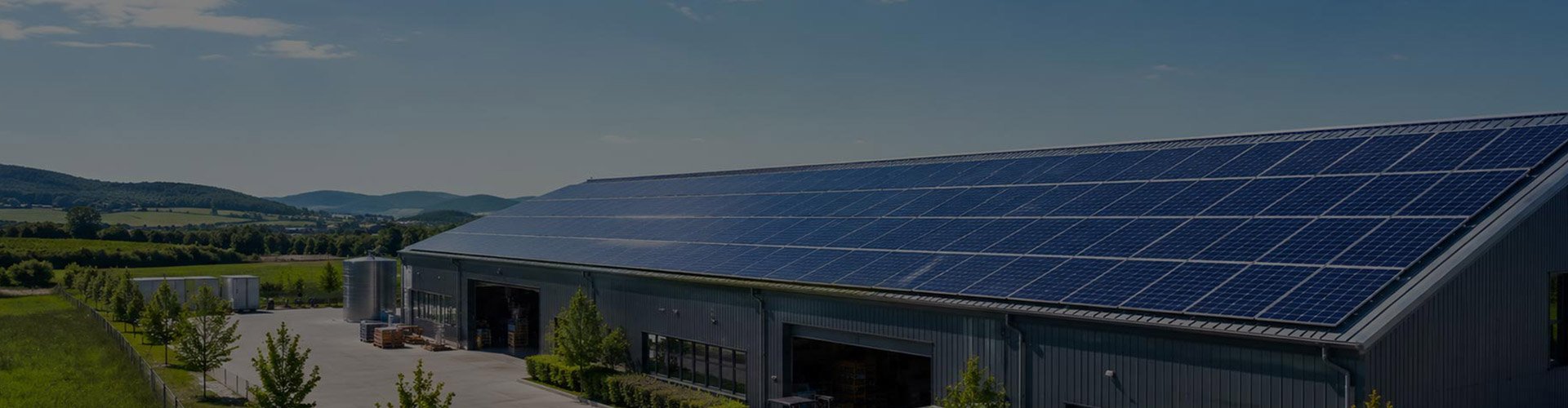
A 30KW solar system is widely treated as a commercial-scale solution worldwide. It is mostly used for SMEs, farms, warehouses, workshops, and institutional buildings with large electricity consumption during the day. HBOWA offers you complete 30KW solar systems with different types, installation,and electricity type, including 30KW hybird and 30KW on grid solar systems.
| Specification | Typical Range |
| System size | 30kW |
| Typical panel count | 50–75 panels, depending on module watt |
| Roof area | 120–180 m² |
| Daily generation | 90–150 kWh |
Contact us for a tailored 30kW solar system solution based on your site, load profile, and backup requirements.
Quick Product Navigation
Use these quick links to jump to the right section.
30KW Hybrid Solar System
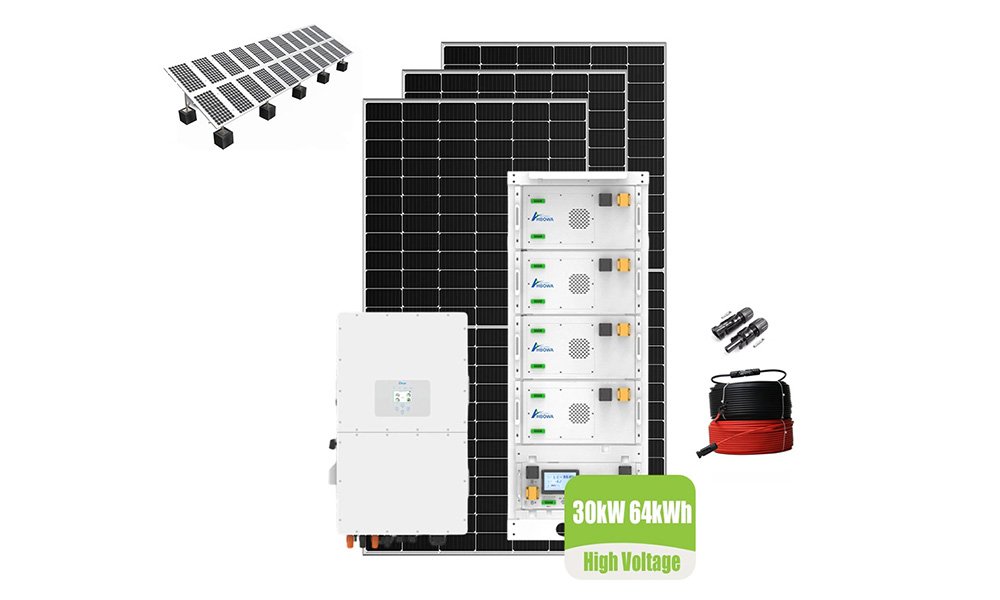
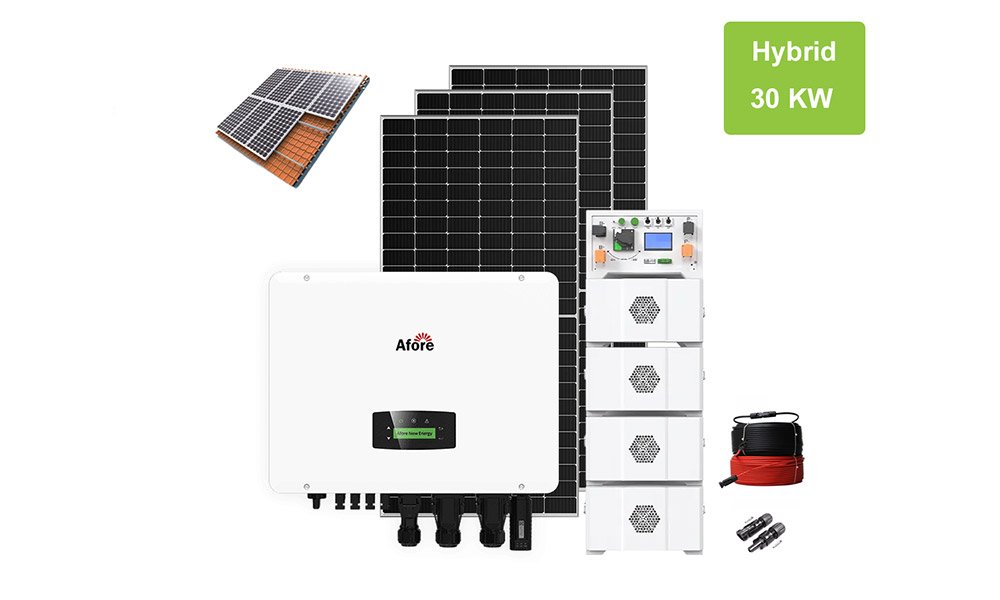
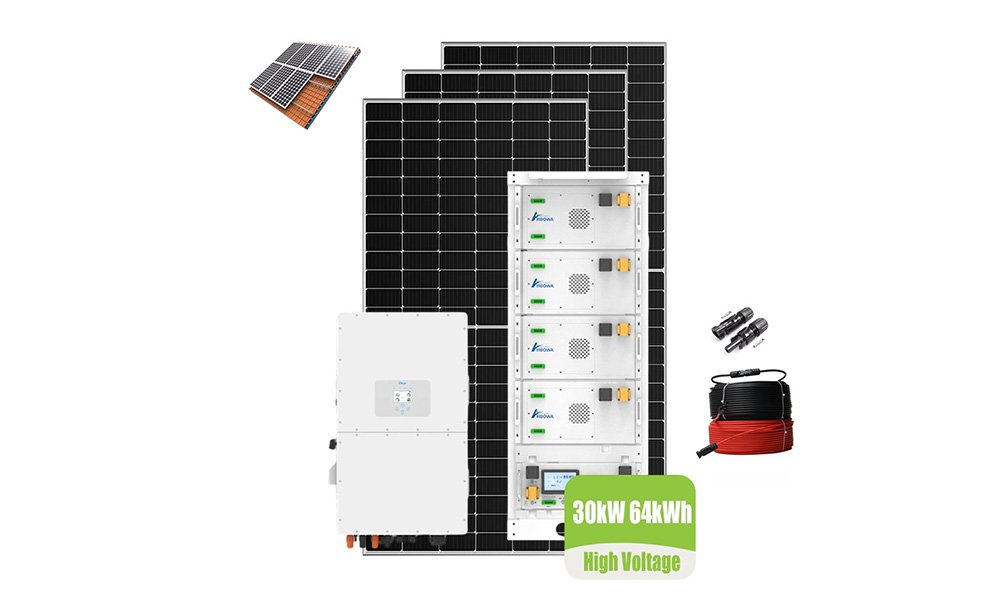
HBOWA provides 30KW three-phase high voltage hybrid solar systems with Growatt and Afore 30KW Inverters, installments including rooftop and ground-mount, you can choose each system according to your budget and project real needs.
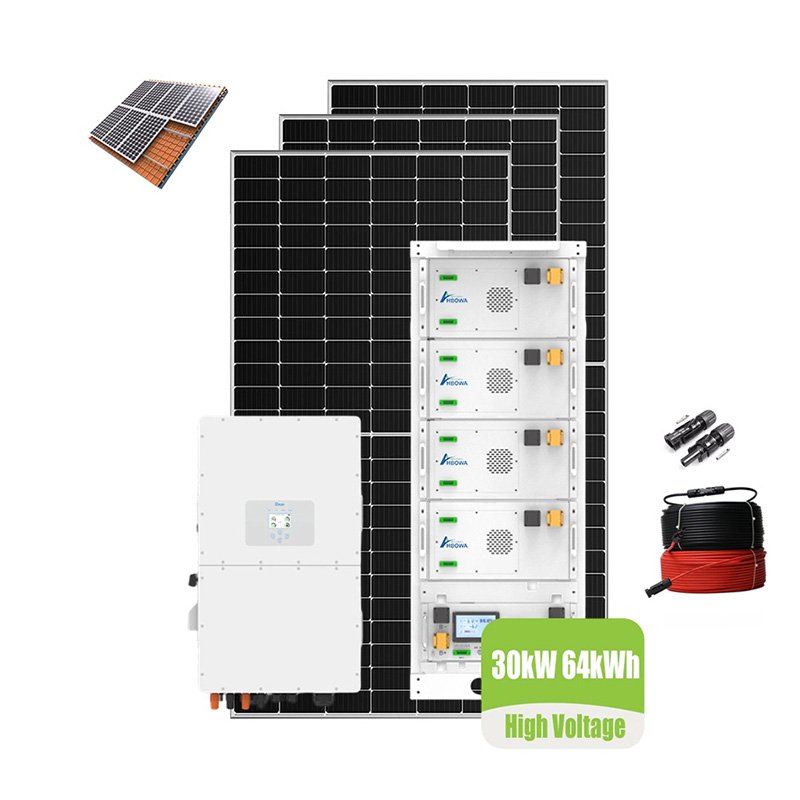
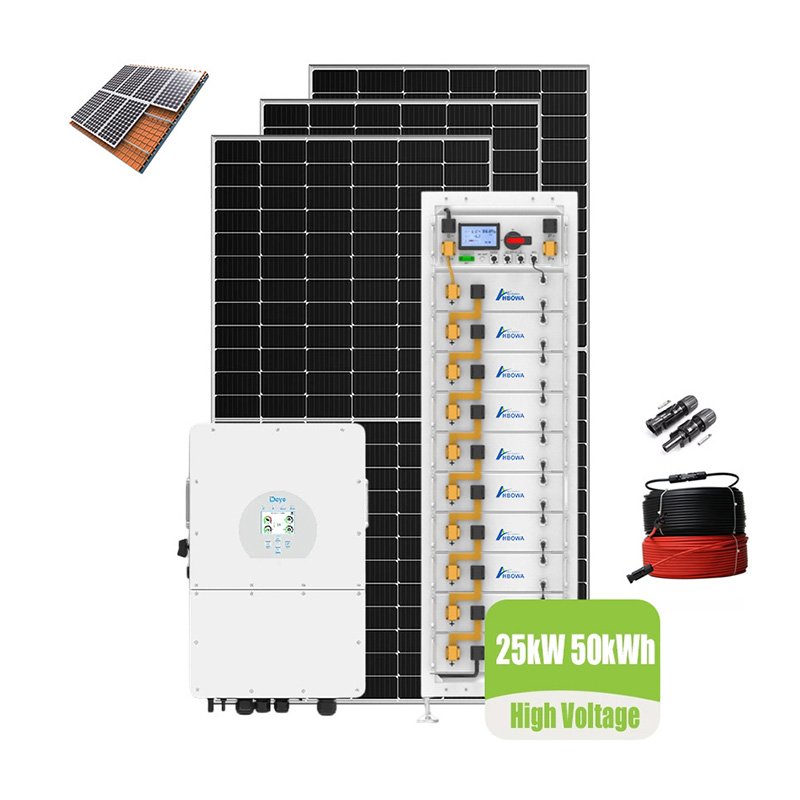
- Inverter: Deye hybrid
- Electrical Type: 3-Phase High Voltage
- Installation: Rooftop
- Battery Capacity: 64kWh
- MOQ: 1 Set
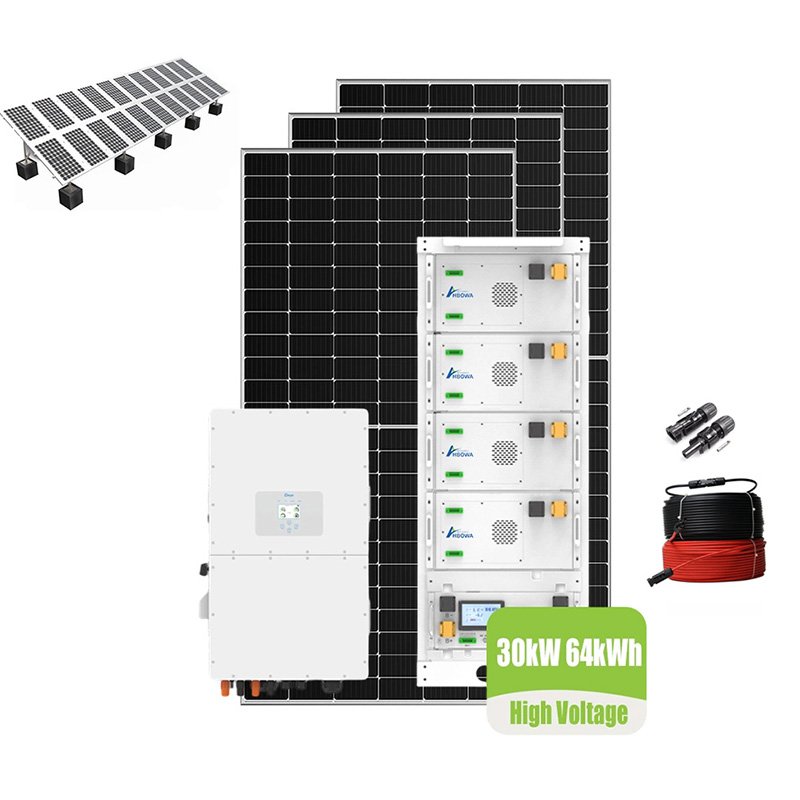
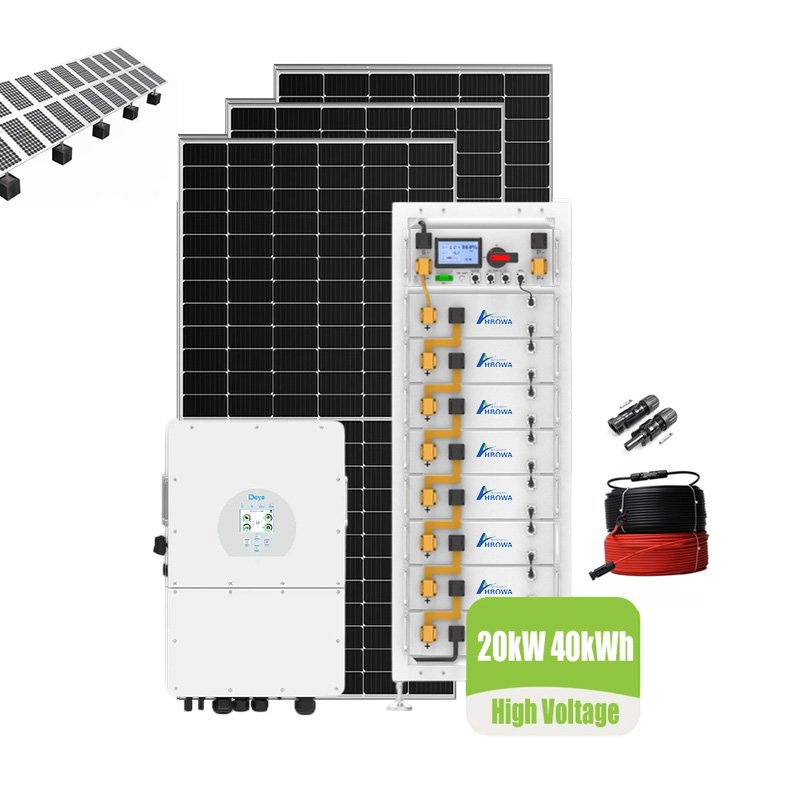
- Inverter: Deye hybrid
- Electrical Type: 3-Phase High Voltage
- Installation: Ground-mounted
- Battery Capacity: 64kWh
- MOQ: 1 Set
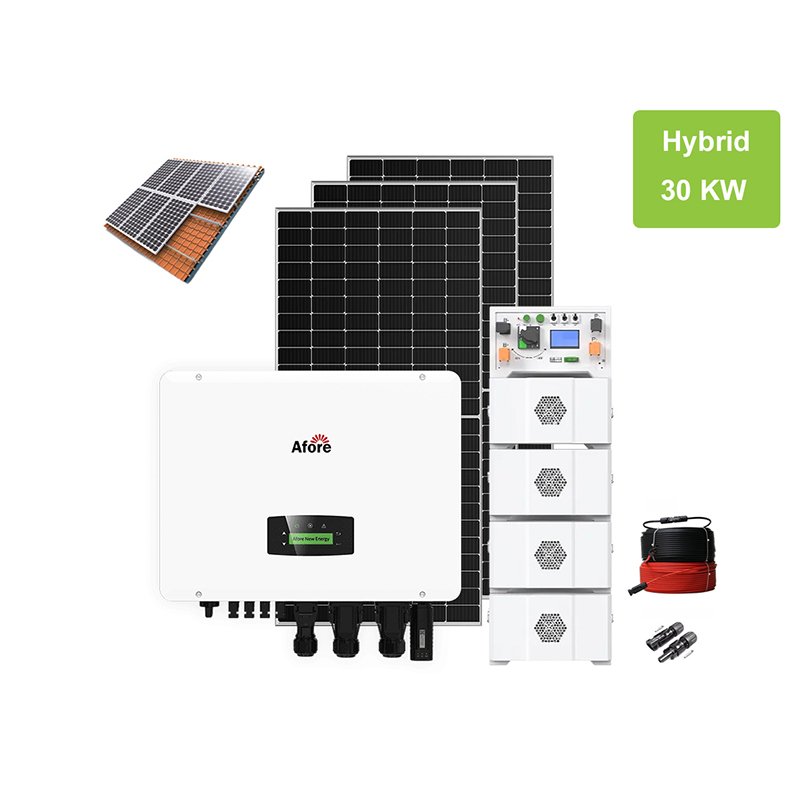
- Inverter: Afore hybrid
- Electrical Type: 3-Phase High Voltage
- Installation: Rooftop
- Battery Capacity: 64kWh
- MOQ: 1 Set
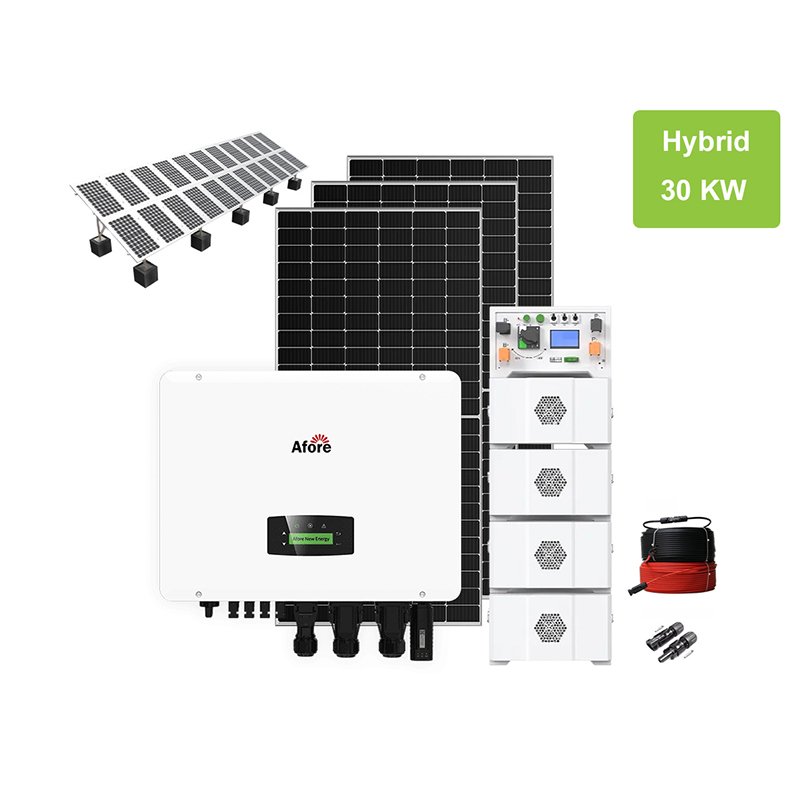
- Inverter: Afore hybrid
- Electrical Type: 3-Phase High Voltage
- Installation: Ground-mounted
- Battery Capacity: 64kWh
- MOQ: 1 Set
30KW On Grid Solar System
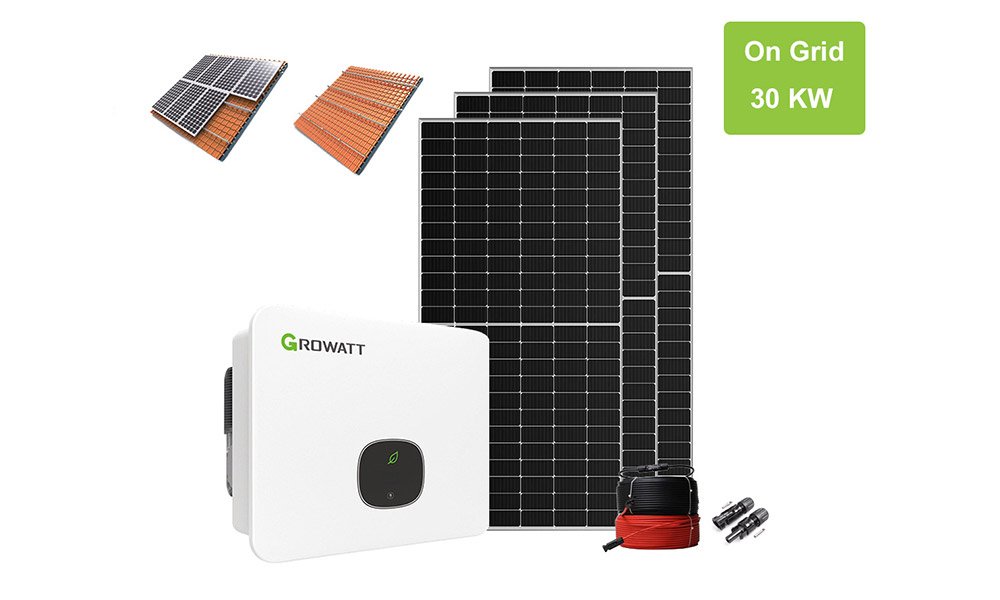
30KW on grid solar systems have no battery configuration, they are ideal for businesses seeking fastest payback and strong daytime bill offsetting, HBOWA provide both rooftop and ground mounted 30KW on grid solar systems for you to choose.
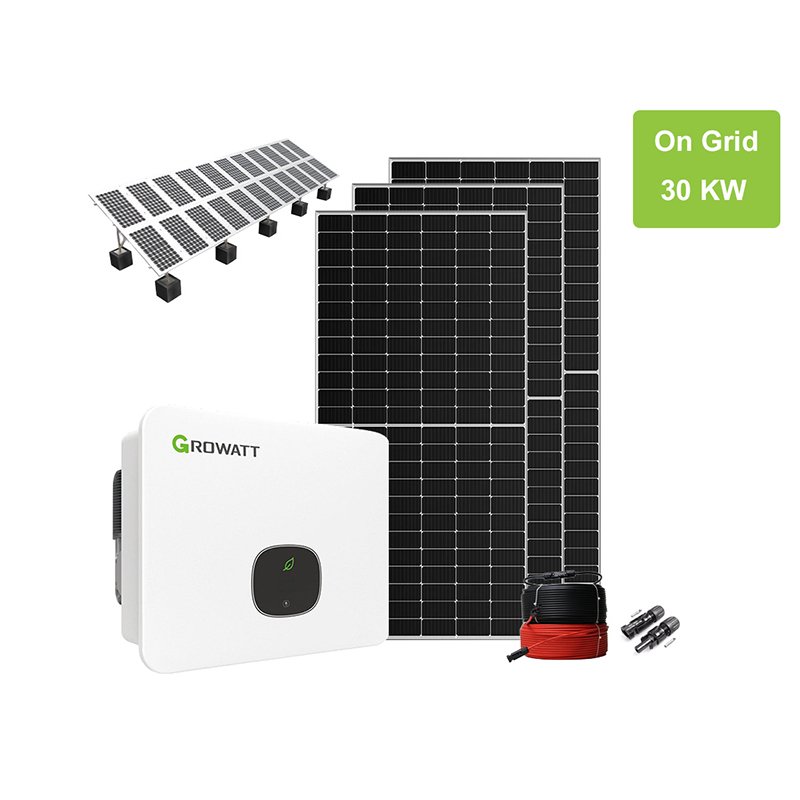
- System Type: On-Grid Growatt
- Electrical Type: Three-Phase
- Battery: Not included
- Installation: Ground-mounted
- MOQ: 1 Set
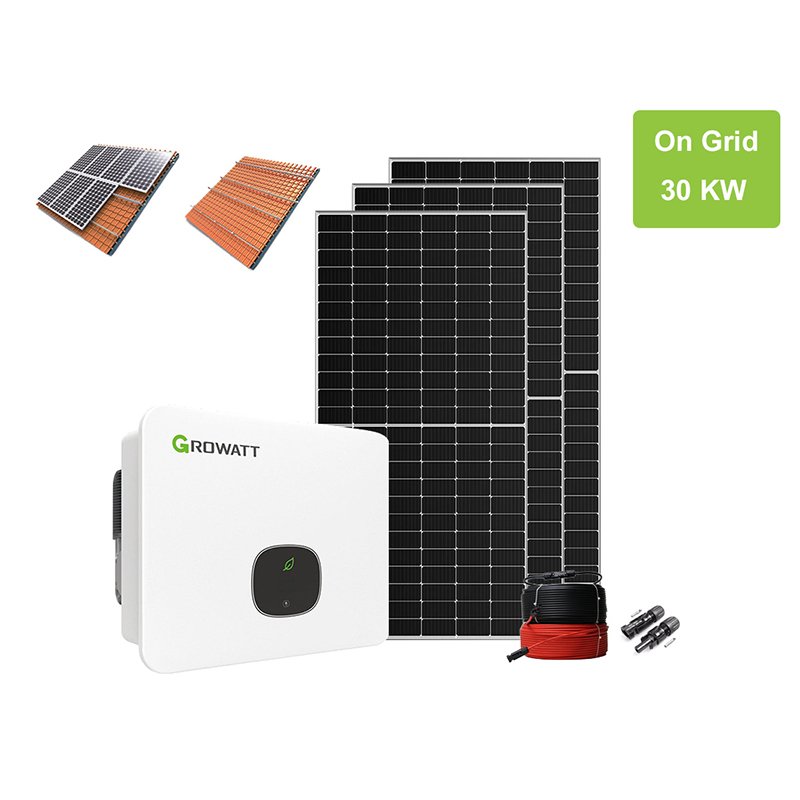
- System Type: On-Grid Growatt
- Electrical Type: Three-Phase
- Battery: Not included
- Installation: Rooftop
- MOQ: 1 Set
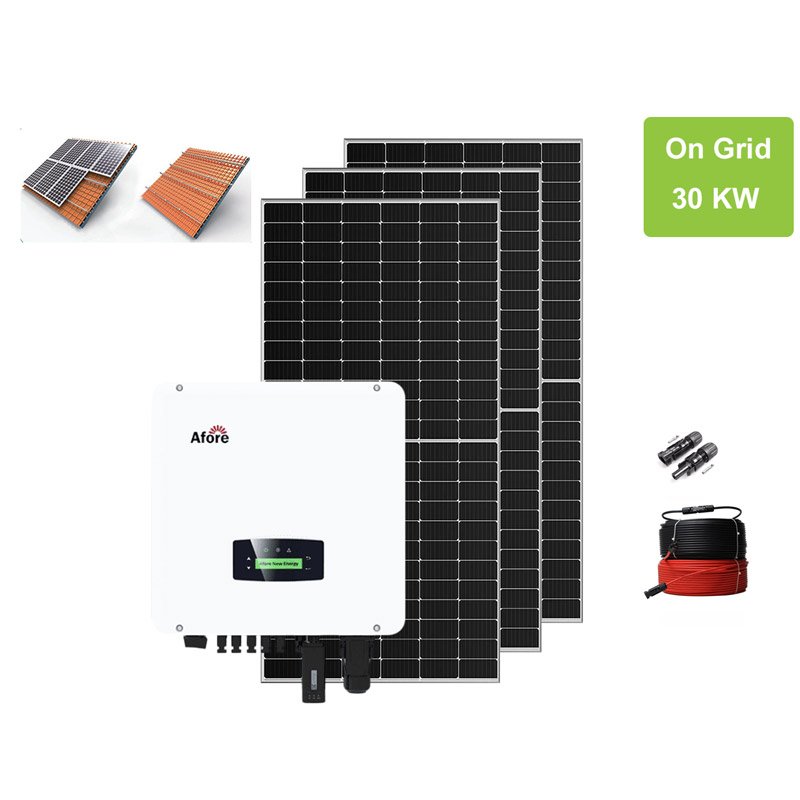
- System Type: On-Grid Afore
- Electrical Type: Three-Phase
- Battery: Not included
- Installation: Rooftop
- MOQ: 1 Set
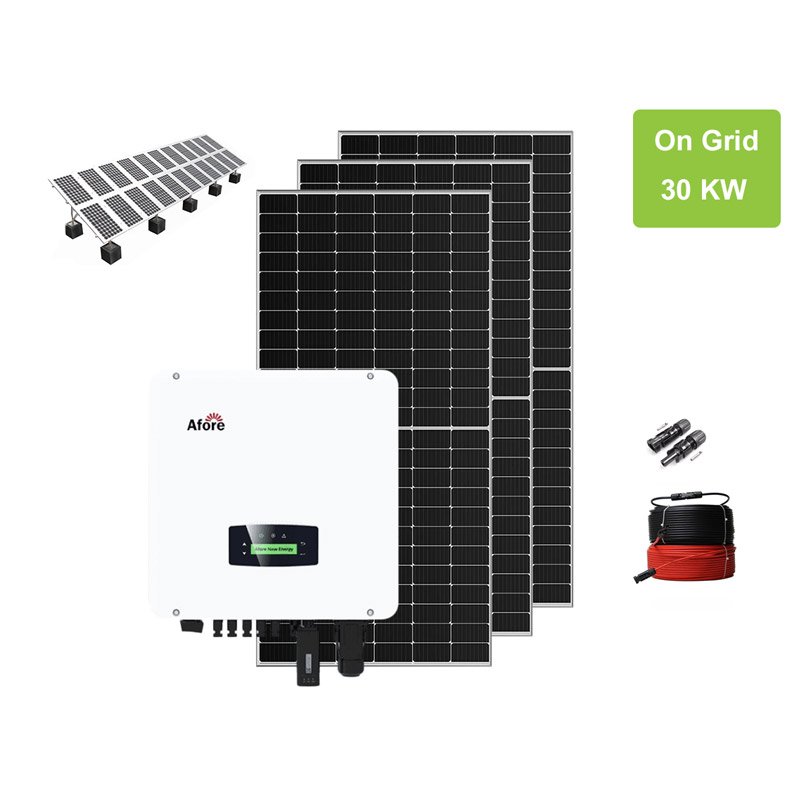
- System Type: On-Grid Afore
- Electrical Type: Three-Phase
- Battery: Not included
- Installation: Ground-mounted
- MOQ: 1 Set
How Many Solar Panels Are Needed for a 30kW System?
Panels count needed for 30KW solar systems depends on the wattage of the solar panels you choose and the layout design.
| Panel Wattage | Approximate Panels for 30kW |
|---|---|
| 450W | about 67 panels |
| 500W | about 60 panels |
| 550W | about 55 panels |
| 600W | about 50 panels |
| 700W | about 43 panels |
| 730W | about 42 panels |
Rooftop vs Ground-mounted Installation
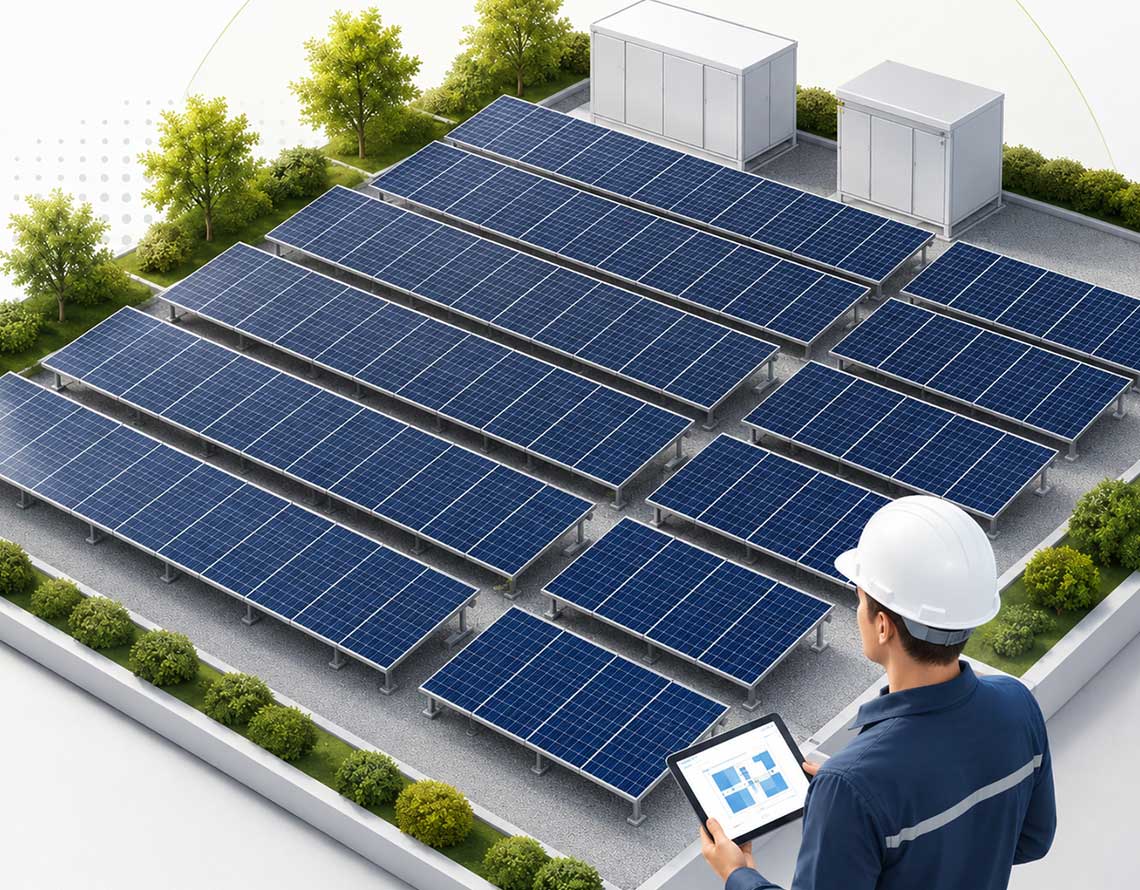
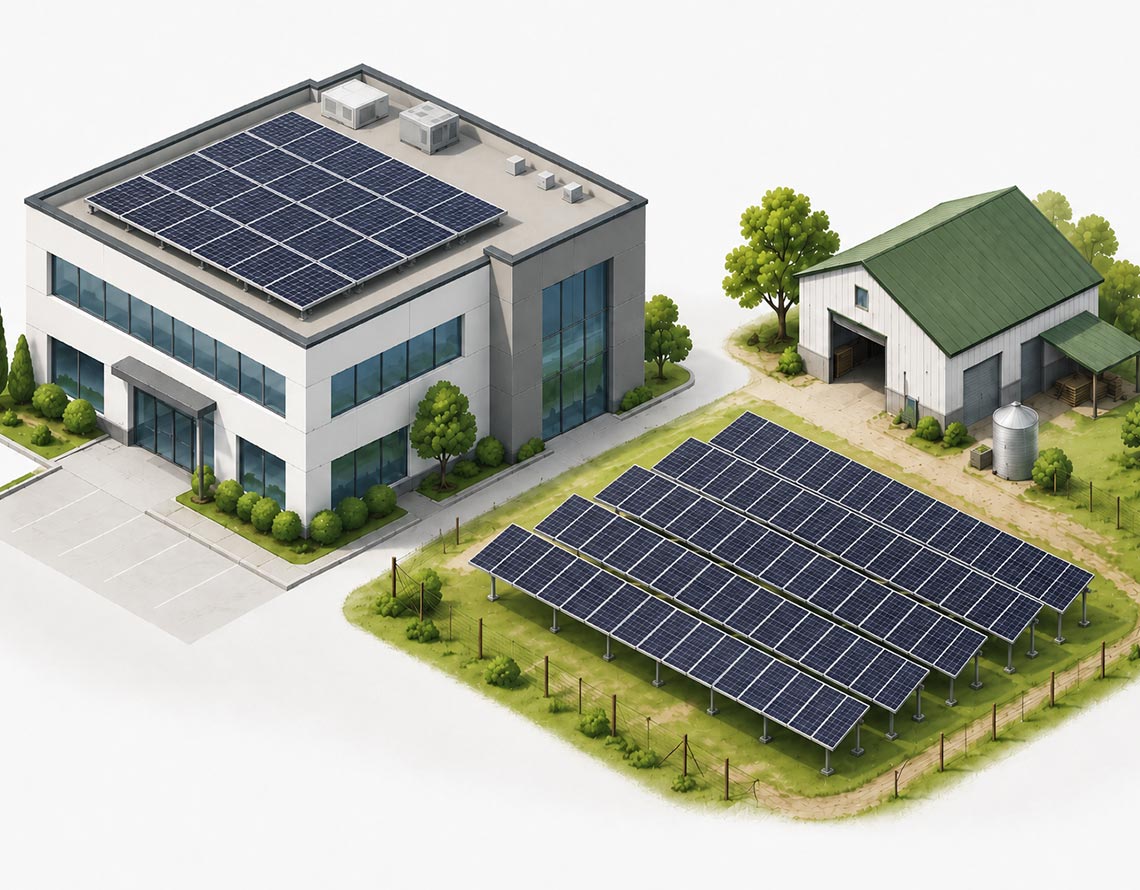
Rooftop installation is the leading way for commercial buildings, clinics, retail properties, and workshops that need 30KW solar systems. Ground-mounted installations remain important for farms and rural businesses, where there are large spaces available.
More About HBOWA 30KW Solar Systems
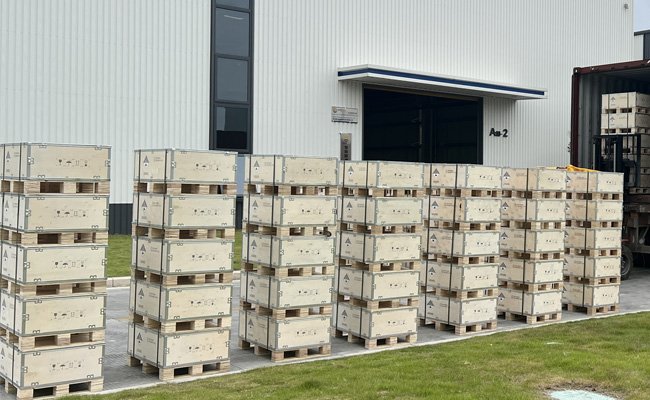
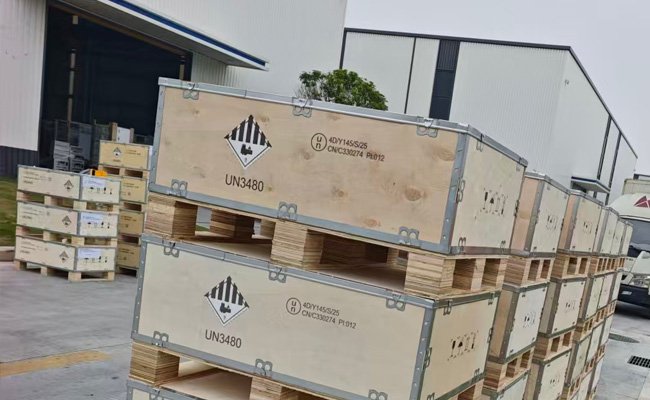
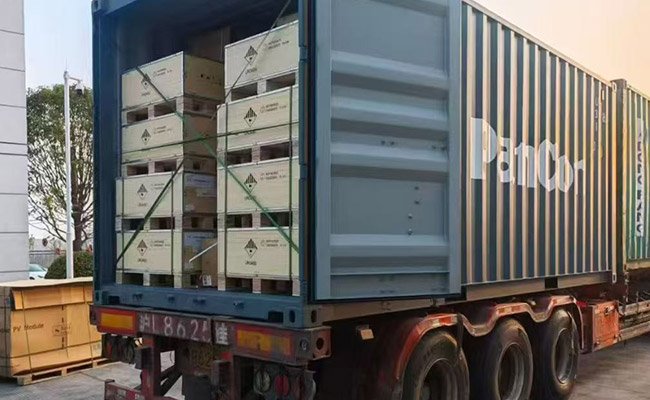
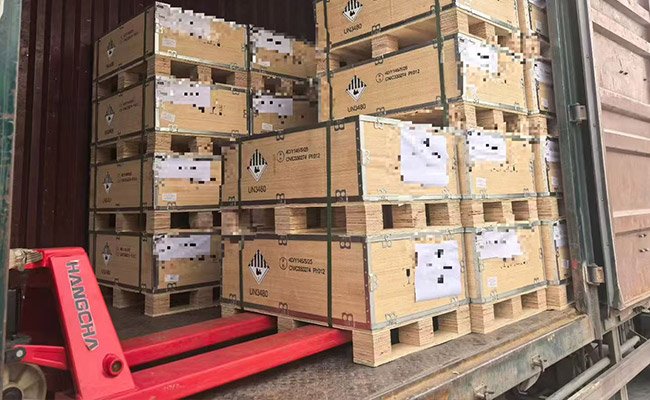
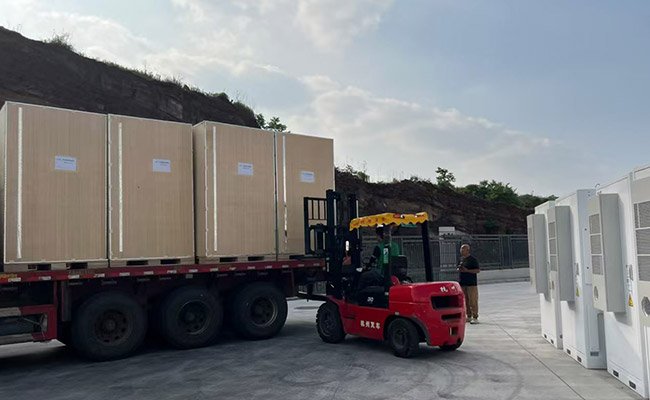
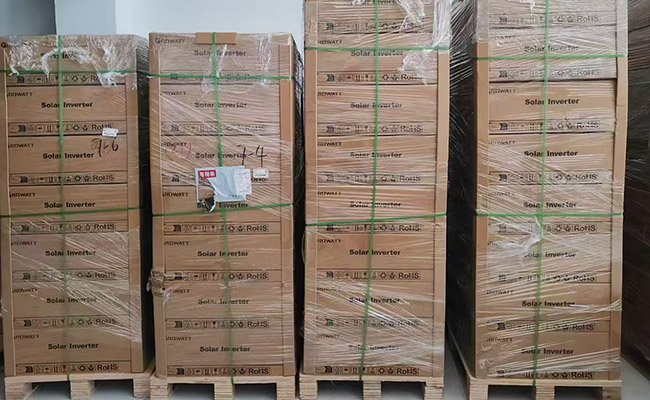
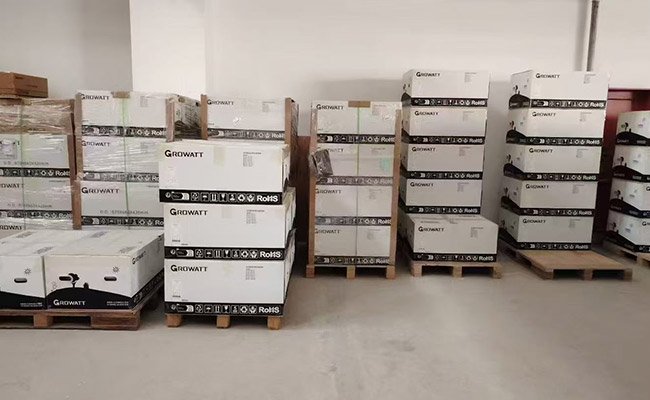
- Shipping
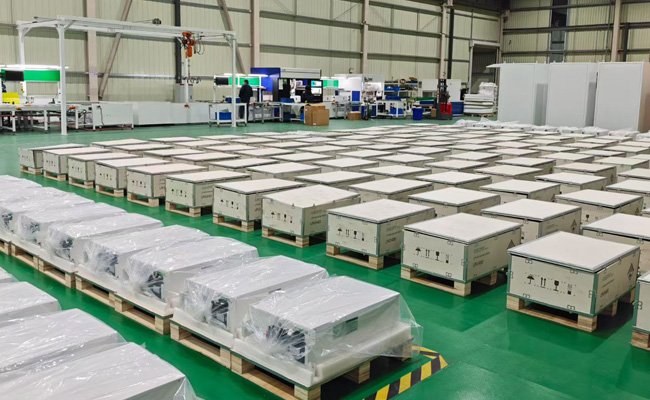
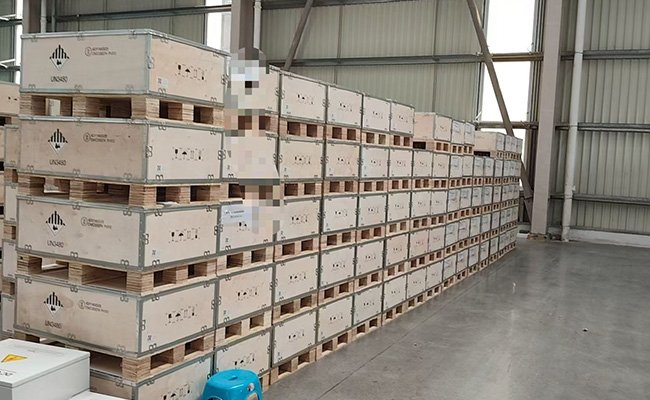
- Warehouse
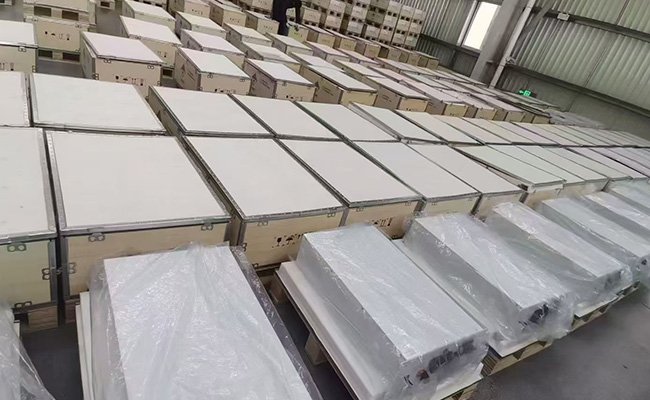
- High Voltage Battery Show
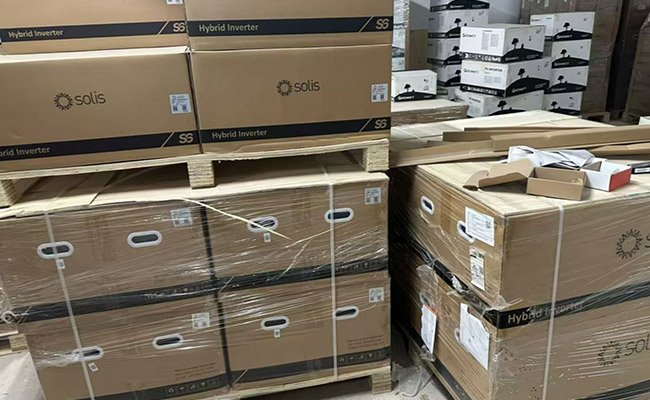
- Packaging Video Show
FAQ
Yes. A 30kW Solar System can enable daytime charging of electric vehicles, particularly when a fleet’s charging schedule coincides with peak solar times. The number of vehicles whose charging is possible is dependent on fleet size, capacity of the charger, distance driven and overall consumption of electricity. During system design, a detailed load assessment is recommended.
30KW systems are used for business applications where they need higher power loads, which single-phase electrical grids can not handle. 3 phase systems can support better load balancing, are more suitable for commercial equipment and continuous daytime operation.
Choose a 30kw on grid solar system if you want faster ROI, lower cost, and strong bill reduction during the day.
Choose a 30kw hybrid solar system if you need battery backup for evening or rainy days, and you want continuity during an outage.
A 30kW commercial solar system requires relatively little maintenance, such as once a year or a maximum of 2 times a year. Modren inverter like Growatt provide monitoring all the time and testing for electrical safety. You just need to clean PV modules regularly, even if it’s from Tier-1, to avoid a reduction in energy generation. These are preventive maintenance and will help you to maximize the performance for a longer period.
Certainly yes! Metal roofs are a popular choice for business solar installation projects, given their durability and ease of mounting. Nonetheless, experts must assess the roof condition, structural condition, wind load requirements, drainage paths, and mounting system prior to installation for long term safety, compliance, and performance of the system.
All photovoltaic modules lose efficiency over time. As per International Energy Agency Photovoltaic Power Systems Programme (IEA PVPS) reports, high-quality modern modules have relatively low annual degradation rates. Tier-1 solar panels will produce good energy over a period of time, albeit slowly, for a period of twenty-five years or more, when properly maintained.
Yes. The performance of a 30kW Solar System can be greatly enhanced with energy management software. From optimising load scheduling to early fault identification, monitoring equipment health, and increasing self-consumption, the software performs a variety of tasks. Companies with battery storage, electric vehicle charging infrastructure, or multiple distributed energy assets at various facilities find these platforms especially beneficial.
No, a standard grid-tied 30kW Solar System shuts down for safety in case of a grid outage. When battery storage has been installed in the system, and a hybrid solar inverter is suitable, backup power will be available. Planning a system, businesses needing continuous operations should evaluate options for a hybrid or off-grid setup.
Many things dictate how long it takes to install a 30kW commercial solar system. The complexity of the project, the permitting required, the roof conditions, and the weather all come into play. Often, the actual physical installation can take place in a matter of days, but a real time-consuming activity is the engineering approvals, grid interconnection, and commissioning, which can extend the total duration to several weeks.
Certainly. The installation of many 30kW Solar Systems can be expanded later in case of additional roof space, capacity of the inverter, and electrical infrastructure. Organizations looking for scalability should ensure they discuss it during design. Planning for the future will reduce upgrade costs and simplify the addition of extra panels or batteries.
Related Solar Product

How Much Space is Required For a 30kW Solar System?
Installation areas for most commercial installations range from 120 square meters to 180 square meters because the size of a 30kW Solar System depends on the efficiency and wattage of the panels.
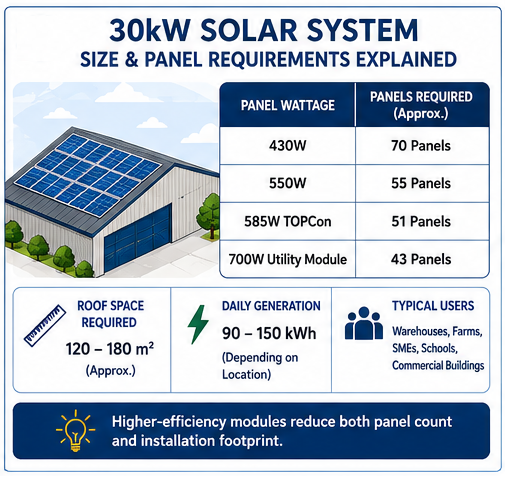
For businesses wanting to know what is the size of a 30kw solar system, roof space or availability is often the first design consideration. Standard commercial solar panels typically require more installation area, while higher-efficiency panels allow for greater power density.
| Panel Type | Estimated Space |
| Standard commercial modules | 150–180 m² |
| High-efficiency TOPCon modules | 120–150 m² |
How many amps is 30kW?
The amps in 30KW depends on the voltage of the electricity, whether it is a DC, single-phase AC, or three-phase AC system. For 30KW three phase high voltage AC system, A = (KW x 1000)/(√3 x V x PF), in which V means voltage, PF means power factor, √3 means phase factor. For example, voltage is 480V, PF is 0.85, then A equals 42.5A, details: (30 x 1000)/(√3 x 480 x 0.85)=42.5A.
What’s The Output Power Of A 30kW Solar System?
The power generation by a 30kW Solar System depends on the availability of solar resource, deployment of the system, and its operating circumstances, but the common range lies between 33,000kWh/year to +55,000kWh/year.
Daily, Monthly, and Annual Output
When businesses look at how much power a 30kw solar system produces, location is the biggest factor. In places with strong solar energy irradiation, they achieve much better yields than in areas with more cloud cover and less daylight.
| Solar Resource Level | Daily Output |
| Low irradiation | 90–110 kWh |
| Moderate irradiation | 110–135 kWh |
| High irradiation | 135–150+ kWh |
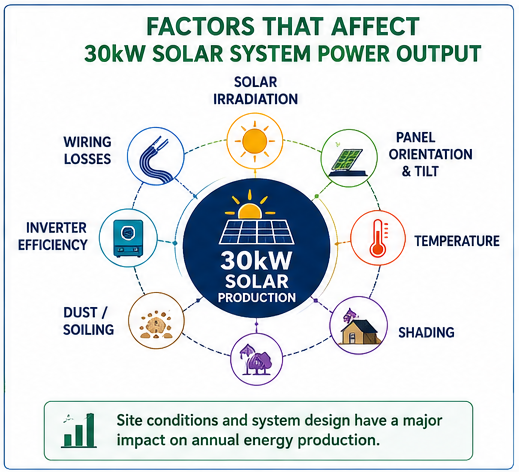
There are many technical variables that produce solar electricity generation. The solar irradiation is the sun’s availability. The tilt angle and orientation of a panel affect energy captured throughout the day. Higher module temperatures can reduce the operating efficiency of modules, and output levels can be lowered due to shading from surrounding buildings and/or trees.
If not maintained regularly, the accumulation of dust or soiling may also lower the production. Not only that, but all kinds of wiring losses, inverter efficiency, and other system losses also influence performance.
Use an industry tool for your solar simulation, like the European Commission’s PVGIS calculator. Most commonly used for site-specific estimates of energy production before installation are NREL’s PVWatts calculators or from a reputed solar solution provider, such as HBOWA’s website.
How Much Does a 30kW Solar System Cost in 2026?
There is no magic number or specific answer for the cost of 30kw solar system because it varies widely by country, but also largely on the quality of equipment, installation complexity, battery, permits and labour of that region. As a consequence, organizations should consider system value, rather than just the acquisition cost.
Major Cost Drivers
The final price of a 30kw solar system depends on several aspects. High-efficiency equipment usually entails a higher capital investment. Moreover, it also enhances energy yield in the long run and brings down lifecycle costs.
The integration of batteries is $ / kWh the highest additional cost because storage systems require extra power electronics, control systems, and safety systems. Conditions surrounding installation are relevant too. Engineering, labor, and other costs often rise for ground-mounted projects, complex roof structures, or long cable runs.
| Cost Factor | Impact |
|---|---|
| Solar Panel Type | High |
| Inverter Brand | High |
| Battery Storage | Very High |
| Roof or Ground Mounting | Medium |
| Local Labor and Permits | High |
| Grid Connection | Medium to High |
Which Businesses Benefit Most From a 30kW Solar System?
A 30kW solar system is going to be fit for organizations that have a predictable daytime electricity demand and enough installation space. A commercial solar system can lessen your yearly expenses and enhance your energy resiliency in these scenarios.
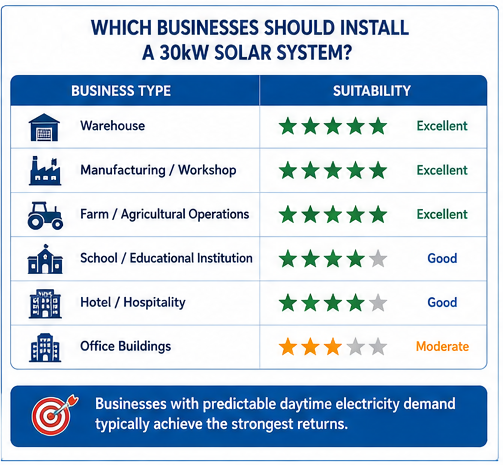
Warehouses are typically lit, ventilated, and have their material-handling equipment operational during business hours, making them well-suited to a business solar installation project. Industrial workshops where machines run throughout the day also have a high self-consumption rate.
Another strong use case is agricultural cold storage facilities. Electric loads can be reduced significantly with solar generation based on the run time of refrigeration systems. A furniture workshop with saws, compressors, and finishing equipment running in the daytime turns out to make maximum use of Solar energy. Many rural telecom sites in remote areas use a combination of solar generation supplemented with battery storage to cut down on diesel consumption and improve site reliability where grid access is poor or intermittent.
Should You Add Battery Storage to a 30kW Solar System?
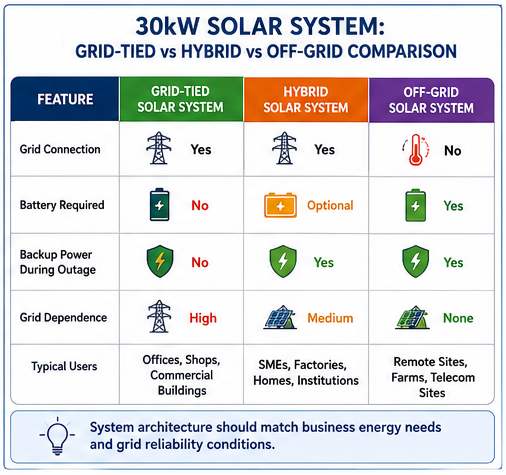
No, Battery storage is not required for all the projects. But in real life, it would add significant value where backup is needed, grid reliability is poor, and electricity demand is high after sunset.
A business that is having frequent outages can opt for a Hybrid Solar System with a battery. Storage systems contribute to boosting self-consumption by utilizing excess generation during the day for evening loads. This is highly beneficial in areas with high electricity tariffs.
| System Type | Backup Power | Grid Dependence |
| Grid-tied | No | High |
| Hybrid Solar System | Yes | Medium |
| Off-grid solar system | Full | None |
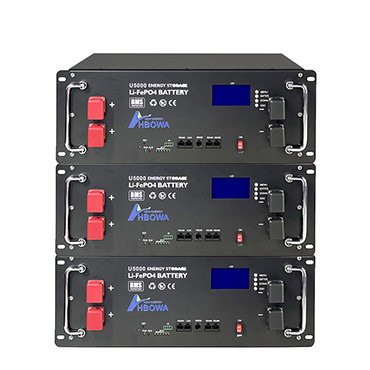
Due to its long cycle life, high safety, and low maintenance characteristics, modern LiFePO4 Battery technology is increasingly becoming the choice of many commercial applications. According to the International Energy Agency Photovoltaic Power Systems Programme (IEA PVPS) studies, energy storage is being increasingly used commercially, providing flexibility to and resilience from weather events.
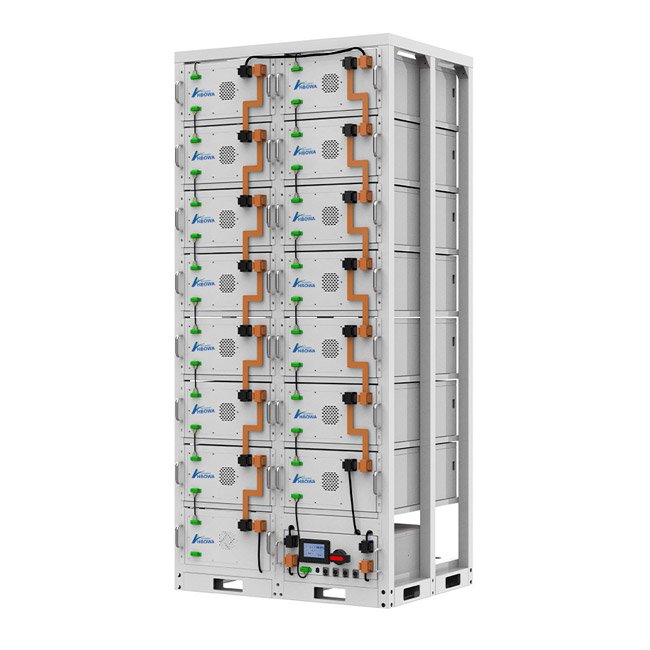
Modular solar energy storage solutions, such as an Energy Storage Cabinet, will facilitate expansion of the systems as well as centralized management for larger facilities.
What Is the Typical ROI and Payback Period?
30 KW Solar system financial projection and profitability depend on electricity tariff and self-consumption rates, government incentives, local law, and battery storage inclusion.
The formula for estimating the solar payback period is:
Payback Period = Total System Cost ÷ Annual Electricity Savings
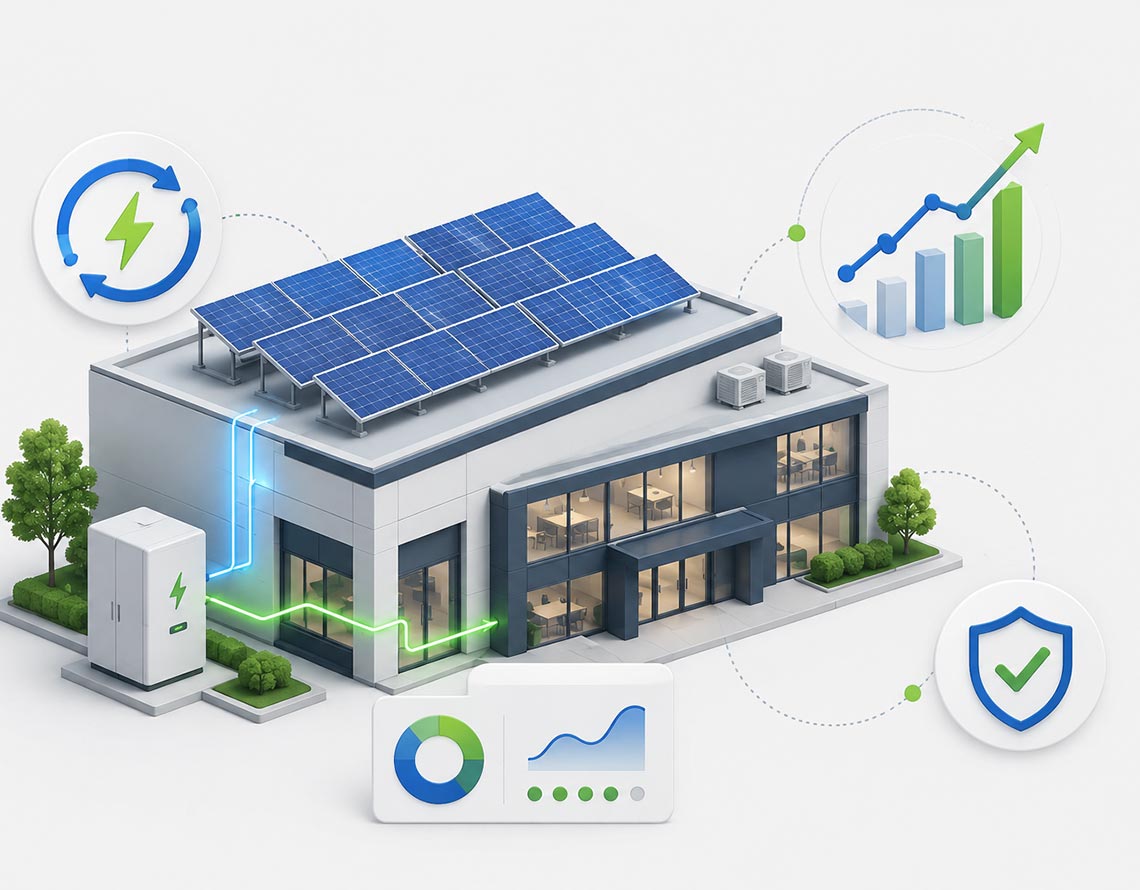
Most commercial facilities that use the majority of their electricity during the day achieve a stronger solar ROI because instead of exporting that electricity to the grid, more solar energy is used onsite.
Look at a small factory processing food that runs refrigeration machines and production equipment all day. If around 80% of the electricity generated by the system is consumed, then the business reduces its purchased electricity. Thus, improving financial performance and reducing the payback period.
| Scenario | Expected Payback Trend |
| High daytime consumption | Faster |
| Heavy exports to grid | Moderate |
| Battery-supported self-consumption | Faster in high tariff regions |
Tax incentives, electricity price escalation, and local net-metering policies impact the solar system’s long-term project economics.
Choosing the Right Hardware
Component selection determines not only system performance but also long-term operating costs and reliability.
Solar Panels
Commercial buyers often select either PERC or TOPCon technology. PERC modules have been in service for a long time and are still in widespread use. However, typically N-type TOPCon modules have higher efficiency, better temperature behaviour, and lower degradation rates. Choosing reliable manufacturers can ease the risk factor.
Inverters
The efficiency of a system relies on properly sizing the inverter. String inverters are widely used in most commercial projects because of their modular design, simplifying your maintenance. Businesses that require backup functionality can go for a hybrid solar inverter that can integrate battery storage. One example of a widely used commercial inverter solution present in the market is the Growatt inverter.
Battery Chemistry
Battery chemistry extends lifespan and total ownership cost.
| Chemistry | Lifespan | Commercial Suitability |
| Lead-acid | Lower | Limited |
| LiFePO4 | High | Excellent |
For commercial applications, LiFePO4 battery systems generally provide longer service life than lead-acid technologies.
Comparison of Equipment Quality
The system lifetime is affected by reliability, degradation rate, and maintenance cost of major components with overall quality of major components.
| Equipment Tier | Typical Features |
| Economy | Lower efficiency |
| Tier-1 PERC | Proven reliability |
| Tier-1 N-type TOPCon | Higher efficiency, lower degradation |
Use of credible solar panels and inverters from a well-known distributor such as HBOWA can diminish operational risks for commercial projects. Organizations like BloombergNEF classify manufacturers according to bankability metrics regularly. The Tier-1 manufacturers are widely recognized with Risen, Longi, Trinak, JA Solar, and many more.
Should businesses oversize the solar panel array relative to inverter capacity?
In a number of commercial projects, moderate DC oversizing is deliberately used to increase annual energy yield and utilization of the inverter. The ideal ratio of direct current to alternating current will vary depending on climatic conditions, solar irradiation, inverter specifications, and project aims. Oversizing should always be done as per vendor recommendations and verified during detailed engineering and the system performance model.
Is a 30kW Solar System Right for You?
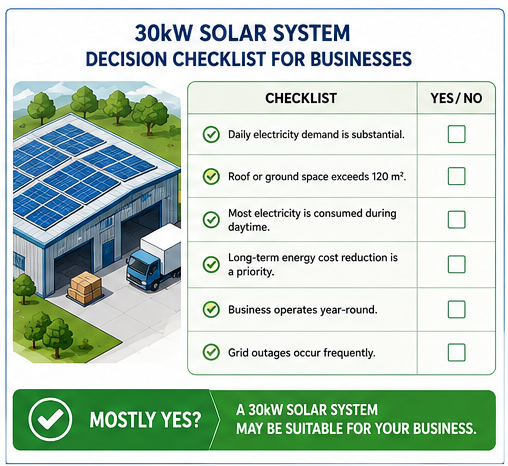
Selecting an appropriate 30kW Solar System depends on the nature of operations, not electricity usage. The first step the business needs to take is to evaluate if its energy use is high enough. Businesses that maintain stable daytime loads typically benefit the most because they use more of the solar electricity they generate.
It is equally important to have installation space available. The usable roof or ground area will often exceed 120 m², but high-efficiency modules may limit this requirement. Businesses aiming for sustained savings on energy expenditures, as well as safeguards against rising utility rates, should take this system size into account for greater energy resilience.
A 30 kW commercial solar system typically works well where a business operates the year round and demand for electricity is fairly steady. Before designing your system, an energy audit and load profile can help ensure right-sizing and economic viability of the installation.