



What Is a 20 kW Solar System?
20KW solar system is a photovoltaic system with a power output of up to 20 kilowatts and a corresponding output power operating at standard test conditions. Most systems are designed with a higher DC capacity from solar panels than the inverse AC output rating. As an example, a system may have 22-26 kW of panels coupled to a 20 kW inverter to enhance annual energy harvesting. A 20 kW system might be insufficient for energy-heavy manufacturing facilities. On the contrary, if the solar water heater is intended for installations at homes or businesses with low daytime usage, then it may be oversized. Unless it is installed with a hybrid solar system and battery storage.
20kW Solar System for Business Application
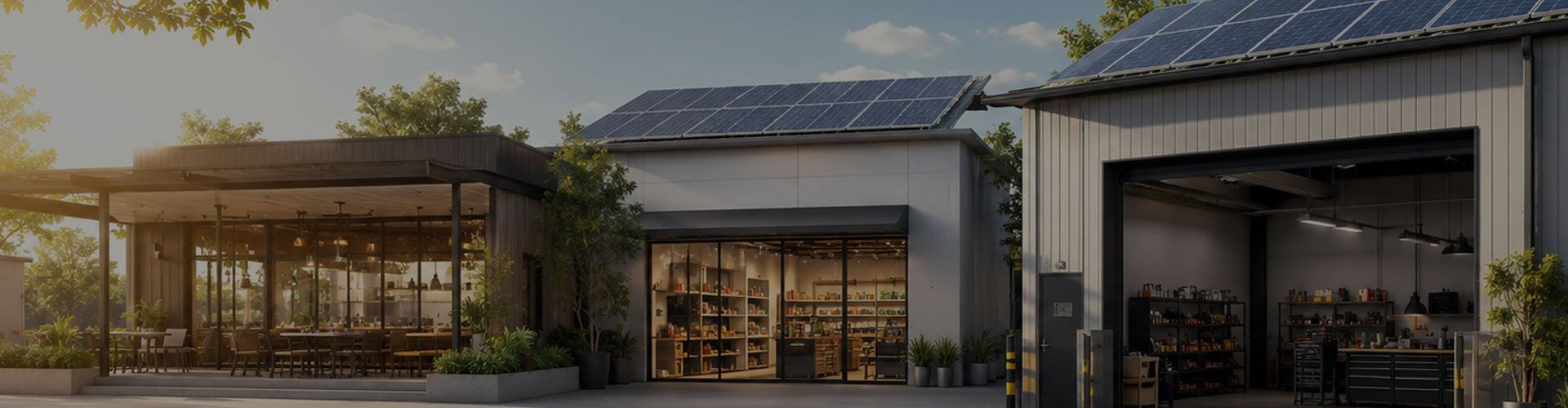
A 20KW solar systems are larger system for light commercial use, they are commonly chosen for properties with three-phase service and strong daytime loads, such as cafés, retail stores, and workshops, farms and agricultural operations, etc. that need stronger output, more advanced configurations. You can find your tailored 20kw system solutions here in HBOWA.
A commercial solar system of this size is commonly installed on businesses that have large electricity demands during the day. It can also be used for certain agricultural and residential uses.
| Application | Typical Daily Consumption |
| Retail stores | 50-100 kWh/day |
| Farms | 60-120 kWh/day |
| Offices | 50-150 kWh/day |
| Small factories | 80-200 kWh/day |
| Warehouses | 40-120 kWh/day |
| Large homes | 50-90 kWh/day |
Quick Product Navigation
Use these quick links to jump to the right section.
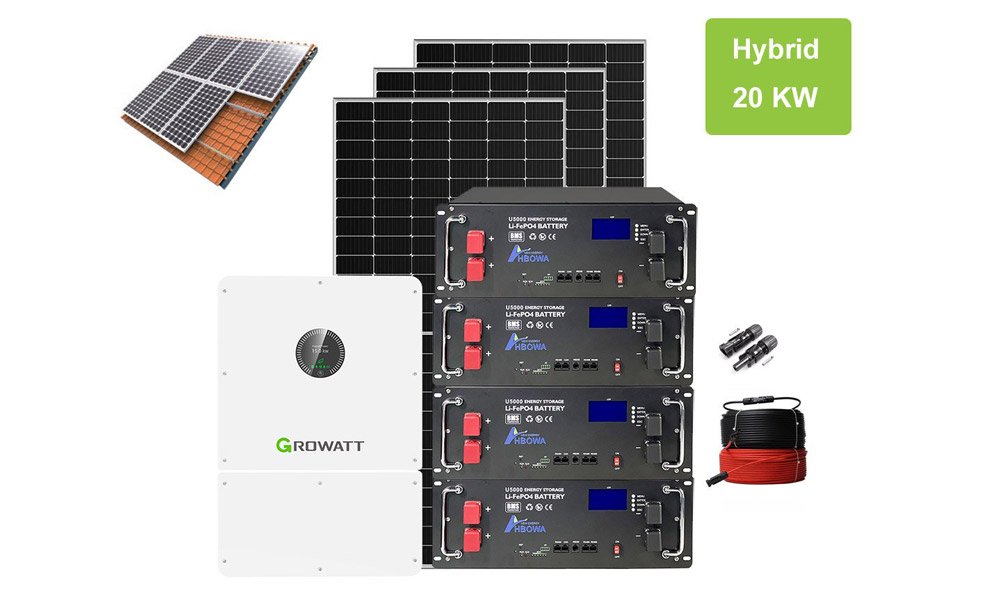
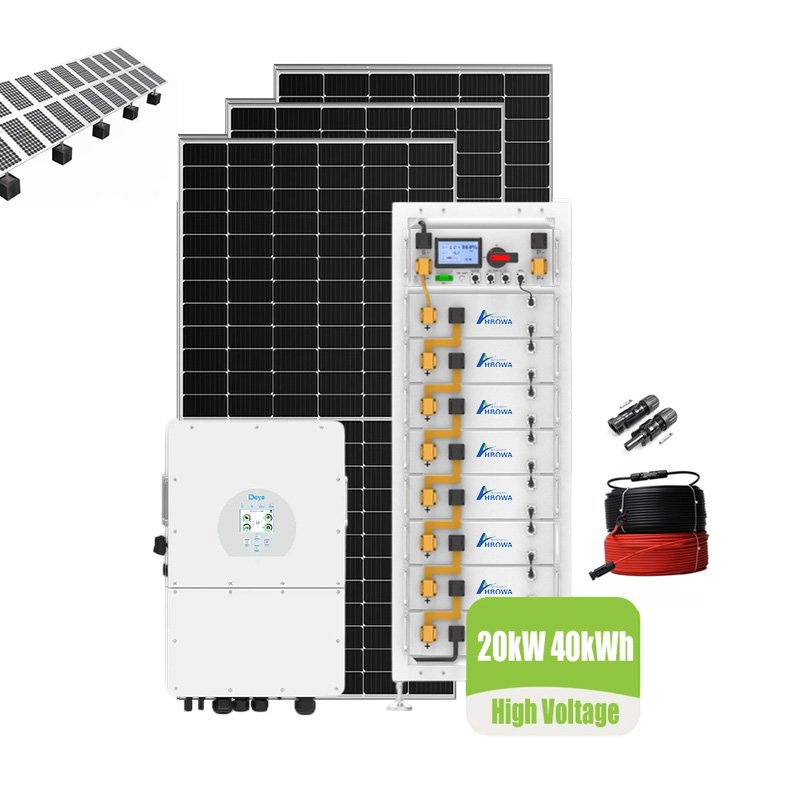
20KW Hybrid Solar System
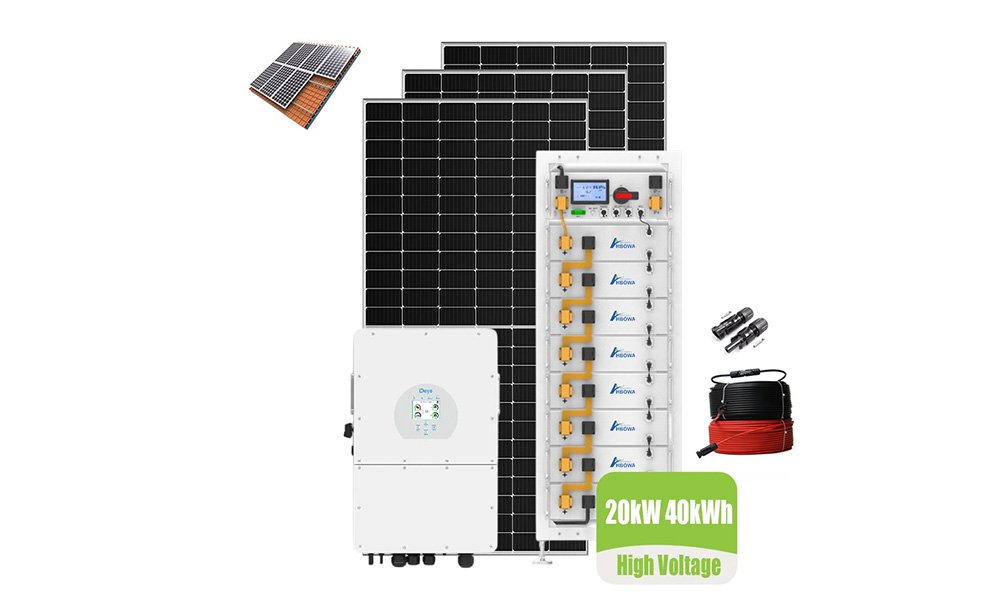
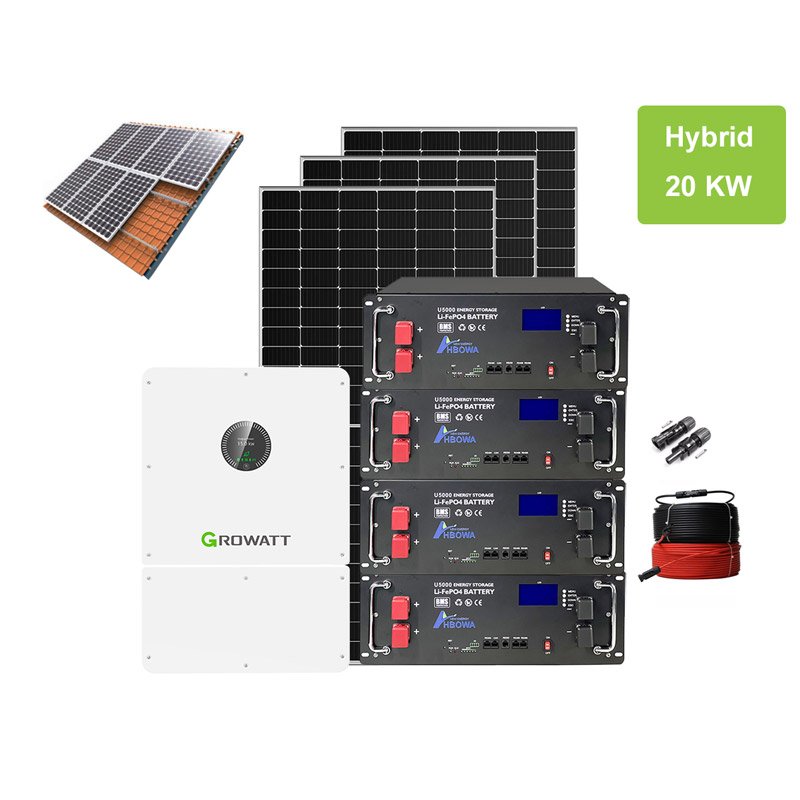
Hybrid 20kW solar systems are the best fit for you who want both bill savings and power continuity. At this size, three-phase high voltage hybrid systems are usually the preferred option for high-consumption properties.
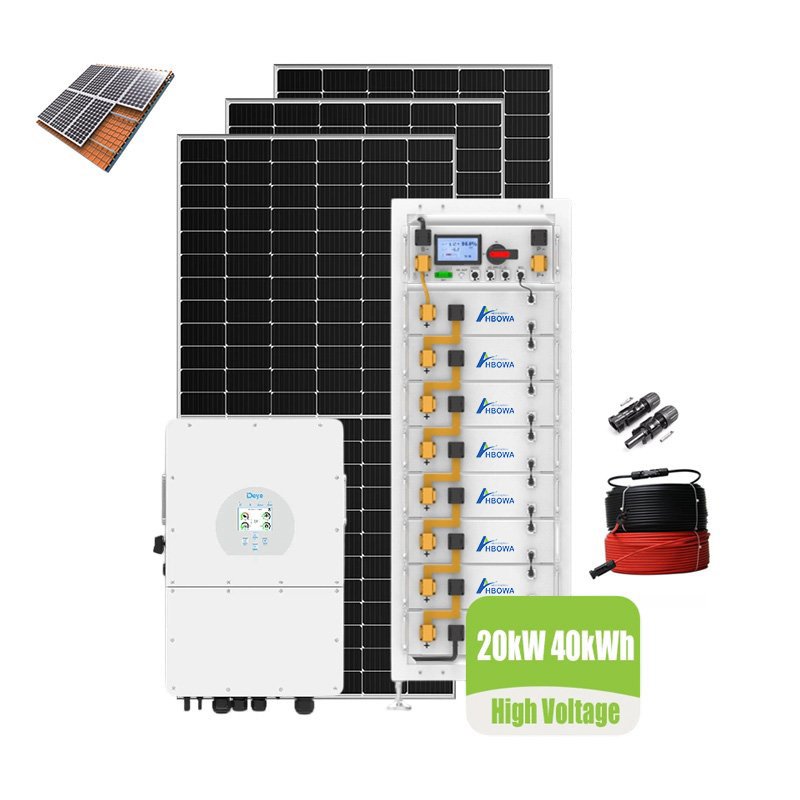
Three-Phase High Voltage
Installation: Rooftop
MOQ: 1 Set
Three-Phase High Voltage
Installation: Ground-mounted
MOQ: 1 Set
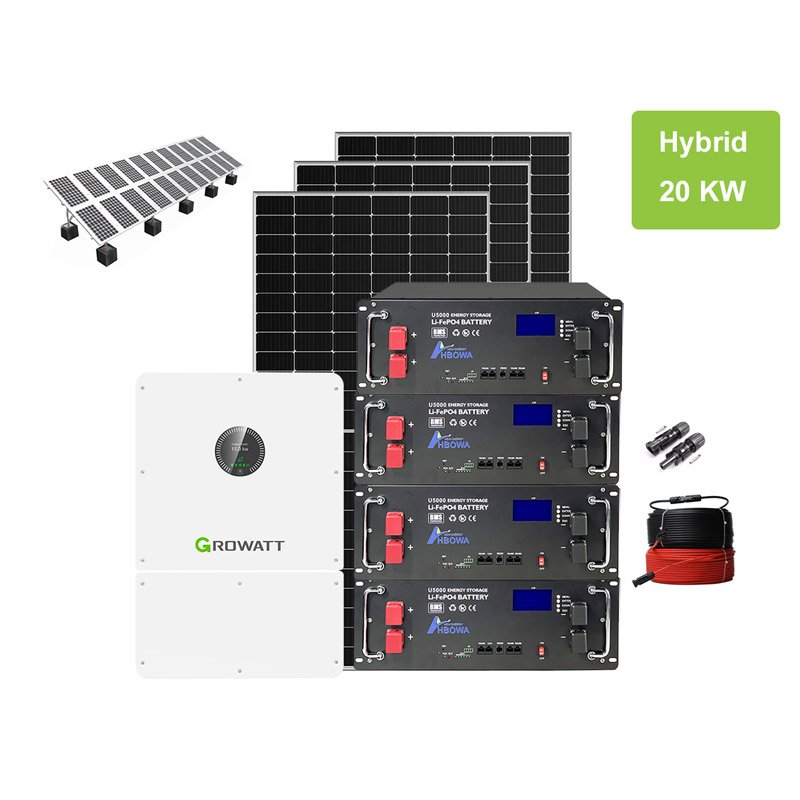
Three-Phase Low Voltage
Installation: Rooftop
MOQ: 1 Set
Three-Phase Low Voltage
Installation: Ground-mounted
MOQ: 1 Set
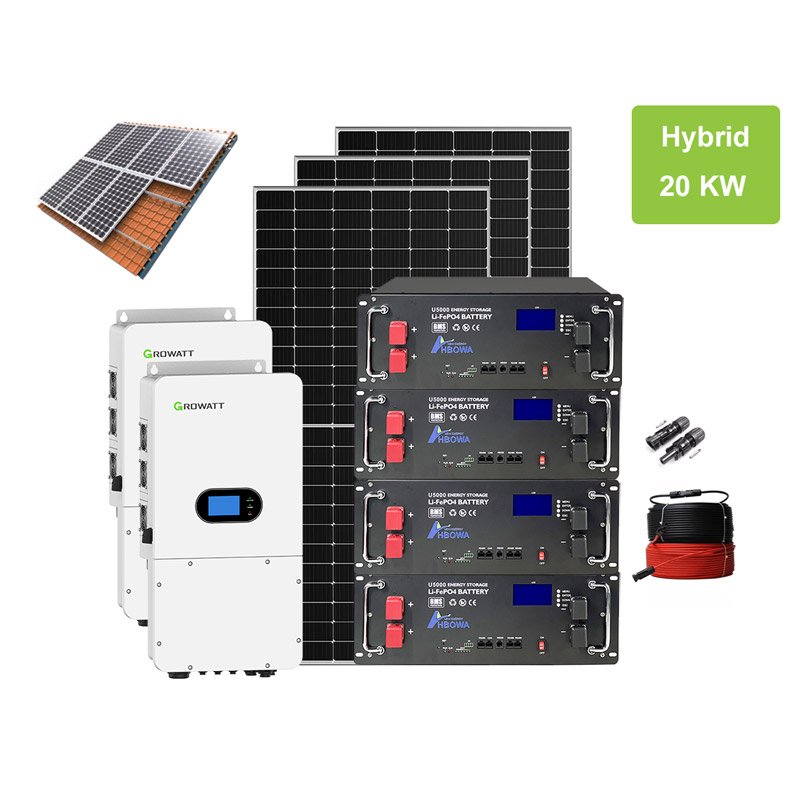
Single-Phase Low Voltage
Installation: Rooftop
MOQ: 1 Set
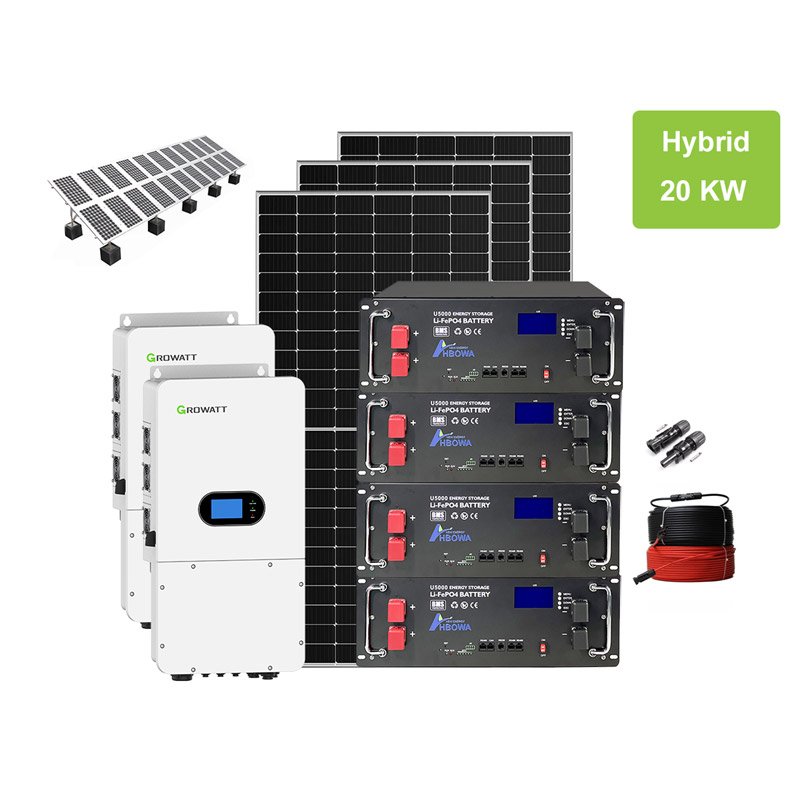
Single-Phase Low Voltage
Installation: Ground-mounted
MOQ: 1 Set
20KW On Grid Solar System
On-grid 20kW solar systems are usually chosen by you, who want the fastest ROI through bill offsetting. They are especially suitable for offices, farms, and small commercial sites with stable utility access.
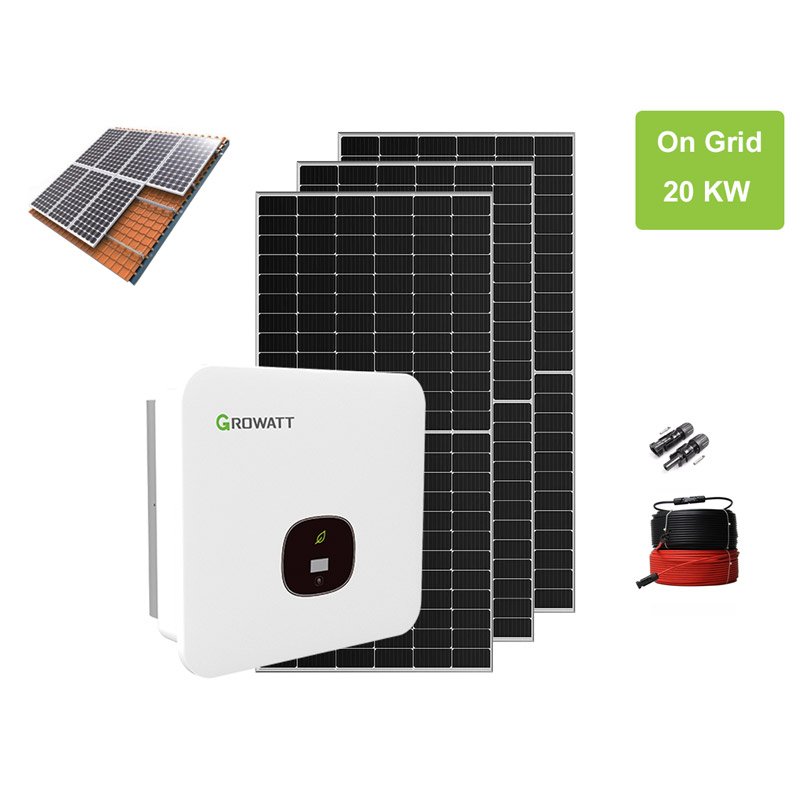
Single Phase Low Voltage
Installation: Rooftop
MOQ: 1 Set
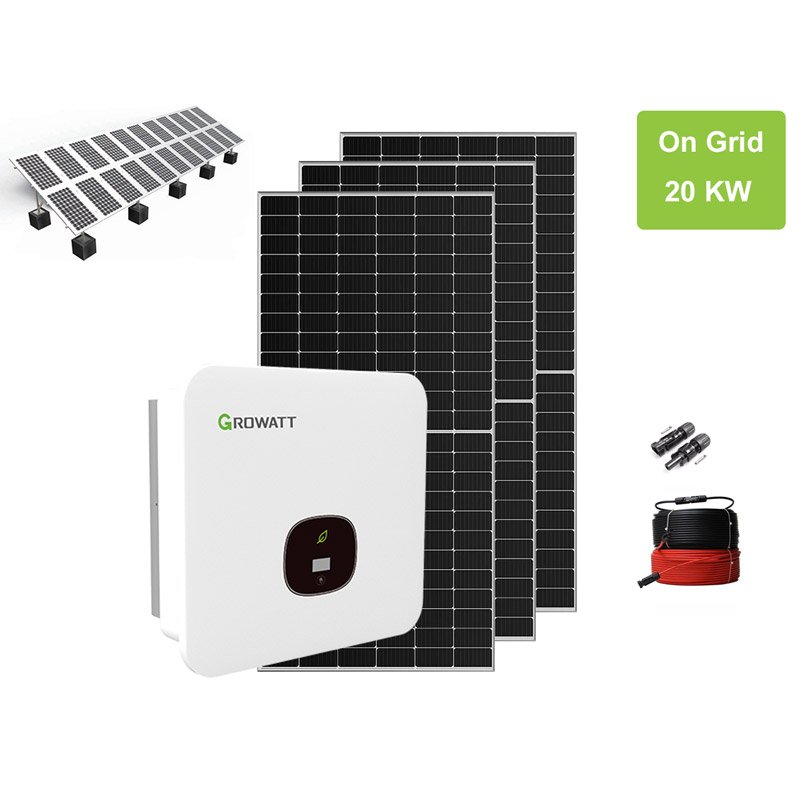
Single Phase Low Voltage
Installation: Ground-mounted
MOQ: 1 Set
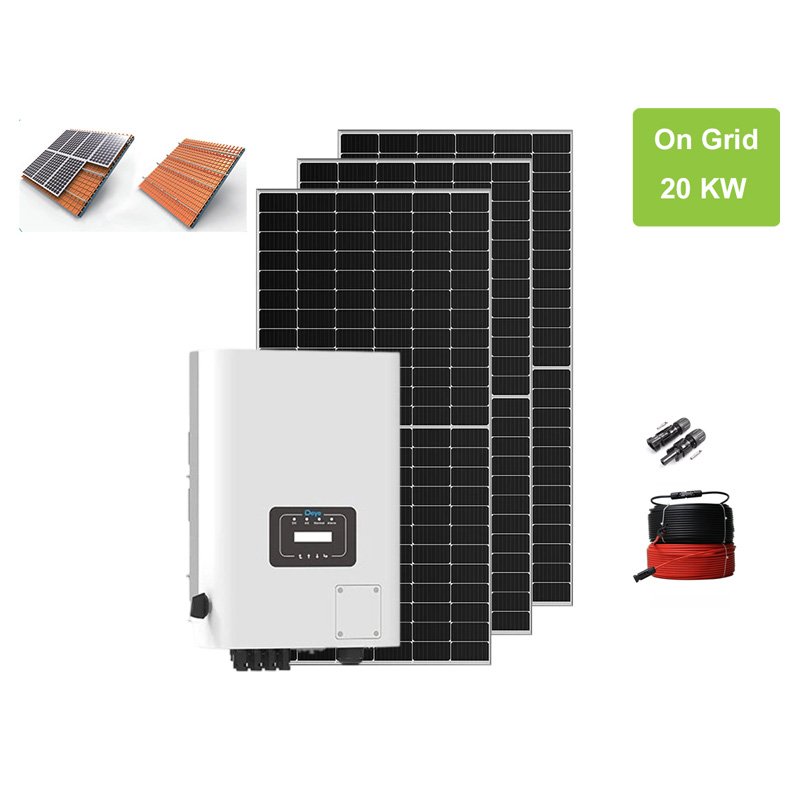
Three Phase Low Voltage
Installation: Rooftop
MOQ: 1 Set
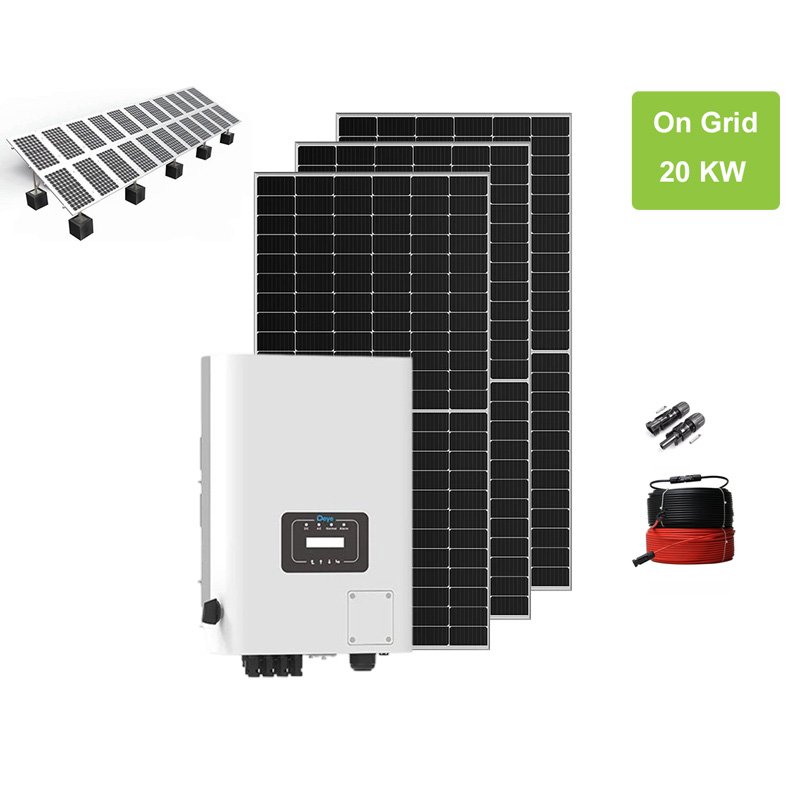
Three Phase Low Voltage
Installation: Ground-mounted
MOQ: 1 Set
20KW Off Grid Solar System
Off-grid 20kW solar systems are more specialized and are designed for remote farms, agricultural sites, and island properties, which often require energy independence. These off-grid 20KW systems often need larger battery banks and may also integrate with diesel generators for 24/7 continuity. The systems below, we configue battery capacity to be twice the wattage of the system. You can also buy more battery storage if you need more power backup. All 20kw off grid solar systems can be set flexibly according to your specific needs. If you wonder how to choose and configue them, welcome to contact us directly.
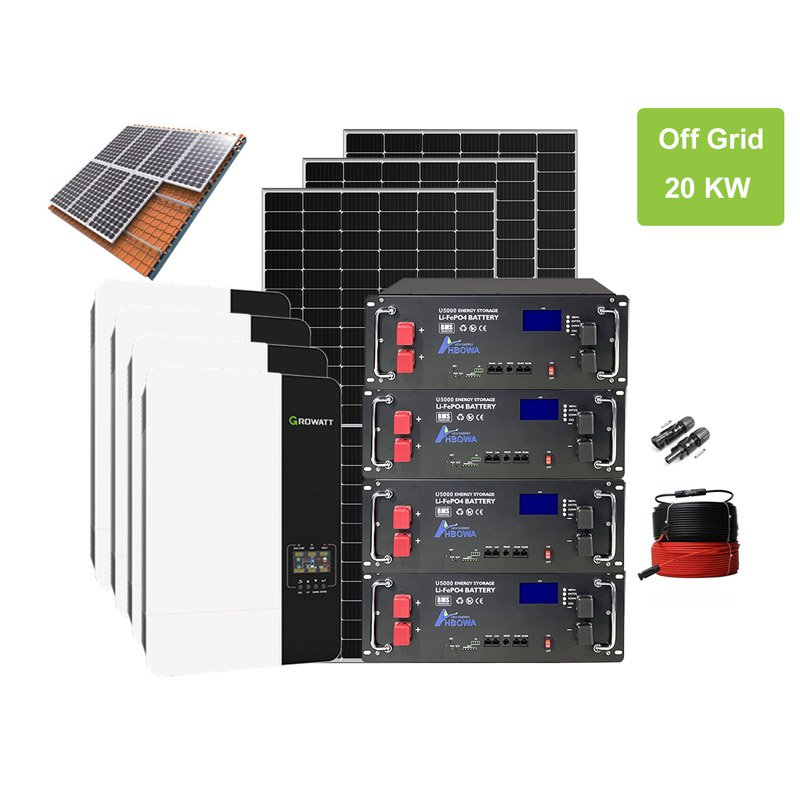
Single-phase Low Voltage
Installation: Rooftop
MOQ: 1 Set
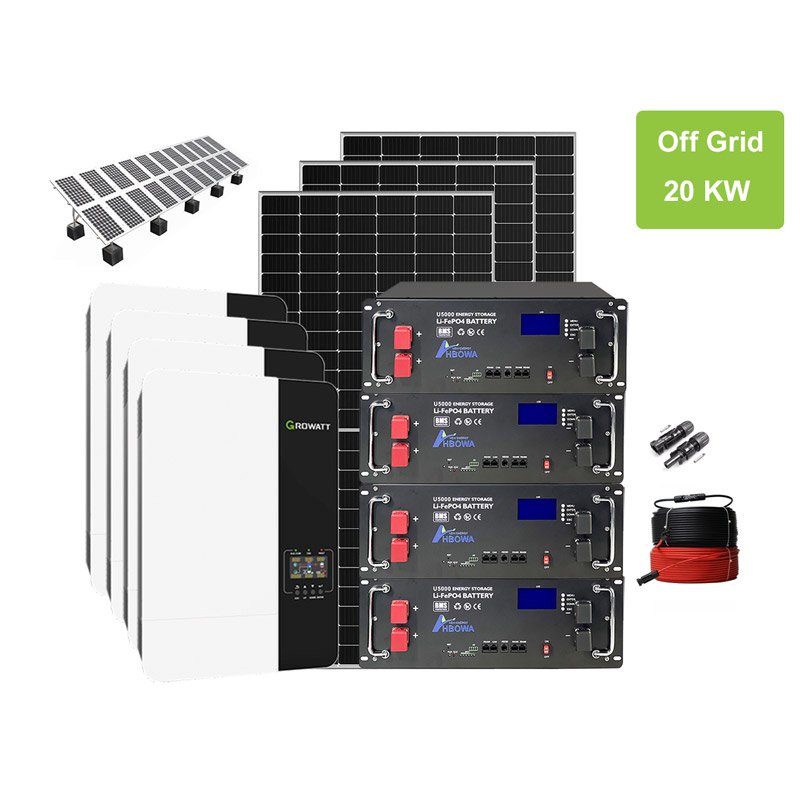
Single-phase Low Voltage
Installation: Ground-mounted
MOQ: 1 Set
20KW Solar Systems Applications
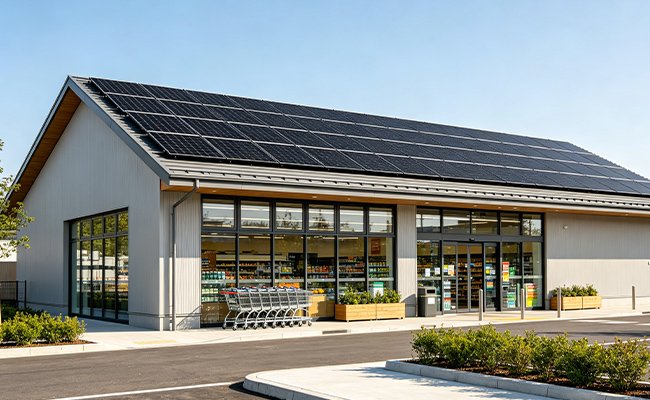 Solar Systems for Shops
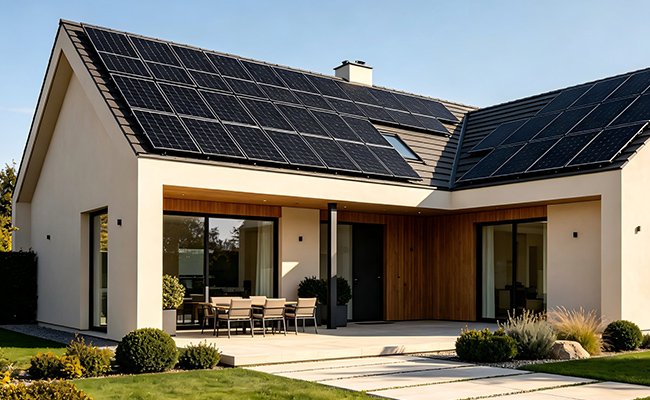
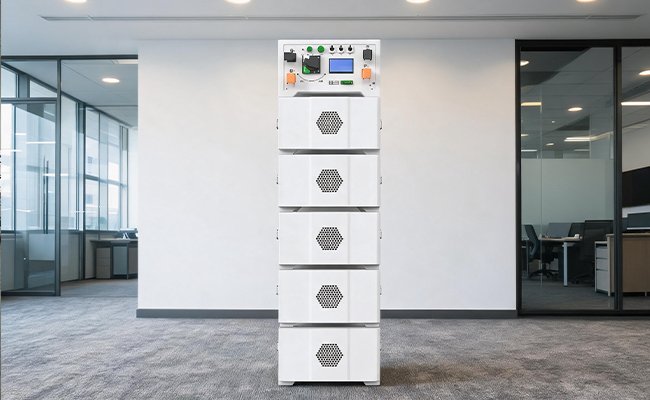
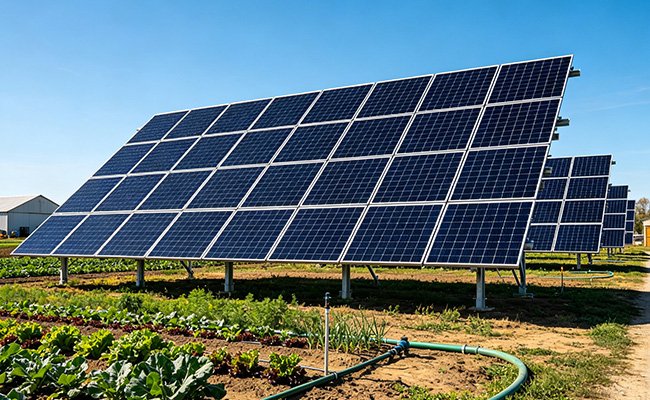
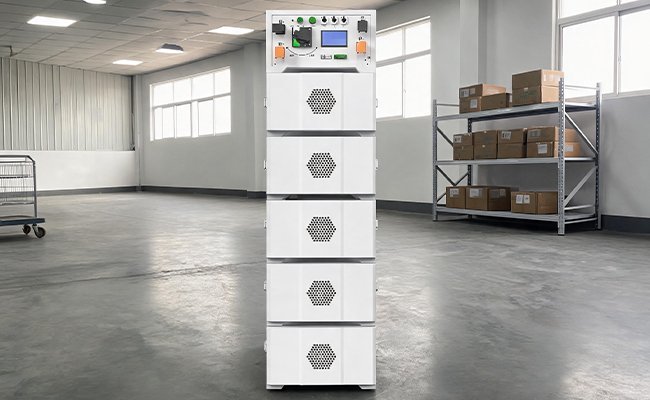
More About HBOWA 20kW Solar Systems
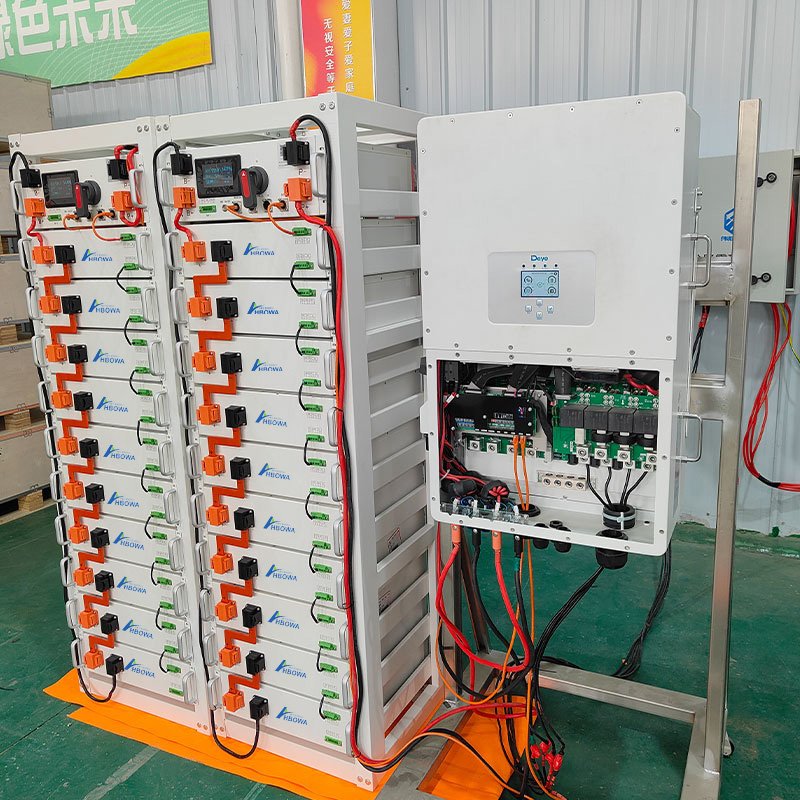
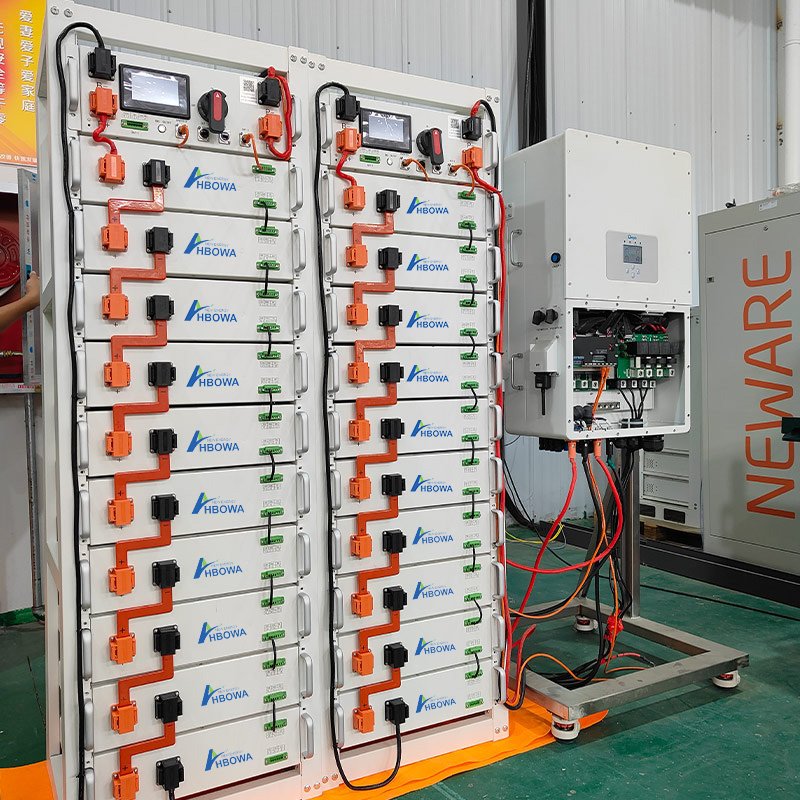
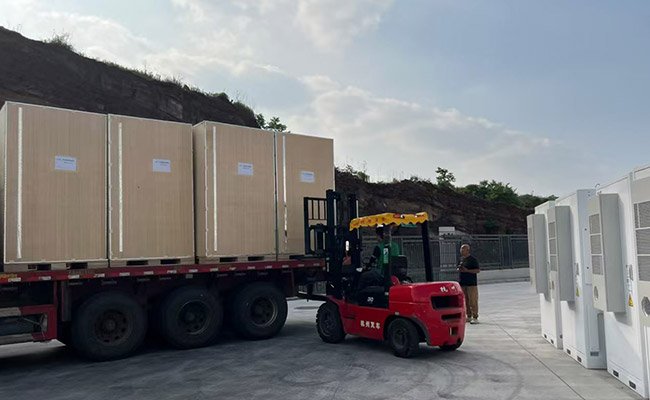
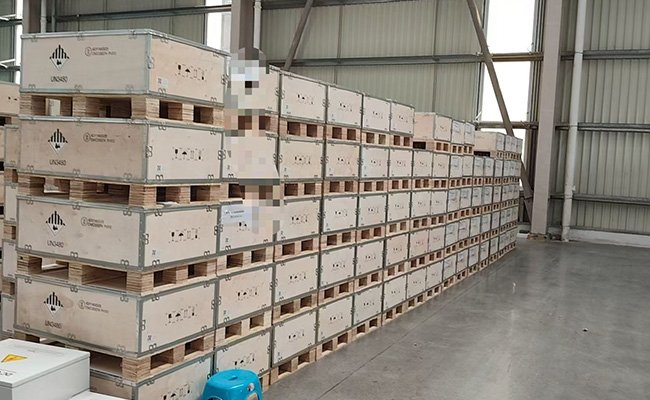
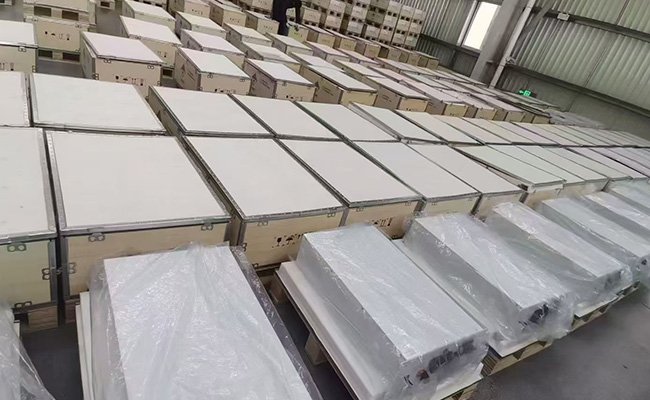
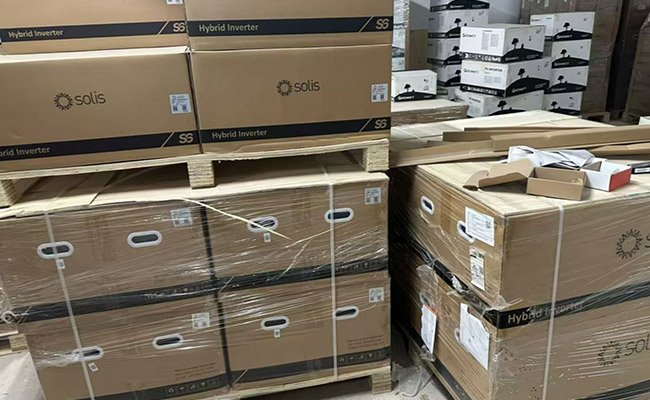
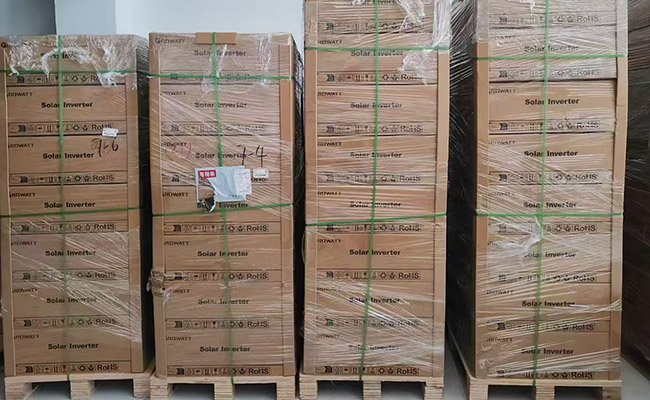
- 20kw Solar System Images
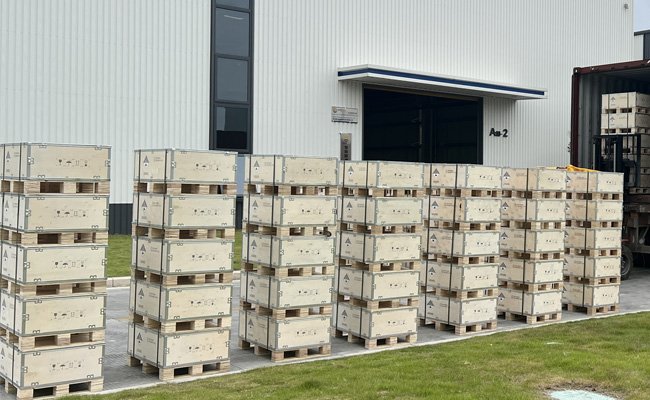
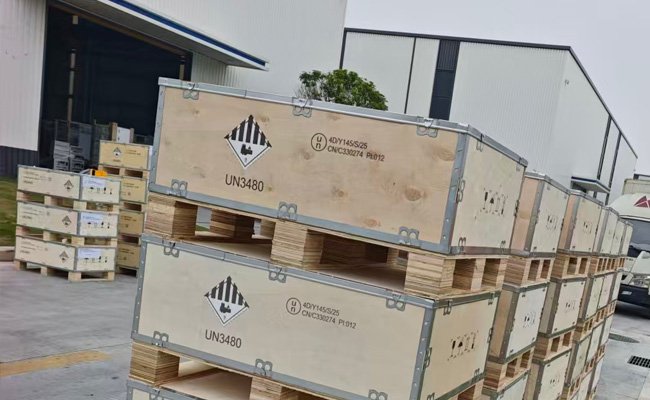
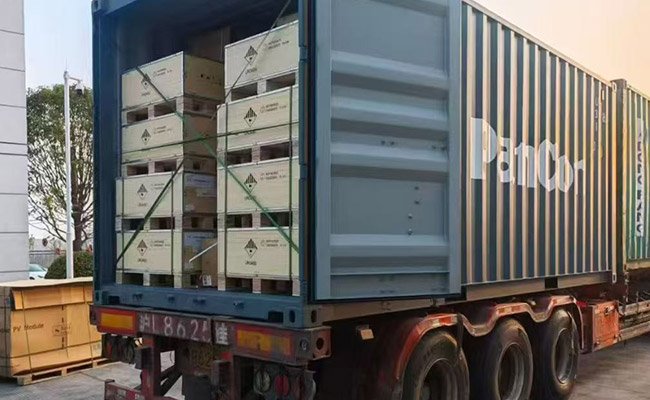
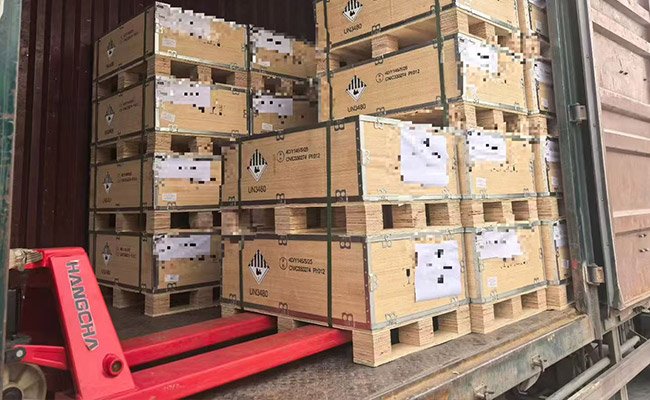
- Shipping
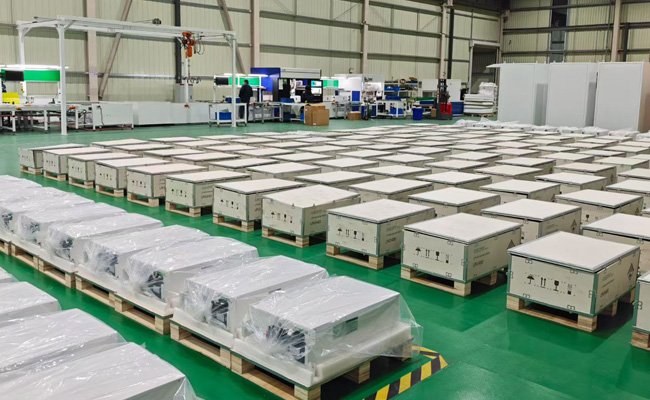
- Ware House
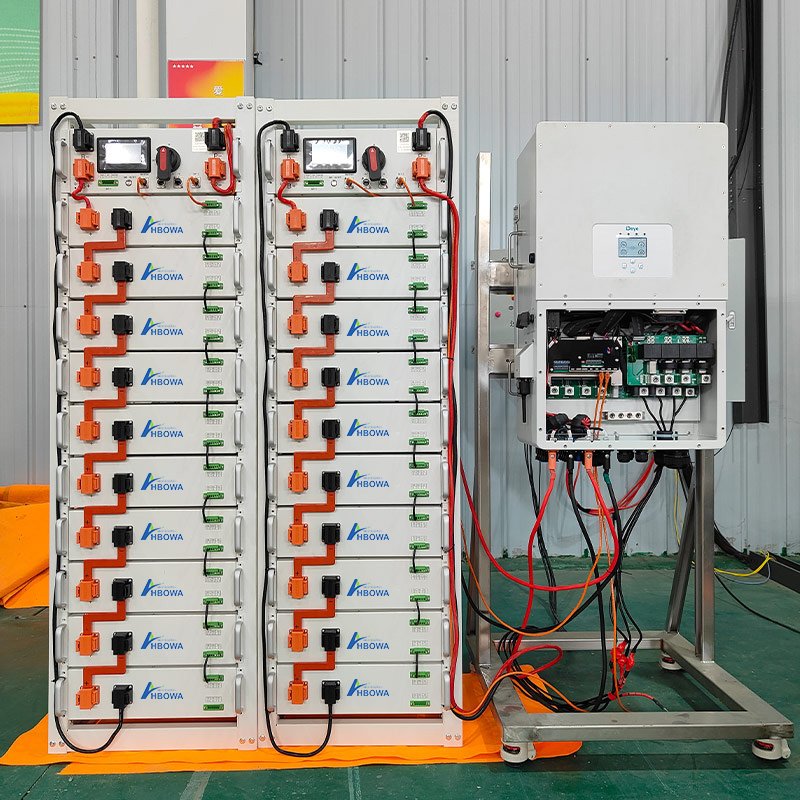
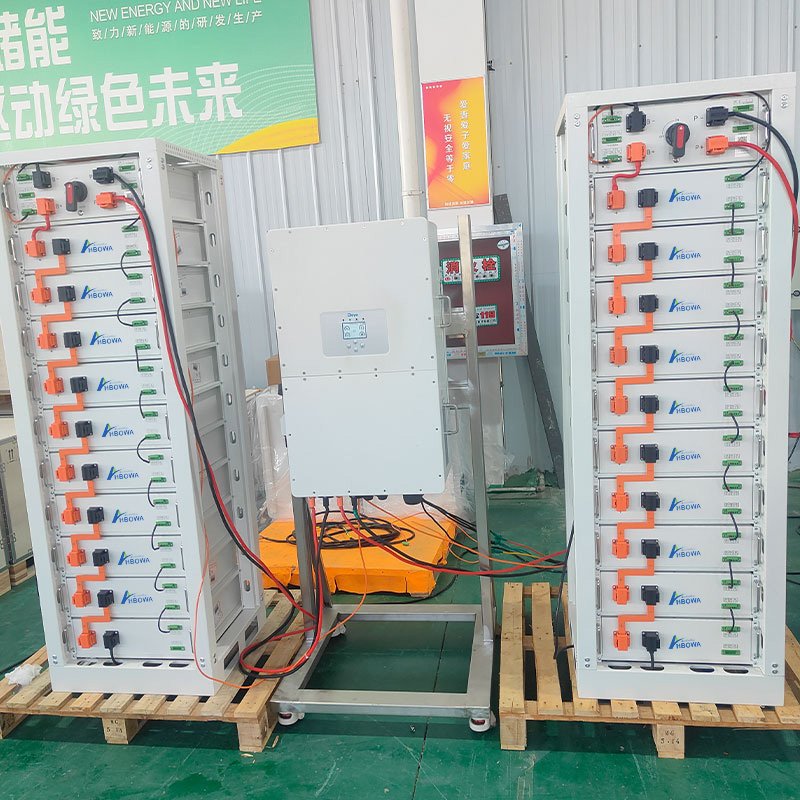
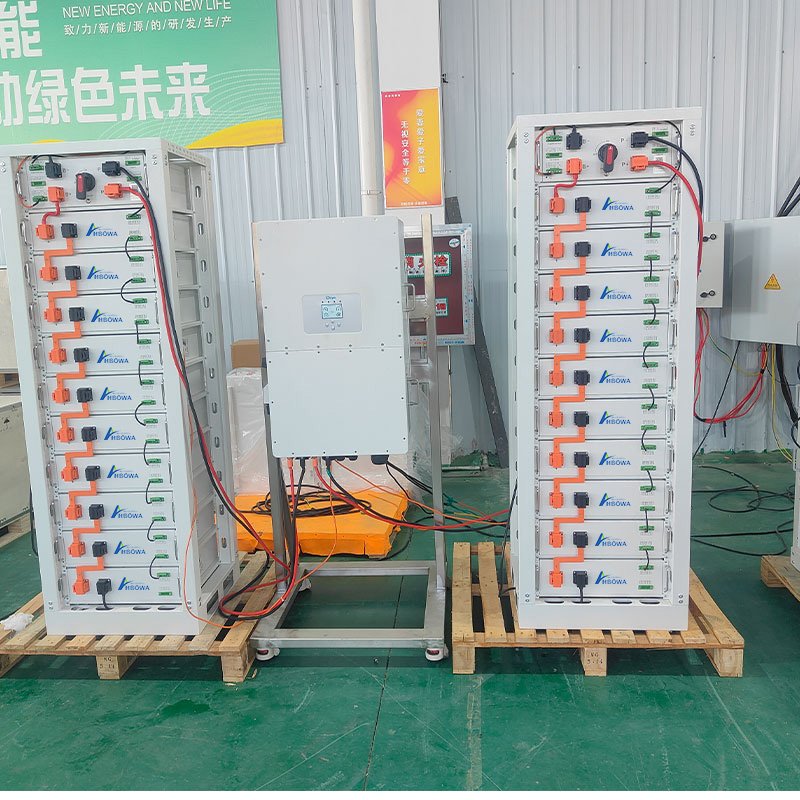
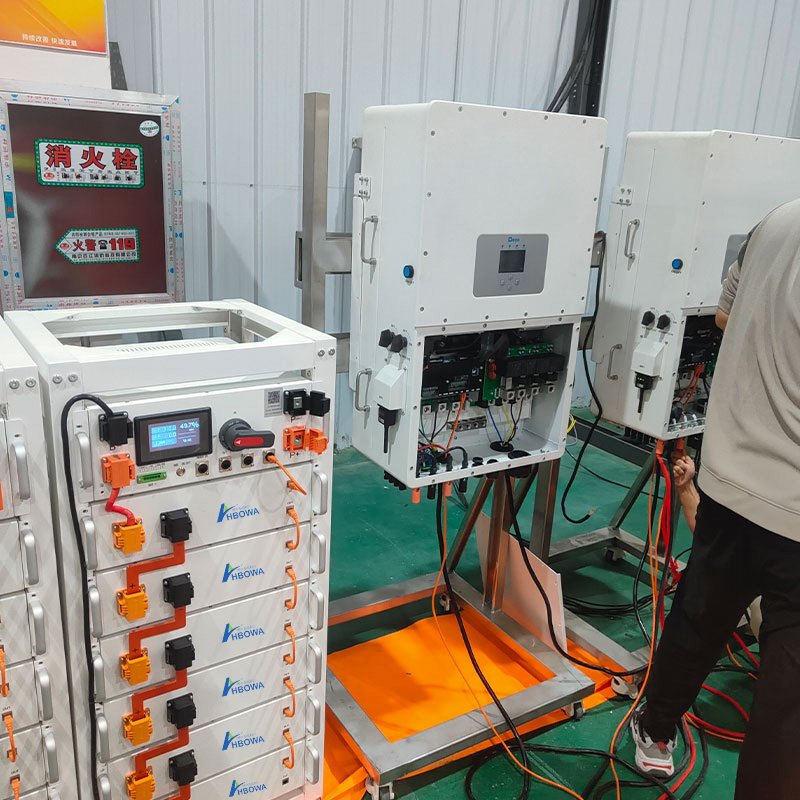
FAQ
A 20KW solar system are better suited for businesses, such as offices, retail shops, farms and light commercial properties. Also it can also be used for larger home with high consumption of power.But according to the overall intent and HBOWA customers review, this power is more commercial than residential.
Three-phase is usually recommended because 20kW is the point where systems shift toward commercial-grade loads and electrical standards.
A 20kW hybrid system is often configured with about 40kWh to 60kWh of battery storage. The final battery size depends on your backup goals, nighttime usage.
Rooftop is better for offices and shops with enough usable roof space, while ground-mounted is often better for farms and properties with open land. The best choice depends on your site conditions, layout flexibility, and maintenance preference.
Yes, many 20kW hybrid and off-grid systems can be designed to work with a diesel generator.
Certainly yes! A 20 kW solar setup is more than capable of charging your electric vehicle while running multiple business loads, certainly during the day. The real charging capacity depends on the vehicle and charger size, and also on the business’s demand for electricity and solar.
Yes, although the energy generation of solar power will be hampered during cloudy days. Production may decrease by 10-70% due to cloud density and local weather patterns. System design and efficiency of modules and battery storage can help ensure energy is available when it’s not sunny.
Buyers should select equipment certified to internationally recognized standards, IEC, UL, CE, and also local grid compliance requirements. All equipment, including solar panels, inverters, batteries, and mounting systems, must be certified. Certifications that are verified assure safety and reliability as well as long-lasting performance. In addition, it makes for easy approval by local utilities and regulators.
Related Solar Product


How Much Does a 20 kW Solar System Cost in 2026?
The cost of a 20kw solar system varies significantly from country to country, with reference to the quality of equipment, labour rates, mounting system, and whether any battery storage is included or not. Equipment installation rules and component tariffs vary around the world, and that is why there is no global/standard price.
According to Industry data from the International Energy Agency (IEA PVPS) Assessment, installed solar prices continue to differ greatly across markets due to labor, permitting, and balance-of-system costs.
Cost Influencing Factors
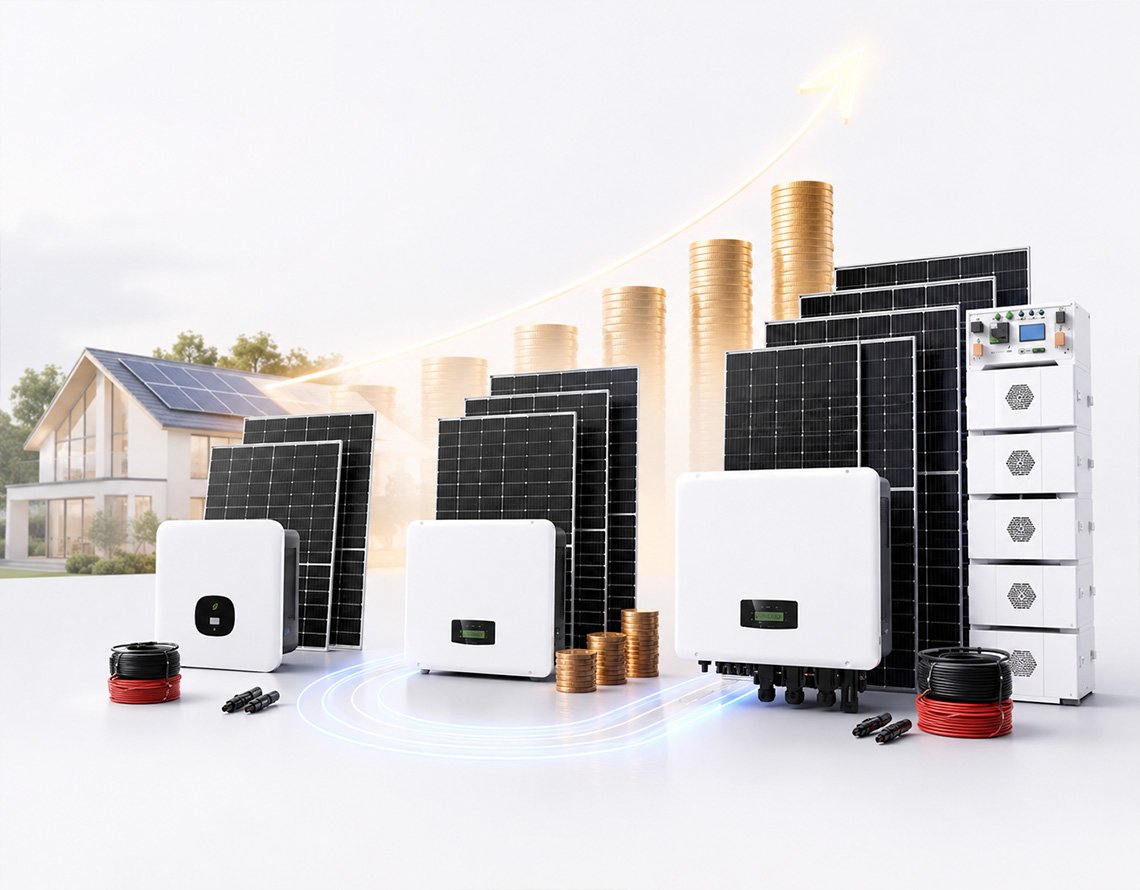
Many things influence the final investment price. The cost of modern N-type premium tier-1 solar panels is higher than standard PERC. However, N-type panels often offer better efficiency and lower degradation. Selecting the right inverter is crucial. A grid-tied string inverter usually costs less than a hybrid solar inverter due to the latter’s battery management and back-up functionality.
The cost of battery storage is a primary factor. Adding a LiFePO4 battery bank for backup power will significantly increase the project cost. Ground-mounted systems generally need more steel structures, civil works, and installation labor than roof-mounted systems. Local wages, permits, and transportation costs are other price factors.
20 kW Solar System Price Ranges in 2026
| Configuration | Estimated Price Range* |
| Grid-tied | US$12,000-$28,000 |
| Hybrid | US$25,000-$55,000 |
| Off-grid | US$35,000-$70,000+ |
*Indicative global ranges. Actual prices vary by market, taxes, government policies, equipment specifications, brand premium, and installation conditions.
Why Hybrid Systems Cost More
A hybrid solar system includes solar power generation, connection to the grid as well as an energy storage system. A hybrid solar inverter, higher-end monitoring equipment, and more than one LiFePO4 battery are the major necessities for creating these systems. Firms looking for energy independence frequently assess 20 kW off-grid or hybrid design solar, but these designs require further engineering and storage capacity.
How many solar panel needed to design a 20 kW solar system?
The number of panels in a 20kw solar system will depend on the wattage of the module selected. The quick and easy formula for sizing is given below, or you can use advanced HBOWA Calculators.
Required panels = System size ÷ Panel wattage
| Panel Wattage | Approximate Quantity |
| 450W | 45 panels |
| 550W | 37 panels |
| 600W | 34 panels |
| 700W | 29 panels |
Commercial projects typically use modern Tier-1 solar panels from manufacturers LONGi, Trina, JA Solar, and Canadian Solar in the range of 550W to 700W. Many installers are now choosing high-performance N-type TOPCon solar panels as they struggle with higher efficiency and lower long-term degradation than conventional PERC technology.
How Much Roof Space Does a 20 kW Solar System Need?
One key consideration when assessing the size of a 20kw solar system is roof area. A usable space of around 90-140 m² is required for most installations. On the whole, systems using higher-wattage N-type modules require less area than PERC. Local fire safety setback rules, roof shape, and access paths, plus tilt angles, will influence ultimate space needs.
How Much Energy Does a 20 kW Solar System Produce?
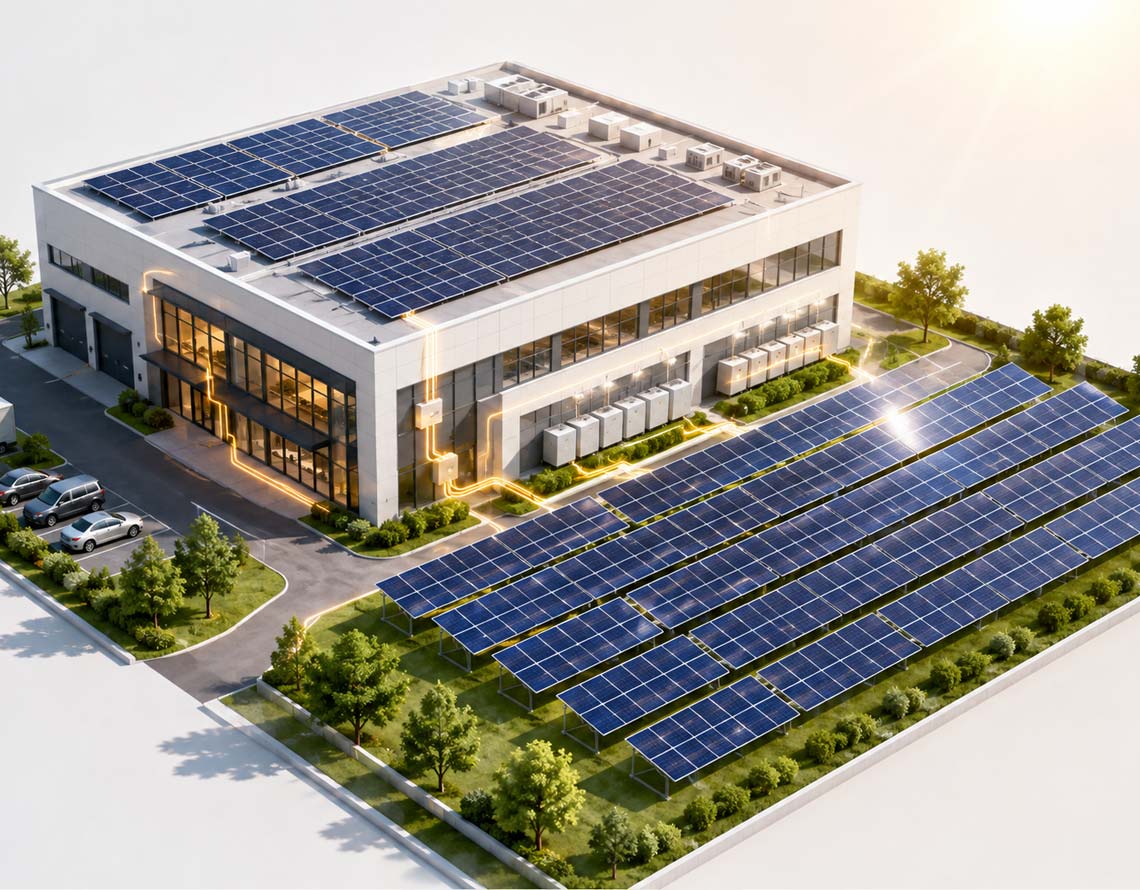
How many kwh does a 20kw solar system produces depends on local conditions rather than the size of the solar system. The output of 20kw solar systems is most affected by solar irradiance, location of installation, orientation of panels, operating temperature, shading, and so on. 2.4% of panel output is lost due to wiring, inverters, dust, and equipment loss.
According to the website of the National Renewable Energy Laboratory (NREL), the actual solar energy production is highly site-specific, and we should always estimate it using local solar resource data rather than generic assumptions.
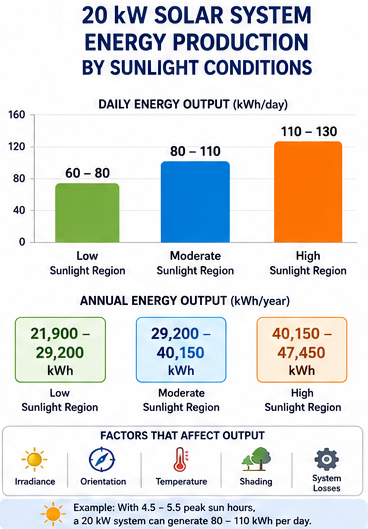
A practical example is that a sufficiently designed 20kw solar system installed at a location that receives 4.5-5.5 peak sun hours will generally produce about 80-110 kWh every day under normal circumstances.
Output is also affected by temperature. When the temperatures of the cells rise, most crystalline silicon modules lose efficiency. If there is significant glare or shading from nearby buildings, trees, rooftop equipment, etc., generation on an annual basis can be further lowered than one estimated at the outset.
Commercial buyers can estimate more accurately using free tools like PVGIS or NREL’s PVWatts calculator. Weather and irradiance data are used to estimate energy generation based on location.
How Much Solar Battery Storage Do You Need for 20kW?
It’s not one-size-fits-all when it comes to how many batteries for 20kw solar system installations. Indeed, storage requirements vary tremendously between applications. Energy demand is a better basis for battery sizing than solar array size.
The most important considerations are nighttime electricity consumption, required backup duration, critical loads, and the number of autonomous days required with respect to grid outage.
A sizing formula is:
Battery Capacity (kWh) = Daily Backup Requirement × Days of Backup
Most commercial projects today use LiFePO4 battery technology these days due to its long cycle life, higher depth of discharge, and lower maintenance than lead acid counterparts.
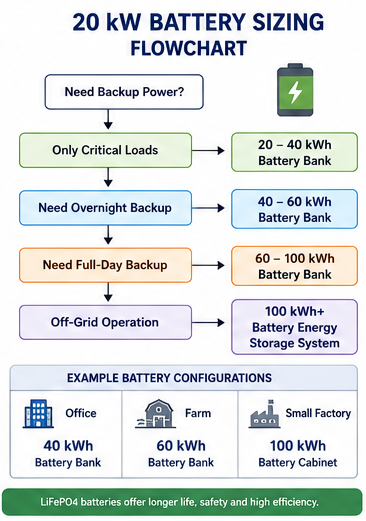
| Backup Requirement | Recommended Battery Bank |
| Essential loads only | 20-40 kWh |
| Overnight backup | 40-60 kWh |
| Full-day backup | 60-100 kWh |
| Off-grid operation | 100 kWh+ |
The final storage capacity should align with operational priorities.
Example Battery Configurations
| Application | Suggested Storage |
| Office | 40 kWh battery bank |
| Farm | 60 kWh battery bank |
| Small factory | 100 kWh battery cabinet |
The choice of battery bank in a business for resilience against outages is often 40 kWh or 60 kWh. Facilities that must maintain uninterrupted operation or require off-grid capability may need a larger battery energy storage system or modular commercial battery storage solution, e.g., a scalable 100 kWh battery cabinet. Whenever sizing is done, a load analysis and future expansion must always be done.
Which Inverter Size Is Best for a 20 kW Solar System?
The correct size of 20kw inverter depends on configuration, grid specifications, and backup needs. To efficiently balance electrical loads, most installations use three-phase.
| System Type | Typical Inverter Configuration |
| Grid-tied | One 20 kW three-phase string inverter |
| Hybrid | Two 10 kW hybrid inverters |
| Off-grid | Multiple parallel off-grid inverters |
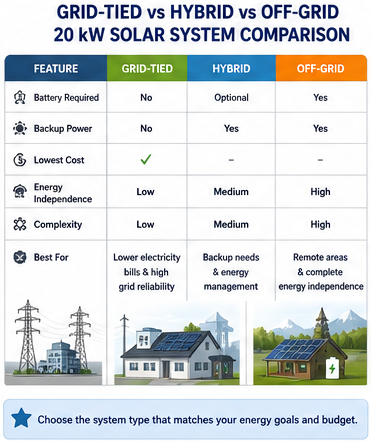
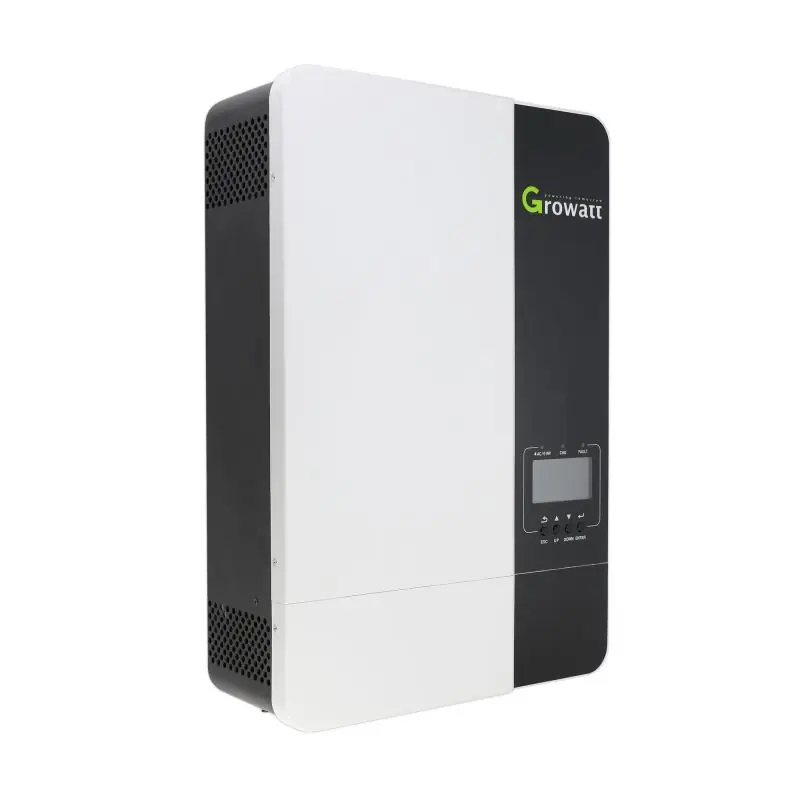
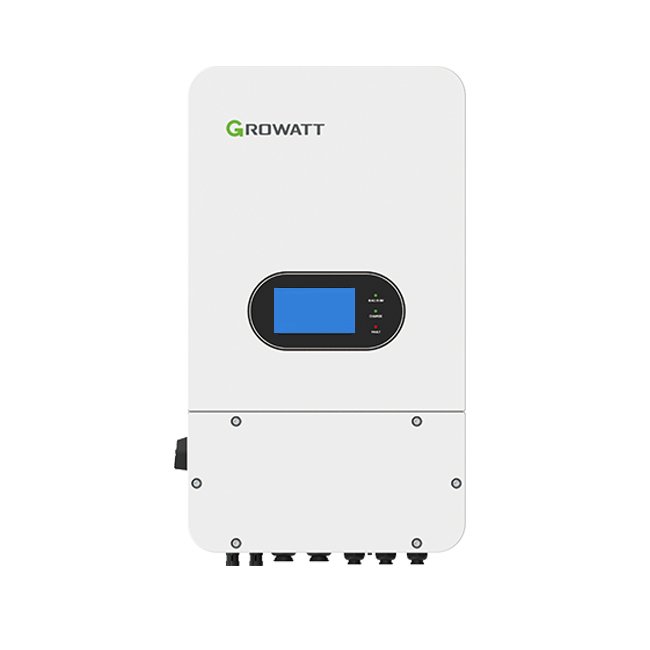
String inverters are often used for grid-connected systems due to cost and simplicity. A hybrid solar inverter can charge a battery and supply backup power, making it suitable for facilities with battery storage capabilities. For instance, the commercial projects opt for either two 10 kW hybrid units or one 20 kW three-phase inverter. This choice totally depends on the level of redundancy required. Growatt and similar manufacturers offer both string and hybrid options for medium commercial systems.
Is a 20 kW Solar System Suitable for Your Business?
The electricity consumption pattern and timing, as well as available space installation, determine solar system sizing. A commercial solar system ought to be designed to optimize self-consumption as opposed to just installed capacity.
| Business Type | Recommended | Reason |
| Restaurant | Yes | High daytime energy demand |
| Office | Yes | Strong daytime consumption profile |
| Farm | Yes | Irrigation and equipment loads |
| Manufacturing | Sometimes | May require larger capacity |
| Warehouse | Yes | Lighting and equipment loads |
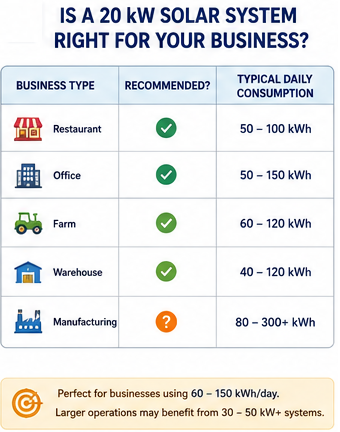
Typically, a 20 kW system is apt for small and medium-sized businesses whose energy consumption is about 60-150 kWh/day. It may be that businesses whose operations take place over multiple production lines, refrigeration systems, or heavy machinery need a bigger installation of 30-50 kW and above. The most reliable method for ascertaining whether a 20 kW system is correctly sized is to carry out an energy audit before installation.
What Is the ROI and Payback Period of a 20kW Solar System?
The return on investment of a 20 kW solar system differs by project. The majority of commercial installations achieve quicker returns when electricity prices are high and there is significant self-consumption of solar energy. Solar payback period depends on government policy regarding hardware imports, electricity tariffs, installation cost(Labor), self-consumption rate, battery usage, and government incentives(net metering) on offer.
| Factor | Impact |
| Electricity prices | Higher tariffs generally shorten payback |
| Sunlight | Better solar resources increase energy generation |
| Self-consumption | Higher on-site usage improves savings |
| Battery storage | Improves resilience but increases upfront cost |
A small warehouse that uses about 36,000 kWh. With a size of 20 kW, properly powered, it can save electricity during the sunniest part of the year with efficiency between 70 to 85%. If the electricity tariff is kept on the average side, each year savings will vary between US$4,000 and US$8,000 depending on location and operation patterns.
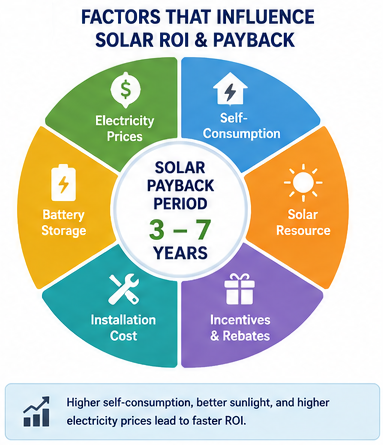
Given these conditions, a commercial solar investment can expect payback in approximately 3-7 years, though performance is dependent upon project-specific economics and local market conditions.
Buying Checklist: What to Look for Before Purchasing a 20 kW Solar System
Buyers must assess the quality of the equipment and the support provided before investing in a commercial solar system. The system must incorporate good Tier-1 solar panels from a reputable manufacturer with a strong product.
LiFePO4 technology must be preferred for commercial projects because your profitability is directly related to the project; battery chemistry must also be checked carefully.
While designing the system, inverter efficiency, future scalabilities and system compatibility with energy storage should be checked. The products and goods must meet the relevant local certifications, labelling, and grid standards.
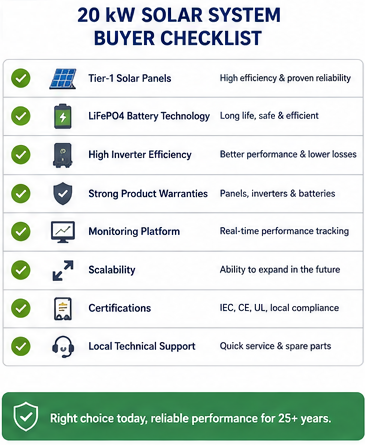
An efficient monitoring platform is required so that faults and performance can be monitored over the lifetime of the system. Before purchasing, finally review whether local technical support, spare parts, and after-sales services will be available.