Formula: W = (mA ÷ 1000) × V
Introduction
In the fields of electrical engineering, battery technology, and solar energy, the conversion of a milliamp to watts is fundamental. Calculating power accurately is necessary for any engineers and technologists to design efficient circuits. The conversion helps to compute the power consumption of any devices, the capacity of batteries,s and to have good exposure for configuring well-formed wiring systems to meet the electricity needs. Thus, people working on solar panel installation, LED lighting, and mobile charger assembly should have well opportunity to convert mAh amp to watts. By using the mA To watts Calculator, the users can test the difference and assure the accurate conversion.
The Formula: How to Convert mA to Watts
To convert milliamps to watts, first, you need to understand that current alone doesn’t determine power. You must also consider voltage, which is the force that drives electrical flow. So, how do you calculate it? You use the formula:

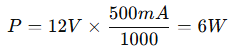
This way, you get accurate power measurement even if you changed current ( mA ) to A before multiplying with voltage. For example, if a device runs on 500mA and 12V, you calculate its power consumption by:
Using another common example of USB charging, these devices usually run on 5V. For example, if you have a charger that offers 1000mA (1A) of current:

So, any mA to watts or mAh to watts calculation can be done using the formula. Even when it comes to battery systems, often engineers need the conversion when they need to calculate mAh to wattage using the voltage and discharge rate. A mA to watts calculator is essential not just for perfect watts to mA calculations but to reduce errors in power estimation too. Remember that understanding how 5V and 500mA to watts conversions work is essential for optimizing efficiency in electronic and solar energy applications.
Understanding Electrical Units and Their Relationship: Milliamps (mA), Volts (V), and Watts
These are the basic three electrical units and they are milliamps (mA) for the current, volts (V) for voltage, and watts (W) for power. Milliamps (mA) is a unit for a current, volts (v) is a unit for voltage, and watts (W) are units for power. It is necessary to know the relation between these three units. So relating them together helps in making accurate energy computations. Milli is a prefix for 1/1000. Therefore mA is a subunit of Amperes. 1A= 1000mA. Milliamps (mA) is used to measure the flow of charge or electrical current.

Small electronic devices like Led circuits, mobile chargers, etc., and other similar works most of the time used milliamps (mA) rather than amperes. Volts (V) is used to measure the potential difference between the two points in a circuit. More is the voltage, more will be the energy available to push out the electrons in the device.
It depends on how much force the electrons tend to drive. Volts (V) is worked for quantification of voltage. Watts (W) for power is computed as the power rate.
Units Conversion Reference Table
| Convert From | To | Multiplication Factor |
| Amperes (A) | Milliamperes (mA) | × 1000 |
| Milliamperes (mA) | Amperes (A) | ÷ 1000 |
| Watts (W) | Milliwatts (mW) | × 1000 |
| Milliwatts (mW) | Watts (W) | ÷ 1000 |
| Watt-hours (Wh) | Milliwatt-hours (mWh) | × 1000 |
| Milliamp-hours (mAh) | Amp-hours (Ah) | ÷ 1000 |
| Volts × Amps | Watts | Direct equivalence |
| Watts ÷ Volts | Amps | Direct equivalence |
| Watts ÷ Amps | Volts | Direct equivalence |
Engineers and professionals use mA to watts calculators to simplify the volt conversion to watts to measure the precise requirement of power and energy needed for appliances.
| Current (mA) | Current (A) | 48V Battery | 96V Battery | 192V Battery | 384V Battery | 512V Battery | 768V Battery | 1000V Battery |
|---|---|---|---|---|---|---|---|---|
| 10,000 mA | 10 A | 480 W | 960 W | 1,920 W | 3,840 W | 5,120 W | 7,680 W | 10,000 W |
| 20,000 mA | 20 A | 960 W | 1,920 W | 3,840 W | 7,680 W | 10,240 W | 15,360 W | 20,000 W |
| 50,000 mA | 50 A | 2,400 W | 4,800 W | 9,600 W | 19,200 W | 25,600 W | 38,400 W | 50,000 W |
| 100,000 mA | 100 A | 4,800 W | 9,600 W | 19,200 W | 38,400 W | 51,200 W | 76,800 W | 100,000 W |
| 200,000 mA | 200 A | 9,600 W | 19,200 W | 38,400 W | 76,800 W | 102,400 W | 153,600 W | 200,000 W |
| 500,000 mA | 500 A | 24,000 W | 48,000 W | 96,000 W | 192,000 W | 256,000 W | 384,000 W | 500,000 W |
| 1,000,000 mA | 1,000 A | 48,000 W | 96,000 W | 192,000 W | 384,000 W | 512,000 W | 768,000 W | 1,000,000 W |
Higher battery voltage allows the same current to deliver much more power, which is why 384V, 512V, 768V, and 1000V battery systems are widely used in commercial and industrial energy storage applications.
Practical Applications Examples of mA to Watts Conversion
4.1. Solar Panel Systems & Battery Storage
The practical conversion of mAh to watts is important for determining the right capacity of battery storage to be used for solar energy systems. Solar panels have different current and voltage ratings. To determine the total power, accurate mA to watts calculations are required.
For example, a solar battery of 12V 100Ah has a total energy capacity:

When a solar inverter has a rating of 5000mA (5A) and 48V of power, its total output power will be calculated as:

Right converter provide you the right answer which helps to prevent overload and helps in proper distribution of energy. It is also crucial for determining discharge rates of batteries and also for optimizing the capacity of energy that can be stored using solar energy.
Calculating battery watt-hours will facilitate in understanding for how much time, power source can manage connected devices before it requires recharging.
4.2. Electronic Circuits & Device Power Consumption
LED lights, smart phones and microcontrollers function at lower current and so a precise power calculation is super necessary.
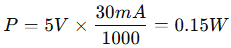
For instance, if an LED light uses 30 milliAmpere (mA) at 5 volts (V) then the LED light uses:
If a microcontroller uses 200mA at 3.3V then the power consumed by the microcontroller is:

So, an understanding of voltage to Watts is crucial for the efficient design of the circuit. Engineers use the mAh convert to watt formulas for mobiles to increase solar battery life.
Case Studies: Real-World Examples of mA to Watts Conversion
Laptop Charger Power Consumption
To find the efficiency is necessary for laptop adapters because it operates at specific voltage and current ratings. So mA to watts conversion is necessary to find out its efficiency.
For example :
- 19V 3.42A charger will deliver

In this way, this calculation makes sure that you are getting the right power supply to charge your battery and that too avoiding the problem of overheating. For design efficient methods to supply power, engineers usually convert voltage to wattage formulas.
Solar Power Bank Efficiency Calculation
Portable solar power banks store energy in milliamp-hours (mAh), but you need watt-hours (Wh) for precise power estimation.
For example :
- 20000mAh power bank
- 5V outputproduce
To calculate the result is:

The conversion table amps to watts is useful for comparing battery performance of the power bank.
| Device | Voltage (V) | Current (mA) | Power (W) |
| USB Charger | 5V | 1000mA | 5W |
| LED Bulb | 12V | 500mA | 6W |
| Solar Panel | 24V | 2500mA | 60W |
Understanding and answering the questions of “how to convert volts into watts” help you to design solutions for better energy management in everyday electronics and renewable energy applications.
What Are The Common Mistakes in mA to Watts Conversion & How to Avoid Them?
These are some common mistakes users do that result in wrong readings and faulty electric power design for the applications:
Troubleshooting Power Calculation Issues
| Mistake | Impact | Solution | Formula/Tool |
| Ignoring voltage in conversion | Incorrect power calculations (e.g., 500mA at 5V = 2.5W vs. 12V = 6W) | Always include voltage in calculations | Power formula: P(W)=I(A)×V(V) (Convert mA to A by dividing by 1000) |
| Confusing mA (current) with mAh (capacity) | Misunderstanding energy capacity vs. instantaneous current | Use mAh with voltage and time to calculate energy (Wh), not power (W) directly | Energy formula: Energy (Wh)=mAh×V/1000; factor in discharge rates and efficiency |
| Not considering power losses | Overestimating available power (e.g., 10W supply at 90% efficiency = 9W output) | Apply efficiency factor (85–95%) to calculations | Adjusted power: Output Power=Theoretical Power×Efficiency Output Power=Theoretical Power×Efficiency |
Ignoring Voltage in Conversion
For instance 500mA at 5V, the power is 2.5W whereas for the same 500mA in 12V, the power is 6W Engineers should always include voltage for exact calculations in amperage to wattage conversion.
Confusing mA with mAh: Can I replace Milliampere Hour With milliampere?
No, you can not replace one with the other because a 1000mAh battery,3.7V won’t give a 3.7W all the time, but it depends on discharge rates and efficiency.
Not Considering Power Losses in Circuits
Electrical Circuits, in real-world, have resistance and heat loss which reduces the actual power output. The inverters, regulators, batteries have some efficiency value, according to the type and is estimated to be 85-95% for these converting devices.
Interactive Tools: Using an mA to Watts Calculator
It can cause lots of time and errors in the manual calculations to convert milliamps and volts with watt power output. The online tools like an mA to watts calculator make it easier in just no time.
The engineers, electricians, and solar energy professionals need quick and accurate results. The mA to watts online calculators is beneficial when implementing circuits, choosing battery capacity, and forecast on electricity utilization.
It is very easy to change milliamps to volts by dividing power P by the i.e. (watts = voltage V times current I), and you can get the watts by using the amp to watt converter.
It will give you the power output in watts when you provide the current (mA) and voltage (V) and later converted by the electric converter into watts.
There are more advanced voltage to watts calculators that provide various power output while using the same voltage. When you calculate power output for some type of power it can include low and high rates and presumably other multiple rate power consumption results.
The voltage to wattage calculators should also contain efficiency loss to provide a practical result, unlike other calculators online. The real-world calculations by using calculators make it easier to create, optimize, and use an electrical device.
Conclusion
Conversion of accurate mA to watts as in electronics, battery design and solar energy systems. The relationship between milliamps, volts, and watts is important in determining efficiency and proper system sizing. Using a mA to watts calculator can help in quickly and accurately calculating the same. A converter or conversion tables can be used for more accurate and precise calculations, like the mah to watt converter that can be found in various online websites and resources. Hence, it is essential to know how to convert mA to watts for engineers and DIY people to avoid costly mistakes. And if you need to learn more about mAh to Watts calculation, welcome to view our blog mAh to Watts Calculator: Find theReal Power Behind Your Battery.
More Conversion Calculators:
Solar Products for Your Project
 Solar Panels |  Energy Storage Cabinet Energy Storage Cabinet | 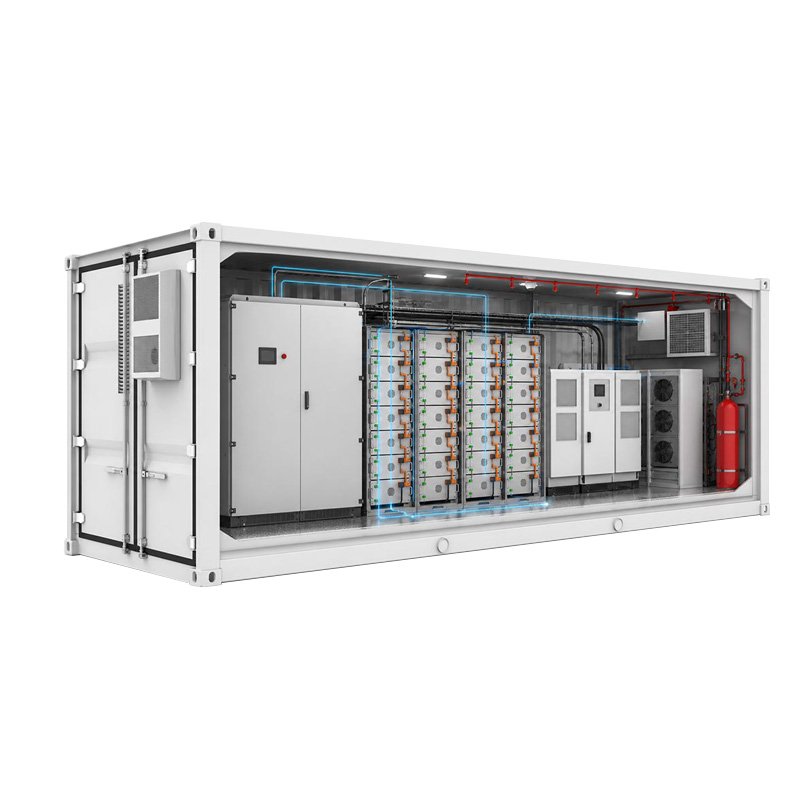 C&I Battery Container |