A solar panel cost calculator helps you estimate the total cost of a solar system, so it considers system size (kW) multiplied by cost per watt, and it also accounts for the solar output based on your location, which aids homeowners, businesses, and distributors in calculating installation cost, expected savings, and payback period. The calculator allows you to assess solar investment before an actual installation by transforming usage into system size and using real pricing data.
Solar Cost & Savings Calculator
Enter a city or address to estimate local solar output, system cost, savings, and payback.
Advanced assumptions & coordinates
—
—
—
—
—
—
Estimate only. Actual project cost, incentives, roof condition, shading, and grid policy may vary by market.
Formula & Variable Definitions

This formula specifies how pricing in the solar system works. The overall cost will depend on installation size and cost per capacity unit. The size of the system indicates how much electricity it can produce, and the cost per watt is the cost of the panels, inverter, installation, regional labour conditions, etc.
The first step in determining system size is to convert energy consumption into solar capacity. The annual solar energy generation potential of a site is to be found out. A tool like PVGIS gives estimates on energy generation per kW installed.
In reality, higher electrical use increases system size requirements. Nevertheless, areas with higher solar irradiation can produce the same energy with smaller systems. Larger installations tend to lower per-watt costs, which are often attributed to economies of scale. The relationships are the basis for any correct solar panel cost calculation.
Example Calculation
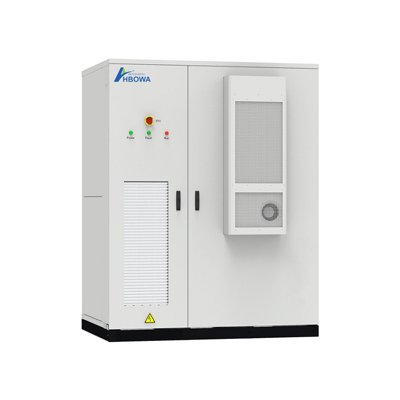
In Budapest, a homeowner designed a residential system to reduce electricity bills and provide backup power. This system includes Longi solar panels for electrical generation, a Growatt inverter for “Direct Current” to AC (Alternating Current) conversion, and HBOWA battery for storing energy.
An €130 monthly power bill for a family typically equals an annual consumption of 7,500–8,000 kWh. In the area that gets around 1,400–1,500 kWh per kW of solar production, a system size of approximately 5–6 kW is required. Using average market pricing of €1.6–€1.8 per watt, the total installation cost is essentially from €8,000 to €10,500. While the upfront cost of a LiFePO4 battery may be higher, it allows you to use what you store from solar at night.
1. ENERGY NEED 7,500–8,000 kWh/year | 2. SYSTEM SIZE 5–6 kW | 3. TOTAL COST €8,000 – €10,500 |
💰 Annual Savings €1,200 – €1,600 | ⏱️ Payback Period 5 – 7 years | |
Looking at this from a practical angle, this setup can offset most of the household’s electricity consumption and thus helps of annual savings between 1,200 and 1,600. So, payback would be around 5 to 7 years. Combining Longi panels with Growatt inverters and versatile HBOWA battery storage to achieve an effective balance of cost and reliability in a system.
When to Use a Solar Panel Cost Calculator
Most useful when converting power consumption into actual system price and financial performance, a solar panel cost calculator is. When putting together real-world projects, equipment pricing is not the only decision driver. It is the degree to which the system matches energy needs and long-term savings.
Homeowners can use the calculator to estimate how much installation will cost and cut the discharge. It gives a clear picture of how system size, location, and pricing impact total investment. This becomes critical when contrasting solar and traditional energy costs.
The calculator aids businesses by estimating the return on investment and savings on operations. These calculations are often used by commercial customers to analyze whether solar can bring down their long-term energy costs and cost certainty.
The calculator serves as a useful tool for pricing and planning for distributors and installers. This enables professionals to modify the system size, cost per watt, and project to test different scenarios. This aids in optimizing pricing strategies that help ensure projects are competitive and profitable.
Reference Table (Typical System Costs)
| System Size (kW) | Cost per Watt (€) | Total Cost (€) | Common Use |
|---|---|---|---|
| 3 kW | 1.90 € | 5,700 € | Small home / apartment |
| 5 kW | 1.80 € | 9,000 € | Average household |
| 7 kW | 1.70 € | 11,900 € | Large home with EV |
| 10 kW | 1.60 € | 16,000 € | Small business / villa |
| 20 kW | 1.40 € | 28,000 € | Commercial / workshop |
| 50 kW | 1.20 € | 60,000 € | Industrial / warehouse |
The aforementioned values indicate how price scales w.r.t system size. Larger systems have a lower cost per watt than small ones because fixed costs (labor, installation) are spread over more capacity. This is especially relevant when buildings are large enough to become cost-efficient in industrial and commercial projects.
Cost Breakdown: What You Are Paying For
A solar panel cost calculator provides you with a total amount, but it is important to know its breakdown.
Solar panels usually represent around 40–50% of the total bill depending on the hardware and its brand, and efficiency. Longi’s high-efficiency modules in this case guarantee reliable energy generation. The system cost is nearly 15–20% of the inverters. The system performance directly relies on an efficient power conversion and system stability by a Growatt inverter.
40–50% Solar Panels (Longi) | 15–25% Inverter (Growatt) | 30–40% Installation & BOS |
💡 Battery addition (HBOWA LiFePO4): adds 20–30% to total cost but increases energy independence. | ||
The remaining 30-40% consists of installation and various balance-of-system components like wiring. The complexity of the system, the location, and the installation conditions influence the cost. Inclusion of battery storage, such as a LiFePO4 from HBOWA, will raise the total cost, but self-consumption and independence increase significantly. In areas with high electricity rates or an unreliable grid supply, this is valuable.
B2B Insight: How Distributors Use Cost Calculators
A calculator for the cost of solar panels is much more than an estimation tool for distributors. This is used to assess the pricing of the project, determine margins, and plan inventory strategy.
In bulk buying situations, the cost per watt can decrease by 10-25% compared to the domestic cost. This enables distributors to provide competitive pricing and remain profitable. Distributors can change system size and component selection to simulate project scenarios and find the cheapest solution.
| Order Volume | Typical Cost per Watt (€) | Discount vs Residential | Example 50 kW System Cost |
|---|---|---|---|
| Residential (1–10 kW) | 1.60 – 1.90 € | — | 95,000 € (50 kW @1.90) |
| Small Commercial (10–50 kW) | 1.30 – 1.50 € | 15–20% ↓ | 70,000 € (50 kW @1.40) |
| Bulk / Wholesale (100+ kW) | 1.00 – 1.20 € | 25–35% ↓ | 55,000 € (50 kW @1.10) |
Key takeaway: Distributors can reduce cost per watt by 10–25% through bulk purchasing, enabling competitive project pricing.
For instance, installers can sell unbranded system packages using a combination of Longi panels, Growatt inverters, and HBOWA LiFePO4 batteries that balance performance and price. This makes it easier for installers to procure and offers consistency, because in commercial and industrial sectors, proper pricing is very important to negotiating contracts, and developing successful long-term agreements.
| Feature | Solar Only | Solar + LiFePO4 Battery |
|---|---|---|
| Upfront cost (5 kW example) | €9,000 | €11,000 – €12,500 |
| Self-consumption rate | 30–50% | 70–90% |
| Energy independence | Low (grid reliant at night) | High (stored energy for evening) |
| Payback period | 5–7 years | 6–9 years (but higher long-term savings) |
| Best for | High feed-in tariffs, low electricity prices | High electricity rates, unstable grid |
Batteries improve ROI in markets with low net metering or time-of-use rates.
Accuracy & Limitations
Although a calculator is a good starting point, it requires stable operating conditions that may not reflect actual working conditions. Weather systems, surrounding obstructions, and system orientation can alter solar production.
The actual output can be less due to system losses – inverter inefficiency, wiring resistance, etc. Over time, solar panels become less effective because they undergo gradual degradation. Changes in electrical rates may modify long-term savings. The installation costs are variable based on site difficulty, roof structure, and local labor rates.
Ultimately, due to these two factors, we should use the calculator for estimates and not final designs. For good system planning, we need thorough site and expert assessments.
Case Study
There is a small business facility in Porto, which has an annual electricity demand of 20,000–22,000 kWh, and for that, the owner needs a hybrid solar system that helps reduce costs over the long term, so the solar energy system comprises Longi panels, a Growatt inverter, and an HBOWA battery.
Depending on local solar conditions, the system size is expected to be around 14–16 kW. The bigger the system the lower the cost per watt. For the commercial segment, mainly the cost per watt would be a chained solutions, which is around €1.3 to €1.5 per watt. The overall project cost will be within the region of €20,000 to €24,000.
📈 System size: 14–16 kW 💰 Cost per watt: €1.3 – €1.5 💵 Total investment: €20,000 – €24,000 ⚡ Annual savings: €3,000 – €4,000 ⏱️ Payback: 5–6 years | 🔧 Components: Longi solar panels Growatt inverter HBOWA LiFePO4 battery |
Hybrid design reduces grid reliance and stabilises operating costs over 20–25 years. | |
The system provides power for most daytime use, whilst the remainder is stored for evening use. Reliance on grid electricity decreases thus it stabilises operating costs. Estimated annual savings of between €3,000 and €4,000 depending on your electricity consumption and rates. Considering all the financial aspects, a payback of around 5-6 years can be considered with good long-term returns over a 20-25 year system lifespan.
Expected Payback by System Size
3 kW (€5,700) Payback ~6–8 years |
5 kW (€9,000) Payback ~5–7 years |
10 kW (€16,000) Payback ~4–6 years |
50 kW (€60,000) Payback ~3–5 years |
This case serves as proof for distributors and project developers that Longi panels with Growatt inverters and HBOWA LiFePO4 batteries guarantee a reliable and scalable solution catering to technical as well as financial feasibility.
Conclusion
A solar panel cost calculator is a systematic way to estimate the system cost, savings, and ROI. Connecting energy use to system size and actual pricing, it offers homeowners and professionals an easy way to make choices. Using Solar Potential Maps will enable a more accurate data-driven solar investment decision for residential and commercial strategies.
Solar Products for Your Project
 Solar Panels | 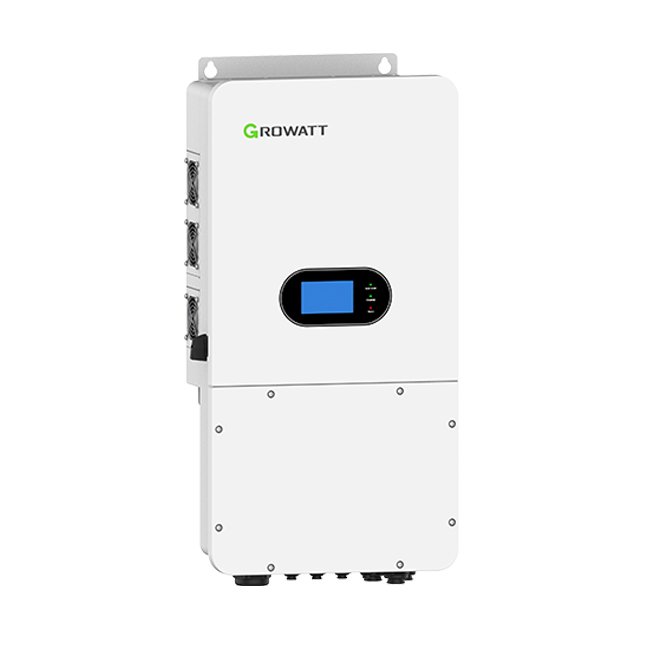 Solar Inverter |  C&I Battery Storage |