Introduction
Most homeowners and small business owners are selecting 48V solar power systems as they deliver superior energy efficiency. The performance of this high voltage solar power system is much more effective than a low voltage solar system. Therefore, it is the best way to live off-grid using solar with minimal energy loss.
Since solar panels generate DC electricity, solar panels are linked directly to the batteries that can charge and re-charges throughout the day. Hybrid inverters and LiFePO₄ battery technology have developed in recent years to switch between solar, battery, and grid power quickly.
To know the right 48V solar power system and configure it, refer to this guide. The guide will explain a few aspects of off-grid solar installations such as inverter selection, battery set up and connection, system wiring, and much more.

Why Choose a 48V Solar Power System Over 12V or 24V?
A 48 volt solar system works at a lower current for the same power output as compared to 12V or 24V systems. This makes less energy loss due to heat, especially over long cable runs. Lower current also allows for thinner wires needing smaller installation and lower cost. 48v solar systems and its components are easier and cheaper to procure, making 48V setups more efficient and scalable for medium to large applications, especially when power demand crosses 1kWh daily.
Suppose you want to establish a remote eco-cabin that uses around 2kWh daily. In this case, the 48V system can operate at this power using a hybrid inverter and LiFePO₄ battery bank. There would be minimal heat loss and improved voltage stability. But to work at 12V with the same power, the load would require much thicker wiring, having more energy drop across connections.
| Voltage | Cable Size | Efficiency | Ideal Use Case |
| 12V | Thick (4 AWG) | Low | RVs, camping, small DC loads |
| 24V | Medium (6 AWG) | Moderate | Tiny homes, small cabins |
| 48V | Thin (8–10 AWG) | High | Eco-cabins, home backup, solar farms |
Higher-voltage configurations also simplify the connection of modern components such as solar panel 48v arrays and 48v solar panels, which are specifically designed to match 48V system requirements.
Components of a 48V Solar Power System
The 48v solar power system is designed with a few main components which must be equal in voltage and capacity to work effectively. The basic foundation of this power system starts with 48v solar panels. These panels generate DC power which fits the voltage requirement of the system. These solar panels are available as a 48v solar panel kit making installation and compatibility easy.

The DC power generated is moved to a hybrid solar inverter. This inverter does two main things- it transforms the DC power into usable AC electricity and it also helps manage the flow of the energy between the solar panels, the battery bank. Also, the grid or load. There are different compact inverters like 1.3kW available up to larger 12 kW systems.
The energy storage is managed by a LiFePO₄ battery bank which keeps the storage stable and safe. Brands like HBOWA offer LiFePO4 batteries especially made for a 48v system with a long cycle life and high discharge efficiency.

The charge controller is used to regulate the voltage and current from the solar panel before it reaches the battery and prevents overcharging. Safety devices such as disconnect switches, fuses, and grounding systems are necessary to ensure system protection from failure and to meet standards.
| Component | Role | Voltage Compatibility | Example |
| 48V Panel | Generates power | 48V DC | 48v solar panel kit |
| Inverter | Converts DC to AC | 48V input | 1.3–12 kW hybrid inverter |
| Battery | Stores energy | 48V | HBOWA 51.2V 200Ah |
Understanding Hybrid Inverters in 48V Systems
In a 48V solar power system, the hybrid inverter has a crucial role. It helps convert the solar DC electricity to AC power for appliances.
It also controls the way the solar panels, the battery bank, and any backup grid or generator interact. A hybrid inverter is different from a standard inverter because it has a charge circuitry for the Inverter battery. It can charge batteries using either the grid or solar power and automatically swap between them to maintain an uninterrupted power flow. For both off-grid setups and grid-tied setups where system stability and autonomy are a factor, the hybrid inverter is essential.
For a smaller home or cabin, a 3 kW hybrid off-grid solar inverter can power the lights, refrigerator, and communication equipment like a router. In a residential application with more load, a 6 kW hybrid MPPT solar inverter can be utilized due to a higher solar input, advanced charge control.
In a single phase domestic application where more energy is consumed, a 10 kW single phase hybrid inverter provides the facility to fit heavy-duty appliances and proposed load expansion.

All the inverter models calculated for a 48V system should be compatible with the 48V solar panels and battery bank. Choosing the right size and types of inverters allows everything in the system to work together in the right balance, protect parts, and aggressive vitality.
Setting Up Your 48V LiFePO₄ Battery Bank
When you are setting up the 48 V solar battery bank, then you must first have to equipment yourself with the right system battery technology. LiFePO4 batteries are the best new battery technology for off-grid power systems. They are way better than the traditional lead-acid batteries as they have got higher efficiency, deeper discharge, longer cycle life, better thermal stability, increased safety and continuous voltage output.
Selecting 48V LFP batteries allows the home or business solar battery banks the standard energy storage and cycle life as needed. Since the battery is also safer, it can also provide improved performance as well.
To size your solar battery bank, first determine what energy you can use in a day:
If a house uses 5 kWh of the energy every day, then it must need a battery at least of 10 kWh capacity to charge/discharging 80% of its capacity each day based on 2 day autonomy.
Voltage must be added to a 48 V system by connecting batteries in a series. With four 12.8V 200Ah LiFePO4 batteries (e.g. LiFePO4 batteries offered by HBOWA), then you can get a nominal 51.2 V battery bank for either residential or light commercial solar applications.
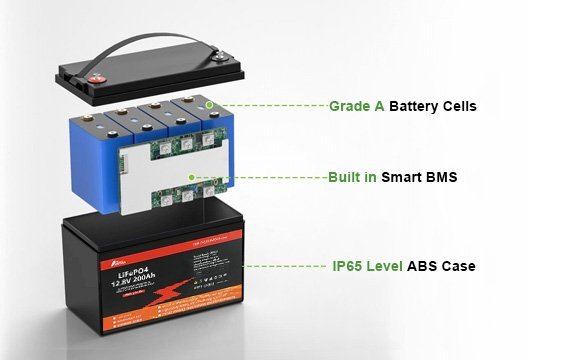
In a suitable series connection battery that has a similar voltage across, charge/discharge cycle and also safeguards continuous operational and failure.
Make sure that the system designer includes proper fusing and the battery interconnect cable and battery cables are large enough to support the expected current draw by the load and also an inverter.
Wiring and Connecting Solar Panels in Series for 48V Input
To provide the voltage to a 48V solar system, it is critical to correctly wire the solar array. Thus, series connection is made to match the inverter’s input voltage. They have to include the four 12V solar panels, and the 12V solar panels will make a combination to be 48V when it is fitted as series to power a 48V inverter effectively.
The positive terminal of each panel will be joined to the negative terminal of the next panel to form a chain to increase voltage and maintain the current. MC4 connectors are made use to prevent a water intrusion and to make a secure connection.

It is also essential to choose the proper gauge of cable size as to connect the undersized wire will be the cause of voltage drop and energy loss. Probably the 10 or 8-guage copper cables are utility for most residential runs, depends upon the distance and current.
The use of 48 V solar panels is efficient if it is available. Using 48V solar panels is an easy way to wire the array, and the use of these panels reduces connection count and simplifies it. Make sure that each panel voltage and current match because it is dangerous to have the panels’ voltages and currents that does not match can be the cause of the component damage.
Real-Life Case Study: 48V Solar Setup for a Garden Farmhouse
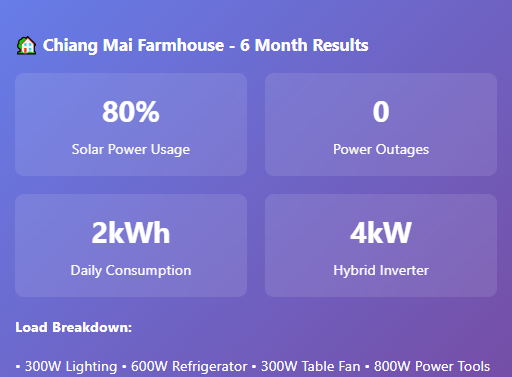
For a small Farmhouse which is located outside of Chiang Mai, Thailand the owner needed one economical, efficient solar system to support daily uses. The everyday load was required to be 2kWh consisting; 300W for Lighting, 600W for Refrigerator, 300W for one Table Fan, and 800W for Power Tools. To meet this load and some buffer as well as allow for future up-gradation the system was built around a 4kW hybrid on-grid solar inverter, which can provide the system with necessary support from the grid whenever needed, besides to allow solar to be the primary source of power generation.
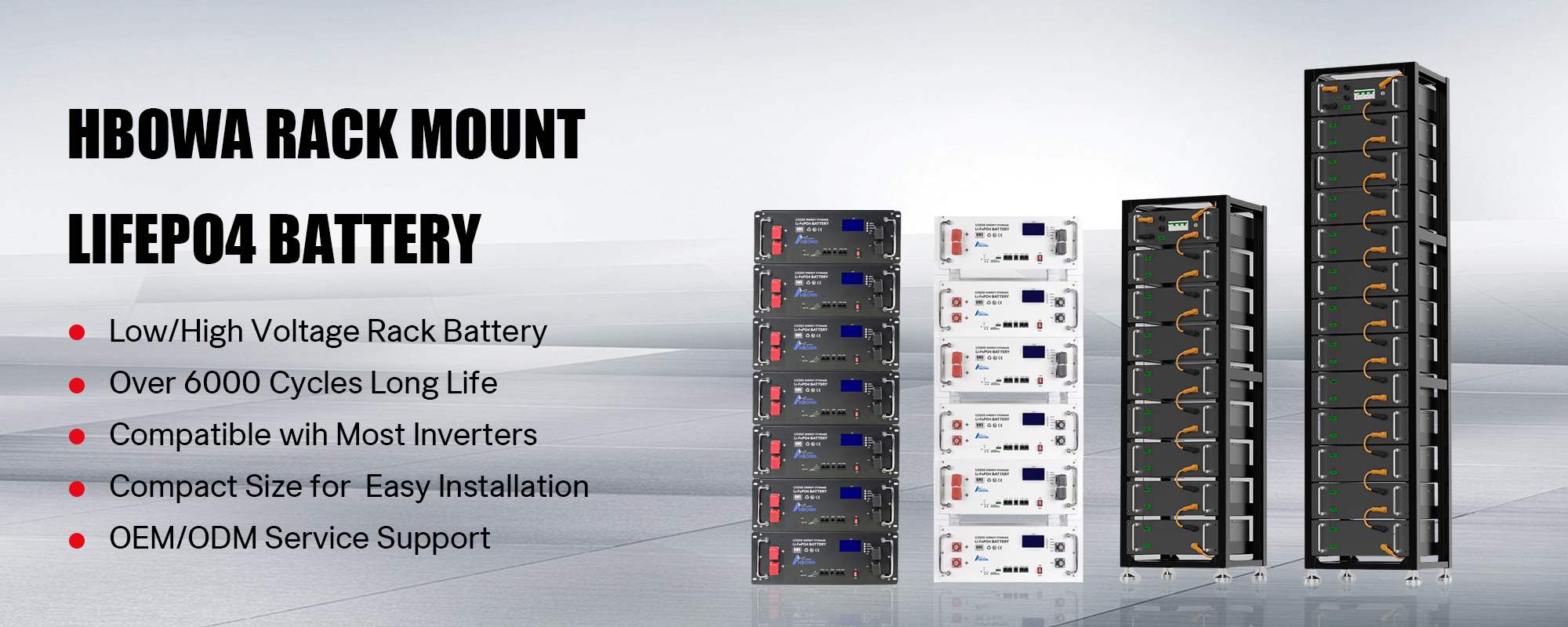
The design included was to use 1.8kW solar panel 48V into an array, connected in series as the system voltage was 48V. Moreover, the power was stored into 5kWh HBOWA LiFePO4 battery bank, and for nominal and maximum voltage of 51.2V respectively. That way, the usage pattern of energy during the daytime and storage at evening was considered without overloading the inverter or battery.
After 6 months of full-time power usage of this model, the real-life case was as follows:
Not a single time was there any power outage, and approx. 80% of total energy was directly drawn from the solar generation. The small usage of evening power when the sun was down was used from the available battery bank, and the inverter did the regulation in real-time based on battery power. In this real-life case study, it is proved that a 48V solar power system with a medium-sized hybrid inverter and LiFePO4 storage like HBOWA batteries can support your lifestyle off-grid without any issues and big maintenance.
Solar Pathway Lighting: Can 48V Power Small Outdoor Loads?
The answer to that question is yes, a 48V solar power system can also support smaller outdoor applications such as solar power pathway lights and solar garden lights pathway setups.These small load appliances typically run in low-voltage DC (12V, 24V), but they can be connected into a 48V system by using steps-down converters or connecting these small loads to an auxiliary output of a small inverter.
For example, a house’s garden can have solar power pathway lights installed for the garden. This lighting can be used once the solar energy produced is more than the energy needed in a day.
We can program the relay in such a way that solar path lights should turn on from the inverter output AC or, we can connect it to some dedicated DC circuits. To avoid main battery bank over-discharging and to use the system in optimal sense we can use additional installation methods.
When connecting the solar lighting pathway system, safety is very important. The pathway lighting voltage conversion circuits should be isolated, and the cables used for connecting should be used underground or in a place secured from moisture and pests. These help in allowing a person to use superior voltage solar to make their property good and safe.
Safety, Maintenance & Expansion Tips
When working with a 48V solar power system you should always follow some safety and maintenance points. Grounding is important and should be both at the inverter and panel level to protect against surges and lightning. Overcurrent protection should be maintained and choose from DC breakers and fuses. They can be placed in between the panels, and charge controllers, batteries.
Regular inspection of wiring, connectors, and terminals. Detect any corrosion, loose contacts, and overheating. Maintenance includes keeping the components clean, dry, and well-ventilated. Also, check the battery health regularly and update the inverter/charge controller for firmware.
Make a provision for future expansion by leaving some room in inverter capacity. An 8.3KW hybrid LV solar inverter can be installed if your current load is almost 5-6KW. Adding more loads like water pumps, A/C, etc. is possible without changing the whole system.
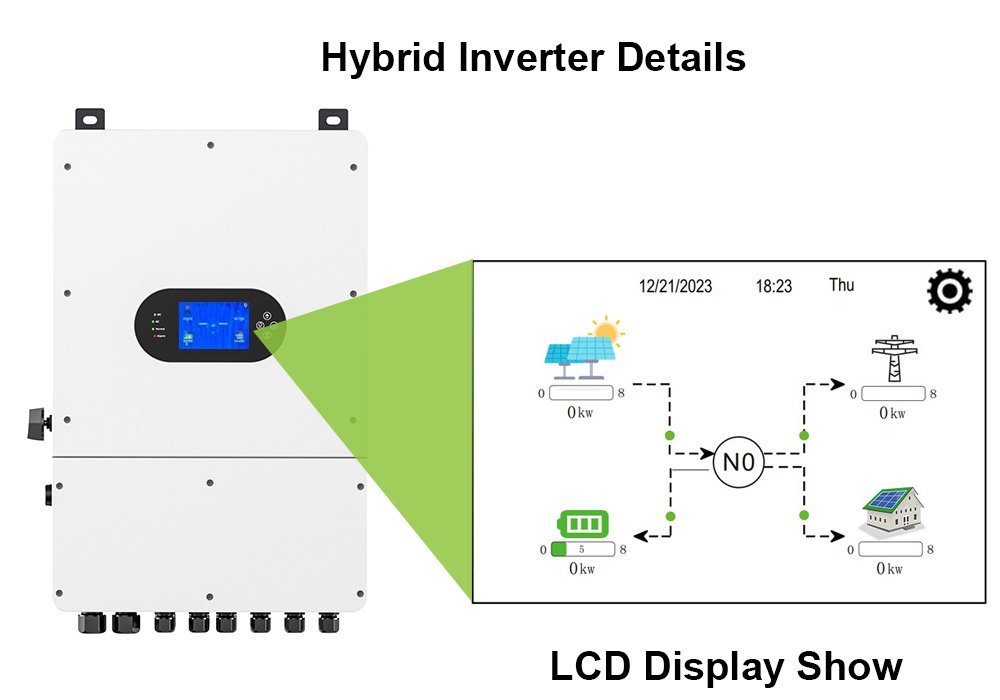
HBOWA Hybrid Solar Inverter
HBOWA provides high-end, integrated with state of art technology hybrid solar inverters of wide range such as; 1.3 kw hybrid solar power inverter, 3 kw hybrid off-grid solar inverter, 4kw hybrid on grid solar inverter, 6 kw hybrid MPPT solar inverter, 10 kw single phase hybrid inverter, 12 kw Sun hybrid solar inverter and 8.3 kw hybrid LV solar inverter.
Conclusion
If you consider the specifications, a well-designed 48V solar power system provides an efficient energy conversion. It has a flexible scalability, and a robust off-grid functionality. With hybrid inverters and reliable LiFePO4 solar battery banks delicate enough for users to install this system configuration and get high performance with no requirements of maintenance. A well-designed 48V solar power system also have a reliable solar battery banks to make sure they remain living off-grid solar applications. For more detail our experts are more than happy to answer more of your questions.