GW to kW Calculator
Formula: kW = GW × 1,000,000
Converting 1GW to KW: A Step-by-Step Explanation
Conversion of energy units like gigawatts to kilowatts is simple with the use of a simple multiplication or division process. The most common question 1GW is equal to how many KW is a straight calculation based on the relationship between them.
Let’s start by converting gigawatts (GW) to its smallest unit, the watts (W). So the formula for this specific conversion is:
1GW=1 Billion watts = 1,000,000,000 Watts
To convert Gw to Kw, we just multiply or divide the given watt value by 1,000,000 or one million.
1 GW = 1 million kilowatts = 1,000,000 KW
If you wish to do reverse conversion then you need to divide by one million in order to get the equivalent value in gigawatts.
Moreover, a gigawatt is also equal to 1,000 megawatts. That is, 1 GW = 1,000 MW. The Megawatts is a larger unit compared to Kilowatts.
We can easily convert between units using these numerical relationships:
1 Gigawatt = 1,000 MegaWatts = 1,000,000 Kilowatts = 1,000,000,000 Watts
To put differently, 1 GW = 1*10^3 MW = 1*10^6 KW = 1*10^9 W
Additionally, the most convenient and easy to remember conversion for 1GW to KW is broken down in a simpler way as follows:
- Step 1: One Gigawatt = thousand MegaWatts
- Step 2: To convert from GW to MW, multiply GW value by thousand.
- Step 3: To convert from MegaWatts to KiloWatts, again multiply the value by thousand.
- So, it becomes 1GW = 1,000MW = 1,000 x 1,000 KW
- Thus, finally, 1 GW = 1,000,000 KW
These calculated results of converting Giga-watt to Kilo-watt are essential in energy management discussions. Similarly, converting the energy capacities from MW to GW helps in clear measurement and quantification for better energy management. Large-scale energy systems use GW to MW and MW to GW conversions to show system capacities, like measuring grid capacities and renewable energy outputs.
Gigawatt to Kilowatt Conversion Table
To convert gigawatts to kilowatts, multiply the GW value by 1,000,000.
The formula is: kW = GW × 1,000,000.
| Gigawatt (GW) | Calculation | Kilowatt (kW) | Common Example |
|---|---|---|---|
| 0.000015 GW | 0.000015 × 1,000,000 | 15 kW | Small commercial 15kW solar system |
| 0.00002 GW | 0.00002 × 1,000,000 | 20 kW | 20kW Solar system for small businesses, farms, or shops |
| 0.00003 GW | 0.00003 × 1,000,000 | 30 kW | 30kW Commercial solar system for workshops or offices |
| 0.00005 GW | 0.00005 × 1,000,000 | 50 kW | 50kW Solar system for warehouses, farms, or small factories |
| 0.00006 GW | 0.00006 × 1,000,000 | 60 kW | Medium 60kW commercial solar project |
| 0.00008 GW | 0.00008 × 1,000,000 | 80 kW | Commercial rooftop or ground-mounted 80kW solar system |
| 0.0001 GW | 0.0001 × 1,000,000 | 100 kW | 100kW Commercial and industrial solar system |
| 0.00015 GW | 0.00015 × 1,000,000 | 150 kW | 150kW Larger commercial or light industrial solar project |
| 0.0005 GW | 0.0005 × 1,000,000 | 500 kW | 500kW Large C&I solar or battery storage project |
| 0.001 GW | 0.001 × 1,000,000 | 1,000 kW | Equivalent to 1 MW |
| 0.01 GW | 0.01 × 1,000,000 | 10,000 kW | Equivalent to 10 MW utility-scale project |
| 0.1 GW | 0.1 × 1,000,000 | 100,000 kW | Large solar farm or wind power project |
| 0.5 GW | 0.5 × 1,000,000 | 500,000 kW | Large renewable energy generation project |
| 1 GW | 1 × 1,000,000 | 1,000,000 kW | Gigawatt-scale power plant or grid-level project |
For commercial solar buyers, values such as 20 kW, 30 kW, 50 kW, 100 kW, and 150 kW are usually discussed in kilowatts, while gigawatts are mainly used for utility-scale solar farms, national grids, and large power generation projects.
Gigawatt to Kilowatt Examples & Cases
1 Gigawatt = 1000000 Kilowatt;
1.21 Gigawatts = 1.21 x 1,000,000 = 1210000 Kilowatts;
6 Gigawatts = 6 x 1,000,000 = 6000000 Kilowatts;
15 Gitawatts = 15 x 1,000,000 = 15000000 Kilowatts;
0.000038GW = 0.000038 x 1,000,000 = 38 KW.

Understanding Energy Units: Watts, Kilowatts, and Gigawatts
Watts
According to U.S energy information administration (EIA) definition, “a Watt (W) is the unit of electrical power equal to one ampere under the pressure of one volt”. It is mainly used for smaller devices like LED lights or telephones.
Kilowatts
EIA explains Kilo-watts is a larger unit than watts (W). Kilowatt is normally used for appliances that consume a lot of energy. It is also commonly used for the measurement of small-scale solar power systems and household energy consumption.

Gigawatts
Gigawatt (GW) is mostly used in massive amounts of power. This is useful for national energy grids and vast power plants or principal renewable energy projects or generators that are capable of producing power in such caliber. Other explanation would be One gigawatt could supply energy to over 750,000 households easily.
Power vs. Energy: Understanding the Difference
Power and energy are two different things and understanding the difference is very important for the professionals, and students related to the engineering sector. Power is the speed at which energy is produced or consumed, while energy is the ability to do work according to EIA, such as electricity consumed over time. The rates and quantities are calculated and given in gigawatts (GW) and gigawatt-hours (GWh), respectively.
For example, it is helpful to use an analogy of a vehicle when you are comparing the power with its energy. Think of power as the speed of a vehicle—how fast it’s moving. Energy, on the other hand, is like the total miles or distance the vehicle covers over a certain period.
Another example is a power plant of 1 GW can generate energy at this rate, but the amount of energy produced would be determined over the course of time. If the plant operates for an hour, then it will make 1 GWh of electricity.
There is one practical factor that needs to be kept in mind is the power transmission losses. Power gets lost as it passes through transmission lines. A 1GW power plant doesn’t deliver the full 1,000,000KW to users. The system loses 2% to 6% of power during transmission. This depends on distance and wire quality.
For example:
Starting power: 1GW (1,000,000KW)
Power lost in transmission: 6%
Power reaching users: 940MW (940,000KW)
These losses matter for planning. Engineers must install extra capacity to ensure users get the power they need. If a city needs 1GW of power, the plant needs to generate more to make up for these losses. A well standard difference in the relation between power and energy is necessary to understand them correctly.
Practical Applications of 1GW in Real-World Scenarios
One gigawatt of power is a lot and it usually comes from large energy systems like;
- national power grids
- wind farms
- solar plants.

Therefore gigawatt-level energy is typically used by large populations or industries.
For example, the capacity of 1GW is crucial in terms of its ability to power homes and businesses. 1GW can supply 750,000 homes for a year, based on their consumption. It provides an estimation of the energy consumed by the regions/cities, especially from renewable sources like solar and wind power. These sources may contribute to the grid system significantly if the energy capacity is managed properly.
Large wind farms often produce 1GW or more. A 5GW wind farm can power millions of homes each year, depending on wind conditions. Similarly, a 1GW solar plant can power thousands of homes during peak hours. However, solar output varies with the time of day and weather.
Advanced Conversions: Gigawatts to Other Units
In real life cases the conversion of gigawatts into other units (MWh, KWh, Wh) is very important to calculate how much energy produced or vice versa. The practical application of such conversions is to measure:
- Production of electricity
- Power of a generator
- Electricity production of power plants, or consumption.
To convert gigawatts to MWh, use the following formula:
Energy (MWh) = Power (GW) × Time (hours) × 1,000
For example, If the power plant of 1GW works for 5 hours, then the total energy produced is equal to 1GW × 5 hours × 1,000 = 5,000 MWh
Similarly, while converting megawatts (MW) to kilowatts (kWh), use the formula as follows:
Energy (kWh) = Power (MW) × Time (hours) × 1000
For example, a power generator releases power at the rate of 1MW and it operates for 10 hours. Then the total energy which will be produced is 1MW × 10 hours × 1,000 = 10,000 kWh.
It is essential to understand these advanced conversions, such as converting from mWh to kWh, to plan, monitor, and manage the system efficiently. This is an essential process used while developing any renewable energy projects as the power developed by these systems from time to time is varied.
Online Tools and Calculators for Energy Unit Conversions
Several online tools and converters are used for unit conversions in various energy sectors. These tools are beneficial for professionals and students who need to work on these conversions and calculations frequently.
One online converter, such as unit converters, is the MW to kWh conversion calculator. With this converter’s help, the result rates can be found in kWh which is a widely used measurement for household energy consumption. Many large-scale energy projects are mainly based on this unit conversion for a more efficient and effective project. Another beneficial point about this converter is that it saves time and effort to be maximized without the help of complicated manual conversion.
A GW to MW to KW calculator is beneficial for different-size energy measurements and is readily available on several websites. These tools are usually computerized and automated for units related to power and energy.
Current Trends in Renewable Energy:
According to Solar Market Insight Report Q4 2025 issued by the SEIA, there are projections about 41 GWdc of utility-scale solar to be built in 2025. This kind of annual outlook signals that project pipelines, procurement, and grid interconnection planning are increasingly sized in tens of gigawatts, making “GW-level” solar installation demand far more common than it was just a few years ago.
Conclusion
It is crucial to find megawatt-to-kilowatt or gigawatt-to-megawatt or other relevant conversions for the proper design of energy systems in the modern world. Knowing the conversion is also critical for accurate communication of the energy projects. This makes it easy for project planners to plan and manage efficient renewable or non-renewable energy projects.
Normal consumers or industry experts working in the field of energy projects need to familiarize themselves with how to convert 1GW to KW. It is a fundamental conversion for energy managers, grid planners, and professionals especially those working on renewable energy projects in years to come.
Popular Power Conversion Calculators
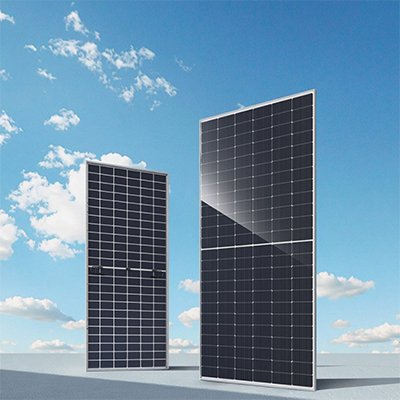
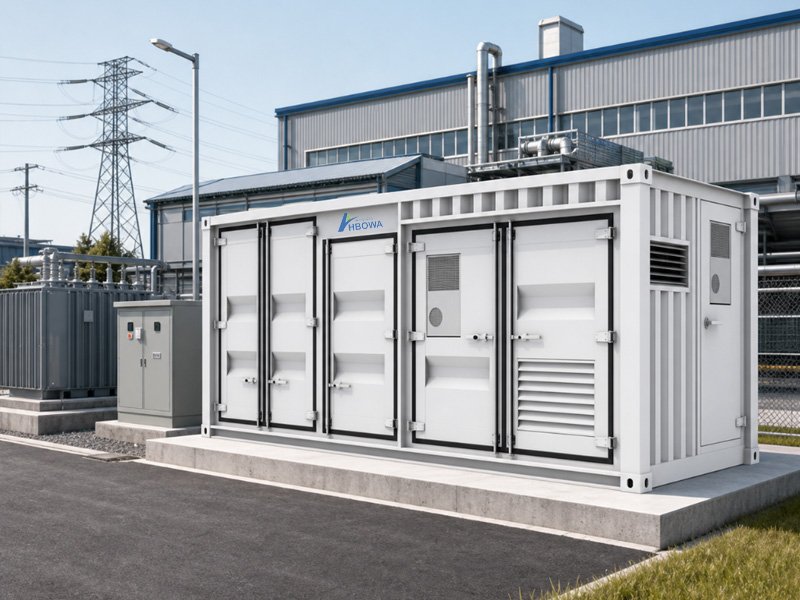
Solar Products for Your Project:
Solar Panels | Home Battery Backups | C&I Battery Storage |
 |  |  |
Frequently Asked Questions
Gigawatt (GW) is equal to 1,000,000 Kilowatts (KW). This will help you to know the enormous number of Kilowatts present in a Gigawatt. When the energy level is to be measured, the kilowatts is used to measure a smaller energy system like the domestic power supply. The gigawatt is generally needed to measure a higher order of energy produced like the national grid and solar panels, etc.
A megawatt or MW is 1000 times smaller than a gigawatt or GW. Simply put, 1GW is 1000MW. Understanding this difference is vital when it comes to discussing large energy systems and networks. Even though a wind farm of medium size might be recognized with the output of one megawatt, a gigawatt or a GW describes a high capacity for power output for massive energy projects, or in some cases giant energy projects or power plants.
To convert 1 megawatt (MW) to kilowatt-hours (kWh), you need to * by the hours and value of one thousand.
The formula is: Energy(kWh) = Power(MW) * Time(hours)* 1000.