

Formula:
Wh = (mAh × V) ÷ 1000,
W = Wh ÷ Hours
mAh to Watts: Quick Answer
You cannot convert mAh to watts directly unless you also know the battery voltage and discharge time.
First, convert mAh to watt-hours using Wh = (mAh × V) ÷ 1000.
Then divide the watt-hours by runtime: W = Wh ÷ hours.
For energy storage batteries, mAh values are usually much larger than those used in phones.
For example,
A 51.2V 100Ah battery equals 100,000mAh and stores about 5.12kWh.
If discharged over 4 hours, its average output is about 1,280W.
How to Use the mAh to Watts Calculator (With Real Examples)
The measure of total battery capacity converted into watts, the mAh to watts calculator is used to convert the mAh into real power output. The Watts can be manually calculated also if you don’t wish to use any online tools when converting mAH to W. You <strong>can’t convert mAh to watts (W) directly</strong>. To estimate watts, you need battery voltage (V) and runtime (hours). This tool converts mAh → Wh using voltage, then calculates swatts = Wh ÷ hours.
Watts = (mAh × Volts) ÷ (1000 × hours).

Runtime is approximately 15.7Wh divided 5W = 3.14
The above formulae can be understood clearly with some real-life examples. Let’s do a simple mah to watt calculation using two examples:
Example 1: A 5000 mAh battery with 3.7V for 1 hour.
Convert 5000 mah to watts:
Watts = (5000×3.7)/1000 / 1 = 18.5W.
Example 2: A 10000 mAh Smartphone rated 3.7V for 2 hours.
Convert 10000 mah to watts:
Watts = (10000 × 3.7) / 1000 /2 = 18.5 W.
If used for over 1 hour, it gives you 18.5 Watts.
The amount of energy depicted will help you shortly understand how much energy your phone is draining while using for high-power tasks like Games or HD video streaming.
Example 3: A 20000 mAh power bank rated 5V for 1 hour.
Convert 20000 mah to watts:
Watts = (20000 × 5) / 1000 / 1 = 100 W.
Over 2 hours of use, the actual output will be 50 Watts per hour.
The output is necessary while comparing the advertised capacity with actual power output when charging multiple devices simultaneously.
The use of mAh to watt formulae and the mAh to Wh calculator is essential while evaluating the efficiency of the device. Always convert milliamp hours to watt hours to check if your battery is suiting your daily per hour usage.
Conversion Reference Table: Fast mAh to Watt Calculations
When viewing a battery’s power capacity the value is often quoted as 6000mAh capabilities to deliver a perfect power output of 6000 milliampere hours when discharged over a 1 hour period. The table below will help converter mah to Wh via the standard formula below that assumes a 1-hour discharge to represents the power in watts.
This table is useful when comparing cameras, headphones, or small medical devices.Standardization for this parameter will help all types of device to calculate. This chart will also help you know why voltage is so important in understanding how many mah a battery produces power. For example, a 1000 mah battery at 3.7V will generate significantly less power than a 1000 mah battery at 5V.
| mAh | Voltage (V) | Wh | Watts (1 hr) |
|---|---|---|---|
| 1000 | 3.7 | 3.7 | 3.7 |
| 5000 | 3.7 | 18.5 | 18.5 |
| 10000 | 5.0 | 50 | 50 |
| 20000 | 3.7 | 74 | 74 |
| 30000 | 3.7 | 111 | 111 |
| 50000 | 3.7 | 185 | 185 |
| 100000 | 12.8 | 1,280 | 1,280 |
| 100000 | 25.6 | 2,560 | 2,560 |
| 100000 | 48 | 4,800 | 4,800 |
| 100000 | 51.2 | 5,120 | 5,120 |
| 200000 | 51.2 | 10,240 | 10,240 |
| 100000 | 192 | 19,200 | 19,200 |
| 100000 | 384 | 38,400 | 38,400 |
| 100000 | 512 | 51,200 | 51,200 |
| 180000 | 614.4 | 110,592 | 110,592 |
| 280000 | 768 | 215,040 | 215,040 |
| 280000 | 1000 | 280,000 | 280,000 |
The mah to watt converter will help you to quickly compare a truly battery delivers. The mah to watt hours calculator will offer even more accurate calculation for different voltages. This helps you on how can power you expect from a battery with a specific mah rating.
Note: Calculations assume full 1-hour discharge for watt conversion. Runtime will vary depending on device load.
Why mAh to Watts Matters
Converting mAh to watts using voltage gives a clear picture of the real energy a battery can deliver. Understanding the mAh to Watt value helps the consumers and engineers to take better energy decisions. Hence, it becomes essential to know about mah to watts value of a battery while one tries to choose power banks, drones, or any other portable electronic device. Having the mAh to watts value offers an easy way for consumers to make better energy decisions. Knowing about the mAh to watts value makes it easier to compare different models while the selection of drones, power banks, or any other electronic device. A mAh to Watts calculator is one such tool that offers ideal mAh in watts, where one can have a precise measure of mAh in watts easily. Any battery comes with its capacity mentioned in mAh (milli-ampere-hour) to give an idea of how long a battery would last before draining out.
Understanding Battery Basics: mAh, Volts, and Watt-Hours Explained
Watt-hour and mAh are the fundamental elements for understanding the information and limitations about batteries. milliamp-hour, commonly called as mAh, is a unit that defines the electric charge, i.e how much current the battery can deliver over time, while Voltage(V) refers to the electric pressure.
A watt-hour, commonly called as Wh, expresses the total capacity of the energy that the battery can deliver; a watt supply the rate at which power is consumed or delivered. To convert milliamp-hours to watt-hours, the following formulas are used.
Wh=(mAh×V )/1000
And, watt-hour supply power(W) output over time on particular applications
W = Wh/hours.
Understanding the Relationship between Key Concept mAh, Volts, and Watt-Hours

In order to convert from mAh to watt-hour or mAh to Volts, mAh calculator and mAh to volts calculator are used, as different voltage devices, the power delivered by batteries are compared side by side to the energy supplied to the device.
Here’s how it looks with real values:
| Capacity (mAh) | Voltage (V) | Watt-Hours (Wh) | Power Output (W over 1h) |
| 5000 | 3.7 | 18.5 | 18.5 |
Understanding these relationships is critical for evaluating mah to wh, converting mah to watt hour, and determining mah in watts using a reliable mah to watt hours converter. For larger battery packs, conversions like mah to kWh also become relevant.
Real-World Case Studies: Comparing Different Battery Applications
Different battery power is used on different devices and various ways, although they have similar mAh. So, in this section, we’re going to consider some real-world applications and compare them using the mah to watts calculator and see why mAh alone isn’t enough to understand battery performance.
Case Study 1: Drones vs Smartphones
Imagine a drone and a smart phone, both having batteries rated in few thousand mAh. The 6000 mAh drone battery at 11.1V delivers, (6000 × 11.1) / 1000= 66.6 Wh. So, it offers high watt-hour, and powerful motors can fly for around 20 minutes. Whereas a smart phone with a 4000 mAh battery at 3.7V gives only 14.8 Wh and then can last 8-10 hours, despite having just 14.8Wh or 0.0148 kWh of energy.
Case Study 2: Electric Bikes vs Power Banks
Ride an electric bike that has a 10000 mAh battery at 36V, stores 360 Wh. Similarly, power banks of 20000 mAh at 5V will store only 100 Wh, which is less Wh compared to the bike, although it has twice the mAh. This shows the difference between mah versus watts hour and the significance of using a mah to watt converter.
| Device | mAh | Voltage (V) | Wh | Estimated Runtime |
| Smartphone | 4000 | 3.7 | 14.8 | 8–10 hours |
| Drone | 6000 | 11.1 | 66.6 | ~20 mins |
| Power Bank | 20000 | 5 | 100 | Varies |
| E-Bike Battery | 10000 | 36 | 360 | ~1 hour |
Understanding mah to wattage helps you to make realistic decisions for everyday use for better efficiency.
Advanced Use Case: High Capacity Power Banks
The large capacity power banks like 20,000 mAh or more presents a unique challenge when the watt output has to be calculated. Although the battery’s capacity in milliamp-hours (mAh) is ample, the real power available depends on the battery voltage and the efficiency of the device. For example, a 20,000 mAh battery at 3.7V will have approximately 74 Wh (20,000 x 3.7 /1000).
However, while charging devices with varied power requirements, efficiency losses like heat and light or sound dissipated must be taken into account. The higher power devices like laptops will draw much more significant current compared to the phone, and the runtime will be lesser. Moreover, many power banks have multiple output ports (5v, 9v, 12v), which involves different power levels.

Consider the following example for a 20000 mAh power bank at 3.7V:
| Device | Watts Used | Runtime (20000 mAh @ 3.7V) |
| LED Light | 5W | ~3 hours |
| Laptop | 45W | ~20 minutes |
For larger power banks, such as those with 50000 mAh or 100000 mAh, similar calculations can be made to determine runtime. A mah to watt hours calculator can help clarify the expected performance and provide more precision for the performance and realistic runtime.
Conclusion: Know What Your Battery Can Really Do
Converting mAh to watts helps when correctly evaluating the actual power capacity of a battery. While mAh shows you how much power it can store, it does not reveal the complete picture. Knowing voltage and watt-hour (Wh) helps you figure out how much your device can give you. It is highly advisable to check the voltage before buying battery-powered equipment or a power bank. By knowing the voltage, you can easily decide whether it fits your needs. You can use a mah to watts calculator to make better-informed decisions based on actual energy needs.
More Conversion Calculators:
Solar Products for Your Project
 Solar Panels | 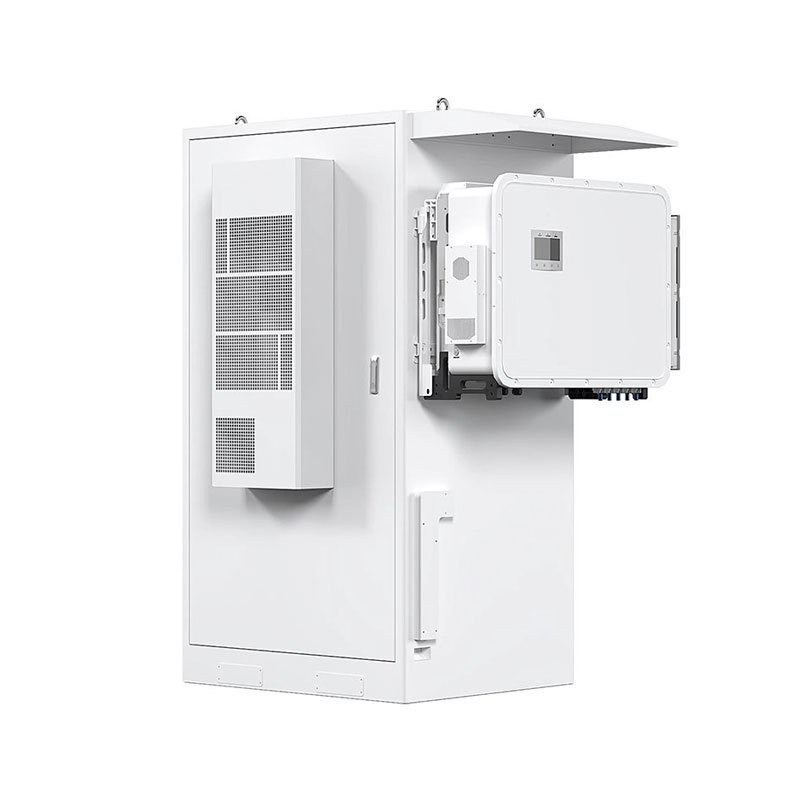 Energy Storage Cabinet Energy Storage Cabinet | 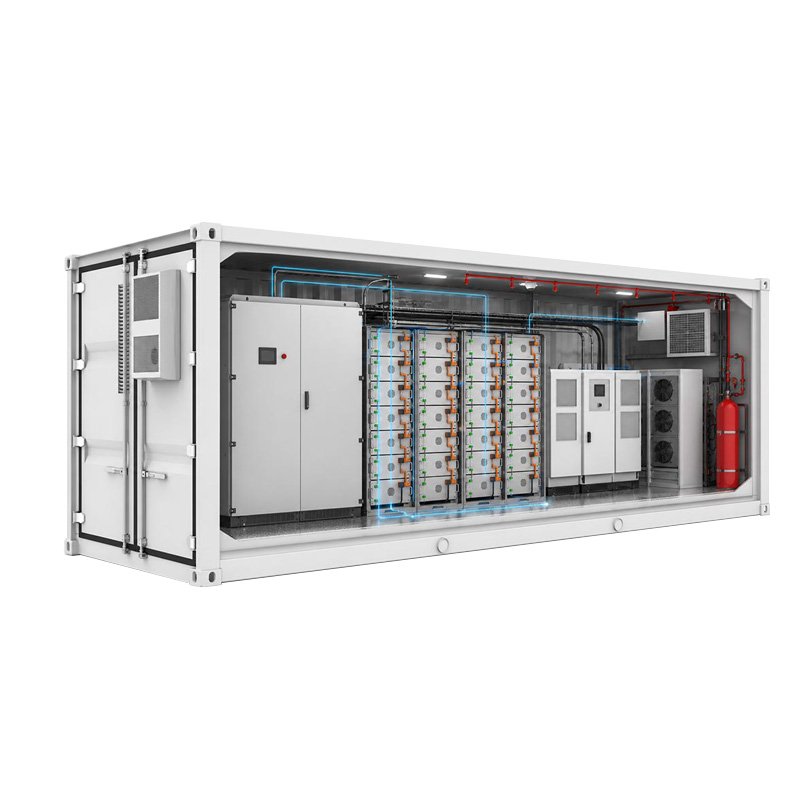 C&I Battery Container |
Frequently Asked Questions
For the conversion, use the formula below:

Because of voltage and internal resistance, higher voltage means more energy per unit of charge. That’s why two 3000 mAh batteries can produce different watt-hour values.
mAh measures charge capacity. Wh measures actual energy available. Devices draw different amounts of power, so Wh provides more precise estimation of runtime.

