
Formula: kWh = MWh × 1000
1 MWh equals 1,000 kWh. To convert megawatt-hours to kilowatt-hours, multiply the MWh value by 1,000. For example, 5 MWh equals 5,000 kWh, and 100 MWh equals 100,000 kWh.
This MWh to kWh calculator is useful for solar farm output, battery discharge reports, utility billing, energy cost analysis, and commercial power monitoring.
Formula & Variable Definitions
Formula:
kWh = MWh x 1000
No efficiency factors, no voltage adjustments, this is a pure unit conversion.
Kilowatt-hours and Megawatt-hours are two terms used to measure the highest electrical energy conveyed or consumed over a time period. The only variation between kilowatt-hours and megawatt-hours is about scale. Megawatt-hours are used in big projects such as utility plants or commercial infrastructure, or even along with offset solar outcomes, whereas Kilowatt-hours are used on a smaller scale, such as building-level power usage and equipment intake.
The initials MWh stand for the total energy measured on a large scale, such as over a month or a year. In contrast, the output, kWh, expresses the same quantity on a smaller scale to give better detail for monitoring or comparing. The multiplying factor to decrease the quantity from an MWh to a kwh is 1000. This is the conversion constant because how many kwh in a MWh are always defined by the same relationship that one megawatt-hours equals one thousand kilowatt-hours.
kWh vs MWh: What Is the Difference?
| Unit | Meaning | Scale | Common Use |
|---|---|---|---|
| kWh | Kilowatt-hour | Smaller energy unit | Home bills, appliances, battery storage, building energy use |
| MWh | Megawatt-hour | 1 MWh = 1,000 kWh | Solar farms, utility reports, commercial energy production, grid data |
It is a unit conversion used for practical applications, billing systems, and technical documentation demands. This report does not depend on Voltage, current, or efficiency of the system. This relationship can be shifted across: solar generation, battery discharge report, or utility metering report.
MWh to kWh Price Conversion: $/MWh to $/kWh
Energy prices are often listed as cost per megawatt-hour, such as $/MWh, €/MWh or £/MWh. To compare them with electricity bills, battery costs, or solar project tariffs, you can convert the price into cost per kilowatt-hour.
Price per kWh = Price per MWh ÷ 1000
| Energy Price | Conversion Formula | Price per kWh | Common Use |
|---|---|---|---|
| $100/MWh | 100 ÷ 1000 | $0.10/kWh | US power purchase or energy billing |
| $150/MWh | 150 ÷ 1000 | $0.15/kWh | Solar PPA, utility cost, commercial energy analysis |
| €200/MWh | 200 ÷ 1000 | €0.20/kWh | European electricity price comparison |
| £120/MWh | 120 ÷ 10 | 12 p/kWh | UK tariff comparison in pence per kWh |
For UK-style pricing, converting £/MWh to p/kWh uses a different display format because £1 equals 100 pence. The shortcut is: p/kWh = £/MWh ÷ 10. For example, £120/MWh equals 12 p/kWh.
Example Calculation
The energy consumption for the complete cycle of the logistics distribution center monitored 126.38 MWh with the help of the aggregate utility data and the sub-meter information available for the storage, packaging, refrigerated, and automated sortation, based on multiple zones of the warehouse centre during the year.
Converting 126.38 MWh to kWh
kWh = 126.38 x 1000 = 126380 kWh
The converted figure permits management a more detailed view of energy consumption. For example, if expressed in kWh, this total can be separated into monthly consumption or departmental consumption, etc, and if this load is spread evenly, the average monthly usage would be about 10,531 kWh, but this is not the case in real-world operations. In reality, operations are affected by seasonal demand, equipment and machinery cycle times, and the level of activity or intensity.
The chart below shows a realistic seasonal variation pattern.
When prices are listed in kWh, it allows for direct comparison with electricity tariffs since utility billing is almost always in kWh. It allows a financial organization to calculate annual energy costs as well as peak consumption periods and possible savings.
The reason to convert from megawatt-hours to kilowatt-hours is that the energy management software, often used for tracking the unit consumption of equipment, uses kilowatt-hours. If the megawatt-hour of a machine is converted to kilowatt-hour, the unconventional sudden upcoming of zones will drop the supply count to a great extent, which will be clear from the graph.
From an engineering point of view, the kilowatt-value we get post the units implementation will help us know how to do future load forecasting. In the machine or equipment, if we are introducing more expansion, then we have to increase the capacity as per the increase in the units of the equipment. We also have to increase the energy systems, such as additional transformers, additional connections, and backup systems, too.
When to Use This Calculator
A large amount of energy production or consumption values needs a more detailed expression. Solar farm controllers calculate the total output produced by the systems in megawatt-hours, and then they convert the result to kilowatt-hours to compare the system’s performance with the outputs of individual installations. The grid-level generation figure is also converted into kilowatt-hours to align the supply data with the customer billings.
Common Conversion Use Cases By Profession
| Who | Source Data (MWh) | Why Convert to kWh |
|---|---|---|
| Solar Farm Operator | Monthly site output | Compare with individual rooftop installations |
| Utility Analyst | Grid generation totals | Reconcile with consumer billing records |
| Facility Manager | Annual meter readings | Analyse department-level or zone consumption |
| Energy Engineer | System design specs | Size equipment, transformers, and backup power |
| Financial Team | Annual usage report | Match tariff rates (billed in kWh) to actual cost |
| EMS Software User | Aggregated sensor data | Feed equipment-level monitoring dashboards |
This conversion is essential for planning purposes because it allows the engineers to estimate the large renewable installations’ expected annual production figures. The conversion process also lets the verification process perform, such as verifying the recorded worth of mwh kwh conversion value, which is the amount recorded in the electricity meter of kilowatt-hour across multiple sites. In facility management, the conversion process helps to calculate building energy consumption over a longer period.
MWh to Electricity Units
In many countries, one electricity unit means one kilowatt-hour, or 1 kWh. Therefore, 1 MWh equals 1,000 electricity units.
| MWh Value | kWh Value | Electricity Units |
|---|---|---|
| 1 MWh | 1,000 kWh | 1,000 units |
| 1.5 MWh | 1,500 kWh | 1,500 units |
| 10 MWh | 10,000 kWh | 10,000 units |
| 100 MWh | 100,000 kWh | 100,000 units |
When a bill or energy report uses the word “unit,” always confirm the local definition. In many electricity billing systems, one unit refers to 1 kWh.
Reference Table (Typical Values)
The table gives practicable megawatt-hour values with their equivalent in kilowatt-hour terms. These are the realistic values with their production or consumption values from working sites, rather than just reading from the books.
| Energy (MWh) | Energy (kWh) |
|---|---|
| 0.42 MWh | 420 kWh |
| 0.88 MWh | 880 kWh |
| 1 MWh | 1,000 kWh |
| 1.37 MWh | 1,370 kWh |
| 1.5 MWh | 1,500 kWh |
| 2.94 MWh | 2,940 kWh |
| 4.16 MWh | 4,160 kWh |
| 7.83 MWh | 7,830 kWh |
| 12.59 MWh | 12,590 kWh |
| 18.72 MWh | 18,720 kWh |
| 27.45 MWh | 27,450 kWh |
| 39.68 MWh | 39,680 kWh |
| 54.23 MWh | 54,230 kWh |
| 76.91 MWh | 76,910 kWh |
| 100 MWh | 100,000 kWh |
| 103.54 MWh | 103,540 kWh |
| 148.27 MWh | 148,270 kWh |
| 212.64 MWh | 212,640 kWh |
| 305.18 MWh | 305,180 kWh |
| 468.92 MWh | 468,920 kWh |
| 500 MWh | 500,000 kWh |
| 620.75 MWh | 620,750 kWh |
| 1000 MWh | 1,000,000 kWh |
These values are in the terrace of the energy deployment scale. The lesser values will give the short-term generation of power from a small solar site. The mid-terrace values can give the power consumption for a pack of commercial buildings per month. But greater values would be linked to industry techniques or the annual production from any large solar sites. Therefore, this continues to be changed according to the scale of the specific energy properties. However, the conversion value does not change when combusted
Accuracy & Limitations
The calculator performs an accurate mathematical conversion on the basis of a single, fixed unit relationship. The variation in results comes from the accuracy of the measurements, and not because of a conversion process. The input data to the calculator, due to meter precision, estimation method, and reporting interval, always has variance related to the converted results.
The converter does not account for: system efficiency, transmission loss, temperature effect, and equipment performance changes. It does not perform a true power output calculation for the facility requirement, nor does it find its operating duration and cost.
Case Study
Mwh to KWh in Solar Output Breakdown
One of the Solar operators is running their rooftop installation in many commercial places in the region. At the end of the year, the total combined production of all the sites summed up to 358.74 MWh. To compare it with site data and building-level consumption, the operator has to convert MWh to KWh.
358.74 MWh -> 358740 kWh
358.74 x 1000 = 358740 kWh
By converting and comparing the per-kilowatt-hour value, analysts can evaluate the energy contribution per site. Teams can assess which structures performed above or below expected output levels. After evaluation, one site seems to produce a lot less than the others of a similar size.
Illustrative Multi-site Solar Output Breakdown
Further examination showed that it received seasonal shading from added structure constructs close by. The use of kilowatt-hour conversion helped the team identify the problem more directly when one unit is smaller, and the comparison will be more detailed regarding the individual sites. By having the result, the team started planning for further maintenance and also decided on the positioning for their future systems.
MWh to kWh in Solar and Battery Systems
Solar farms, battery energy storage systems, and utility reports often use MWh because the numbers are large. However, kWh is easier to use for billing, performance comparison, and system-level analysis.
| Scenario | MWh Value | kWh Value | Why Convert? |
|---|---|---|---|
| 100MW solar farm daily output | 500 MWh | 500,000 kWh | Grid billing and performance reporting |
| Battery discharge report | 1.5 MWh | 1,500 kWh | Battery capacity and backup energy analysis |
| Commercial building monthly usage | 100 MWh | 100,000 kWh | Cost allocation and energy management |
Conclusion
When we convert MWh to kWh, we can get specific data rather than having a large amount of data that is not figured to be useful for you. MWh to kWh calculator to make your conversion accurate and speedy for planning, energy reporting, and analysis. To understand the relation between Megawatt hours (mwh) and kilowatt hours (kWh), we can also better figure production data and account for energy efficiency across the board.
See More Calculators
Storage Solutions for MWh-Scale Projects
Converting MWh to kWh helps align large energy totals with billing, monitoring, and project-level storage data. Use the converted value as a starting point to compare broader BESS solutions and containerized systems for large commercial or utility applications.
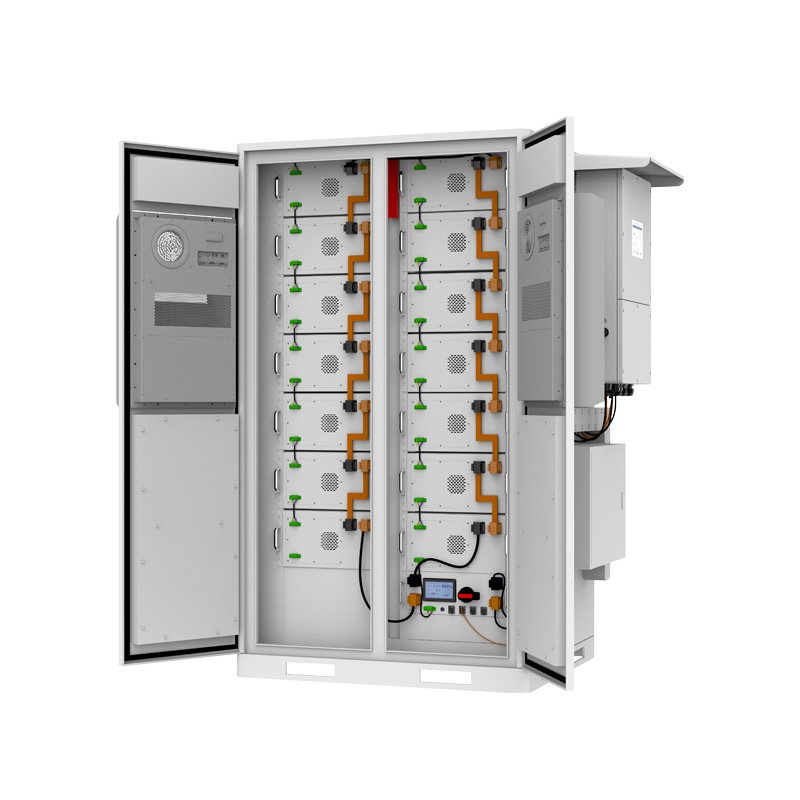
Battery Energy Storage System
For C&I projects that need system-level planning across usable energy, load profile, backup duration, and site conditions.
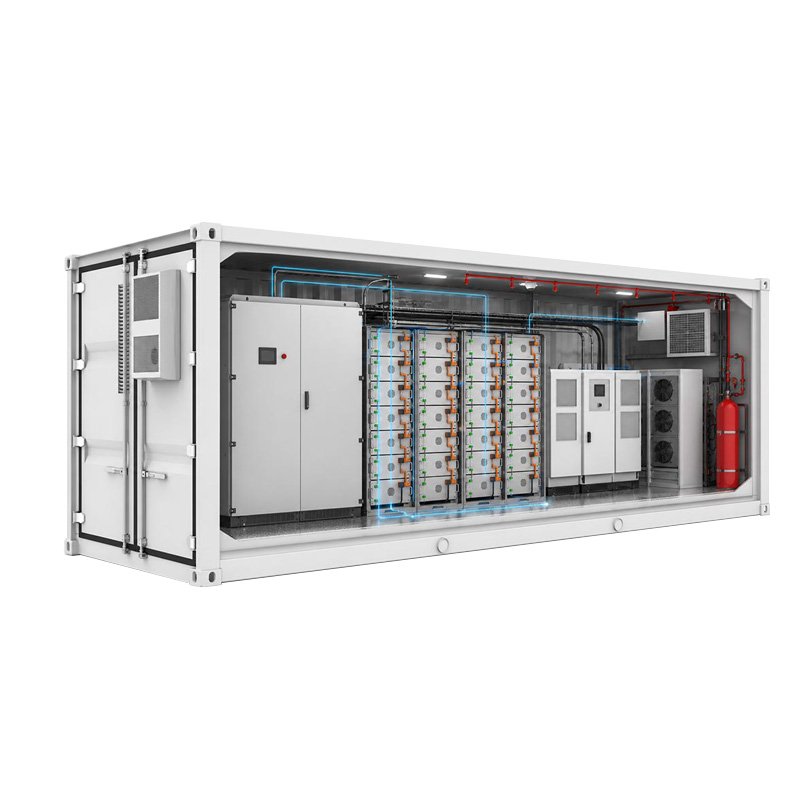
BESS Container
For MWh-scale projects that require integrated battery racks, PCS, thermal management, fire protection, and site-specific container design.
Frequently Asked Questions
1 MWh equals 1,000 kWh. To convert MWh to kWh, multiply the MWh value by 1,000, and this is the fixed relationship behind how many kWh in a mwh calculations.
500 MWh equals 500,000 kWh. The calculation is 500 × 1000 = 500,000 kWh.
1000 MWh equals 1,000,000 kWh. This is often used for utility-scale energy reporting.
Divide the price per MWh by 1000. For example, $150/MWh equals $0.15/kWh.
To convert £/MWh to p/kWh, divide the £/MWh value by 10. For example, £120/MWh equals 12 p/kWh.
In many billing systems, one electricity unit means 1 kWh. Therefore, 1 MWh equals 1,000 electricity units.
Yes. Solar farms, battery storage systems, utility meters, and energy management platforms often convert MWh to kWh for billing, performance analysis, and system comparison.