
Formula: BTU/hr = W × 3.412142
A watt to BTU calculator‘s function is to take electrical power, measured in watts (W), and convert it into a heat transfer rate, measured in BTU/hr. This conversion is frequently necessitated when the electrical power consumption is compared to the heating or cooling capacity in HVAC equipment, appliances, and energy equipment. Engineers, technicians, and planners of hybrid systems use watts to BTU/hr calculations to figure out how much heat energy electrical devices emit over time, or how electrical power relates to heating and cooling in reality.
Watt to BTU Formula & Variable Relationship


BTUs per hour and watts reflect an electrical power transfer to thermal energy conversion relationship. The rate at which energy is used or produced within a system is referred to as watts. Meanwhile, BTU means the transfer of heat over time. Since both units measure energy transfer rates, a numerical conversion can be made.
When electrical energy is converted into heat for heaters, HVAC equipment, or industrial manufacturing equipment, the power level in watts are equivalent to a proportional heating capacity in BTU/hour. The physical connection of the two units is expressed by 3.412142. To obtain the corresponding rate of heat transfer in BTU/hr, watts(electric power) are multiplied by this factor.
This relationship is heavily utilized for the comparison of electrical components with thermal systems. Heating elements, air conditioning systems, and ventilation equipment, for example, are generally specified in BTU/hr, while the electrical input power is specified in watts. This conversion will help the engineers and technicians to assess energy use.
Watt to BTU Conversion Example Calculations:
A laboratory workspace using a number of electronic instruments consuming a 920-watt power supply. The engineers/technicians want to know how much heat this equipment pours into the room to check whether the ventilation system has enough cooling capacity.

The electrical device output of 3,139 BTU/hr as heat, and as you know, the heat value indicates how much thermal energy must be extracted by the ventilation in order for the room temperature to remain stable.
In HVAC design, understanding the conversion of watts to btu hr helps engineers assess the capacity of cooling equipment to manage the thermal load generated by electrical devices like servers, light fittings, and laboratory equipment.
When to Use Watt to BTU Calculator
Calculating watts to BTUs when determining heating loads in buildings containing electrical machinery and lighting is a common challenge engineers face.
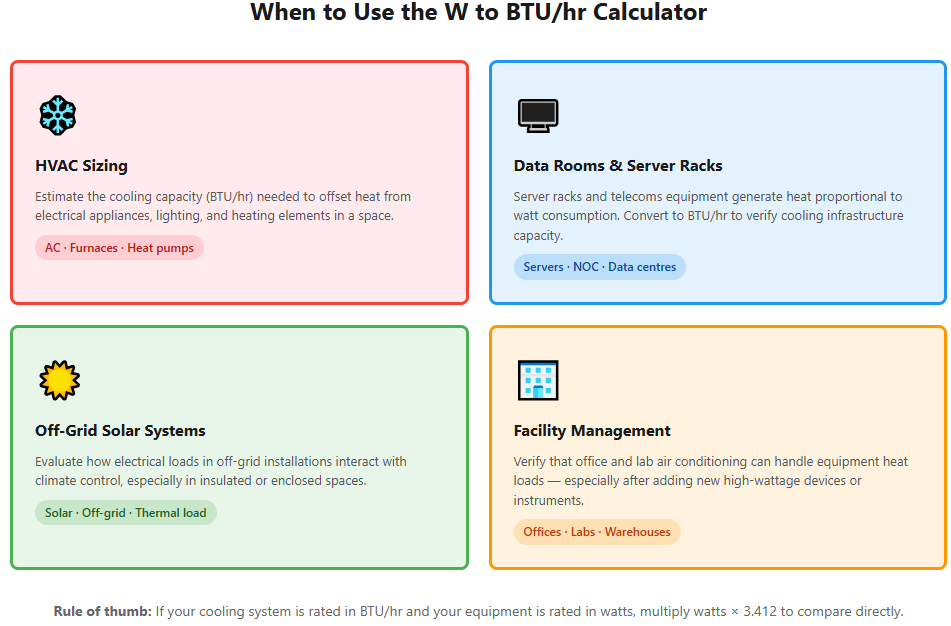
HVAC designers estimate cooling capacity needed to offset heat created by electrical devices using watts to BTU/hr relationships. Manufacturing systems, server racks, as well as power electronics generate heat in proportion to their electrical consumption.
With what definitely works, solar power system manufacturers also use wattage computing systems when contemplating how to calculate impact, electrical much sync with movement studio designs in non-quota product venture. Just like facility managers, we all know the watts to BTU conversion calculator results are helpful when checking that the air conditioning systems can manage the equipment heat load in offices, data rooms, or laboratories.
Watt to BTU Reference Table (Typical Values)
The table given below provides typical conversions of watts to BTU/hr for various electrical loads found in common residential and light commercial systems.

| Electrical Power (W) | Heat Output (BTU/hr) |
| 60 W | 204.7 BTU/hr |
| 120 W | 409.5 BTU/hr |
| 275 W | 938.3 BTU/hr |
| 450 W | 1,535.5 BTU/hr |
| 725 W | 2,473.8 BTU/hr |
| 900 W | 3,070.9 BTU/hr |
| 1,150 W | 3,924.0 BTU/hr |
| 1,500 W | 5,118.2 BTU/hr |
| 1,950 W | 6,653.7 BTU/hr |
| 2,600 W | 8,871.6 BTU/hr |
| 3,400 W | 11,601.3 BTU/hr |
| 4,750 W | 16,208.7 BTU/hr |
| 6,200 W | 21,155.3 BTU/hr |
| 8,900 W | 30,367.1 BTU/hr |
| 12,500 W | 42,651.8 BTU/hr |
When operating continuously, electrical equipment generates thermal loads as shown by these values. Occupancies located within real buildings tend to produce heat with the equipment found therein. This heat production increases the cooling requirement placed on the HVAC system.
For instance, we assume that a collection of equipment that utilizes approximately 3,400 watts generates more than 11,600 BTU/hr of heat energy. Insufficient ventilation can cause the temperature of the room to rise, affecting the dependability of the instrument.
Accuracy & Limitations
The conversion is about energy equivalence, not about the actual heat output of an appliance or device. This calculation assumes electrical energy is fully converted into heat, something which does not always happen in reality.
Most electrical devices are designed to convert energy into useful work or heat. Motors, compressors, and electronic components may dissipate only a fraction of the energy they consume as heat. Moreover, the efficiency of the system, as well as airflow patterns and conditions, also introduces heat into a space.
The wiring, power conversion equipment, and control electronics can also add to the errors. Due to this, engineers usually apply w to btu hr conversion figure as a planning estimate and combine it with equipment specifications and thermal measurements when designing any HVAC systems.
Case Study
A network operations center is a location from which a telecommunications network is controlled and monitored. The equipment installed draws a constant electrical power of approximately 3,800 watts.
To ensure the cooling gas is large enough, engineers do a watts to btu hr conversion to determine the cooling load of the electronics.
We know the conversion relationship, hence the heat output is 12,966 BTU/hr.
The cooling system of the facility has a capacity of 18,000 BTU/hr and can remove heat from all the equipment with a safety margin for operation. It would be hard to assess whether the cooling infrastructure could bear the electrical load without converting watts to btus.
Conclusion
Using the W to BTU calculator, one can easily convert electrical power into a thermal energy transfer rate. The ability to perform watts to BTU conversion helps a user compare electrical load with heating or cooling capacity, as well as gain insight about energy flow in real systems. This calculation assists HVAC planning, equipment sizing, and heat load analysis in residential, commercial, and industrial applications.
Solar Products for Your Project
 Solar Panels |  Solar Inverter |  C&I Battery Storage |
Frequently Asked Questions
1(watt) is around 3.412(BTU/hrs).
To convert watts to btu/hr, you can use the HBOWA calculator or, using the formula, and the numerical value is the equivalent rate of heat transfer.
Engineers and HVAC technicians convert watts to btuh in order to estimate the heat produced by electrical devices. An estimate of the cooling capacity required to stabilize the temperature of equipment rooms, offices, and industrial establishments.