

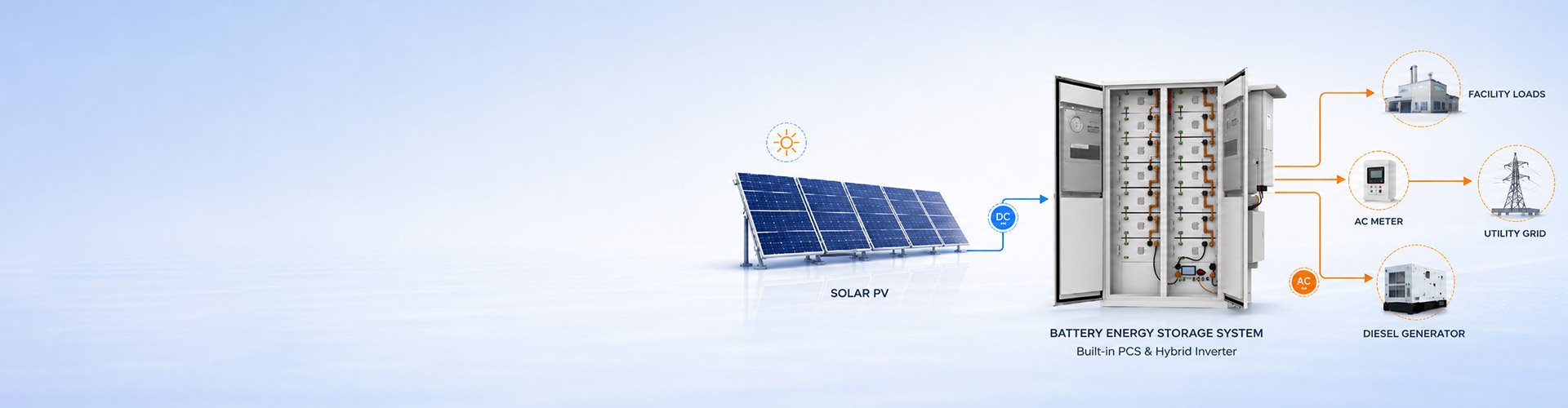
Solar Plus Storage Solution
For Solar EPCs, Installers, Factories, Farms, Hotels, and Commercial Buildings
 50kWh to Multi-MWh Battery Storage
New PV Projects and Existing Solar Retrofits
EMS Control, Zero Export, and Backup Power
Scalable for Commercial and Industrial Projects.
What Is a Solar Plus Storage Solution?
A solar plus storage system consists of a solar photovoltaic (PV) system joined with a Battery Energy Storage System (BESS) that captures extra solar energy for use in your business during peak demand. Rather than sending surplus electricity back to the grid at low feed-in rates or restricting solar generation due to grid constraints, the system stores excess energy and automatically supplies energy during peak demand, at night, and during blackouts.
An intelligent Energy Management System (EMS) is always monitoring the solar production, battery capacity, facility loads, and grid conditions of one such commercial and industrial facility for optimum charging and discharging capabilities of the battery. This helps alike to leverage the solar self-consumption, cut energy costs, boost energy resilience, and keep essential activities up and running.
Installing an entirely new solar system or integrating battery storage into an existing PV installation, a solar plus storage system is a scalable solution that is engineered for the future, improves energy independence, and increases your solar investment returns.
Why Is Your Solar Power Not Fully Utilized?
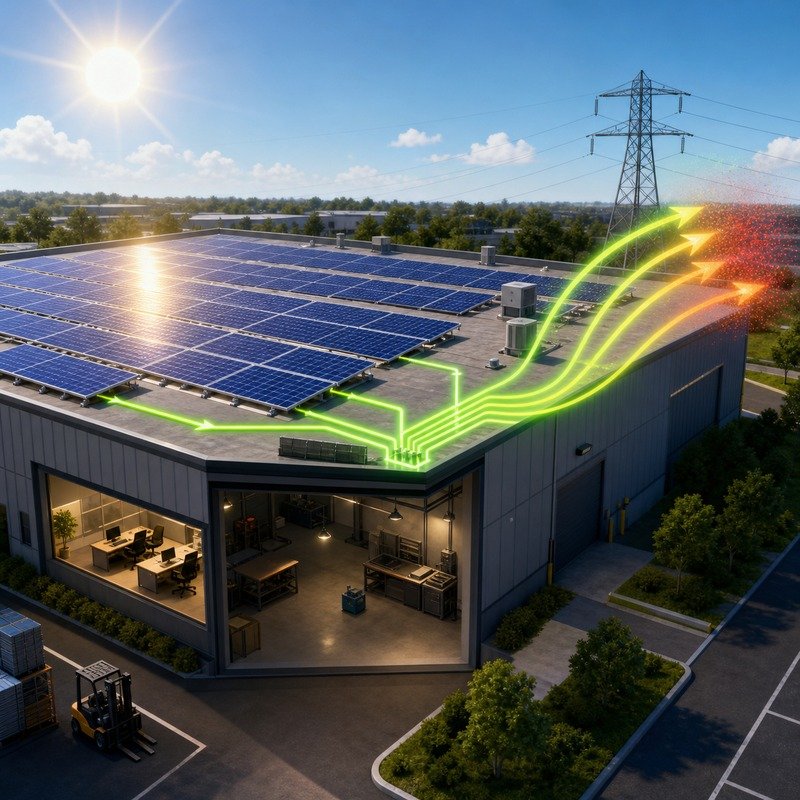
The PV system generates more electricity than the facility can use during certain daytime periods.
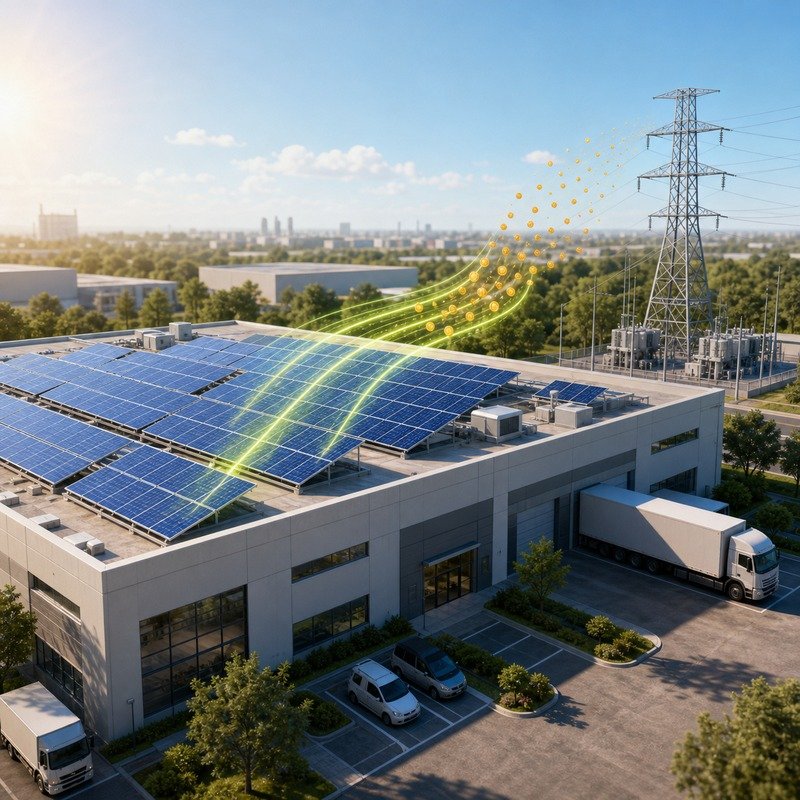
Excess solar electricity may be exported at a price much lower than the cost of purchasing electricity later.
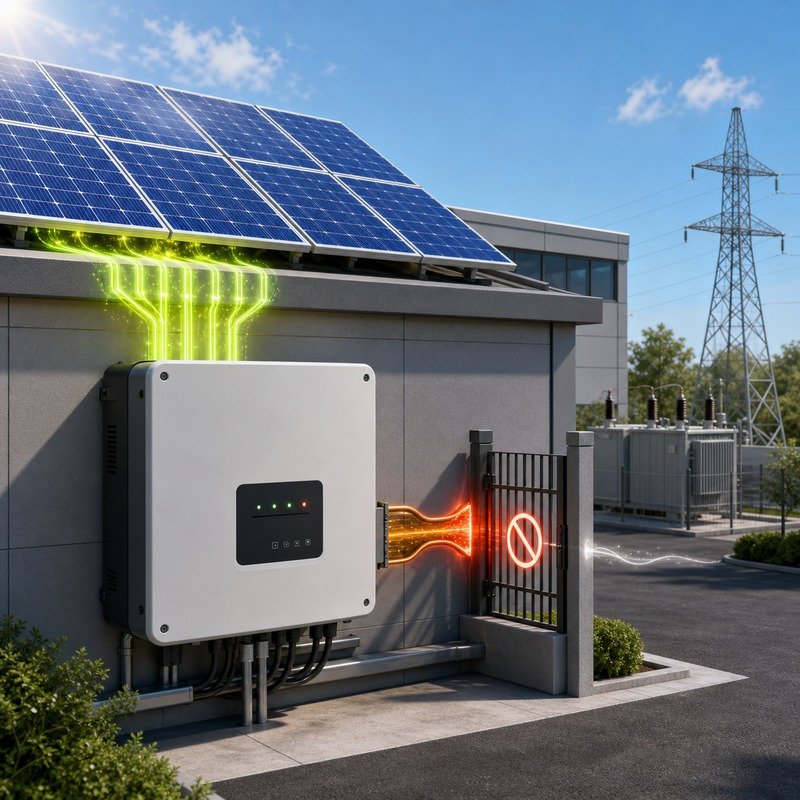
Some projects are not permitted to export electricity to the grid, causing the inverter to limit PV output.
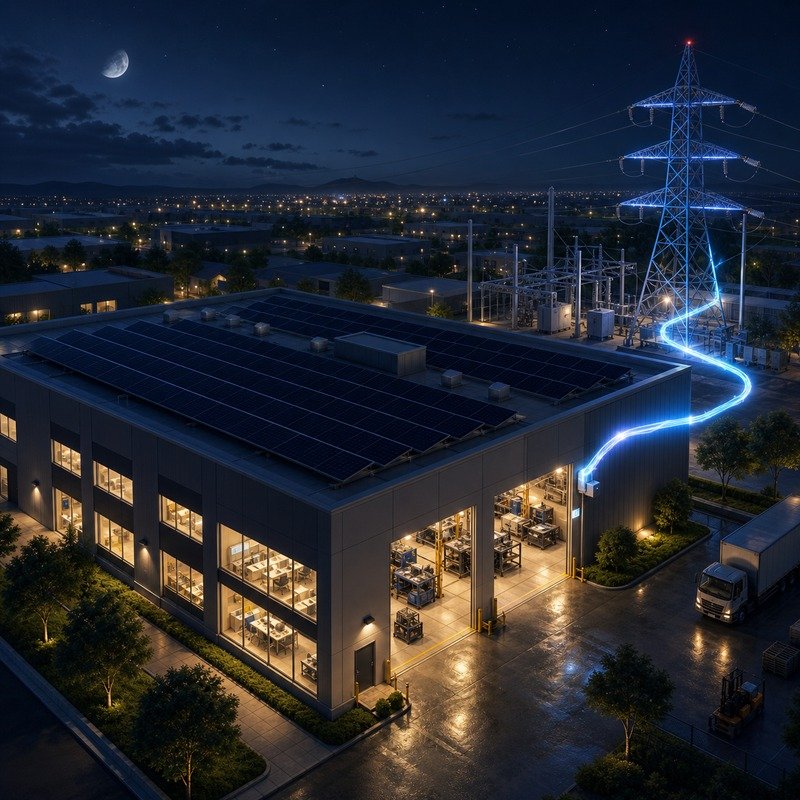
The facility still purchases grid electricity after solar generation has declined.
How Does a Solar Plus Storage System Work?
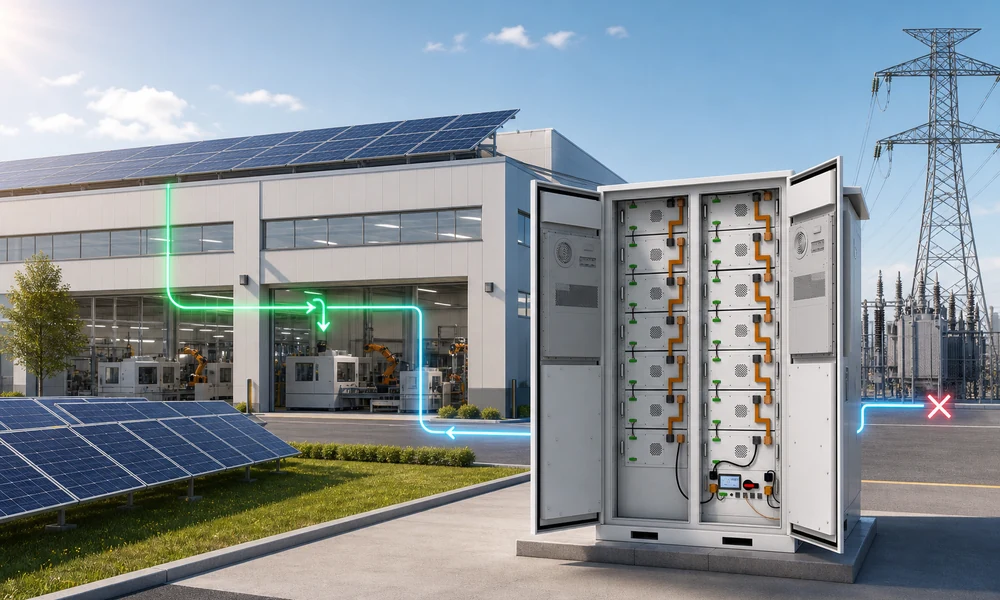
Solar plus storage system will automatically generate, store and consume electricity day in and day out. Your facility uses solar energy first, then the excess gets used to charge the BESS battery. When solar production is reduced or electricity demand increases, the battery discharges energy stored in the battery to reduce grid use.
An intelligent Energy Management System (EMS) automatically controls the charging and discharging of solar energy from the panel, taking into account various factors. The system typically operates in four stages.
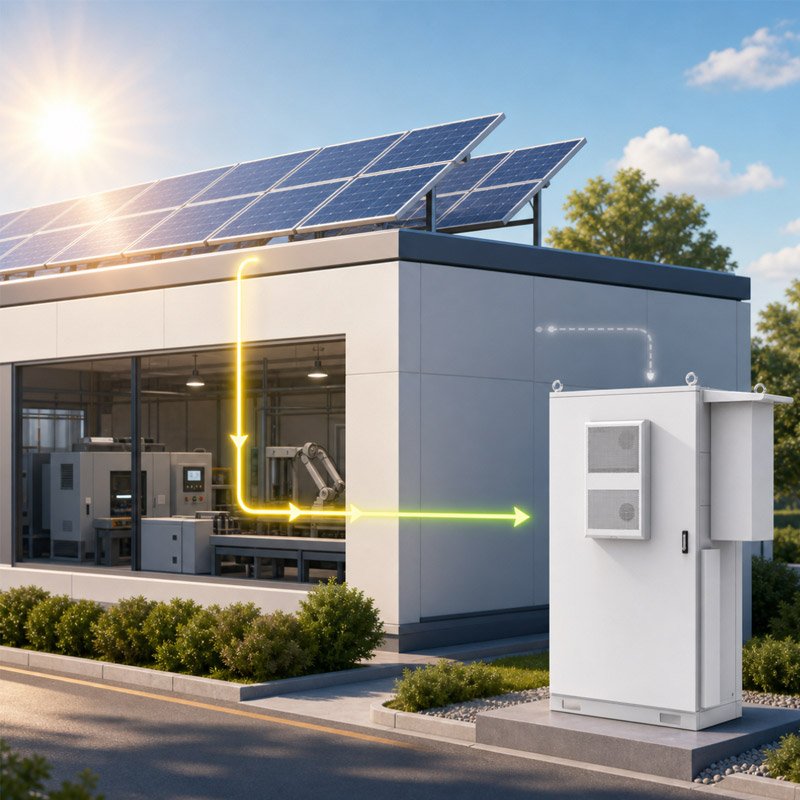
Electricity is generated for facility loads through solar pv. The battery sits idle until there is excess solar energy.
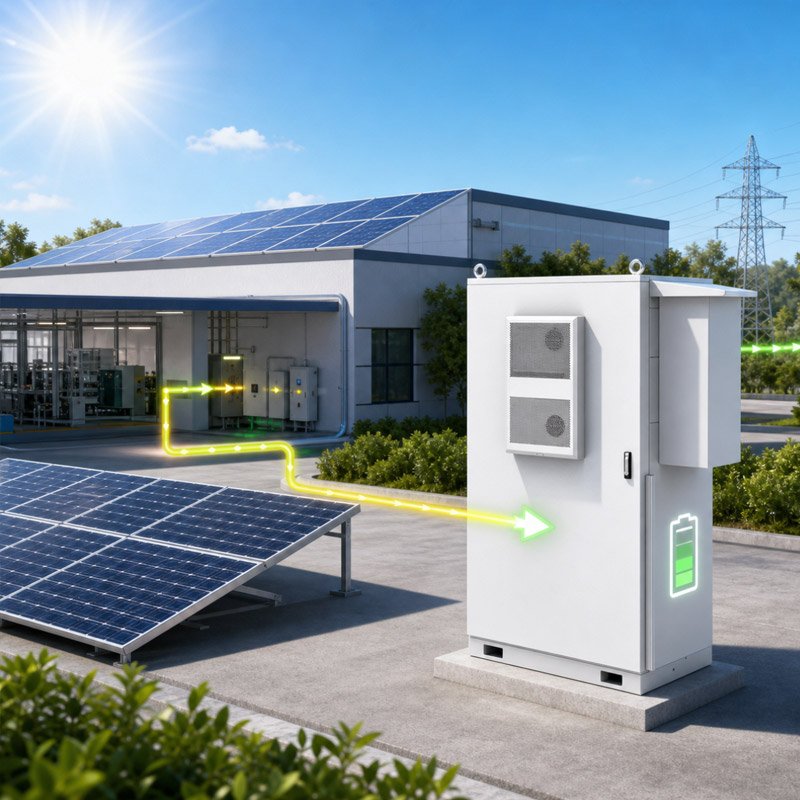
Excess electric energy, generated by solar after meeting demand, gets stored in the battery instead of the grid.
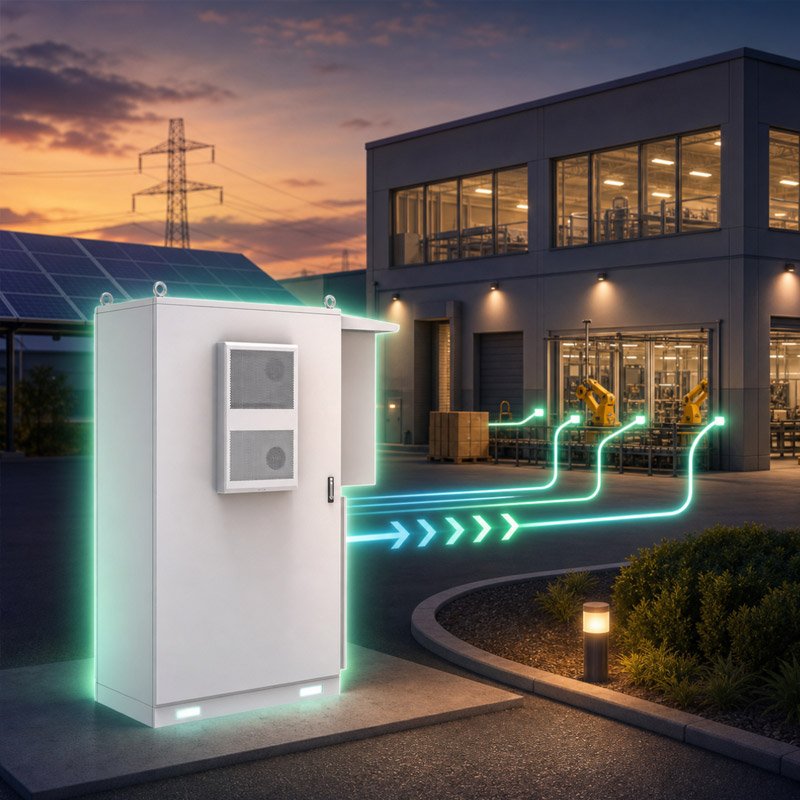
When production from solar energy is low, stored energy from the battery can reduce peak electricity costs and operate the facility.
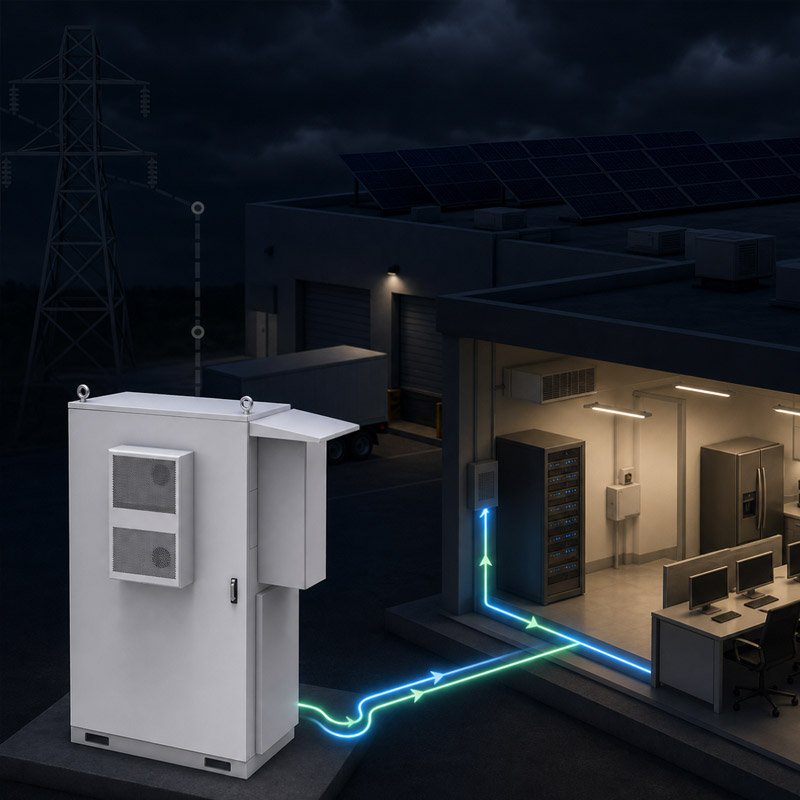
The battery will power the selected loads until the solar starts producing again or the utility power comes back on.
Recommended Solar Plus Storage System
HBOWA provides three-phase hybrid solar systems with high-voltage batteries for new PV projects, solar retrofits, backup power, and commercial energy cost optimization. System capacity can be adjusted based on your PV size, daily load, backup time, and local grid requirements.
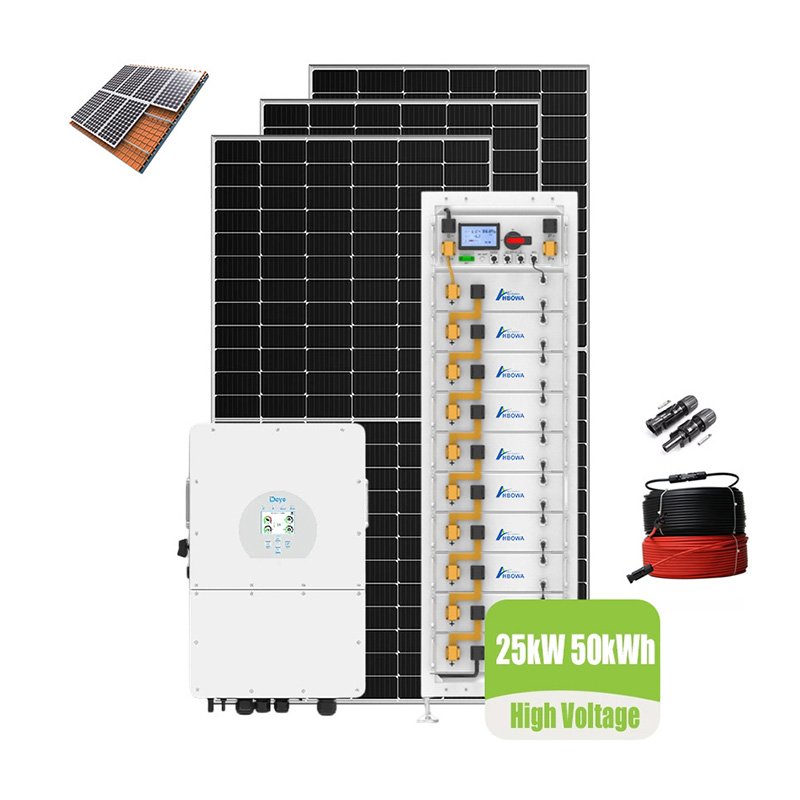
Power: 25kW
Battery Capacity: 50kWh
Installation: Indoor
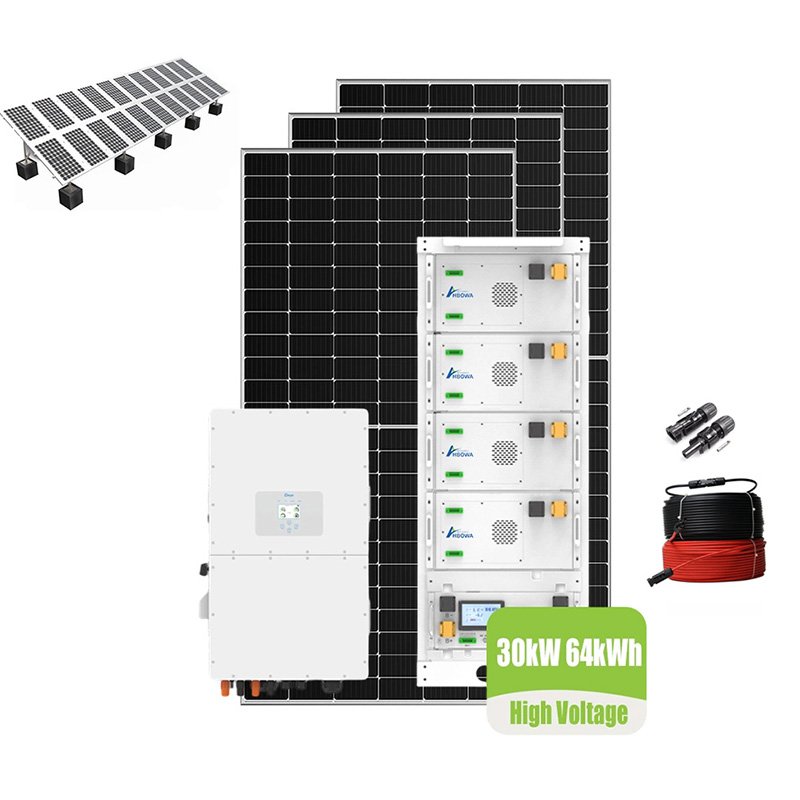
Power: 30kW
Battery Capacity: 64kWh
Installation: Indoor
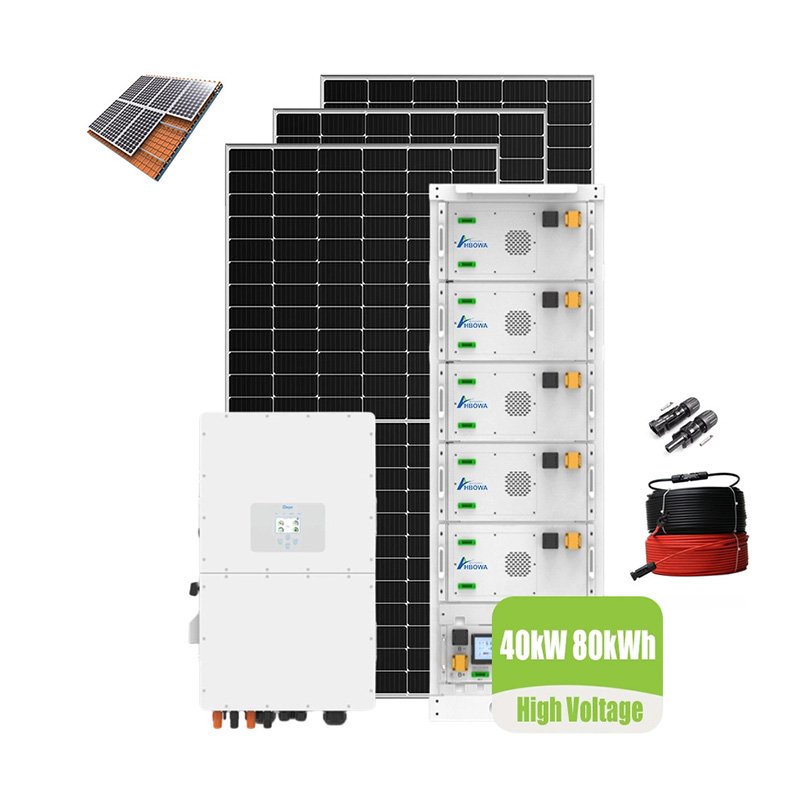
Power: 40kW
Battery Capacity: 80kWh
Installation: Indoor
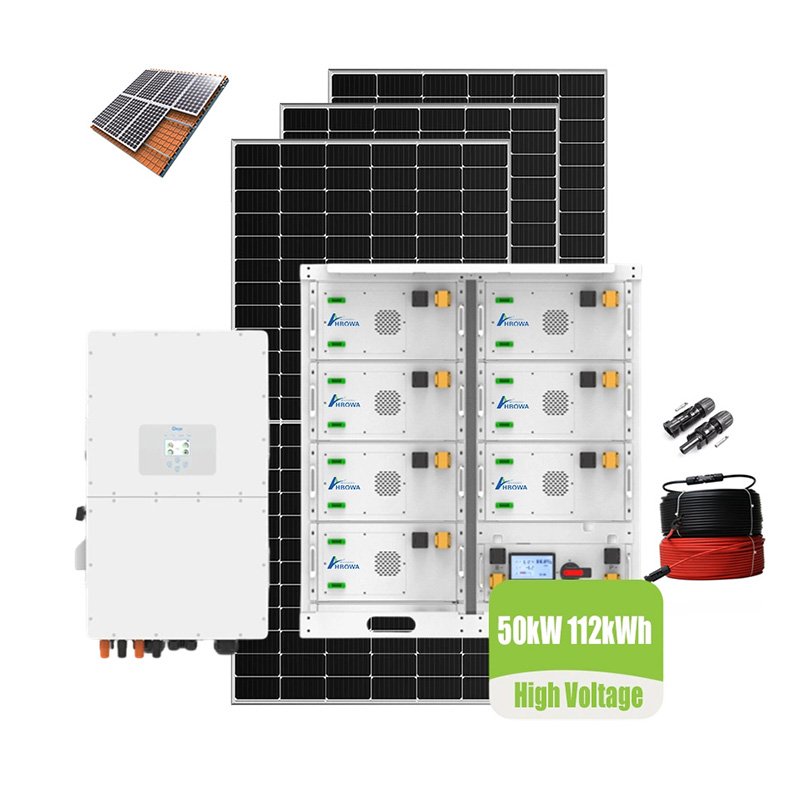
Power: 50kW
Battery Capacity: 112kWh
Installation: Indoor
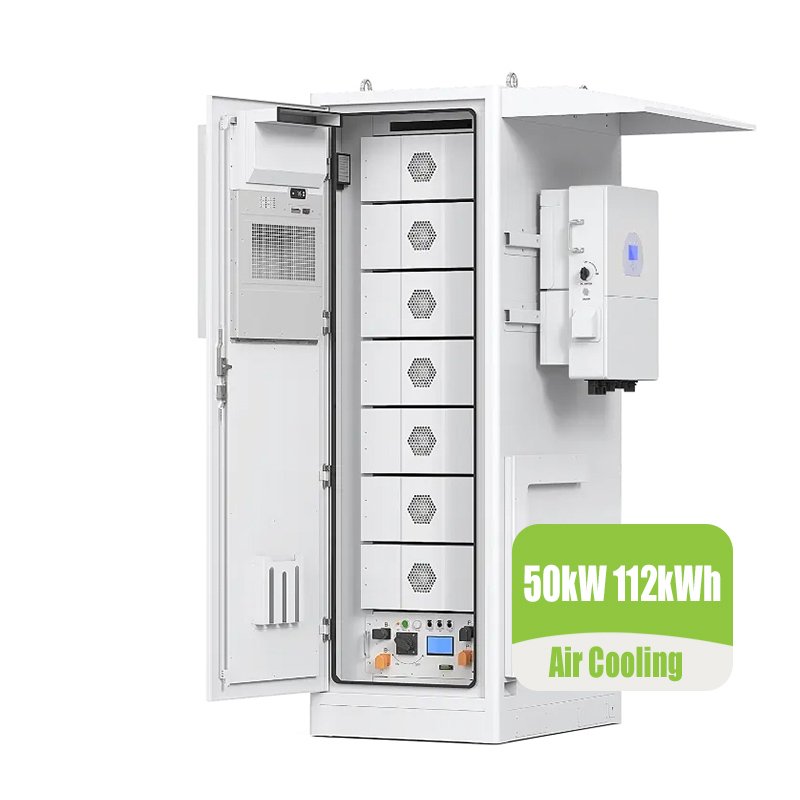
Power: 50kW
Battery Capacity: 100kWh
Installation: Outdoor
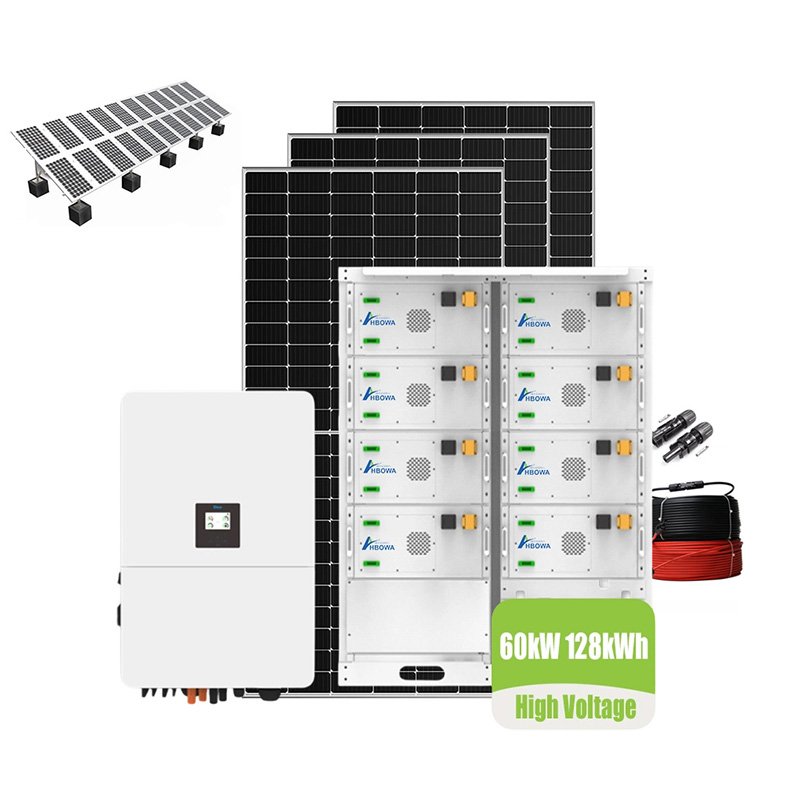
Power: 60kW
Battery Capacity: 128kWh
Installation: Indoor
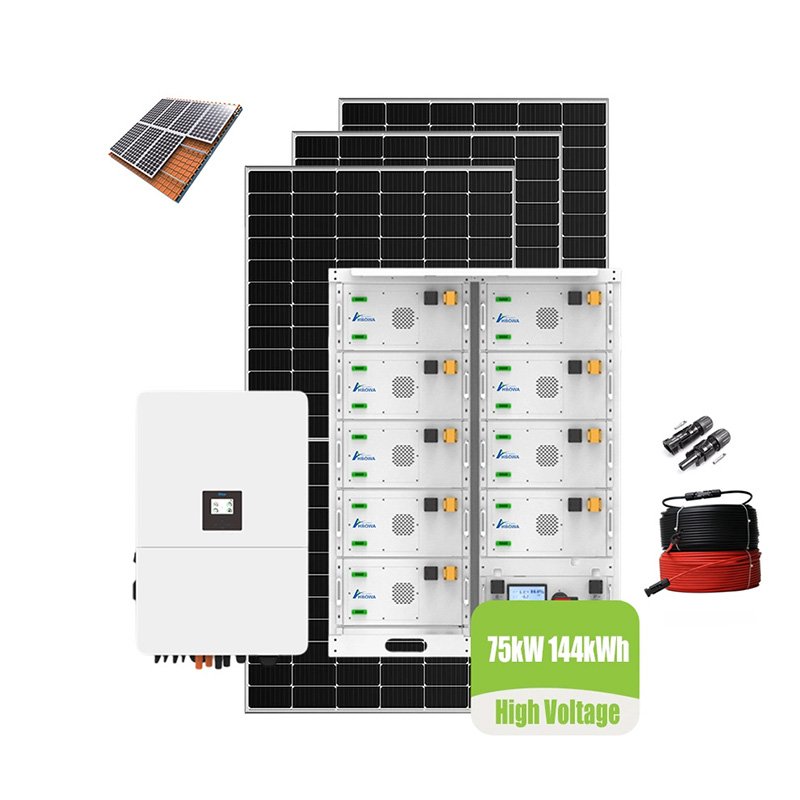
Power: 75kW
Battery Capacity: 144kWh
Installation: Indoor
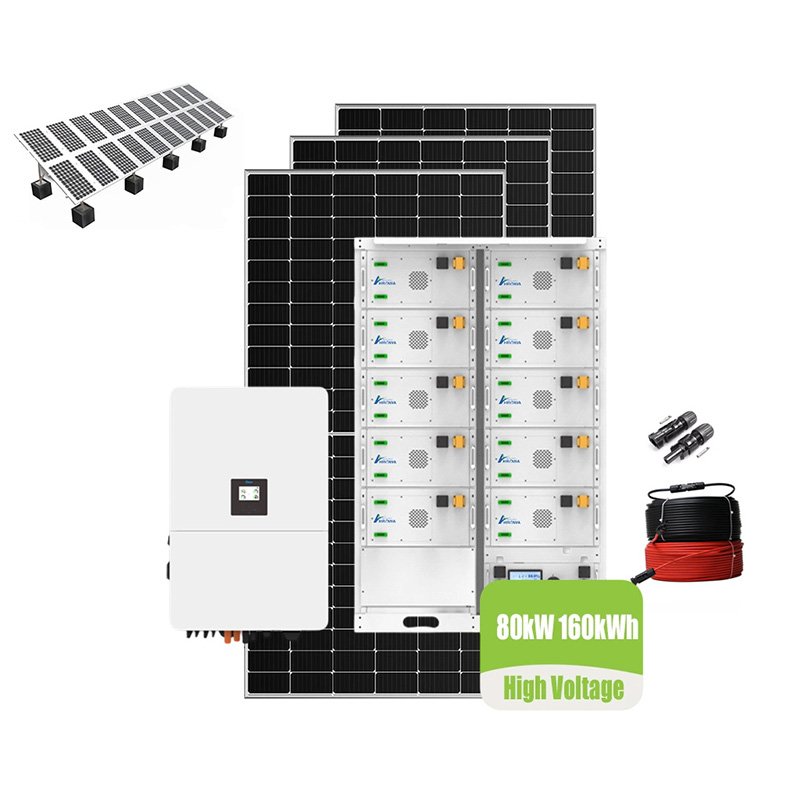
Power: 80kW
Battery Capacity: 160kWh
Installation: Indoor
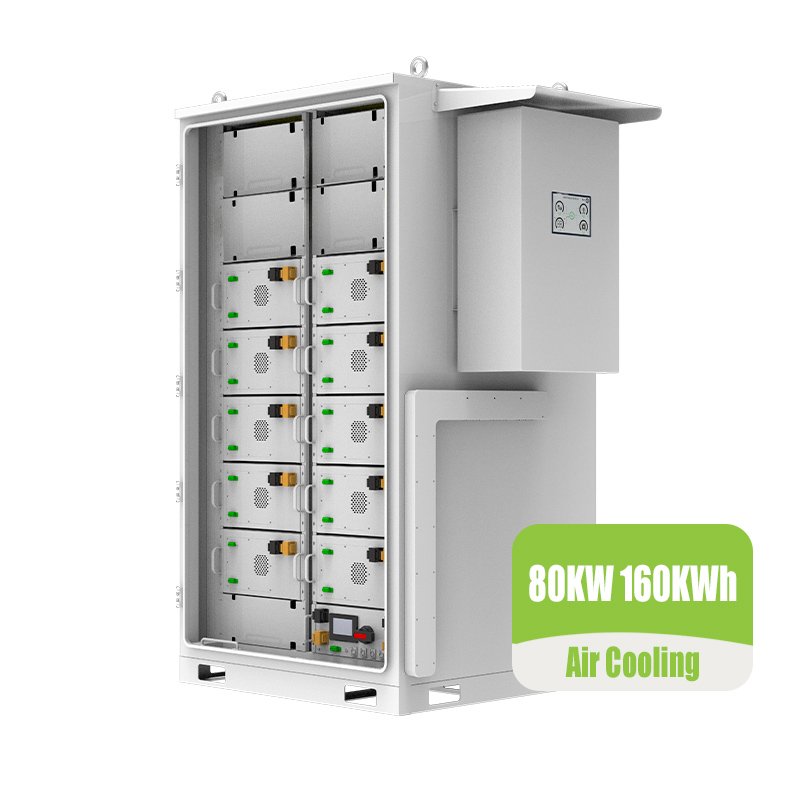
Power: 80kW
Battery Capacity: 160kWh
Installation: Outdoor
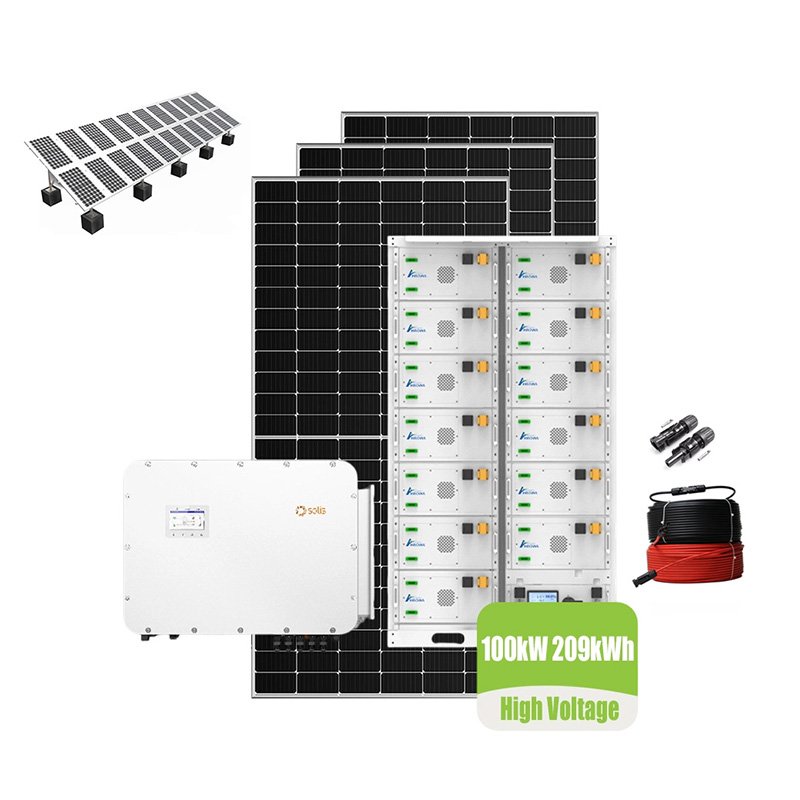
Power: 100kW
Battery Capacity: 209kWh
Installation: Indoor
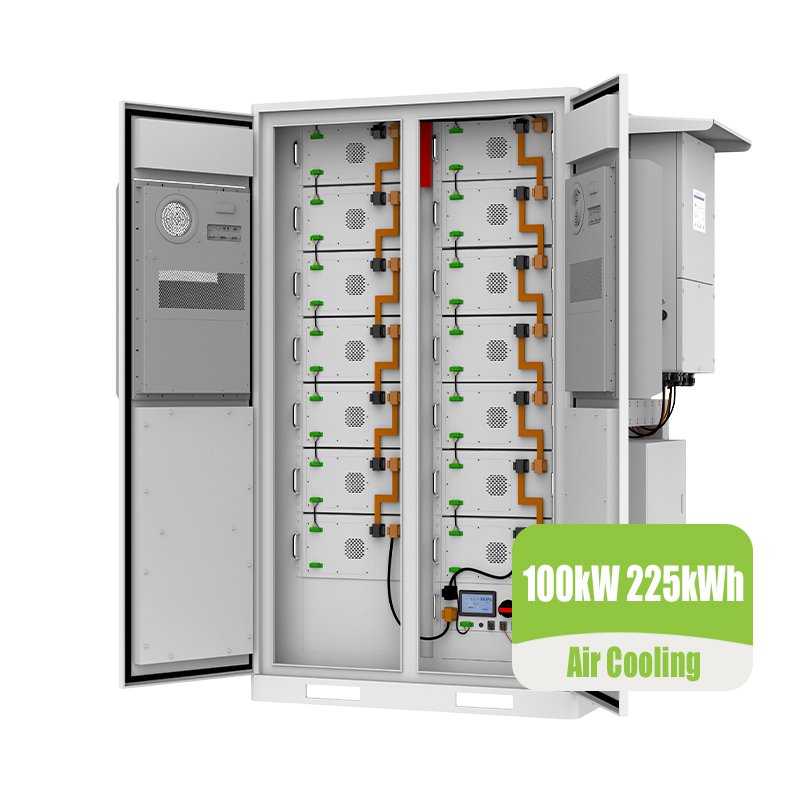
Power: 100kW
Battery Capacity: 225kWh
Installation: Outdoor
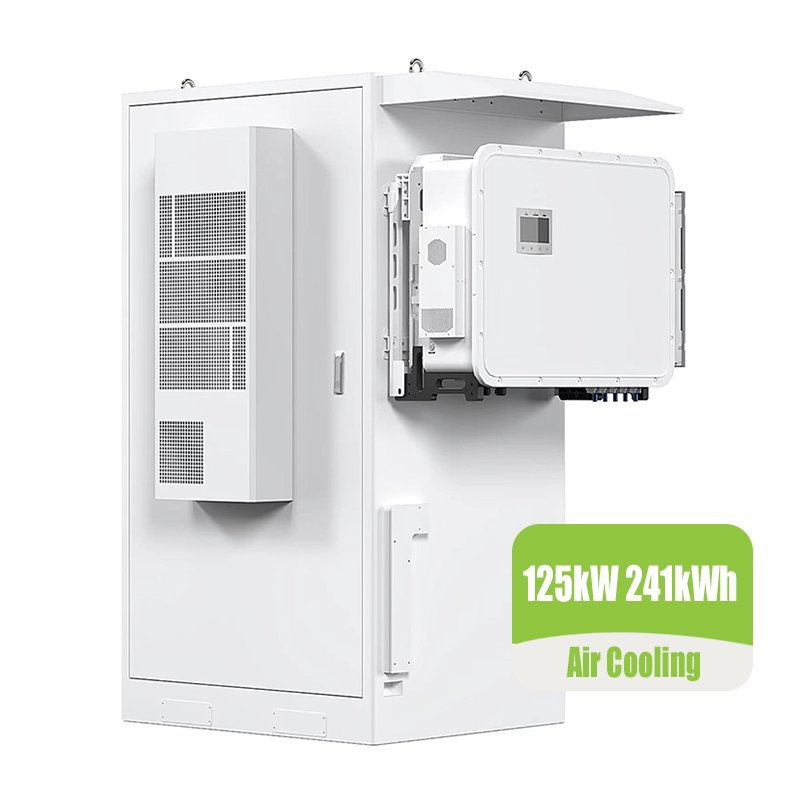
Power: 125kW
Battery Capacity: 241kWh
Installation: Outdoor
What are the benefits of a solar-plus-storage system?
A solar plus storage solution gives businesses more control over energy costs, its operational capacity, and lowers the price of energy. Organizations can save unused energy for peak-demand periods thus increasing their solar self-consumption. As a result, they reduce their dependence on the utility grid, electricity costs and enjoy reliable backup power during outages. Smart energy management ensures compliance with zero export regulations while leaving room for battery capacity upgrades as energy needs grow which helps businesses meet their sustainability and ESG goals in the long term.
Industries That Benefit from Solar Plus Storage Solutions
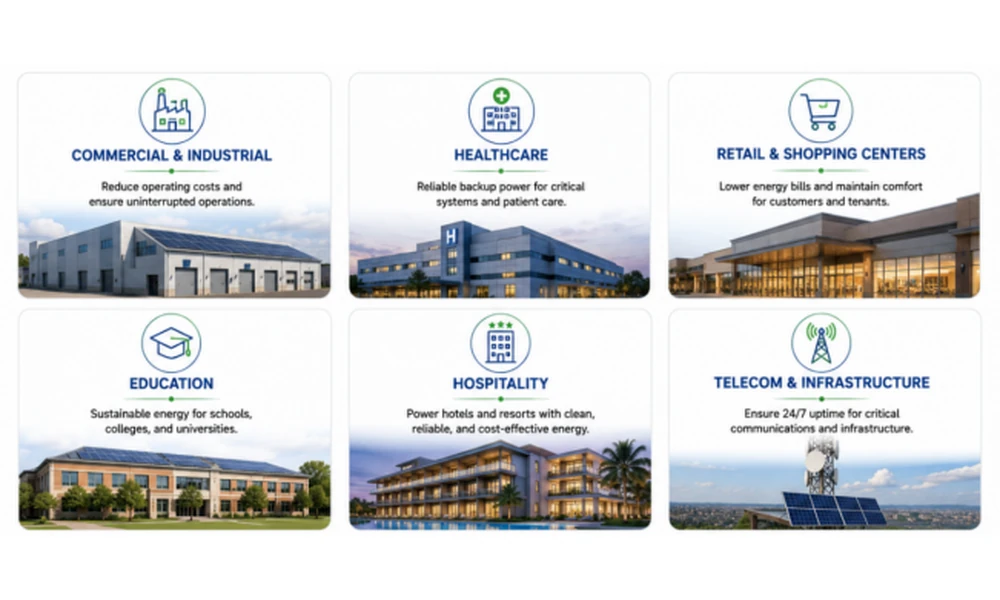
A solar plus storage solution works well for any business that uses a lot of electricity, often during peak tariff periods or with reliable backup power design requirements. HBOWA designs tailored commercial and industrial (C&I) energy storage solutions for many industries, with each C&I energy storage system designed around the facility’s expected energy use, operational requirements, and potential for expansion.
How to Start Your Project with HBOWA?
Before We Quote, Tell Us 4 Things
Project Location & Grid
Country, grid stability, voltage, frequency, and whether grid connection or power selling is required.
Application Scenario
Backup power / solar storage / peak shaving / demand charge reduction / off-grid / hybrid / microgrid use.
Load & Energy Demand
Daily kWh use, peak power, operating hours, main loads, and whether motors or inductive loads are used.
Site & Special Requirements
Indoor or outdoor installation, available space, existing PV, generator, anti-backflow, EMS, or other special needs.
How HBOWA Handles Your Project
1 Project Location & Grid
We first confirm where the cabinet system will be used and how it connects to the local grid.
2 Application Scenario
Define backup power, solar storage, peak shaving, off-grid, or hybrid use.
3 Load & Energy Demand
Load data helps us calculate cabinet capacity, PCS/ inverter size, backup time, and surge load margin.
4 PV & Existing Equipment
We check whether the storage cabinet needs to work with solar panels, generators, transformers, or existing equipment.
5 Installation Site
Confirm indoor/outdoor installation, cooling method, cable distance, and installation cost.
6 Solution & Quotation
After collecting the project information, HBOWA prepares a practical cabinet solution and quotation for you.
FAQ
Solar plus storage solutions are used by the commercial and industrial sectors:
- Manufacturing
- Warehouses and logistics
- Hotels and resorts
- Commercial buildings
- Agriculture
- Healthcare
- Telecommunications
- Data centers
- EV charging stations
Yes and sometimes no. In most instances, the engineers design the system in a way that it is possible to integrate battery storage into your existing grid-tied solar setup without having to replace your solar panel or PV inverter. Based on the equipment you already have an AC-coupled solution using a power conversion system (PCS) may be the easiest form. This enables companies to enhance solar self-consumption, lower power expenses, and include battery backup while optimizing their current solar investment, according to industry standards.
A hybrid inverter is a single device which is designed to manage solar generation as well as the battery, perfect for new solar-plus-storage systems. A Power Conversion System (PCS) is typically required if you are adding batteries to an existing solar system. As it doesn’t need any significant changes to the original installation, the battery can be operated with the existing PV inverter.
Affirmative. A system of solar plus storage can deliver backup power to the critical loads of a facility during utility outages but must be designed with backup capability. The back-up time for any system depends on the battery capacity, power consumption and load.
Affirmative. HBOWA’s Battery Energy Storage Systems can be modular and are expandable in the future. As your business develops or the demand for electricity increases, more battery cabinets can usually be added on with the original system.
Providing a few key project details helps the HBOWA team recommend the solution, such as:
- Project location(region/geography)
- consumption/day (kWh)
- Peak-Power requirement(kW)
- Existing solar-module’s capacity(if applicable)
- Backup-power requirements
- Available Space(for installation)
- Grid requirements and Government law(for better and accurate quotation)
With this information, HBOWA can recommend a more precise system configuration to you.
Related Solar Plus Storage Products
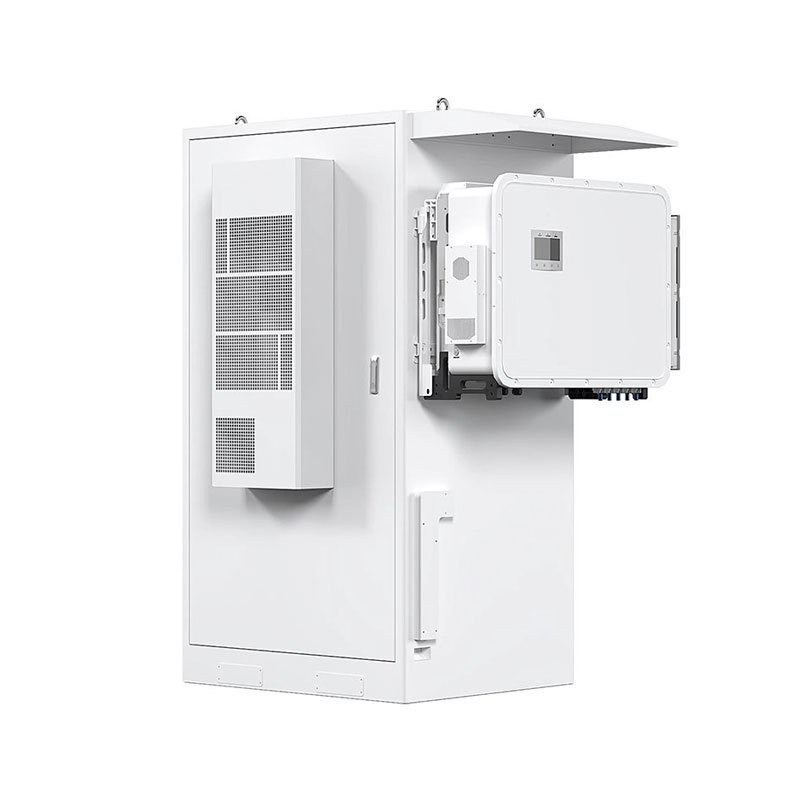
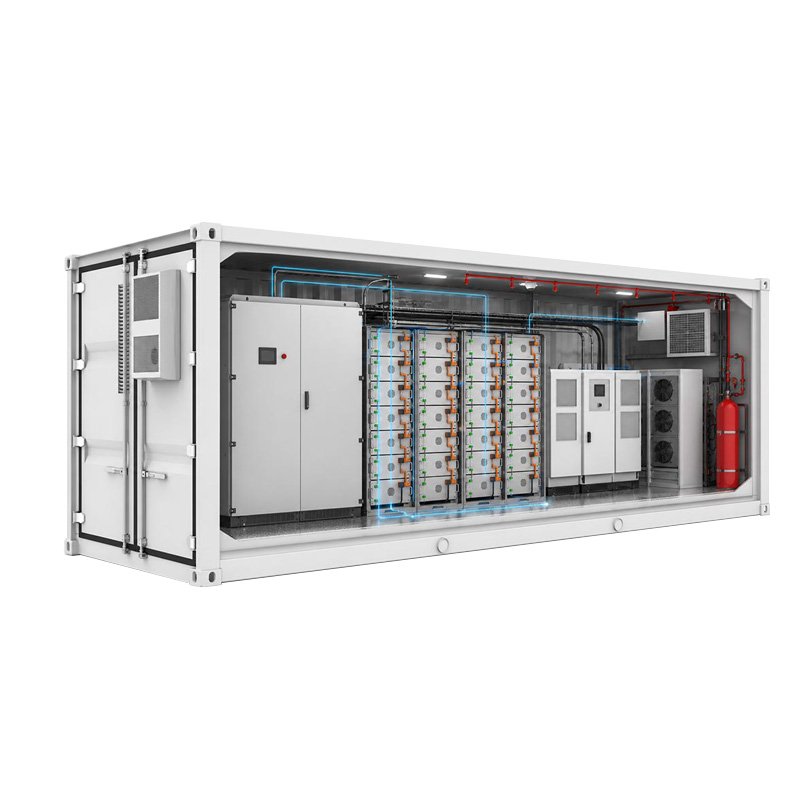
Find the Right Solution for Your Business
No matter if you run a factory, a warehouse, hotel, commercial building, farm, hospital, data center, telecom network, or EV charging station, HBOWA collaborates with EPC companies, developers, and commercial clients to design their systems to minimize energy costs, enhance operating reliability, and assist with long-term business growth.
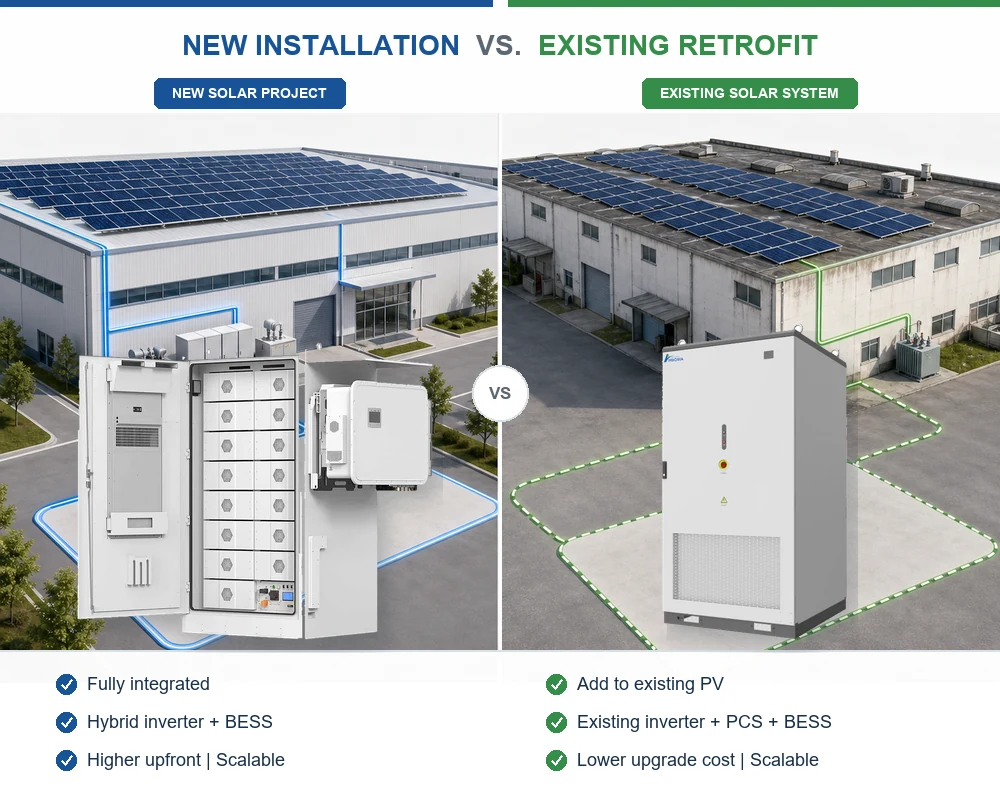
Solar Plus Storage Solutions for New and Existing Solar Systems
Whether you’re considering a new photovoltaic (PV) installation or an upgrade to your existing solar system, solar plus storage can be designed for your facility’s needs. HBOWA assists with new integrated installation and battery retrofitting projects that help businesses with energy efficiency, increase solar self-consumption and maximize the value of the solar project.
New Solar Plus Storage Installation
Solar PV system, battery storage and energy management combined in one new installation to integrate the solution. The implementation of this system provides high efficiency as well as reduced complexity and scalability.
Add Battery Storage to an Existing Solar System
Existing grid-connected solar systems can typically be enhanced with battery storage using a Power Conversion System (PCS). This allows businesses to increase the use of solar, reduce electricity bills and add backup power with no need to replace the PV system.
| Compare | New Installation | Existing Retrofit |
| Best for | New solar projects | Existing solar systems |
| System design | Fully integrated | Battery added to existing PV |
| Main equipment | Hybrid Inverter + BESS | Existing Inverter + PCS + BESS |
| Investment | Higher upfront | Lower upgrade cost |
| Scalability | Easy to expand | Easy to expand |
The right solution to choose will depend on your solar capacity, power consumption, backup power requirements, grid regulations, and plans for expansion. The Engineering team of HBOWA assesses all these parameters and recommends the best-suited solar plus storage configuration.
How We Size Your Battery Storage Solution
The energy requirements of each commercial facility is different so there is no one solution. The engineering team at HBOWA reviews your energy usage, peak demand, backup power needs, and future expansions to recommend the best-suited Battery Energy Storage System (BESS) for your work site.
Recommended Battery Storage Configurations
| Business Type | Typical Battery Solution | Primary Objective |
| Small Commercial | 50–100 kWh | Backup power, solar self-consumption |
| Medium Commercial | 100–250 kWh | Peak shaving, demand charge reduction |
| Industrial Facilities | 250 kWh–1 MWh | Energy optimization, zero-export, business continuity |
| Large Industrial & Utility | Multi-MWh | Microgrids, grid support, renewable integration |
Modular by Design
HBOWA’s modular LiFePO₄ battery storage systems can grow with your needs. The cost of upgrading in the future is lowered by the addition of extra battery cabinets which is compatible with the existing system and preserves your original investment.
Need help selecting the right battery storage solution?
HBOWA’s engineers and experts can suggest or collaborate with the client teams for an ideal system based on the energy profile of your facility, operational needs, and business objectives.
What Components Are Included in a Solar Plus Storage Solution?
A solar plus storage solution employs integrated components that generate, store, manage, and distribute electricity. All the components work together to improve the performance, reliability and energy management system.
| Component | Primary Function | Typical Role |
| Solar PV Modules | Generate DC electricity from sunlight | Primary energy source |
| Hybrid Inverter / PCS | Convert and manage power between solar, battery, loads, and grid | Energy conversion & control |
| Battery Energy Storage System (BESS) | Store excess solar energy | Backup power, peak shaving, load shifting |
| Battery Management System (BMS) | Protect and monitor battery health | Safety & battery optimization |
| Energy Management System (EMS) | Optimize charging, discharging, and energy flow | Intelligent system control |
| Smart Meter | Measure energy import, export, and consumption | Energy monitoring & zero-export |
| Transformer & Switchgear | Distribute and protect electrical power | Grid integration |
| Monitoring Platform | Provide remote monitoring and analytics | Performance monitoring & diagnostics |