Introduction
Power systems must keep supply and demand in sync. The addition of solar and wind to this balance generates more interruptions. The Battery Energy Storage System Substation integrates the storage facility with the grid infrastructure to allow a controlled exchange of power with the grid. Likewise, it offers ancillary services like frequency response, voltage support, renewable integration, and much more.
What Is a Battery Energy Storage System Substation?
A Battery Energy Storage System Substation is a grid-connected arrangement in which a battery energy storage system is electrically integrated with substation equipment to exchange controlled power with the electricity network. The term refers to the system relationship rather than a separate battery chemistry or unique standardized configuration.
There is a difference between a BESS and a conventional substation battery. A station battery typically provides auxiliary DC power for protection, control, operation of breakers, and communication functions. A BESS is capable of storing electrically charged energy and uses power-conversion equipment to charge and discharge that energy for defined grid or energy-management service.
| System | Primary purpose | Typical role |
|---|---|---|
| Conventional substation battery | Auxiliary DC power | Protection, control, breaker operation and communications |
| BESS | Energy storage and controlled power exchange | Grid support, energy shifting and renewable integration |
This differentiation prevents project teams from treating different storage applications as the same technology. A containerized battery system, PCS, transformer, switchgear, protection, controls, and communications may comprise a BESS substation, but the connection point and grid requirements influence configuration.
A battery storage substation is a controllable electrical resource that uses stored energy. The battery’s value is governed not by the battery itself, but by what the connected grid wants the system to do.
How Does BESS Connect to a Substation?
A battery energy storage system is connected to a substation via equipment through the BESS. A simplified path consists of: battery cells or racks, BMS, DC system, PCS, AC switchgear, transformer, substation bus, grid. The actual designs depend on the voltage level, project size, protection needs, and point of interconnection.
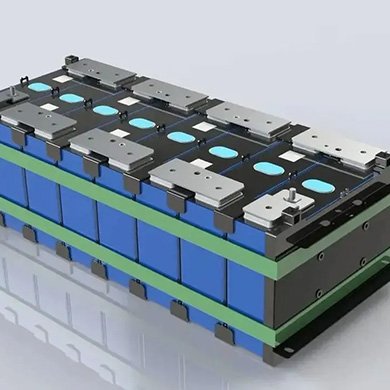
Battery racks store electricity in DC. The battery management system (BMS) monitors actual operating conditions and manages battery protection within limits. It provides the battery-level monitoring and control needed for safe operation.
The power conversion system, also known as the PCS, is an electrical link that connects the battery’s DC side to the AC grid. During discharge, it converts battery-side DC to AC power. When charging, the power conversion is done from AC to DC while controlling charging. The integration of BESS grid integration into electrical grids is a concern globally.
An energy management system EMS works at the level of the system. It can coordinate electricity charging and discharging according to its operating objectives, battery condition, load, renewable generation, and grid signals. The BMS and EMS do not act at the same level; they are different systems.
The switchgear serves a variety of switching and protection functions. The voltage can then be adjusted by a transformer to the connection level. As per the protection and interconnection design for the project, the BESS can transfer power through the substation bus to the wider grid.
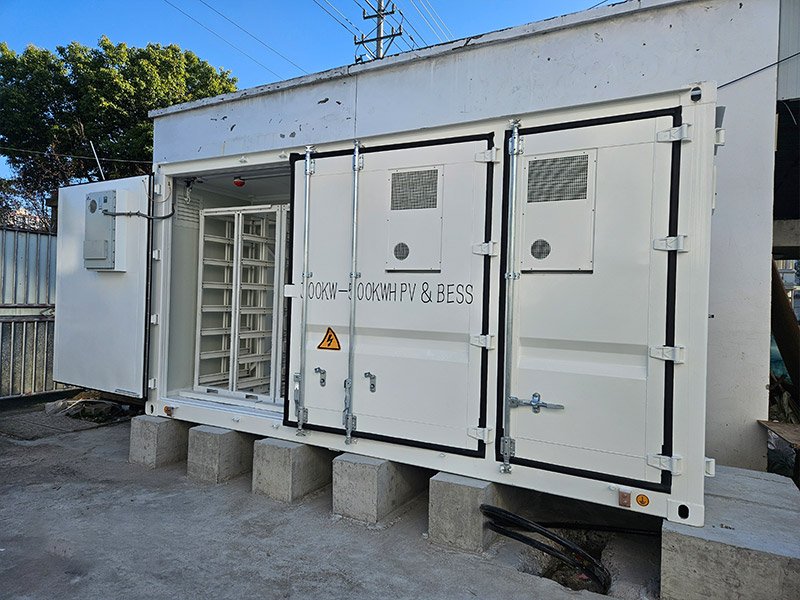
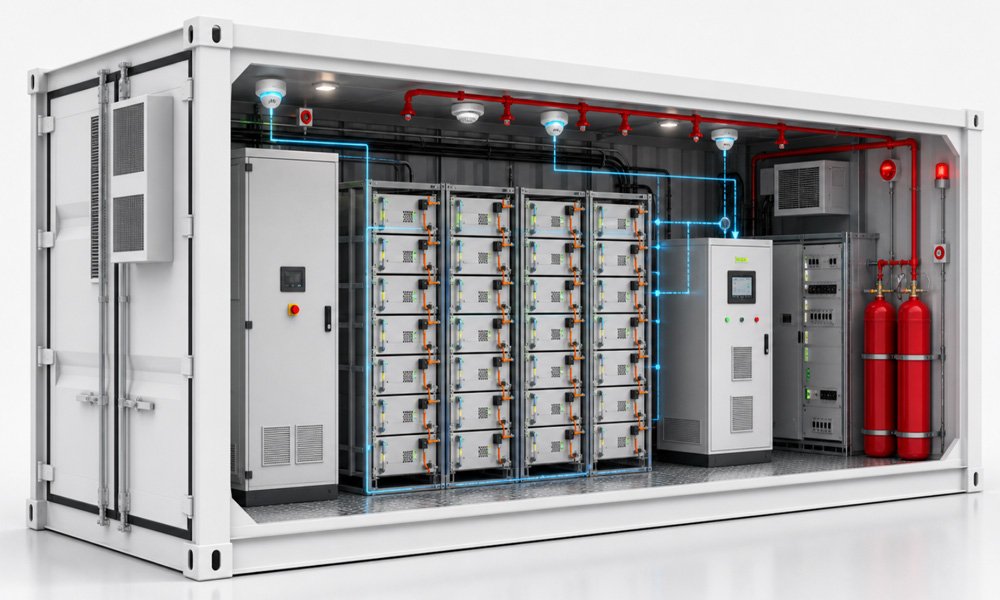
A battery energy storage system container’s architecture allows much of the battery, control, thermal, and safety components to be integrated into a factory-configured enclosure before site installation. As such, the container is only one component of the complete electrical system; PCS, transformer, switchgear, controls, and substation interface determine how that stored energy reaches the grid.
How Does BESS Support Grid Stability?
A BESS aids in grid stability as it might provide a controllable source of active or reactive power as required. Its contribution will depend on the PCS, controls, available state of charge, interconnection requirements, and the relevant service.
Frequency regulation:
The balance between generation and demand is reflected by grid frequency. When the balance is out of phase with the actual transmission line flow, a BESS may assist in either increasing or decreasing active-power output to assist in correcting the deviation. According to the U.S. Department of Energy, energy-storage applications include frequency regulation, reserve and response, and rapid response. This ability is especially important when output or demand from renewables changes quickly.
Voltage support:
A suitably configured PCS can exchange reactive power and use its controls to support voltage within the limits of the connection and operating strategy. Be aware that while BESS performance depends on network conditions, inverter capability, protection settings and grid requirements, it is not a panacea for voltage problems.
Renewable integration:
The output of solar and wind varies with the weather and operating conditions. According to the IEA’s Electricity 2026 report, battery storage can serve as a flexible resource. It can respond quickly for system balancing and grid-support services. It can also shift renewable generation to increase during higher demand periods.
Peak support and energy shifting:
A BESS has the ability to charge when electricity is plentiful, or demand is low. Additionally, it could also discharge when demand is high, depending on the configuration and operational strategy. A grid-scale battery energy storage system can therefore provide numerous services, although not every project provides all services.
The IEA reports that, globally, 108 GW of new battery storage was deployed in 2025, around 80% of which was utility-scale new capacity.
What Are the Main Components of a Substation-Connected BESS?
A BESS connected to a substation comprises multiple electrical, control, safety, and communication systems. The battery-to-grid energy transfer and system management during operation each have clearly defined roles. According to the U.S. Department of Energy, the following elements are common to a BESS architecture.
| Component | Main function |
|---|---|
| Battery racks/modules | Store electrical energy |
| BMS | Monitor battery condition and protection |
| PCS | Control AC/DC power conversion |
| EMS | Coordinate system-level operation |
| Transformer | Provide the required voltage interface |
| Switchgear | Switching, isolation, and protection |
| Thermal management | Maintain operating conditions |
| Fire/safety systems | Detect and mitigate defined safety events |
| Communications/SCADA | Support monitoring and control integration |
The battery stores energy, while the BMS monitors the battery level and its safety. The PCS manages the conversion of electrical currents flowing through the battery and AC network. The EMS manages the overall coordination at a higher level; the transformer and switchgear help establish the electrical interface.
For EPCs, the whole architecture of the system is more important than battery capacity. An integrated electrical system should be the one that is done when overall Battery energy storage system testing is done to store battery energy.
How Should BESS Capacity Be Sized for a Substation?
The essential service the project is to provide should drive BESS sizing. A frequency response system designed for short-duration frequency response will differ from a frequency response system designed for renewable energy shifting or longer peak support. We need to consider the power rating and the energy rating separately.
MW and MWh describe different characteristics. The capacity of a battery energy storage system (BESS) to either absorb or supply power. The amount of energy it can store is indicated by MWh. For instance, a nominal system having a 1 MW / 2 MWh energy-to-power ratio will reflect idealized conditions and is a two-hour system. The true useful life can be reduced due to efficiency losses, state-of-charge limits, temperature, degradation, reserve requirements, and operating constraints.
Factors affecting project sizing include load profile, renewable generation profile, required grid service, rating of the power conversion system (PCS), interconnection limits, site conditions, and operational strategy. According to the IEA, the battery capacity registered by the manufacturer does not reflect the available power in a peak event, which may be reduced by temperature, state of charge, duration, and reserved capacity.
For this reason, a 1mw battery storage containershould not be considered a one-size-fits-all setup. Consulting the output levels on the plates is useful; however, buyers should compare these MW and MWh ratings. And confirm what the system can deliver under the intended operating conditions. One megawatt battery storage container
Grid-Forming vs Grid-Following BESS: What’s the Difference?
BESS behaviour may vary in response to the control mode of the connected inverter. A grid-following BESS usually synchronizes its output to the existing grid voltage and frequency. It is mostly used in conventional grid-connected applications.
Battery Energy Storage Systems (BESS) that form grids can control an AC voltage reference. This may render the technology applicable for certain weak-grid, microgrid, and resilience applications where system strength or islanded operation is an important consideration.
| Mode | Basic function | Typical relevance |
|---|---|---|
| Grid-following BESS | Follows an existing grid reference | Conventional grid-connected applications |
| Grid-forming BESS | Establishes or controls an AC voltage reference | Selected weak-grid and microgrid applications |
Not every Battery Energy Storage System Containerized Substation is automatically required to be grid-forming. The worth of a power conversion system (PCS) depends on the PCS design; its protection, controls, and network properties; the grid-code requirements; and the overall project architecture. The grid-forming inverter is identified by the IEA as one technical measure that can help strengthen system strength as power systems evolve.
What Should EPCs Check Before Integrating BESS With a Substation?
EPCs should determine the electrical and operational requirements at the proposed connection point prior to selecting a substation BESS. The grid connection study will determine the necessary voltage, frequency, connection point, grid-code requirements, and any network constraints.
Power and energy requirements should then be matched to the intended service. The project team must validate the MW, MWh, hours of operation, dispatch profile, and reserve requirements. All these ratings and protection coordination shall match the connection design, notwithstanding the harmonization of the PCS, transformer, switchgear, and protection scheme.
Control and communications
Control and communications also require early definition. Prior to equipment selection, the functions of the system, SCADA requirements, communication protocol, monitoring points, and dispatch logic. While a containerized energy storage system may make physical deployment easier, it does not eliminate the need for site-specific electrical and control engineering.
Site and safety
Site and safety conditions should be assessed before installation. The final design could be affected by availability of space, accessibility for maintenance, cable routing, environmental conditions, thermal management, fire detection and suppression, emergency shutdown, separation distances, maintenance access, degradation, replacement strategy, and warranty terms.
A good BESS project planning will therefore begin with the required grid service and site conditions, not simply the biggest available battery.
What Do Real BESS Projects Show About System Design?
BESS configurations should be application-based, not fixed power-to-energy ratios; report real projects.
The Poland factory project by HBOWA uses a 50 kW / 301 kWh LiFePO₄ battery system for solar self-use, peak shaving, and load shifting. This shows that we must look at MW and MWh separately. If the purpose is to shift energy over a longer time period, then a lower power rating can be paired with higher energy capacity.
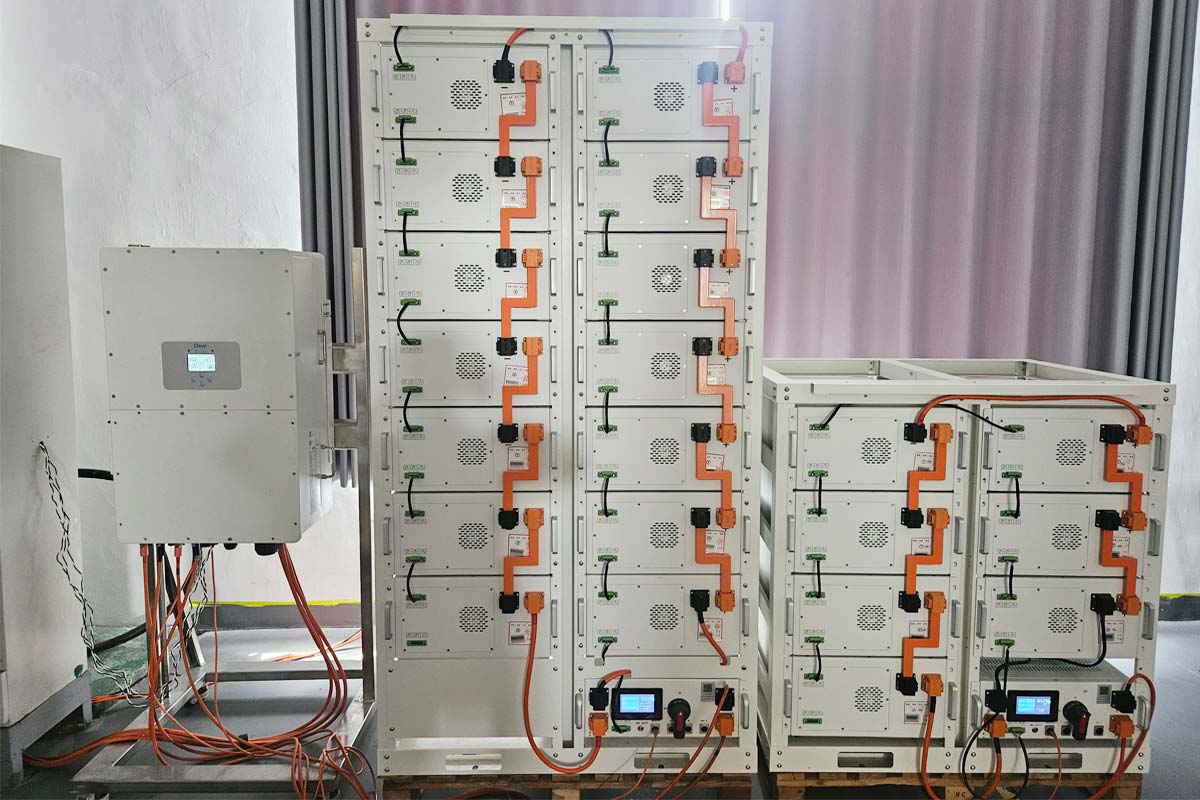
HBOWA’s Togo initiative integrates a 300-kilowatt photovoltaic system and 400-kilowatt-hour battery storage to operate off-grid.
The scheme took into account the load on site, operational schedule, PV production, and HTHR(High-temperature and high-radiation) conditions.
These are project examples, not substation projects. By showcasing the impact of application requirements, operating conditions, and energy demand on the sizing of BESS. When planning a Battery Energy Storage System Substation, the specifications of the service required should govern the system design.
Where Are Battery Energy Storage Systems Used With Substations?
The function of a BESS linked to a substation depends on the power system around it and the project problem to be solved. Storage may be used with solar or wind generation at utility-scale renewable projects. It may also be used in distribution networks where there is strong value in flexible power resources. BESS can also be installed as part of microgrids, isolated systems, and some resilience projects.
| Project environment | Why BESS may be used |
|---|---|
| Renewable generation site | Manage variable generation and shift stored energy |
| Transmission or distribution network | Provide flexibility at constrained locations |
| High-demand area | Manage periods of elevated network loading |
| Weak-grid location | Provide inverter-based support when suitably designed |
| Microgrid | Support controlled local power-system operation |
| Off-grid system | Balance generation and demand without a utility connection |
| Critical-load facility | Support designated loads during planned or unplanned interruptions |
The IEA views batteries as a flexibility resource that is growing in importance as variable renewables grow. But the appropriateness depends on the grid connection point, network characteristics, functional capacity of PCS, control strategy, and applicable grid requirements.
The question EPCs face is therefore not whether a Battery Energy Storage System Substation can fulfil a specific application in general. The system architecture proposed which are being evaluated in reference to the electrical conditions, operational targets, and specific area requirements of that site.
Conclusion
A BESS at a substation is not just a bigger battery box. The combined actions of the battery, BMS, PCS, EMS, transformer, protection, and substation interface give it grid value.
HBOWA offers battery-storage designs for commercial and industrial projects, along with solar power conversion technology. If you have energy solution requirements, welcome to contact us anytime.
Frequently Asked Questions
An ordinary substation battery is meant to supply auxiliary DC power for the protection sector, control, operation of breakers, and communication. A BESS accumulates electrical energy and utilizes power-conversion equipment to communicate controlled power with the grid. Battery technology is used by both systems, but they have different functionalities.
The usable capacity of a BESS is dependent on numerous operating conditions such as the permitted state-of-charge range, battery degradation, temperature, efficiency, reserve requirements, and limits on discharging. Thus, it is not always the case that the nameplate MWh rating indicates the available energy for a particular application or grid-support service.
A BESS can defer or reduce some network upgrades by managing peak loading, shifting power flows, or providing flexibility at constrained locations. Nevertheless, this is dependent on the type of network limitation or limitation, operating strategy, interconnection requirements, technical performance, and applicable grid codes
The operating time mainly depends on the ratio of usable energy capacity to discharge power. Generally, a system with more MWh capacity can operate for longer at the same MW. The real duration is also subject to efficiency, state of charge, reserves, temperature, degradation, and other operational constraints.
Buyers should look into the power and usable energy rating, the PCS capability, the voltage interface, control functions, protection systems, thermal regulation, safety equipment, communication protocol, degradation, warranty conditions, and grid-code specifications. The configuration chosen has to correspond to the grid service requirement, site conditions, interconnection requirements, and expected operating profile.