Introduction
Anyone planning to install a solar system must know how long a solar panel lasts. Solar panel life expectancy is important to set the right expectations of costs and energy output over time. Since solar panels are a long-term investment, it is beneficial to know how long they last. Their lifespan helps to understand if solar panels provide better energy savings. This article explains the factors that affect the efficiency of solar panels and how long they last. It will also inform you of the different technologies available in the market and how to increase ROI.
What is the Life Expectancy of a Solar Panel?
The term solar panel life expectancy refers to how long a solar panel can be economically and, therefore, effectively used. In some quarters, however, this term is also used to denote the factory-backed period during which solar panels can operate faultlessly. Most high-performance panels, especially those based on N-type or TOPCon, can produce strong results, from 25 years to 35 years under regular operating conditions.
It is important to note that a specific number of years quoted as an estimate is the duration during which a solar panel is likely to work in an optimal way. It is very different from the functioning of the panel. The functional life is a straightforward way of determining the number of years for which the solar panels can be used in generating electricity at a lesser efficiency after installation. The optimal life of a solar panel, however, refers to the number of years for which the solar panels can produce electricity in approximately the same way.

Earlier generations had a higher degradation rate as a panel’s material and composition were different which resulting in a shorter life expectancy, but for the modern design, it is opposite. Particularly, manufacturers who use N-type cells because over most of the years, these solar panels lose a smaller percentage of their output annually, and increase the expected life expectancy of solar panels in residential applications, as well as industrial use. For the users, it means a number of years to a few decades in terms of stable and productive energy.
How Solar Panel Technology Affects Lifespan: N-Type and TOPCon
N-Type and TOPCon solar modules are the new benchmark for lifespan and energy retention. N-type solar modules and Tunnel Oxide Passivated Contact (TOPCon) cells have a lower LID (Light Induced Degradation) and PID (Potential-Induced Degradation), two of the main reasons for early efficiency loss in conventional PV technologies.
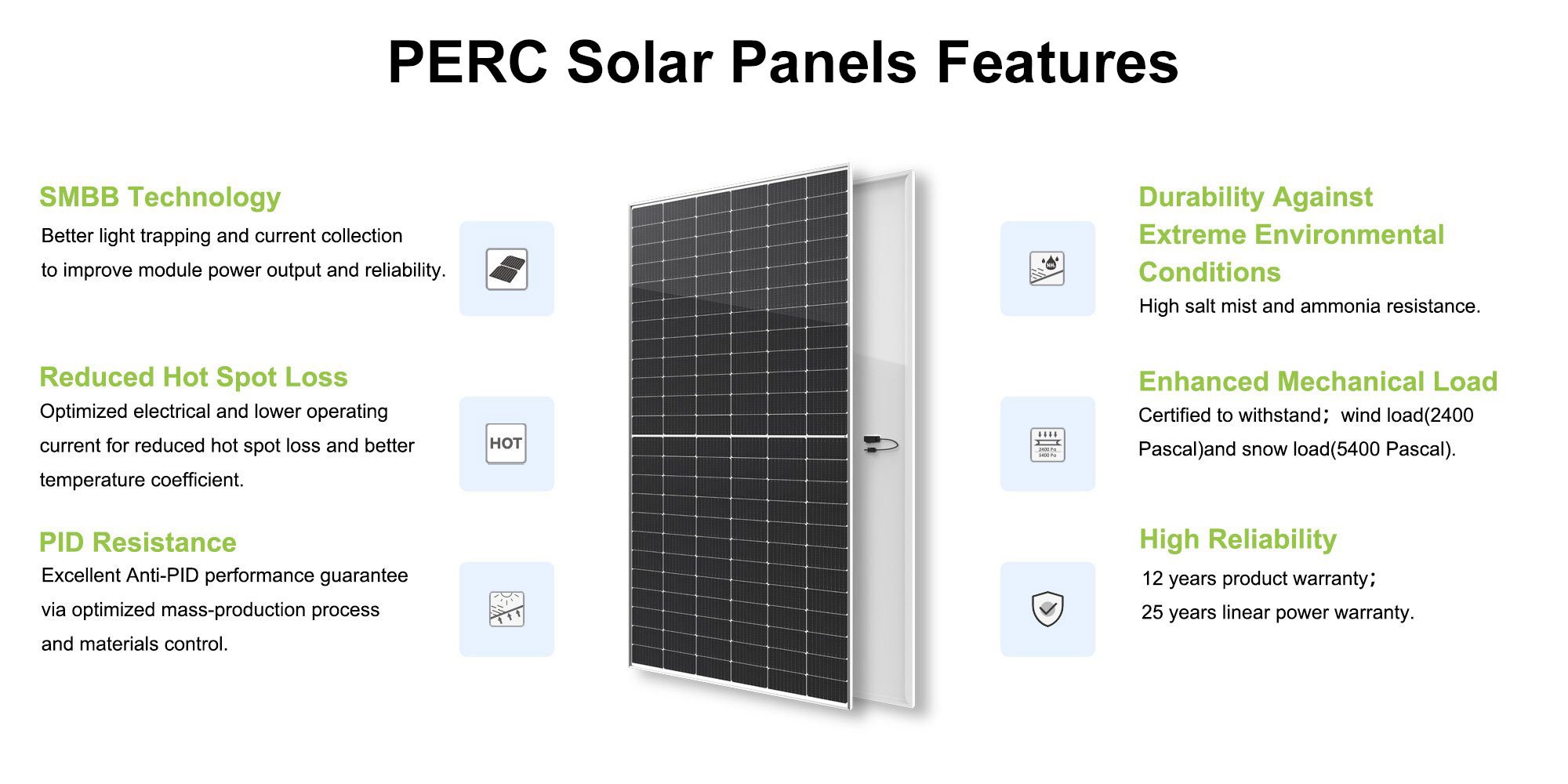
N-type cells have a more durable structure than P-type cells, performing better in low light and a higher thermal stability. TOPCon further improves this by limiting recombination losses by advanced passivation; thus, the module’s operational life is enhanced. Both these technologies are ideal for long-term deployment, especially in commercial and industrial sectors where a consistent power supply is essential.

For this purpose, reputable brands like HBOWA provide N-type solar modules that have a slower rate of efficiency dip and, unlike the PERC solar modules, have a higher power output than the industry average.

Questions such as “What is the life expectancy of a solar panel?” are being redefined by the new development in cell composition and help consumers who seek long-term value.
How Long Do Commercial vs. Residential Solar Panels Last?
Commercial and residential solar panels often last for different periods, and the major determinants of the lifespan are the operational setting of the solar installations.
The power generated from the roofs of houses reduces the degradation rate and also improves the economy of the residential areas. However, with steady materials and module architecture like the N-type and TOPCon modules provided by HBOWA, these smaller setups over houses can easily last for over 30 years.

How long do commercial solar panels last can be explained by the part of the world where these panels are installed and how quickly the soiling occurs. The industrial or commercial solar panels are often prone to high soiling, causing irregular degradation.
Also, in this kind of setting where the commercial installations will be set up, how frequently it is cleaned, any good airflow, or maintenance followed play a crucial role. How long do commercial solar panels last can be clearly understood from this typical setting, for example, a logistics facility in the middle of India installed a 10 kW HBOWA TOPCon system in 2015. After 10 years, it is still producing more than 90% original power without inverter replacement.
The age of the solar panels shows from the above example for how many years commercial solar panels can last when they are used under high-load, continuous-use environments. When solar panels are built with advanced cell technology, the life expectancy of solar panels in both residential and industrial applications can meet or exceed the financial planning goals without heavy hardware upgrades.

Factors That Impact Solar Panel Longevity
Installation Quality
The installation of solar panels is a factor that affects the life cycle of solar panels to a large extent. The orientation and tilt angle, routing of cable, and precision of mounting are important for the long-term reliability. Mismatch between the solar panels of the inverters can result in quicker wear and tear and bring about early inefficiencies. HBOWA is paired with the inverter from Growatt and Deye. The connection helps in balancing the electrical output temperature. This balance between the temperatures ensures that the energy conversion would remain stable over a few decades.
Environmental Stress
Solar panels’ life expectancy is also affected by the climate conditions of that particular location. It has a greater impact on the mounting system and the panel structure as well. Hot regions are going to have higher cell operating temperatures, due to which their materials will wear out much quicker than in normal conditions. Since this may be region-specific, HBOWA panels are specifically designed for thermal cycling and the huge amount of load. It still may slowly degrade its mechanical pressurability and its structure over time due to extreme weather.

Maintenance & Monitoring
The maintenance and monitoring of the system can be considered one of the most critical parts of ownership. The early detection of potential damages and issues is a key factor in prolonging the lifespan of the system and its parts. With the help of monitoring and regular inspection techniques, potential problems could be avoided as it is at its early stage. Voltage drop, temperature rise, and abnormal irregularity in the power flow can be detected through the smart systems. Along with the solar system, remote diagnostic techniques can be used to remove the errors from the grid-attached system. Cleaning the dust from your system is an essential step to prolong the life of the panel, as the dust hinders the sun’s rays.
Solar Panel Degradation: How Performance Declines Over Time
Solar panels lose much of their capacity over time, some quicker than others. This process, known as degradation, is when the amount of electricity a solar panel creates drops, even under perfect circumstances. Material and length of exposure are the factors that play a role in degradation. But it isn’t the end. Solar panels typically operate for more than 30 years. They just lose some efficiency. In simple words, degradation means the amount of energy generated is less than it would be in a new panel. The life span of solar panels isn’t as simple as a kilometre reading on a vehicle; sometimes a solar panel degrades, but not always.
Solar panels with ordinary P-type cells lose about 0.5% to 0.7% of output each year. On the contrary, HBOWA’s TOPCon panels break at a slower pace, about 0.3% annually, because the sensitive film and the panel’s robust design significantly minimize it. After a few notices, the difference becomes important. Upon completion of ten years, conventional modules might provide electricity less than 93% of the time. But HBOWA N-type panels will supply around 93 to 94% of their initial rated electricity.

The utility of the N-type panel would be established through a sample curve. The output of the power remains the same through the first year. Slightly decreases when the year reaches ten, dropping further. In comparison, N-Type panel remains at nearly full functionality after ten years. By year 25, it still generates more than 91% of its power. If comparing with others, panels can degrade more than it upwards to 4% annually. Because of the previous result, only a few commercial varieties preserve 93% or 4% of their power over two and a half decades. The average life of a solar panel is now not just an estimation; it is an asset calculation in longer plans for energy.
How Batteries and Inverters Affect Panel Longevity
The lifespan of the solar panel is only a part of a solar system’s lifespan. A solar panel can work for a long duration, but the overall functioning of the solar installation depends greatly on the longevity of its supporting elements. Solar batteries and solar inverters greatly affect the solar power system.
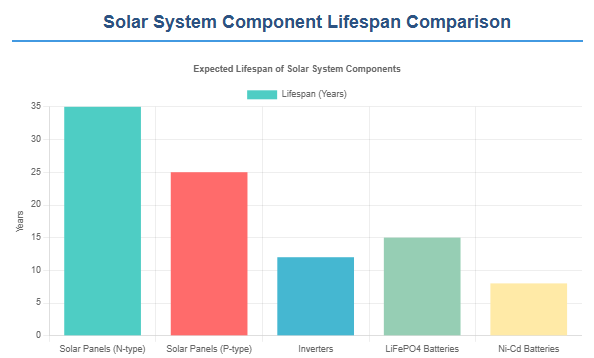
The expected life of an inverter can range from 8 to 15 years, considering the usage, exposure to the environment, and quality. HBOWA recommends Growatt inverters and Deye inverters that are developed to be stable and work efficiently for a long period of time under different loads.
An energy storage system also affects the lifespan of the system. The LiFePO4 battery by HBOWA lasts for 10 to 15 years and maintains stable voltage over deep discharging cycles. On the other hand, the ni-cd/cadmium batteries variety of batteries or nickel cadmium battery system, have shorter lifespans, transparency out energy density, and cause major casualties. If such batteries are paired with solar arrays, it can result in high loading and increase the charging overlap, thus reducing their performance.

The ancillary component must be lasting and reliable for the solar panels to obtain maximum solar power. The poor quality of the inverter, or using a variety of veteran technology batteries, can create poor performance of the whole system of the solar array, even if the panel is well-built.
When and Why to Replace Solar Panels
Knowing the lifespan of solar panels is only a part of the equation. It is equally important to understand when a panel should be replaced. Not all panels at the end of their life expectancy need to be removed. In many cases, specific signs require an upgrade in the system.
There are no general thumb rules for when a system goes bad, and its panel needs to be replaced. It depends on the kind of system and panel used. According to HBOWA, visible damage such as cracked glass, hotspots, or delamination can permanently decrease panel efficiency.
Also, when the power loss exceeds an acceptable grace, which is typically around 80% of the original rated output, the panel may no longer justify its place in the system. Changes in electricity demand may also make an existing setup insufficient.
HBOWA systems are planned such that expansion or full replacement is possible with minor rewiring. For example, a rural school once used a 10W panel array for minimal lighting and small electronics. Fifteen years later, with more digital infrastructure and increased energy demand, the system was upgraded to a 20kW HBOWA solution using TOPCon panels and Growatt inverters.
In other words, the life span of solar panels is not the maximum limit for their life, but it is the point where the actual need from them exceeds their performance, and upgrading will be more of an investment into the security of energy and its scalability in the future.
What Happens After Solar Panels Reach End-of-Life?
Once the life of the solar panels comes to an end, it doesn’t mean they are waste. While their performance decreases, the materials used in their construction (glass, silicon, aluminum) still retain their value and can be collected and reused by recycling. Also, it has a low environmental impact and is supported by international regulations and industry initiatives.
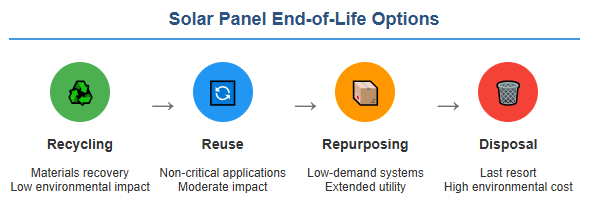
Some panels may not be efficient for the grid, but still aren’t fully dead, and they can be used for low-demand applications. Used solar panels may be effective at producing power just enough to power lights, remote sensors, or backup systems. They give old panels a new reason for use. Moreover, they are added to the landfill. An optional and costly technique to discard solar panels is to incinerate or bury them without utilizing any materials, including recycling.
| Method | Environmental Impact | Common Usage |
| Recycling | Low | Materials recovery |
| Reuse | Moderate | Non-critical loads |
| Disposal | High | Last resort |
Conclusion
So, how long will your solar panels last? There’s more to it than the average solar panel lifetime. The solar panel’s system quality, environmental factors, type of care, and components are compatible to make the solar panels last longer.
N-type and TOPCon panels are engineered for the best performance and durability with a lower degradation ratio over time. But the real value is in planning the entire system, from batteries to monitoring, to ensure you’re supporting their performance throughout their lifetime.
This way, solar panels can deliver clean energy and financial returns year after year for decades, ensuring you are making each investment count.
At HBOWA, we provide you PERC solar panels, TOPCon solar panels, discount grade B solar panels, and used solar panels, in large quantities in stock. HBOWA can be your reliable business partner to get green energy for the whole world. Feel free to reach out anytime.