
Introduction: The Rising Demand for Smart Battery Storage
Smart battery storage is the need of the hour. Electricity consumption is consistently on the rise as a result of which the need for a reliable and clean solution for electricity storage has gained importance. Soon, solar power along with wind power will take over coal and natural gas. But solar power and wind power are not enough.
A reliable battery storage system is their immediate need. This has put a spotlight on battery storage manufacturers who have to build stable infrastructure for energy. Energy storage companies now play a major part in the integration of renewable energy. They come with technology to trap detrimental generation and release them when there’s a high demand. The lithium ion solar battery manufacturers producing lithium-ion (Li-ion) and LiFePO4 battery have poised a global rise in energy storage and will lead the technology of energy storage in the year 2026 as per Statista.

Why Battery Storage Matters in 2026 and Beyond
Battery energy storage System (BESS) is a form of energy storage technology that stores electricity to be later utilised for load levelling, peak shaving, or improving the power quality of the electric grid to balance supply and demand.
Moving into the year 2026, the importance of battery storage cannot be overlooked. All utility models and industries are heading to complete decarbonization to save the environment. With the advent of renewable power, grid energy storage becomes critically important to balance the unforeseen fluctuations due to green power. Without efficient battery storage systems, there is no point in relying on solar or wind energy, residential or utility-scale.
The companies’ BESS and grid energy storage offer advanced systems for grid-connected (on-grid) or off-grid applications to help to cover peak load for power generation and curtailment, rise in the supply of electricity, standalone functions and uninterrupted access to electricity for remote or non-remote areas.

The grid energy storage companies work on the necessary outputs like cycle life, energy density and cost per kilowatt-hour. The lithium-ion batteries and LiFePO₄ chemistries leading the way for global renewable energy storage companies are highly useful for long-duration capacity. Understanding the utilities provided by lithium-ion lead to its further acceptance in renewable energy storage companies and industrial sectors. According to BloombergNEF, the projected energy capacity to be stored is around 550GW by 2030 against the 210GW in 2026.
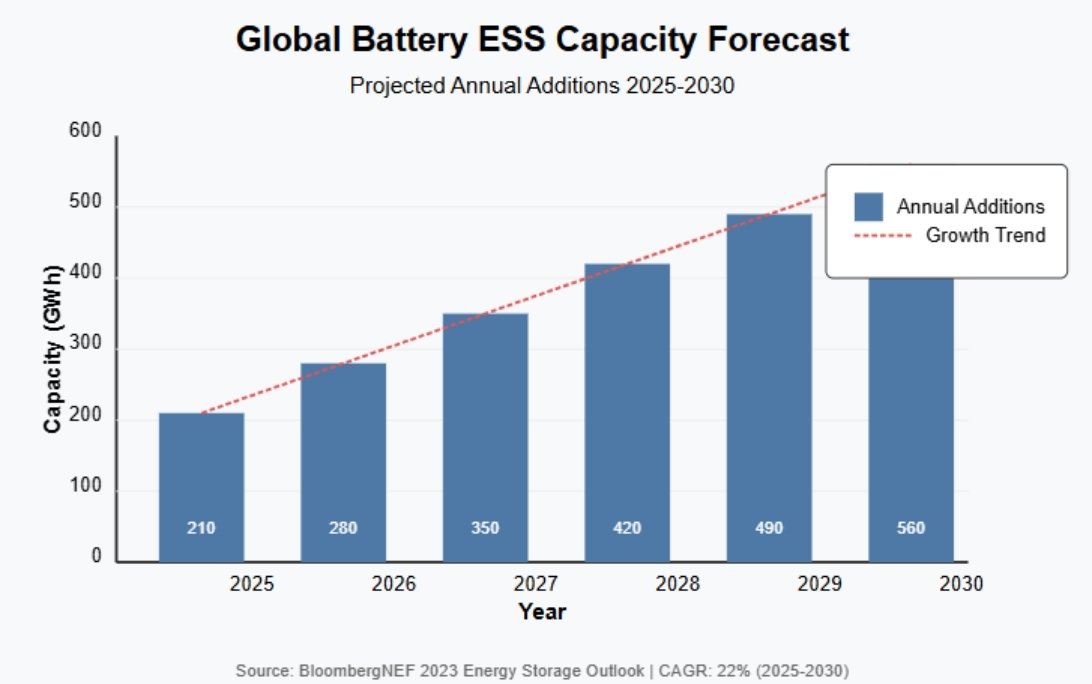
Technology Spotlight: LiFePO₄, Lithium-Ion, and Sodium-Ion Batteries Compared
The important role of battery chemistry is seen in the performance of storage, safety, and value over the long term. Currently, the majority of batteries used are Li-ion, sodium-ion, and lithium iron-phosphate-based batteries. Each of these has its own advantages, and it is important to choose the right one for the application.
The residential and commercial sector is mainly benefits from Li-ion solar-battery manufacturers who produce high-energy batteries with already set-up supply chains. The Tesla Powerwall product is a Li-ion battery that provides a very fast recharge over time, and the NMC Li-ion cells are mainly noted for compact storage. However, Betta Batteries claims that one big drawback is the thermal management and cost per cycle.
The early stage and existing startups prioritize safety and long-lasting, established LiFePO₄ suppliers such as BYD and CATL. Lower energy density than NMC is a drawback, but LiFePO₄ cells provide higher thermal stability, a much longer life cycle, less toxic materials, and a cost that is more than 25% lower for home solar energy storage systems. In hot weather, they offer good performance and minimal battery management is needed, so long-term cost is reduced.
The table below shows the basic differences:
| Chemistry | Energy Density (Wh/kg) | Lifecycle (Cycles) | Safety Rating | Cost per kWh |
| LiFePO₄ | 90–120 | 3,000–6,000 | High | Medium |
| Lithium-ion (NMC) | 150–200 | 1,000–2,000 | Medium | High |
| Sodium-ion | 90–120 | 1,000–2,500 | High | Low |
Sodium-ion battery companies are gradually gaining prominence as lithium is gradually falling short and it is difficult to develop. Due to the commercial pilot installation of industrial UPS and contrast support of the small grid, sodium batteries are promoted. Even though sodium-ion batteries are still in its early development stages, it is anticipated to be a cost-effective and scalable solution for short-term applications soon.
Top Battery Cell Manufacturers in 2026 (SNE Research H1 Data)
Energy storage is no longer a niche segment of the battery industry. According to SNE Research, global lithium-ion battery shipments for energy storage systems reached 461.3 GWh in the first half of 2026, up 71% from 269.7 GWh in the same period of 2025. Growth is no longer concentrated in one region: shipments to North America (75.9 GWh, +83%), Europe (72.7 GWh, +74%), and other regions (110.1 GWh, +119%) together accounted for 56% of the global total, overtaking China for the first time.
The table below ranks cell manufacturers by actual ESS shipment volume in H1 2026 — not by reputation or marketing claims.
| Rank | Manufacturer | ESS Shipments (H1 2026) | Market Share | YoY |
|---|---|---|---|---|
| 1 | CATL (China) | 125.0 GWh | 27.1% | +81% |
| 2 | EVE Energy (China) | 48.0 GWh | 10.4% | +69% |
| 3 | Hithium (China) | 46.2 GWh | 10.0% | — |
| 4 | BYD (China) | 35.7 GWh | 7.7% | — |
| 5 | CALB (China) | 31.5 GWh | 6.8% | — |
| 6 | REPT Battero (China) | 31.4 GWh | 6.8% | — |
| 7 | Cornex (China) | 30.2 GWh | 6.5% | — |
| 8 | AESC / Envision AESC (China) | 21.2 GWh | 4.6% | +111% |
| 9 | Gotion High-tech (China) | 20.8 GWh | 4.5% | +41% |
| 10 | Great Power (China) | 20.5 GWh | 4.4% | +202% |
| 11 | LG Energy Solution (South Korea) | 12.0 GWh | 2.6% | +357% |
| 12 | Samsung SDI (South Korea) | 6.4 GWh | 1.4% | +20% |
Source: SNE Research, Global ESS Battery Shipment Tracker, H1 2026 (published August 2026). Rankings reflect shipped volume for energy storage applications. The combined share of the top three rose to 47.5% from 45.8% a year earlier.
What the 2026 numbers tell buyers
- Concentration is increasing at the top. CATL alone shipped 125.0 GWh — more than the next two suppliers combined — and its share rose from 25.6% to 27.1%. For large utility-scale tenders, cell supply security is becoming a procurement criterion in itself.

- Chinese manufacturers dominate cells; Western players lead system integration. Chinese suppliers account for the vast majority of cell volume, while US and European companies remain strong in system integration, project delivery and local compliance.


- Grid storage still dominates; C&I is among the fastest movers. Grid-scale accounted for 347.0 GWh (75.2% of shipments); residential storage grew 128% to 47.7 GWh; and commercial & industrial storage grew 59% to 39.6 GWh — led by CATL (35%) and REPT (14%).
- Localisation and traceability now matter as much as price. Tightening tariff and supply-chain rules in North America and Europe are making local capacity, documentation and compliance key selection criteria alongside $/kWh.
System integrators and BESS players (not cell manufacturers)
The companies below are frequently listed alongside cell makers, but they operate at a different layer of the value chain. They should be evaluated on project delivery, controls and service — not confused with cell suppliers:
- Tesla Energy (US) — Powerwall, Powerpack and Megapack systems across residential and grid-scale segments; the Hornsdale Power Reserve in South Australia (100 MW) remains a benchmark for fast frequency response.

- Fluence (US) — a joint venture of Siemens and AES focused on utility-scale storage, with 6+ GW deployed and large projects including a 400 MWh system in Chile.
- Sonnen (Germany) — residential storage and virtual power plant integration, enabling households to participate in local energy trading.
- Lyten (US) — acquired Northvolt’s Swedish assets (Northvolt Ett and Northvolt Labs, 16 GWh of capacity) in February 2026, after Northvolt filed for bankruptcy in March 2025, with cell deliveries planned from the second half of 2026. A reminder that supplier stability is a real procurement risk in this industry.
Looking for a procurement framework rather than market data? See our BESS sourcing guide, which compares manufacturers by project fit, compliance documents, and lifecycle service.
Choosing the Right Solar Battery Manufacturer: Key Considerations
There are several key factors to keep in mind while selecting the right solar battery company, and some of them are in the table below:
| Key Consideration | Details | Why It Matters |
| Battery Chemistry | LiFePO₄ (Lithium Iron Phosphate) vs. Traditional Lithium-ion (e.g., NMC) | 1-LiFePO₄ offers superior safety 2-Thermal stability 3-Reducing long-term replacement costs and increasing ROI. |
| Scalability | Systems range from small residential units to grid-connected solutions | 1-Future expansion 2-Integration with microgrids 3-Renewable energy sources or EV charging networks. |
| Warranty & Lifecycle | Strong warranties (e.g., 10+ years) with up to 6,000 cycles* | Reflects manufacturer confidence in product: 1-Longevity 2-Reliability 3-Long-term value |
| Technical Support | Reliable customer support and installation assistance | 1-Reduces setup complexity 2-Minimizes downtime 3-Optimal system performance |
| Installation Flexibility | Backward compatibility and adaptable configurations (wall/floor-mounted) | Accommodates retrofitting into existing systems and diverse spatial requirements. |
The best battery storage companies will be offering the strongest warranty and documented lifecycle performance (usually 6000 cycles or more). Other aspects to consider include reliable customer support, as well as battery systems that are easy to install and integrate with popular inverter brands such as Deye and Growatt, and prioritise technical support, backward compatibility, and installation in the assessment of what factors offer the most long-term value.
Where HBOWA fits
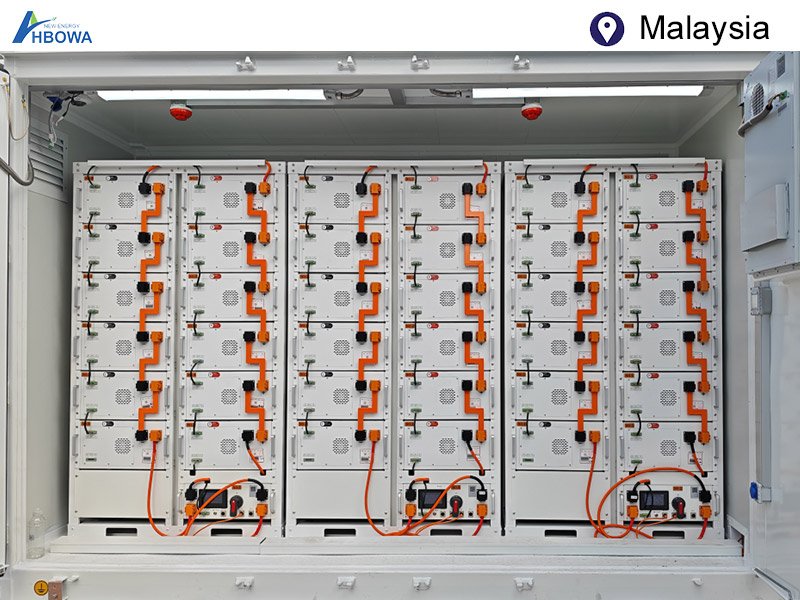
HBOWA designs and manufactures LFP battery energy storage systems for commercial & industrial, backup, hybrid-power and microgrid applications. Delivered projects span cabinet and container systems from 96 kWh to 16 MWh, including a 200 kW / 576 kWh peak-shaving system for an industrial facility in Malaysia and a 5 MW / 16 MWh BESS for factory backup power and peak shaving in Ukraine. The wider C&I BESS project portfolio also covers solar-plus-storage, off-grid and microgrid deployments across Southeast Asia, Europe, Africa, the Pacific and China. Systems are sized around each site’s load profile, grid conditions and duty cycle — which is why HBOWA is usually specified as the system integration and delivery partner, rather than a cell supplier. To see how these systems perform in real deployments, talk to our engineers about your project.
Future Trends in Battery Energy Storage Systems
The future of battery energy storage systems: companies are engaged in a broader range of renewable integrated energy management solutions. Hybrid ESS (Solar and Wind with the storage battery) being linked up to a single line and power in this combined form helps to have proper electric supply with stability and profit.
The top Energy Storage companies are investing heavily in AI – based energy optimization to improve battery performance and demand forecasting. The energy storage companies are also progressing more these days to increase the performance and operating skill of the energy storage system.
Furthermore, notable growth in sodium-ion battery development by key energy storage suppliers such as Faradion and HiNA Battery gives better hope and configuration of low-cost and Eco-friendly support. They can complement traditional Li-ion systems in both grid and off-grid applications with improved outlooks.
The evolution suggests innovation is a key dynamic in meeting the surging global energy storage demand.
Conclusion
Lithium-ion solar battery manufacturers and other energy storage battery manufacturers are leading the transition to a decentralized, battery-enabled global energy ecosystem. The solar battery manufacturers are central to creating a reliable and innovative solar battery, which is required to ensure an efficient and safe source of power for the long term. It is of utmost importance to choose a solar battery manufacturer that can meet the goals of homeowners and businesses to maintain a clean environment in the global landscape of the energy sector.
Frequently Asked Questions
The market splits into two layers. Cell manufacturers supply the cores — CATL, EVE Energy, Hithium and BYD account for most energy-storage cell volume. System integrators — Tesla Energy, Fluence, and Sungrow among them — build the finished multi-hundred-MWh systems, adding PCS, EMS, thermal management, and grid controls. Leadership therefore depends on which layer you are buying from: the two are not interchangeable as suppliers, and they are assessed on different criteria.
Energy-storage cells come from a concentrated group of suppliers, mostly Chinese manufacturers, with Korean producers holding comparatively small ESS shares. Two things are worth knowing when you read that list. First, an ESS shipment ranking is not an EV battery ranking: the same manufacturer can rank very differently in each, because duty cycles, certification and customer base differ. Second, cells are only one input — enclosure, PCS, EMS and thermal design decide how a system performs on site.
Shortlist by project scale rather than by brand familiarity. Utility-scale tenders are usually served by tier-one cell suppliers or large EPCs that can carry the commercial risk. Projects from 100 kWh to a few MWh — factory, campus, telecom or microgrid — are generally better served by specialist integrators that deliver the complete package instead of cells alone, because assembly, controls and on-site service are where these projects are won or lost.
Ask for evidence, not assurances. Five documents are worth requesting: a datasheet stating the cycle life and the depth of discharge it is rated for; third-party test certificates (IEC/UL/CE) with numbers you can verify; at least two shipped references comparable in capacity and climate; a warranty clause that defines a minimum capacity retention, not only defect coverage; and the name and location of the team that will commission the system and hold spare parts. A supplier that cannot produce these quickly is telling you something.
They are not competing categories: a solar battery is a lithium-ion battery packaged and configured for daily charge and discharge cycling on a PV system — usually LFP, occasionally NMC. The practical differences appear in how the pack is engineered rather than in cell chemistry alone: continuous versus peak C-rate for inverter pairing, usable depth of discharge, thermal management for outdoor enclosures, and the state-of-charge limits set by the BMS. Compare those design choices, alongside the chemistry table above, rather than treating the two labels as rivals.