

An energy storage cabinet and a BESS container can support C&I projects, but neither is better than the other. The correct alternative choice for a solution depends on the required power, usable energy, discharge duration, load profile, site conditions, thermal management, safety, expansion plans, as well as grid integration. Recognizing these elements makes the choice of an energy storage cabinet vs BESS container more realistic.
Energy Storage Cabinet vs BESS Container: What Is the Difference?
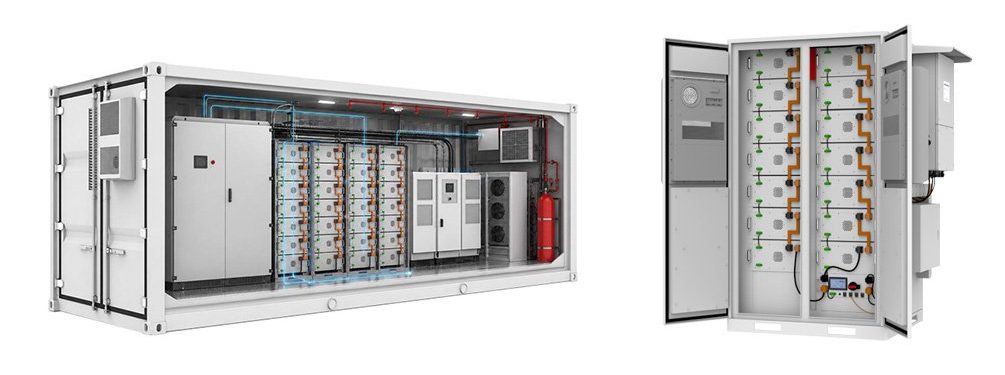
An energy storage cabinet is a compact enclosure integrating battery modules and the equipment needed to operate and maintain the storage system. Depending on the design factors, this can include LFP batteries, BMS, PCS or inverter, EMS, cooling, electrical protection, fire protection, as well as monitoring.
HBOWA’s current cabinet range includes integrated configurations with battery storage, PCS or inverter, BMS, EMS, cooling, and fire protection. Their listed cabinet configurations include 20 kW to 150 kW+ and 50 kWh to 418 kWh per cabinet. Remember: these numbers describe one supplier’s product range, and they are not survey or industry-wide definitions.
By contrast, a BESS container uses a containerised enclosure to integrate battery equipment and the supporting electrical and control system for larger central installations. This format can simplify packaging higher-capacity systems, but it also brings more transportation, site access, placement, foundations and clearances, installation planning, and crane or other lifting services.
| Factor | Energy Storage Cabinet | BESS Container |
|---|---|---|
| Physical format | Compact enclosure | Containerized enclosure |
| Typical use | C&I and distributed storage | Larger C&I and MWh-scale projects |
| Expansion | Often modular | Usually planned around larger system blocks |
| Site needs | Generally smaller footprint | More space and logistics planning |
| Deployment | Flexible for distributed sites | Suited to centralized installations |
| Capacity | Broad range | Often larger overall systems |
| Main decision | Load, power, capacity and site | Scale, power, capacity and infrastructure |
So the difference is in architecture and not battery size alone. A project’s electrical needs should determine what battery energy storage system will be used instead of a random cutoff capacity.
Start With the Load: Why kW, kWh and Duration Matter
Separating rated power from the battery capacity is important before choosing an energy storage cabinet or BESS container. The kilowatt (kW) is a unit that shows how much power a system can deliver or absorb at a given time. The energy storage of the battery is measured in kWh. The two are linked by this.
For instance, 240 kWh of usable energy at 80 kW will take around three hours to discharge, according to theory. The true length of time may differ, given efficiency, starting charge, temperature, limits, and configuration.
This difference is relevant in C&I applications. Power requirements differ for peak shaving and backup power. Peak shaving requires high power for a short period, while backup power requires a lower power rating for a longer period. The energy generated, stored, and used plays an important role in solar self-consumption and load shifting.
HBOWA’s peak shaving advice optimizes system power and battery capacity by taking into account peak demand, normal load, peak duration, tariff data, and project goal. Just like in an architecture comparison, the required kW, usable kWh, and duration must be established before choosing the enclosure.
When an Energy Storage Cabinet Makes More Sense
When the design requires a relatively compact and modular storage architecture, an energy storage cabinet can be a reasonable option. This can be applied to factories, hotels, retail facilities, cafes, commercial buildings, or any sites where available space, ease of installation, and expansion(phase-by-phase) are important.
Cabinets can also be suitable for application-specific commercial energy-storage systems, including solar self-consumption, peak shaving, backup power, EV charging support, and microgrid applications. It is essential to understand that “commercial” does not automatically mean “container”. The architecture should follow the electrical requirements and operating conditions of the site.
A HBOWA project in Vietnam gives a good non-fiction example. In this cafe installation, there is an 80 kW Deye inverter with 241 kWh of battery storage. The project is able to support the loads, including cooling and refrigeration, lighting, coffee equipment, and payment systems. The 241 kWh battery storage cabinet project specifically identifies HBOWA’s project portfolio.
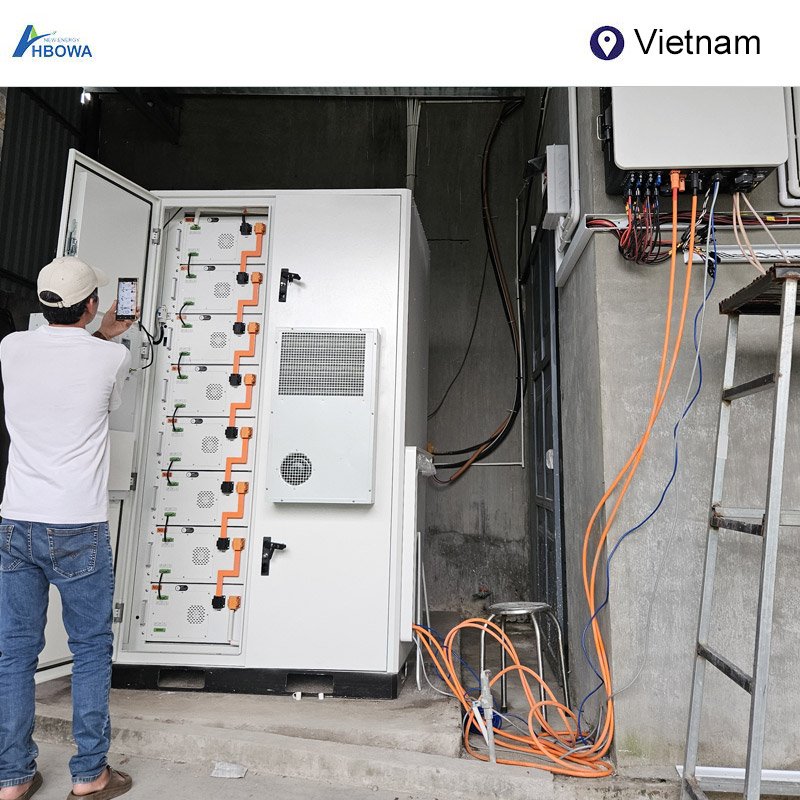
This example demonstrates that cabinet selection should not be based on the premise that commercial sites require large containerized systems. A modular battery storage cabinet can be suitable for a facility, provided its power, energy, controls, installation requirements, and operating profile are compatible.
When a BESS Container Makes More Sense
Larger projects with centralized storage needs may find it more practical to use a container-based BESS than deploying separate cabinets. A containerized BESS packages batteries and ancillary equipment into a larger enclosure. This arrangement can reduce system complexity when the project requires significant energy capacity or a single operating point.
The trade-off involves greater site planning. Prior to installation, we must consider delivery routes and lifting equipment, as well as foundations and clearances, cable runs, service access, ventilation or cooling, and fire-safety provisions. These requirements can be significant for industrial energy storage locations, especially in cases with limited access or when the system is added to an operating facility.
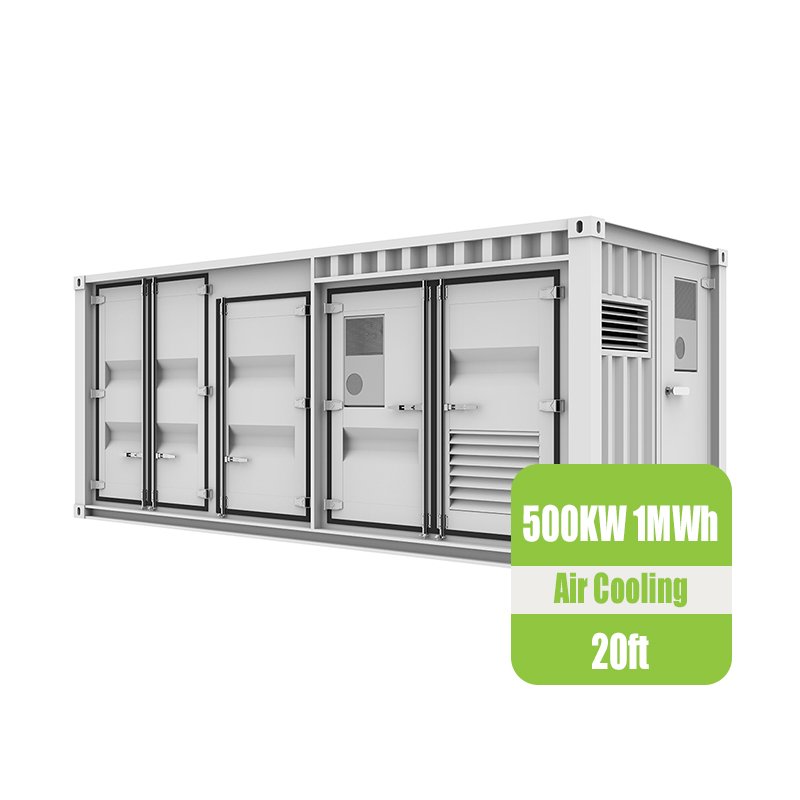
An illustration of this use case relies on a HBOWA project in Ukraine. A 1 MWh BESS container for C&I peak shaving and backup power has been documented by the firm. The system is configured and commissioned prior to delivery to minimise on-site work. This is just an example and not a rule that 1 MWh needs a container. The suitable architecture relies on the load, site, operating strategy, and local conditions of a project.
The 500 kWh–1 MWh Decision: Why Capacity Alone Is Not Enough
The 500 kWh to 1 MWh range is a useful gray zone because battery capacity alone does not determine whether an energy storage cabinet or BESS container is more suitable. While the kWh requirements may be similar, the power demand, operation mode, site conditions, and storage objective of the project can be different.
A factory with short demand spikes may run at a higher output of PCS for limited periods. A commercial facility that has continuous evening demand is likely to place a premium on usable energy and longer discharge duration. The two projects will probably require a comparable amount of storage and different system designs.
Solar self-consumption introduces one more variable. If the generation of PV is concentrated during the day but the demand of the facility is extended into the night, the battery sizing needs to be based on the timing of generation and consumption, not merely connected capacity. The design can also be affected by export limits and the desired operating period.
Off-grid projects need a yet broader assessment. A project has been planned by HBOWA in Togo to combine 300 kW of PV with 400 kWh of battery storage. The storage configuration is influenced by PV production, load demand, operating hours, and required energy availability in the absence of a grid source.
The takeaway is quite simple: 500 kWh, 800 kWh, or 1 MWh should be avoided in future automatic cabinet or container cut-offs. The project’s scale can be determined by its capacity, while the application and operational requirements define what the storage system must do.
7 Factors to Check Before Choosing Cabinet or Container BESS
After determining the project’s objective, assess the following before choosing a battery energy storage system architecture.
1. Usable energy and duration. The usable energy isn’t the same as nominal battery capacity. Determine how much energy the system needs to deliver over what duration and within what state-of-charge range.
2. Rated power. Evaluate the total maximum power the system must deliver or absorb. Assess peak demand, peak duration, PCS rating, and short-time surges due to motors or other inductive loads. Sufficient kWh does not guarantee sufficient kW.
3. Load profile. Utilize demand data that is interval-based or by the hour, where applicable. The average value can conceal peaks that dictate the PCS requirements. To peak shaving, find the threshold and duration. Determine the critical loads for backup. For self-consumption of solar energy, PV generation is compared with facility demand and export limits.
4. Application. Align the system with its intended operating goal, including peak shaving, demand-charge reduction, load shifting, solar self-consumption, backup power, off-grid, microgrid, and EV charging. The battery cycling and the availability of energy depend on the application in question.
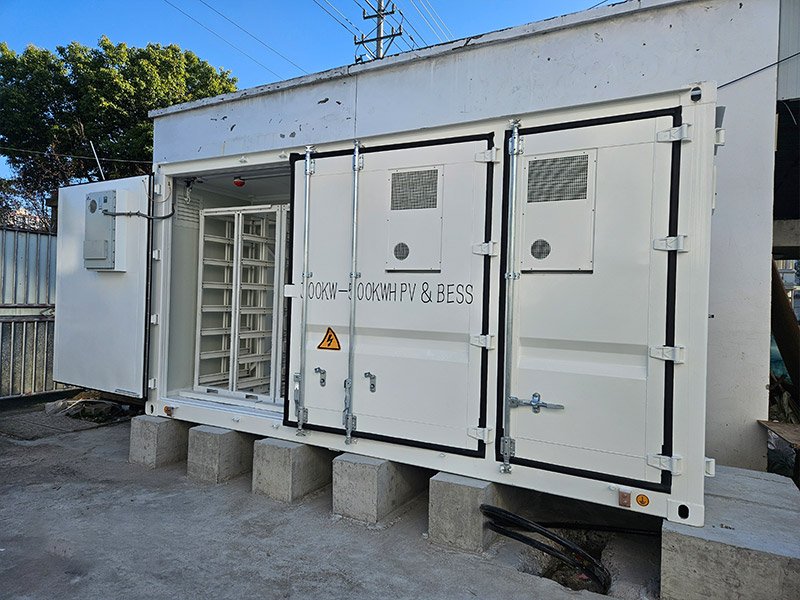
5. Site conditions. It is essential to check the available footprint, indoor/outdoor installation, delivery access, lifting requirements, foundations, cable distances, environmental conditions, clearances, and maintenance access. These considerations will define whether a modular cabinet or a centralized containerized design is preferred.
6. Cooling and safety. An enclosure type doesn’t determine cooling parameters, which should be based on battery density, ambient conditions, operating profile, and system design. Examine the BMS, thermal management, fire detection and suppression, and electrical protection. For U.S. projects, NFPA 855 and UL 9540A may be applicable; applicable requirements vary by jurisdiction.
7. Expansion and lifecycle needs. Keep in mind load growth, further photovoltaics, battery expansion, replacement strategy, equipment compatibility, serviceability, and expected operating life. A modular design could facilitate staged growth, while a centralized configuration may be more appropriate for a larger fixed installation.
These checks provide the engineering basis for comparing an energy storage cabinet vs. a BESS container without allowing the enclosure to drive the design prematurely.
Cabinet vs BESS Container: Compare Total System Complexity, Not Just Battery Cost
Cost comparisons of BESS projects based only on battery dollars per kWh can obscure important costs. A meaningful comparison must consider the battery, PCS, EMS, transformer and switchgear, cabling, cooling, fire protection, transport, lifting, civil works, installation, commissioning, maintenance, and expansion.
As capacity grows, a cabinet strategy may need different units. A phased deployment may be assisted by that; however, involved interconnections, communications, and maintenance may increase. A containerized system can package a larger system for a centralized installation, but transport, foundations, site preparation, and handling can be more difficult.
It is thus the lifecycle cost rather than an equipment-price which dictates the better choice. The economics. Each architecture can change as a result of the project location, labor rates, infrastructure, installation conditions, operating profile, and expansion plans.
For a C&I buyer, the pertinent question is which system delivers the required service with manageable installation and operating complexity, not which enclosure has the lowest initial $/kWh.
Real C&I Examples: Why the Same kWh Can Lead to Different System Designs
Real projects show why battery capacity should not be used as the only architecture test. HBOWA’s documented C&I portfolio includes several configurations across the cabinet-to-container range.
A Romanian hotel uses 100 kW/200 kWh for PV self-consumption, peak shaving, and backup. A Polish factory uses 50 kW/301 kWh for peak shaving, load shifting, and solar self-use. A Vietnam café uses an 80 kW inverter with 241 kWh of storage. The portfolio also lists a 200 kW/576 kWh Malaysia project and a 1 MWh BESS container in Ukraine.
Actual projects illustrate why battery capacity should not be the only test of architecture. The documented C&I portfolio from HBOWA contains various configurations ranging from cabinet to container fitting. A hotel in Romania is using 100 kW/200 kWh for PV self-consumption, peak shaving, and backup. A Polish manufacturer utilizes 50 kW/301 kWh for peak shaving, load shifting, and solar self-use. A café in Vietnam utilizes an inverter of 80 kW and storage of 241 kWh. The portfolio includes a Malaysian project of 200 kW/576 kWh and a 1 MWh BESS container project in Ukraine.
| Project | Configuration | Application | Design lesson |
|---|---|---|---|
| Romania hotel | 100 kW / 200 kWh | PV self-consumption, peak shaving, backup | Power and energy work together |
| Poland factory | 50 kW / 301 kWh | Peak shaving, load shifting | Duration can matter more than power |
| Vietnam café | 80 kW / 241 kWh | Commercial loads | Cabinet storage can serve C&I sites |
| Togo | 300 kW PV / 400 kWh | Off-grid | PV and load shape storage needs |
| Malaysia | 200 kW / 576 kWh | Peak shaving | Mid-range projects need case-by-case evaluation |
| Ukraine | 1 MWh BESS container | Peak shaving, backup | Containerization can suit larger centralized systems |
The Togo project demonstrates why off-grid energy storage must follow different sizing logic than grid-connected systems. The above case studies provide us with one useful message: first choose the electrical and operational requirements, then choose the enclosure.
Common Mistakes When Choosing Cabinet vs BESS Container
Quick Decision Matrix: Cabinet or BESS Container?
There is no specific kWh limit for deciding between cabinet and container BESS. Carry out the preliminary screening through the use of this matrix, and validate the choice through electrical design, site assessment, and any applicable local requirements.
| Project condition | Architecture to evaluate first | Reason |
|---|---|---|
| Limited space or difficult container access | Energy storage cabinet | Modular equipment may be easier to place and install. |
| Phased capacity growth | Energy storage cabinet | Multiple units can support modular expansion where the electrical design allows it. |
| Distributed commercial loads | Energy storage cabinet | Smaller or modular units may better fit dispersed loads and available space. |
| 500 kWh–1 MWh requirement | Evaluate both | Power, duration, application, and site conditions can lead to different designs. |
| Large centralized storage requirement | BESS container | A centralized enclosure can simplify integration as system scale increases. |
| MWh-scale deployment | BESS container | Containerized architecture becomes more relevant for substantial centralized storage. |
| Off-grid project | Evaluate from PV and load data | PV production, load profile, and required autonomy should drive the design. |
Which is better, an energy storage cabinet or BESS container? There is no overall better option. The suitable architecture is consistent with the power of the project, usable energy, duration, applications, site, safety, expansion, and lifecycle.
Final Thoughts
The ideal storage architecture for C&I isn’t merely the smallest cabinet or biggest container. Begin with the load profile, amount of power required, usable energy, application, site conditions, and future requirements. HBOWA can aid in energy storage cabinets, BESS containers, and battery energy storage system configurations for site project requirements.
Frequently Asked Questions
No. A battery energy storage system can consist of either one, although they have different physical architectures. A cabinet is a compact, modular enclosure, while a containerized system packages larger storage assemblies into a transportable enclosure. It impacts installation, scaling, logistics, and integration.
No, not automatically. A containerized BESS can be appealing when storage needs, equipment integration, and centralized deployment rise. In addition, the final choice must consider the power that will be required, as well as site access.
Certainly, in a few projects. A larger C&I BESS can be designed utilizing multiple cabinets, where electrical interconnection, communications, controls, protection, cooling, maintenance access, and equipment compatibility are considered. You should assess the whole installation as a system.
Both are important. Battery capacity tells how much energy can be stored, while rated power tells at what rate the system can charge/discharge within the operating limits. The necessary discharge duration links the two and should fit the load profile present at the site.
Begin with the application and load profile. Subsequently, ascertain the required kW, usable kWh, discharge duration, site limitations, cooling and safety specifications, plans for expansion, and total complexity of the system. The electrical needs of the project are prioritized before choosing the enclosure.

