
Introduction
There’s much more to shipping solar panels than taking them from the factory to the buyer. The process involves palletization, container loading, selection of freight, customs clearance, landed-cost planning, delivery, and receiving inspection.
How Does Solar Panel Shipping Work?
Solar panel shipping involves seven main stages:
| Shipping stage | What happens |
|---|---|
| 1. Factory preparation | Confirm: -Exact module(model and brand/manufacturer) -Quantity -Packing Specifications |
| 2. Palletization | -Pack and secure(according to manufacturer/brand’s requirements) |
| 3. Container loading | According to: -Load pallets approved plan -Container limits -Cargo dimensions |
| 4. International transport | -Move the shipment by the agreed freight method and route. |
| 5. Customs clearance | -Process export and import documents and applicable duties or taxes. |
| 6. Final delivery | -Transport the cleared cargo to the buyer’s warehouse/project site. |
| 7. Receiving inspection | Check: -Quantities -Packaging -Visible damage -Shipment records |
This procedure is also referred to as solar panel logistics or solar panel transport. When it comes to bulk orders, the pallet is generally the planning unit.
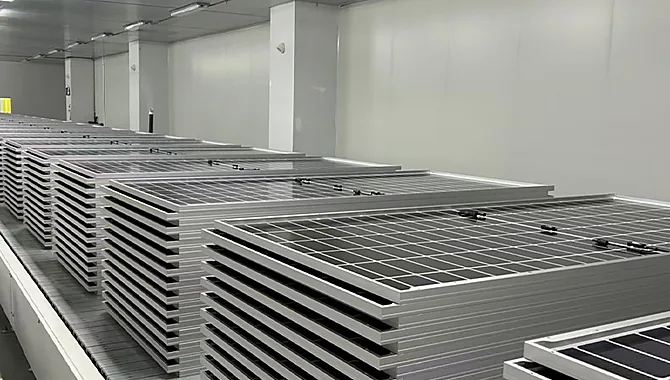
What do solar panels need for shipping?
The shipping method of a solar panel cannot be determined by its wattage alone. The shipping requirements of each solar panel depend on a module’s dimension, weight, thickness, glass configuration, panels per pallet, pallet dimensions, gross pallet weight, total order quantity, container type, loading configuration, destination, and handling condition.
How many modules will be grouped together and how efficiently the cargo will be loaded are based on these variables. HBOWA’s current portfolio reveals the risks of generic estimates. The 450W range features models containing 31, 35, 36, and 37 modules per pallet, varying with the manufacturer/model. A pallet contains 36 modules in the listed Longi 450W configuration. In comparison, the Risen 450W configuration contains 31 modules.
Before arranging bulk solar panel shipping, buyers must confirm the current packing specifications, pallet dimensions, gross weight of the exact model. As a result, freight providers are able to quote the shipment on the right physical dimensions.
How Are Solar Panels Packaged for Shipping?
The packaging of solar panels is as important as the solar panels themselves. Packaging by the factory comprises cartons, separators, corner protection, protective material, pallet frame, strapping. It entirely depends on the module and manufacturer.
The International Plant Protection Convention’s standard (ISPM) 15 applies to wood packaging material like pallets, crates, and dunnage serves and adopted the build of phytosanitary by many countries to minimize or eliminate the danger of spreading pests under consideration for quarantine. It does, however, not clearly indicate the situation of a solar shipment. For solar panel packaging, the right course is to ensure the manufacturer’s packing specifications, the status of treatment (where necessary), and the government rules of the destination before shipment. Thus, the solar panel pallet turns into a portion of the logistics plan, not simply a unit to store or handle in warehouses. This tightening of the shipment’s watch is to happen before the cargo is packed or booked.
How Many Solar Panels Fit on a Pallet?
There is no universal number of solar panels per pallet. The best number or capacity will depend on solar module dimensions, thickness, weight, pallet design, packaging, manufacturer, and handling requirements. It is easier to see with a real listing, so let’s take the example of current HBOWA listings.
HBOWA’s 450W range features a pallet of 36 Longi modules, 31 Risen modules, 35 Canadian Solar modules, and 36 JA Solar modules. These figures represent special product packs and not an industry trend. The practical rule is that one should ask the supplier’s latest packing list rather than a generic panel count.
How Many Solar Panels Fit in a 40HQ Container?
There is no universal number of solar panels that fit in a 40HQ container because the quantity depends on several factors and specs that can be calculated as follows:
Container panel quantity = pallets loaded × panels per pallet
Total module capacity = number of modules × module wattage
This calculation can be considered a planning reference and not a direct booking guarantee. The pallet size used, pallet height, the container’s maximum weight, payload capacity, specifications, and dimensions can be factors in changes to the actual capacity. The variation in the product packaging, mixed product loading, internal dimensions, orientation of loading, and handling allowance affects the final count.
For HBOWA’s current product data, the Longi 540-560W LR5-72HBD is mentioned in the list to carry 720 modules for a 40HQ container. The 700W modules have been listed as being able to carry 594 modules per 40HQ with various brands such as Trina and Canadian Solar. However, these are stated as module counts with the exact product and packing configurations and not for all panel manufacturers under that wattage.
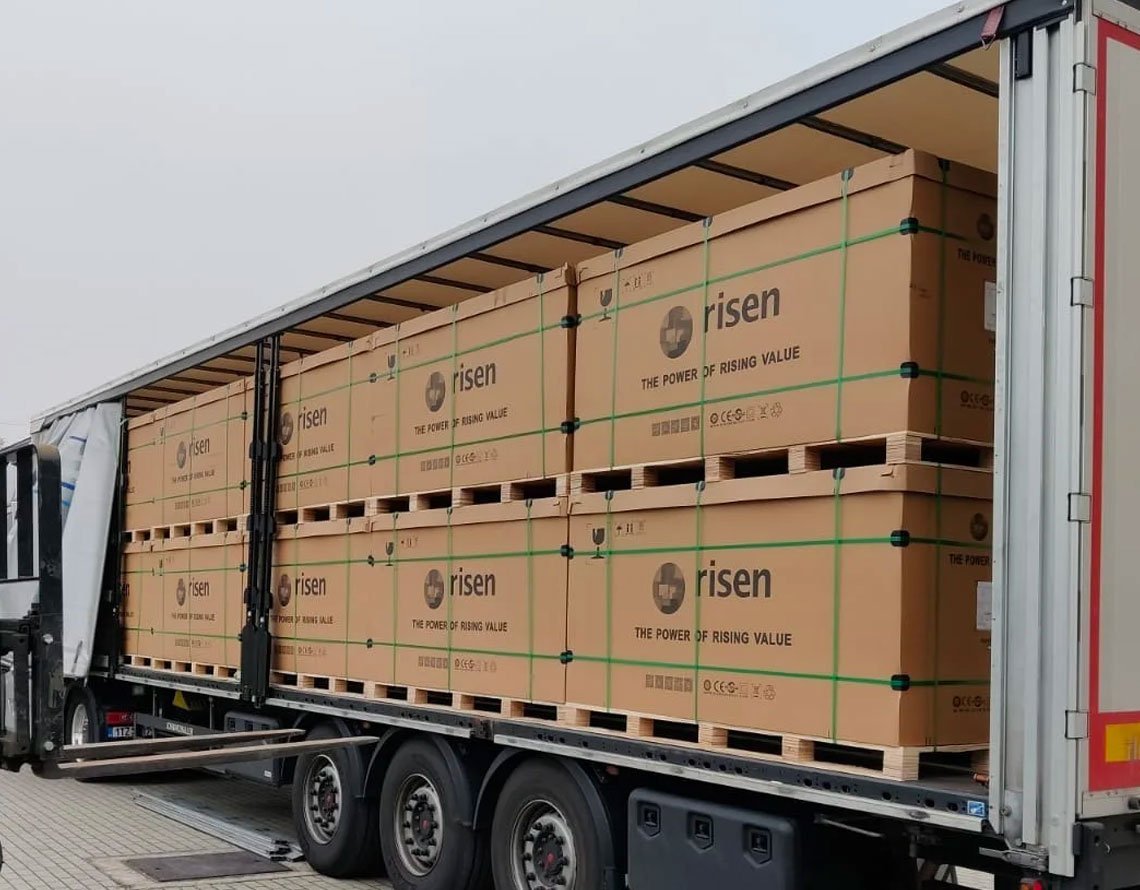
For solar panel shipping buyer’s book freight volume, 40HQ panel count can be mistaken. In case of a change in the model’s loading mix in one shipment, or for differing product packaging, it is requested to verify the panel count, model number, shipping size, weight, and approved loading plan before making any freight booking at all.
Solar Panels by Pallet vs LCL vs Full-Container Shipping
It’s dependent on the order size and destination, whether any special handling is required, and how urgently the buyer needs the modules. Buying solar panels by the pallet can benefit small wholesale buyers or first-time product testers. Having a number of pallets gives buyers the flexibility to take a number of models or quantities to fill a container.
You should consider LCL when your freight does not justify a full container load. It brings together goods from different suppliers, which may add handling stages and coordination. Full-container-load freight, or FCL, is apt if the order can make full use of a container.
Thus, the choice should be made on total logistics requirements and not on freight mode only. For bulk solar panel shipping, compare usable cargo capacity, handling process, delivery terms, and delivered cost. Transporting smaller shipments can benefit from pallet or LCL flexibility, while FCL becomes more convenient for larger shipments. The selection must correspond to what the supplier packs and what the destination receives.
How Much Does Solar Panel Shipping Cost?
There is no universal solar panel shipping cost or a fixed price per container. Pricing of freight will depend on the following factors: origin, destination, volume of shipment, mode of transport, rates of the carrier market, Incoterm condition, insurance, customs and duty charges, and local delivery charges. The freight structures for a Shanghai-to-Europe shipment and a China-to-US shipment could be quite different, so route-specific prices should always be dated and tied to shipment terms.
For comparison, as a layman, you should start with:
Total landed cost = product cost + origin charges + freight + insurance + duties/taxes + customs + destination charges + final delivery.
An illustrative 40HQ shipment containing 720 panels of 615W can be used as an example. The modules coming in the shipment have a capacity of 442.8 kW. For the sake of this analysis, assume a representative $61.50 per panel solely for this calculation. This isn’t a current product price or market quotation.
| Cost component | Illustrative cost |
|---|---|
| Solar panels: 720 × $61.50 | $44,280 |
| Origin charges | $800 |
| International freight | $3,500 |
| Cargo insurance | $300 |
| Customs and duties | $2,000 |
| Destination charges | $1,200 |
| Final delivery | $900 |
| Total landed cost | $52,980 |
The resulting landed cost is:
Landed cost per watt = $52,980 ÷ 442,800W = $0.12/W
This example is for illustrative purposes only.
Solar Panel Shipping Documents, Customs, and Incoterms
International solar panel shipping documents are contingent upon the trade terms, mode of transportation, product, country of origin, and destination of the product. Common documents used are a commercial invoice, packing list, bill of lading or other mode of transportation, certificate of origin (if required), customs documentation, mandates for the product, and lastly, insurance records. If wooden packaging has been used or has other regulated packaging, they may also require documentation.
After Incoterms® 2020, it becomes less ambiguous about which party is responsible for delivering the product, which insurance has to be done, which import duty will be paid by whom, and related queries are resolved.
| Incoterm | Main shipping responsibility |
|---|---|
| EXW | -Buyer handles most transport from the seller’s premises. |
| FOB | -Seller delivers the goods on board at the named port. |
| CIF | -Seller arranges cost -Insurance -Freight to the named port. |
| DAP | -Seller delivers to the named destination -Buyer handles import clearance. |
| DDP | -Seller assumes the broadest delivery obligations -Import clearance(Including) |
The rules in Incoterms® 2020 do not replace the sales contract document. You can see the official IPPC ISPM 15 document to check the packaging requirements for wood. Do not forget to check the ICC Incoterms® 2020 regarding the product to be delivered and the parties’ responsibilities as well.
What Should Buyers Check When Solar Panels Arrive?
When the solar panels arrive, receiving has to start before unloading. The container or truck shall be photographed. The seal number should be recorded, and if any external visible damage is found, it shall be documented. After the unloading begins, inspection of the pallets has to be carried out, looking for broken packaging, shifting, impact marks, or any clue that they are mishandled.
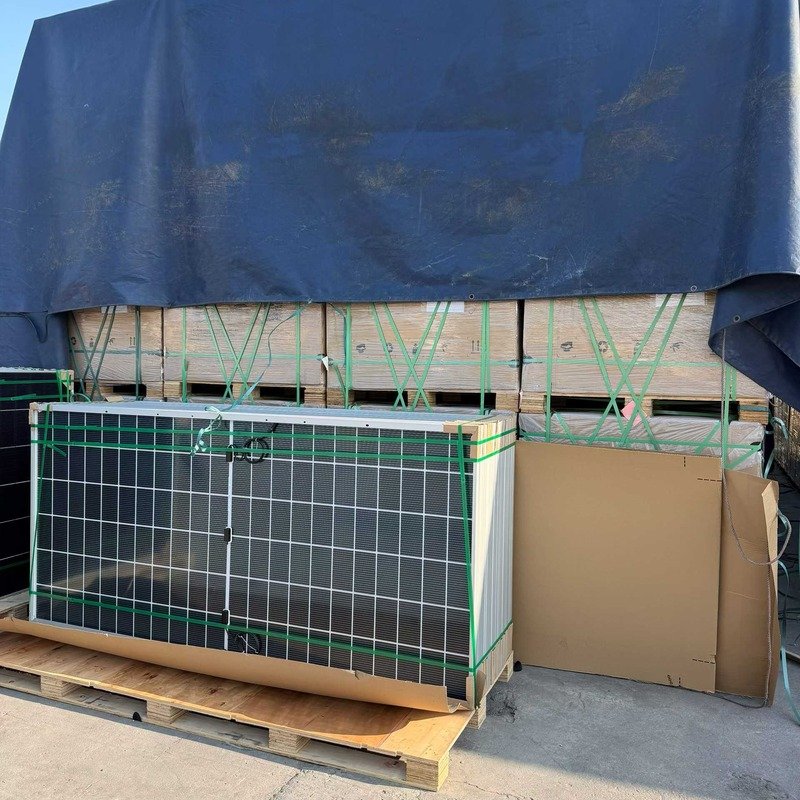
After unpacking, it should be compared with the received quantity, and the modules should be inspected for visible damage to the glass, frame, junction box, connectors, and recorded serial numbers whenever it’s part of the project or warranty process. The photos and packaging of the modules (if any damage is found) should not be disposed of.
If the modules are damaged, the status of the original conditions shall have to be documented before the moved module is affected. The responsible supply chain (according to the shipment terms) of the supplier, carrier, insurer, or any responsible person has to be informed about the damage immediately and follow their guidelines and procedures.
This completes one major final step regarding the transportation of the Solar module. This also makes inventory reconciliation and supplier communication easier for the distributors and Project buyers.
Does Solar Panel Brand or Technology Affect Shipping?
Shipping requirements for different brands have nothing to do with the module. Longi solar panels, JA Solar panels, Trina solar panels, etc., are different in dimensions, weight, frame design, glass build, and manner of factory packing. The same holds for TOPCon solar panels, HJT solar panels, BC, monofacial modules, or glass-glass solar panels. Consequently, there is no similarity in the way we ship or transport solar panels, irrespective of the cell technology or brand.
Therefore, we have to compare the module datasheet with the current packing specification of the type of solar panel we are dealing with rather than assume that panels of the same wattage or cell technology will fit on the same pallet or container.
Solar Panel Shipping Checklist for Bulk Buyers
Before requesting a solar panel shipping quote, confirm the exact module model, order quantity, module dimensions and weight, panels per pallet, pallet dimensions, gross pallet weight, container type, and the expected number of panels per container. Also state the origin, destination, preferred shipping terms, and the agreed Incoterm. Clarify whether the quoted rate includes insurance, customs clearance, and destination handling.
The buyer should also define the inspection and acceptance arrangements before bulk solar panel delivery. Sharing complete physical and commercial shipment data allows the forwarder to assess cargo space, handling requirements, transport options, and the scope of the quotation more accurately.
Conclusion
Effective solar panel shipping starts with accurate product and logistics data. It is important to consider the exact module, the configuration of the pallets and the containers, the loading of the cargo, the mode of freight and Incoterms, final destination costs available at hand, and not rely on panel count and generic freight estimates to visualize bulk solar panel shipments and deliveries.
Frequently Asked Questions
One cannot provide an exact solar panel shipping cost. It all depends on the origin, the destination, the volume of the shipment, the mode of freight, the rates of the carriers, the Incoterm, the insurance, the customs, and the local delivery charges. The buyers need to compare the complete landed cost rather than judging the shipments based on the international freight charge only.
Provide the exact module model and quantity, the panels per pallet, the pallet dimensions and gross weight, the pallet material, the delivery destination, the preferred container type, and the agreed Incoterm. If you share the packing specification and the required delivery window, the forwarder can confirm cargo space, handling requirements, and routing options.
Yes, solar panels are shipped internationally, but requirements vary with the different origins and destinations. Before dispatching, the buyers must confirm with the customs procedures of the origin and destination countries, import necessities, transport documents, packaging necessities, duties and taxes if applied, and the incoterms chosen, and also what the responsibilities are clearly mentioned to avoid international disputes.
Generally, FOB relates to sea or Inland waterway transportation and changes responsibility for delivery when goods are loaded on board the ship. CIF includes the cost of insurance and freight to the named port. DAP means the seller delivers the goods to the named destination, while DDP adds broader delivery obligations for the seller, including import clearance.
If the pallet measurements, loads, packaging, handling necessities, and stacking arrangement are compatible with different solar panel brands or wattages, they can be sent together. The load plan must be confirmed by the supplier or logistics provider. It will be more significant if different sizes of modules require a different type of pallet arrangement or if there are weight distribution issues.
The authenticity of the seal and the consignment condition, the condition of the pallets, the packaging condition, the visible condition of the modules, the quantity received, and the accompanying documents should be verified upon completion of the act of receiving. The photographs and records should be retained in case of any discrepancies. The supplier, the carrier, or the insurance agent, in case of any damage or shortage of the products, should be notified at the earliest.