Formula: W = Wh ÷ Hours
A watt-hours to watts calculator takes an amount of total energy (watt-hours, Wh) and provides the equivalent wattage (in watts, W) to use that power. It also takes into account the time that energy is used to generate the output. Moreover, we can understand battery discharge rates, system loads, and actual power requirements thanks to this conversion. Solar engineers, system designers and homeowners use this converter to convert watt-hours to watts for accurate design of systems. The calculation requires two inputs, energy (Wh) and time (hours) and returns the average power output (W) to help users convert stored energy into usable power.
Formula & Variable Definitions

It is implied in this relationship that power depends on the rate of energy usage over time. The total energy available is represented in watt-hours (Wh), where available energy is the first definition and time (hours) is defined through it. The energy divided by time gives the watts or W, which indicates how power is used.
The same energy can produce a different amount of power, depending on how fast it is used in practical terms, because when the energy is used for a shorter duration, the wattage will be higher. If the duration is longer, the wattage decreases. This is why the wh to watts formula is vital in system design, as it connects stored energy to actual load demand.
This calculation assumes an unchanging energy discharge over time. Although this is appropriate for estimation and planning, actual systems may deviate when their load varies with operating conditions.
Example Calculation
A 48V 5kWh HBOWA LiFePO4 battery in a remote communication setup is used to power equipment at a worksite, and it provides 3600-watt hours of usable energy is available over a period of 9 hours/day, which was sufficient.
To calculate the average power out:
3600 / 9 = 400 W
This indicates that the device operates with a 400-watt load on average.
From a practical perspective, this value is required for the sizing of an inverter and for verifying the load. Use of equipment greater than 400 watts will give shorter runtime than expected. If the load is less, the system can be used for more time on the other side.
This same 3600 Wh battery could be put to use for over six hours instead:
3600 / 6 = 600 W
It shows that less runtime draws more power. When planning battery discharge rates, this type of conversion from wh to watts serves a critical role to ensure safe and efficient operation of systems.
When to Use This Calculator
This calculator is useful for when you want to convert stored energy into power output. Energy capacity does not tell us how quickly that energy can be used, so decisions in real-life are rarely based on watt-hours, but the watt-hours to watts calculation helps users identify load capacity and make more informed system-level decisions.
| Step | Action / Formula | Example Calculation |
|---|---|---|
| 01 | Basic Division Wh ÷ h = W | 3,600 Wh ÷ 9 h = 400 W average load |
| 02 | Apply Efficiency Factor (e.g., 88% Inverter loss) | 3,600 ÷ 0.88 ≈ 4,091 Wh storage needed |
| 03 | Average W Confirmed Final system sizing value | Used for inverter & battery selection |
| Inverter Compatibility Check | |
|---|---|
✓ System is Compatible Inverter rated W ≥ calculated W | ✗ Inverter Undersized Inverter rated W < calculated W |
Common Use Cases:
| |
| Key Insight: Inverters are rated in Watts (W) — not Watt-hours (Wh). Always convert Wh to W before selecting an inverter. | |
This eventually converts the battery power consumption during non-generation hours for a solar energy system. For instance, if the solar energy being stored is for nighttime loads, we can convert watt-hours to watts so that there is no shortage.
This calculation is a key factor in battery-based (off-grid / backup) systems for discharge rates. To make sure batteries can deliver enough power without going beyond the design limits, engineers use conversion calculations from watt-hours to watts.
An inverter was to be selected to assess the feasibility further. As inverters are rated in watts, users must convert battery energy to power output to check compatibility. If you miss this step, then the systems could be incorrectly sized.
In home use, it indicates how long the energy can run the appliances. If watt-hours are converted into watts, users will have a better understanding of actual consumption as well as what the system is capable of supplying.
Reference Table (Typical Values)
The table below shows practical examples of how energy converts into power given different times of operation. The practical operation of the system is reflected in these values as a function of time.
| Watt-hours (Wh) | Time (h) | Watts (W) |
| 300 | 3 | 100 |
| 600 | 6 | 100 |
| 1200 | 4 | 300 |
| 2400 | 6 | 400 |
| 3600 | 9 | 400 |
| 5000 | 10 | 500 |
| 7200 | 12 | 600 |
| 9000 | 6 | 1500 |
| 10000 | 5 | 2000 |
| 15000 | 10 | 1500 |
| Capacity & Time (Wh ÷ h) | Power Output Scale | Output (W) |
|---|---|---|
| 300 Wh ÷ 3 h | 100 W | |
| 600 Wh ÷ 6 h | 100 W | |
| 1,200 Wh ÷ 4 h | 300 W | |
| 2,400 Wh ÷ 6 h | 400 W | |
| 3,600 Wh ÷ 9 h | 400 W | |
| 5,000 Wh ÷ 10 h | 500 W | |
| 7,200 Wh ÷ 12 h | 600 W | |
| 9,000 Wh ÷ 6 h | 1,500 W | |
| 10,000 Wh ÷ 5 h | 2,000 W | |
| 15,000 Wh ÷ 10 h | 1,500 W | |
| Key insight: 9,000 Wh over 6 h and 15,000 Wh over 10 h both produce 1,500 W — it is the ratio of energy to time that determines power. | ||
Power output rises with decreasing discharge time even if total energy is kept constant, as shown by the values. In practical application, the relationship is a critical balancing force between their storage character and the load. In particular, high-power systems must be carefully planned as lower run times increase power demand drastically.
Accuracy & Limitations
The calculator assumes that energy usage remains constant, which might not be the case in real operation. Many electrical systems have loads that are variable, which is when the power requirement changes due to their use or environmental effects.
Moreover, this calculation does not consider system inefficiencies. In real-world scenarios, energy losses include inverter conversion, battery charging and discharging cycles, and wiring resistance. Power losses can diminish the effective usable power output.
Discharge rates, aging, and temperature can affect the operational efficiency of the battery. For example, excessive discharge rates can limit the effective capacity of a battery, while lower temperatures limit its capabilities.
The conversion of watt-hours to watts offers a dependable baseline for designers. Consequently, most designers will add some safety margins to their design to ensure performance.
Case Study
A Hybrid Solar Solution Built using Pretapower components powers a small Off-Grid security and monitoring site based in Faro, Algarve, Portugal. The system shall be installed in a coastal area with limited grid access, so it cannot be too independent. It features an HBOWA LiFePO4 battery, a Growatt hybrid inverter, and Trina Solar planels are used for reliability because many sensitive devices need to operate continuously.
The monitoring site consumes 3600 watt-hours of energy each day for 24 hours/day because devices cannot turn off or experience any power-cuts.
Battery LiFePO4 High-cycle, stable chemistry | Inverter Growatt Hybrid — solar + battery | Solar Panels Tier 1 LONGi & Trina Solar | Runtime 24 h Continuous daily operation |
| STEP-BY-STEP CALCULATION | ||
|---|---|---|
| 1 Raw Wh to W conversion 3,600 Wh ÷ 24 h = 150 W average continuous load | ||
| 2 Apply system efficiency (88%) 3,600 ÷ 0.88 = 4,091 Wh actual daily storage required | ||
| 3 Size battery above 4,091 Wh Add safety margin → select LiFePO4 with headroom for degradation | ||
| 4 Size solar array for local irradiance Panels sized to Faro, Algarve solar conditions — recharge battery daily | ||
Choosing equipment requires an understanding of this value from a system design perspective. The inverter must operate efficiently at all times with continuous loads. Furthermore, the battery must collect enough power to ensure that there are no fluctuations at night, when solar produces nothing.
The overall efficiency of the application is taken as 88 percent, considering the efficiency of inverter, battery charge-discharge, as well as wiring losses.
The battery system, therefore, must supply at least 4091 watt-hours per day to avoid any interruption.
In southern Portugal, the sizes of the solar panels to be used are based on the local solar irradiance conditions so that the production is sufficient to recharge the battery every day and cater to daily loads. The Growatt inverter is used to manage the energy that goes to the panels, batteries, and loads throughout the day.
If the wh to watts isn’t accurately converted and real-world inefficiencies are not accounted for, the system may be undersized and lead to a shortage of power or shorter battery life. The case shows how energy-to-power calculations affect the system sizing, reliability, and performance in applications such as those in the Algarve..
Conclusion
This article describes the conversion between watt-hours to watts and how it is useful in indicating energy use. This calculation is useful in solar energy systems, battery storage design, and electrical design, where energy and power must be appropriately matched. Users can make decisions that increase the performance, reliability, and efficiency of a system successfully with a great understanding of this.
Solar Products for Your Project
 Solar Panels | 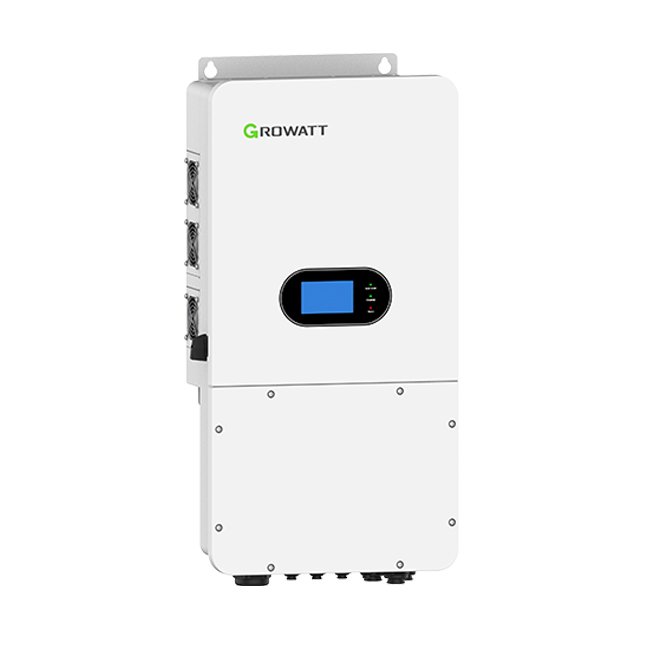 Solar Inverter |  C&I Battery Storage |