
Formula: Wh = W × Hours
A W to Wh calculator converts power in Watts (W) into energy in Watt-Hours. It needs to know how long a device lasts. It is critical for estimating energy consumption, battery capacity, and system run time. Solar engineers and backyard system designers use the tool to convert watts to watt-hours and accurately plan their projects. The Total Energy (Wh) calculator uses power (W) and time (hrs) as input and generates total energy as output. It is useful to understand the concept of “how much energy is actually used in the real world.”
Formula & Variable Definitions

The relationship between energy and power indicates that energy depends on the rate of use and duration of usage. The unit of power of an appliance (in watts) tells us how fast the appliance uses energy at any moment. Time (in hours) refers to how long the energy was consumed. When power and time are multiplied, watt-hours (Wh) are produced which measure how much energy has been accumulated over time.
Put simply, increased wattage means more energy is used in a given time frame, while a longer run time means there’s a larger energy consumption overall, even if the power is constant, so Wh(s) offer a more accurate view of real energy consumption than just watts. It is assumed that power is taken steadily throughout the period of operation. This is adequate for estimation and system planning, although the real load may vary slightly during operation.
Example Calculation
In a remote area of Portugal, a mobile workstation arrangement for a field engineering project and the system consists of a computing unit and peripherals whose combined power is 312 watts, and that equipment is operated continuously for 7.25 hours over a complete shift.
Multiply the power by the total working time to find the energy consumed:
312 x 7.25 = 2262 wh
The system has used 2262 watt-hours of energy during the shift, as seen from this result.
From a practical viewpoint, this value calculates the battery requirement. To illustrate, draw power from a portable battery rated at 2500 Wh, and you have enough to power the workload for one complete shift with little reserve. Nonetheless, engineers generally assume an extra margin for inefficiencies like inverter losses and battery decline.
This type of watts versus watt-hours conversion is important when designing portable systems so that the energy supply matches the customer’s operational needs without interruption.
When to Use This Calculator
When you want to convert power ratings to actual consumption over time, this calculator can be quite useful. In real systems, decisions are rarely made on the basis of watts alone, because power does not tell you how long something will work. Using a w to wh calculations enables an overview of total energy demand and helps in accurate system-level decisions

Converting this data in solar energy system is essential for estimating the daily energy requirement. As an example, determining watt-hours helps calculate the required solar generation per day if a system is required to operate continuous loads like lighting, refrigeration, or communications equipment. Failure to meet this step would result in undersized systems and energy shortages.
In systems, like off-grid setups or backup power solutions that use batteries, calculations are done in watt-hours to size storage. Engineers utilize watts to watt hours conversion to make sure that batteries can support the load for the required duration when there is a loss of generation or during outages.
The calculator is used to verify the load in electrical systems. When users are at the stage of adding more equipment, they can calculate the extra energy demand factors and see if the existing infrastructure can withstand the uptick. By doing this, overload conditions are avoided, and system reliability is improved.
In residential applications, it helps to estimate energy consumption over time of appliances. It helps people to understand electricity use, use it efficiently, and manage energy costs better.
Solar Products for Your Project
 Solar Panels | 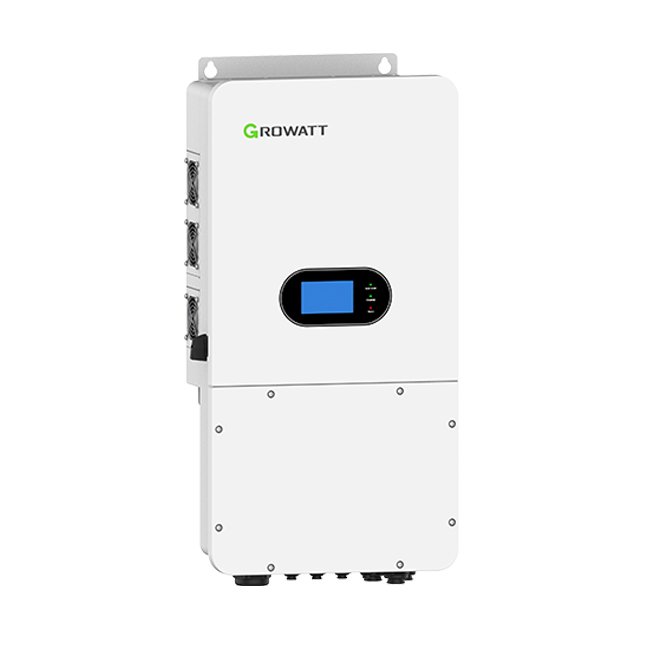 Solar Inverter |  C&I Battery Storage |
Reference Table (Typical Values)
The table below gives realistic examples of power used over various lengths of time. The parameters are representative of real operating conditions and inform users of how consumption increases with power and time.
| Power (W) | Time (h) | Energy (Wh) |
| 72 | 2.4 | 172.8 |
| 95 | 3.1 | 294.5 |
| 130 | 4.75 | 617.5 |
| 185 | 2.6 | 481 |
| 240 | 5.2 | 1248 |
| 310 | 3.8 | 1178 |
| 420 | 6.1 | 2562 |
| 560 | 2.9 | 1624 |
| 675 | 4.4 | 2970 |
| 820 | 3.3 | 2706 |
| 980 | 5.6 | 5488 |
| 1150 | 6.8 | 7820 |
| 1320 | 4.2 | 5544 |
| 1500 | 7.5 | 11250 |
Energy Consumption (Wh) by Power Level & Runtime
| Power Level & Runtime | Visual Scale (Energy) | Total Energy |
|---|---|---|
| 72 W × 2.4 h | 172.8 Wh | |
| 95 W × 3.1 h | 294.5 Wh | |
| 130 W × 4.75 h | 617.5 Wh | |
| 185 W × 2.6 h | 481.0 Wh | |
| 240 W × 5.2 h | 1,248 Wh | |
| 310 W × 3.8 h | 1,178 Wh | |
| 420 W × 6.1 h | 2,562 Wh | |
| 560 W × 2.9 h | 1,624 Wh | |
| 675 W × 4.4 h | 2,970 Wh | |
| 820 W × 3.3 h | 2,706 Wh | |
| 980 W × 5.6 h | 5,488 Wh | |
| 1,150 W × 6.8 h | 7,820 Wh | |
| 1,320 W × 4.2 h | 5,544 Wh | |
| 1,500 W × 7.5 h | 11,250 Wh | |
| Note: Visual bars are scaled relative to the maximum energy (11,250 Wh). Runtime is a critical multiplier—notice how 980 W for 5.6 h exceeds 1,320 W for 4.2 h. | ||
The energy consumed is directly proportional to the power and time or duration. In real-world applications, total energy demand can increase significantly as the operating hours of the high-power system go up. The necessity for precise w to wh calculations for system planning, load balancing, and capacity verification is detailed here.
Accuracy & Limitations
The calculator calculates that the appliance will consume constant power for the specified period, which may not be the case. Devices tend to have variable loads, which change the power consumption based on the operation cycle. Further, even the environmental conditions affect the operation of the devices.
The calculation also does not cover losses due to the system misbehaving, like inverter losses. Further, charge discharge inefficiency and wiring resistance. In real-world systems, these energy losses can reduce net output.
We can expect variable accuracy in temperature variations, aging components, and load types. Thus, although this watt-to-wh conversion is an excellent baseline, if you are designing the system, it should be adjusted for safety margin and efficiency.
Case Study
A remote monitoring station continuously operates with a constant load of 210 watts and is powered by a hybrid solar battery system provided by HBOWA and for that station, it is needed that the system works tirelessly 24 hours a day.
210 x 24 =5040wh
This implies the station needs 5040 watt-hours of energy per day.
For the smooth functioning of the station and the hybrid system, the engineer must consider their inefficiencies and malfunctions. The required energy generation, assuming an overall efficiency of 82% of the whole system, is about 6146 Wh/day.
The battery storage and solar array size are determined using this adjusted value. If this calculation is not done, the system could be undersized, resulting in a power outage and/ or not operating properly.
Conclusion
The w to wh conversion is very important to understand the actual energy your power would consume. As it combines power and time, the user can determine consumption accurately, size systems, and check the capacity of operation. Calculating the DC current and power of the PV array is very important. Comprehension about what watt-hours are can help users make wiser decisions to increase efficiency, reliability, performance, and much more.
More Calculators for You
Frequently Asked Questions
Power measured in watts shows how much energy is being used at a given instant, but on the other hand, the watt-hours (Wh) measure energy used over time, like a car’s odometer. A 100 W bulb that is used for 3 hour take 300 Wh of energy. It does not matter how bright it is.
In order to convert w to wh, you simply multiply the power in watts by the time in hours, and the formula is mentioned above, and the result indicates the total energy used during that period.
Calculating watt-hours is very important for battery sizing, solar system design and energy planning. Power engineers ensure systems match energy requirements to prevent overloads and shortages.