Introduction
Quick answer: DoD is the percentage of battery capacity that has already been used. A 10kWh battery that gives 6kWh to the load is working at 60% DoD. In solar storage, this number helps the owner know usable energy, backup time, and battery stress.
What’s the Depth of Discharge (DoD), and how is it significant in solar systems? Regardless of whether you’re running your home off a hybrid solar setup or dealing with a huge business. Understanding the significance of Depth of Discharge is essential to securing your batteries and augmenting their lifespan. The DoD of a battery characterizes how much energy has been taken from it in relation to its all-out limit. The DoD decides the performance, cost-effectiveness, and life span of a battery, and thus is crucial for different classes of batteries. This article clarifies the DoD, explaining its importance to different kinds of batteries, and genuine application solar energy frameworks in real life.
What Does Depth of Discharge Mean in Solar Energy Systems?
In solar energy systems, depth of discharge of battery refers to the amount of energy drawn from the battery with respect to its total capacity. Depth of discharge is measured in percentage and helps the users to determine the amount of battery capacity that has been used before recharging it. For instance, if a 10kWh battery has supplied 6kWh of energy, then the battery depth of discharge is 60%.

The standard depth of discharge formula is:
DoD (%) = (Energy discharged / Battery total capacity) x 100
The calculation of this formula of utmost significance in solar systems as with these systems, the batteries are charged with sunlight during the day and are discharged during the night without any charging, decreasing the charge which has been applied to the batteries exhausted. Higher the value comes from the depth of discharge calculation, more consumption of energy had been done, but it also wears the battery off.
Depth of charge battery is the opposite theory and is commonly referred to as State of Charge i.e., SoC. If a battery is at 40% of SoC, then it means 60% DoD. SoC and DoD both sum up to 100% no matter what the percentage values are.

In this way, users can have a better understanding of the consumption of batteries by Understanding the usage will lead to a better decision about how to maintain the batteries in the future, especially in systems where uptime and health is essential.
How Does DoD Affect Battery Life and Performance?
The DOD in battery applications pertains to a battery’s capability to provide effective charge over a specific period. Each time a battery undergoes discharge, it incurs wear and tear. The deeper the discharge, the fewer charge-discharge cycles the battery can undergo. This makes depth of discharge battery management a crucial aspect to consider in residential and commercial solar setups.
Accordingly, battery manufacturers assign a cycle life based on a specific battery depth of discharge. For instance, Lithium Iron Phosphate (LiFePO batteries can often render over 6,000 cycles at 50% DOD, but that number can plummet below 3,000 cycles when used at 90% DOD. The reason is that increased chemical stress occurs when a d.o.d battery is pushed till its minimum voltage.
Let’s take a real-world example, a business that harnesses 100% of its battery capacity every night will most possibly need to replace its storage system sooner than one using only 50% of its battery capacity each day. Even though the first setup provides more daily energy, the latter extends battery life and lowers replacement costs.
Different chemistries respond differently to discharge pattern. Lead-acid batteries undergo sharp cycle reductions beyond 50% DOD. LiFePO4 variants offer better feasibility, but it is always beneficial to follow moderate discharge strategies. This is why optimizing depth of discharge battery levels is not just a technical detail it is a financial decision that will affect the total cost of ownership.
Comparison: Depth of Discharge Across Battery Types
There are different varieties of battery types and every battery chemistry has certain limitations. There tolerances of each of these chemistry are different from others. This variation in the tolerance factor related directly to the efficiency of the system, providing scheduled maintenance and the scheduled replacements in the systems. All of the above factors are important to be known in respect to the selection of the type of storage and discharge of the system based on the solar system type used on a residential, commercial based.
The following table comparing DoD based on the battery type gives a clear comparison related to the depth of the discharge of the battery to something based on their type.
| Battery Type | Recommended DoD | Maximum DoD | Notes |
| Lead-Acid (Flooded) | 50% | 80% | – Excessive DoD shortens life quickly – Not ideal for daily cycling |
| AGM/Gel Lead-Acid | 50–60% | 80% | – Limited for deep cycles. |
| Lithium-ion (Li-ion) | 80% | 90% | – Good energy density – Sensitive to high temperatures |
| LiFePO₄ | 90% | 100% | – High cycle life at deep DoD – Ideal for solar applications |
| NiMH | 60% | 70% | – Lower efficiency – Higher self-discharge – Limit practical usage |
| Solid-State | 90% | 100% | – Still emerging – High DoD – Not commercial availability – High Cost |
The data provides a clear idea about the recommended and the maximum DoD. Among the DoD batteries, LiFePO₄ with providing up to 100%. DoD is significant in providing a regular performance without causing any substantial harm to the battery. The deep cycle tolerance makes it one of a unique type of DoD battery. Using DoD lithium battery for providing DoD solar structures are very useful for ensuring good performance at a regular rate.
Real-Life Applications of DoD in Residential Solar Systems
Real-life beneficial activities of DoD in residential solar systems By understanding the concept of DoD, we can optimally control usage and improve solar battery life.
A small example of using Depth of Discharge to our advantage in a typical home setup, suppose a 5kWh hybrid solar system with Lithium Iron Phosphate (LiFePO4) battery backup is installed at home. Depending on how much energy we use daily, we can use this battery to power lights, fans, Wi-Fi, refrigerator (small-sized) etc. for 3 to 9 hours. In both cases, we are effectively using only 20% of the battery’s stored energy per day.
The energy utilization of the battery (or battery performance) is directly proportional to how much of the battery’s stored energy we daily use. The higher, the better.
Suppose we utilize 90% of the battery’s energy daily, that is, recharge it to only 10% SoC after the sun goes down. Then we are utilizing maximum of the available energy. But this means we will have to change the battery earlier, say, after 4 years. This is because the battery has undergone 1600 to 1800 cycles of charging between 10% and 90%.
Therefore, using 90% DoD batteries allows us to efficiently use the available energy. Suppose we cut down our energy usage to 50% DoD level, then, we will extent life of the battery at the cost of underutilization of available storage. Suppose, we decide not to use the battery after 7 or more hrs of zero grid power. Then during cloudy days (or days with less or zero grid power), with us not discharging our battery to its maximum, we would run out of power and be left with no communication media, as it doesn’t charge during cloudy days.
If you use a reputable solar system which includes a Deye inverter which is equipped with an advanced Battery Management System setting that allows you to decide the depth of charge you expect the battery to have and the minimum amount of a battery charge discharge.
By adjusting the DoD setting on a residential system can substantially increase the battery life from 3 to 4 years especially if you use LiFePO4 battery from brands such as HBOWA for your residential, commercial or industrial use.
Commercial Solar Storage Systems and DoD Optimization
In terms of commercial and industrial setups, especially, it’s important to note that the proper way of optimizing D.O.D remains one of the best ways to confirm that a solar storage system can obtain significantly enhanced overall performance and also higher cost-efficiency.
For example, a famous retail side storage facility that is responsible for cold storage is known to use a ‘LiFePO4 BESS (Battery Energy Storage System)’. By managing the DoD in any battery in such strategies is how such a facility can make sure that their batteries are not regularly discharged to their maximum, which allows them to last longer and doesn’t necessarily require high maintenance as well.
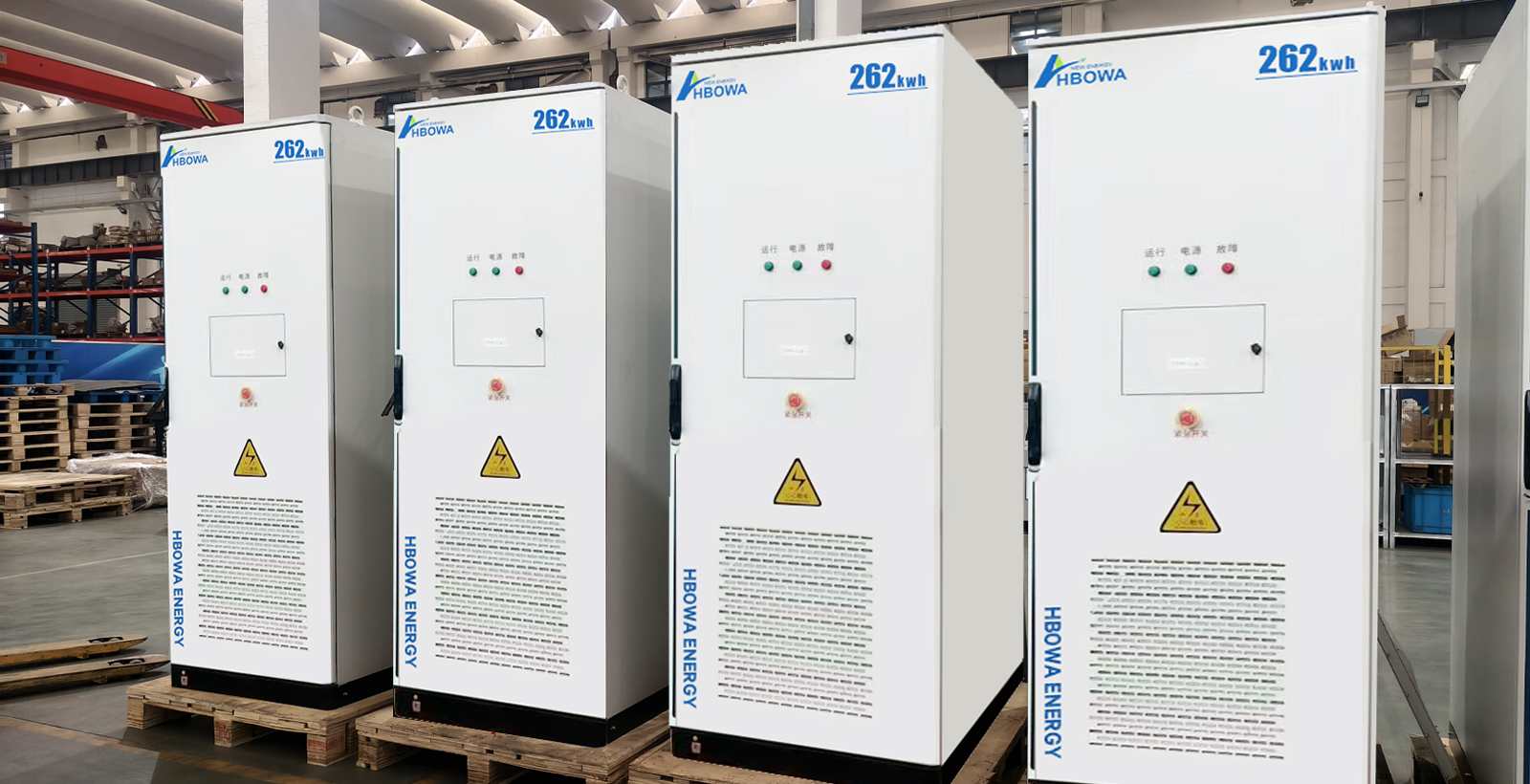
For peak-load-shaving energy arbitrage is to maintain the DoD at a certain optimal level. Peak load shaving means discharging the batteries when electricity prices are at their highest, thus the facility can make sure that they pay the best possible price and doesn’t have to be concerned about DoD battery degradation.
For example, by only discharging batteries to about 60% DoD instead of the regular 80% daily, the setup retains enough energy to offset the need for grid power during peak demand hours and also achieve a significant dod in battery life.
Best Practices for Managing DoD in Solar Battery Systems
Depth of Discharge is one of the biggest factors that determine the lifespan and efficiency of solar battery systems. One of the best practices is to keep the dod lithium battery to less than a hundred percent total charge. When the lithium batteries are constantly drained to a hundred per cent of their capacity, it significantly reduces their operational lifespan. Hence, it is always recommended to keep dod lithium batteries at 50% to 70% irrespective of the environment to ensure their longevity and maximum performance.
While setting up your solar energy systems, Deye solar inverters can help to set the proper DoD thresholds. These inverters allow you to set a battery depth of discharge between different levels of discharge. The lithium batteries can be set to discharge at any level less than or equal to the setting. By setting the dod lithium batteries at a safe depth, the battery’s depth of charge never exceeds its threshold throughout the regular use of any system with the inverter.

Utilizing the features of firmware in LiFePO4 BMS can be quite beneficial to manage Depth of Discharge. It is an easy to use system that requires no maintenance and HBOWA provides one of the best solutions regarding solar systems. When the dod lithium battery voltage reaches its set limit, BMS looks at cable disconnect and alternation with both manual or auto recover. Using the LiFePO4 BMS, you can easily set the discharge cut-off voltage, and the lowest discharge voltage rate could be set to a hundred. Moreover, when the voltage of the dod lithium battery reaches its limit, the BMS will disconnect the load from the whole battery system.
How to Calculate and Monitor DoD in Real Time
The formula for calculating depth of discharge is given by:
DoD = (Energy discharged / Battery total capacity) × 100
For example, if your battery has a total capacity of 10 kWh and you have discharged 4 kWh, then the depth of discharge calculation would be:
DoD = (4 kWh / 10 kWh) × 100 = 40%
With the help of the BMS (Battery Management System) and smart Inverters, we can now monitor the battery DoD in real time. The BMS and smart Inverters can display the DoD value of the battery in the digital dashboard, allowing people to keep a check on the depth at which the battery pack is being discharged.
For instance, the latest models of Deye solar Inverters consist of integrated software that allows you to monitor the dod in the battery and also change the settings so as to not over-discharge.
You can visualize the DoD status, even on the monitoring dashboard which provides real-time status of the energy flow, preventing the battery from getting damaged due to over discharge and helps to keep the system in line, providing a lifeline for the system.
DoD in the Context of Battery Health: SoH and SoC Interrelation
When a battery is utilized and decreased to a high depth of discharge (DoD), it can increase the concerns and lower its state of health. The SoH is the actual condition of a battery. The deeper the DoD of a battery increases, the more capacity of a battery is utilized. Hence, the ageing also increases. Charging in the range of 40%-60% of the rated capacity is the most effective way and suggested to keep the SoH of a battery in a good condition. There is a trade-off between DoD and other aspects of a battery to be managed well for it to endure the best performance for an extended period.
A deep discharge harms it only when it causes a low SoC. A shallow charge of a battery should be maintained within a limit as the lower the depth, the higher the time during which the battery will work effectively. The lower the DoD, the greater capacity it sustains with time. A deep discharge that diminishes the SoH and the battery goes back to zero in a few deep cycles. The lower DoD maintains the SoC at an average rate than an increased DoD. Every discharge of cycle affects the battery. The more the discharge, the fewer the cycle.
How to Choose the Right Solar Storage System Around DoD
In product selection, DoD should be checked together with solar panels, inverter communication, battery size, and the whole solar power system design. A site with weak grid power may need an off-grid solar system, while a grid-connected project may use an on-grid solar system and add storage only when backup is required.
For commercial projects, the choice may move toward an energy storage cabinet or BESS container. Inverter compatibility also matters; a Growatt solar inverter or other matching hybrid solar inverter should support the battery voltage, BMS communication, and safe discharge settings. For small residential backup planning, a wall mounted 10kWh solar battery is also a useful capacity reference.
Choose a Solar Storage System Based on Your DoD Requirements
Depth of discharge is only one part of system selection. You should also evaluate usable capacity, expected backup time, charging and discharging conditions, inverter compatibility, battery management settings, and the intended application.
Residential Solar & Backup
For home solar storage, evaluate DoD together with daily household consumption, essential loads, solar production, and the backup time you need.
Commercial & Industrial Storage
For commercial projects, DoD should be assessed with the load profile, peak-demand strategy, cycle requirements, system control logic, and applicable local requirements.
For a system evaluation, please provide the expected load, required backup time, target usable capacity, solar configuration, installation location, and application requirements.
Conclusion
To optimize the performance and longevity of batteries in solar systems, it is important to know what the depth of discharge is. Managing the depth of the discharge of batteries systems is helpful in making the residential and commercial setups run as expected, which in turn helps in reducing the wear and tear to the batteries and maximizes their life. Users can improve their energy storage solutions by setting up the DoD of the battery wisely meeting the requirements of the system. HBOWA provides clear and easy to understand guidelines and best up-to-date information and solutions so the our clients dont ignore DoD management. Because ignoring is not ideal for a safe, and reliable solar energy system, be it in residential or commercial areas.
Frequently Asked Questions
For LiFePO4 solar batteries, many residential and commercial systems work around 70% to 90% DoD. Lead-acid batteries are usually kept closer to 50% DoD for daily use. The exact value still depends on the battery datasheet, inverter setting, and backup target.
It can be safe when the battery manufacturer allows it and the BMS protects the cells. Even so, using 100% DoD every day is not always the best setting. Keeping some reserve normally gives better battery life and safer backup operation.
DoD means the part of battery capacity already used. SoC means the part still left. If a battery has 40% SoC, it is about 60% DoD.
Yes, a higher DoD gives more usable energy from the same battery size. The trade-off is that deeper cycling can add more stress to the battery, especially when it happens every day.
No. A home backup battery, an off-grid home, and a commercial peak-shaving system have different load patterns. Commercial storage normally needs more attention to cycle cost and battery replacement time.
Many hybrid inverters can set minimum SoC, low-voltage cut-off, or discharge limits. The BMS still protects the battery cells. Both settings need to be matched.