Introduction
A lithium-ion battery may sometimes be recoverable if it has only entered low-voltage protection mode or has been stored too long without use. However, not every dead lithium-ion battery should be revived. If the battery is swollen, leaking, hot, punctured, smells unusual, or has been physically damaged, stop using it and do not try to repair it.
This guide explains how to check whether a lithium-ion battery might be recoverable, which methods should only be handled by trained technicians, and when replacement or proper recycling is the safer choice.
Can You Revive a Lithium-Ion Battery? Quick Safety Check
| Battery Condition | Can You Try Revival? | Recommended Action |
|---|---|---|
| Slightly discharged, no swelling, no leakage, no heat | Possibly | Use the correct charger and monitor the battery carefully. |
| Battery may be in BMS protection mode | Possibly, with caution | Follow the manufacturer’s reset or wake-up instructions. |
| Deeply discharged below the safe voltage range | Professional only | Do not force charge. Ask a qualified technician or supplier to inspect it. |
| Swollen, leaking, hot, punctured, or smells unusual | No | Stop using it immediately and arrange safe recycling or replacement. |
| Exposed to water, impact, fire, or physical damage | No | Do not charge, open, or repair it. Follow local hazardous waste guidance. |
Why Lithium-Ion Batteries Die
Lithium-ion batteries have a high energy density and are thus widely used. This can occur because of several other factors, so some small modifications can help fix lithium-ion battery issues. Every battery has a fixed life, but we can still take measures to keep the battery working and revive a lithium-ion battery. The only way of finding a solution is to understand the root cause of why Lithium batteries die.
There are several factors, like overcharging, deep discharge, aging, physical damage, temperature extremes, and improper storage, that can cause lithium-ion batteries to die. For instance, overcharging lithium-ion battery cells puts stress on them. Deep discharges lower the internal chemistry of the cell, making it hard to fix lithium-ion battery issues. With the increase in age, the capacity reduces gradually. Physical damage like swelling or leaks might reduce the lifespan of a lithium battery and take it beyond repair. High temperatures accelerate the need for degradation, whereas freezing temperatures might hamper functionality. Improper storage of a lithium-ion battery, like long-term storage in full charge or exposing it to extreme temperatures killed its lifespan. Knowing and understanding these causes is important to safely revive a lithium-ion battery or consider techniques like rebuilding lithium battery packs whenever it’s necessary.
Safety Measures Before Attempting Battery Revival
A battery that has merely died may still be recoverable, but a damaged or apparently faulty battery may catch fire or cause injury if charged up. So the table below provides you with the safety measures in a nutshell.
| Safety check | What to do |
| Battery condition | -Do not revive swollen -Leaking -Overheated -Punctured -Visibly damaged batteries |
| Battery handling | -Never open -Puncture -Crush -Dismantle the battery pack |
| Charger | -Use a charger specifically compatible(manufacturing company-suggested ones) with the battery’s chemistry and voltage. |
| Charging environment | -Charge in a dry -Well-ventilated area away from flammable materials and heat sources. |
| Monitoring | Stop charging if the battery becomes unusually: -Hot -Swells -Leaks -Smells unusual -Behaves abnormally |
| Large battery packs | -Follow the manufacturer’s recovery and BMS procedures -If the manufacturing company’s workshop is not available, then seek professional assistance |
Before attempting to revive a lithium-ion battery, you need to take safety measures. Lithium-ion batteries can cause risks like chemical leakage, fire, or even explosion if mishandled. Proper safety measures will protect you and ensure a safe revival process. These are a few safety tips and measures one should take before starting to revive a lithium-ion battery:
● Use Proper Safety Gear
● Work in a Well-Ventilated Area
● Inspect the Battery Before Starting
● Keep a Fire Extinguisher Nearby
● Avoid Improper Handling

HBOWA Expert Note: As a lithium battery and solar energy storage supplier, HBOWA works with home battery storage and commercial energy storage systems. For large battery packs or solar storage batteries, do not attempt risky recovery methods without technical support. A deeply discharged battery should be checked according to the manufacturer’s manual and BMS requirements.
Methods And Techniques to Revive a Lithium-Ion Battery
There are several methods that can help to revive lithium ion battery cells. Each approach varies in complexity and effectiveness, so understanding the best method for your situation is important. Below are some of the most common techniques for reviving a lithium-ion battery.
Slow Charging Method
The slow charging method is by far the easiest and safest way to solve lithium battery problems. You have to use the same battery to apply only a low current for the slow charge. The slow charge method is a docile approach in which you gradually restore the battery’s functionality. This will not let the battery load much so that it might not get damaged beyond repair. If you have a Li-ion battery that has been deeply discharged, the battery can be charged slowly, and one can restore the charge to the battery.
To implement this method, you can connect a multi-meter between the battery and the charger. A slow current setting should be selected, and that is it. You can scale the amount of voltage that is getting raised in the multi-meter with time. If it starts to charge normally, you can leave it for a couple of hours together. This, in turn, will also help to recharge the Li-ion battery cells, which are weak as they cannot charge at the normal rate.
| Method | Complexity | Success Rate | Equipment Needed | Average Time | Cost |
| Slow Charging | Low | 60-70% | Adjustable Charger, Multimeter | 4-8 hours | $0-$50 |

Parallel Charging
Parallel charging is the term which means the technique where a healthy fully charged lithium-ion battery is connected to a dead or below-discharged lithium-ion battery to boost up the charging. When two batteries are connected in parallel connection, both the lithium batteries have now shared the energy of each other. This is an effective method to recharge the lithium battery packs which are not charged completely but are not charging using their charging potential.
The necessary precautions to be taken while charging this method include being very cautious and using a voltmeter. Both batteries should have the same voltage and capacity, and one must monitor the process continuously. The most important point to be noted is, don’t leave it unattended as the battery may tend to overheat if successful, and it may lead to damage when the batteries used are of the wrong capacity. This is the professional method to parallel charge lithium-ion battery packs.
| Method | Complexity | Success Rate | Equipment Needed | Average Time | Cost |
| Parallel Charging | High | 50-65% | • Matched Batteries • Precision Voltmeter • Parallel Charging Equipment | 2-4 hours | $100-$300 |
The Freezer Method
The freezer method is known to be a somewhat controversial method, but it can work well with some of the lithium-ion batteries, which have stopped charging because of internal chemical malfunction inside. The idea of this method is to put the battery inside a freezer for a few hours, so the internal chemicals of the battery get stabilized, which in response can jump-start the battery back to holding a charge again.
To use this method, firstly, seal the battery inside a plastic bag carefully to avoid any kind of moisture damage, and then place the battery inside the freezer for several hours. Then, remove the battery from the freezer let the battery reach room temperature, and then try charging it. While sometimes this process causes a layer of a frozen lithium-ion battery, it can also degrade the batteries. Always take precautions and only try this method with batteries that show no physical damage, including swelling or leakage.
| Method | Complexity | Success Rate | Equipment Needed | Average Time | Cost |
| Freezer Method | Low | 30-45% | • Plastic Bag • Freezer • Room Temperature Environment | 6-12 hours | $0 |
Voltage Activation or Jump-starting
Another way to fix Lithium-ion battery cells is by voltage applying method to activate the battery. This step involves providing a small amount of voltage to the battery using an adjustable power supply. This is similar to the ‘jump-starting’ capability of batteries. This step is very helpful in the case where the battery has entirely stopped charging after the deep discharge of the battery and the battery is shown in the dead state.
To perform this, connect the power supply to the battery to provide the power to the battery and start to increase the voltage value. It is better to monitor the voltage using a multimeter regarding the voltage across the battery. If the battery tends to respond properly and has the charge stored in it, the battery can be provided as the input to the regular charger subsequently.
Although it is the fastest method to enable the battery by providing the voltage, an inadequate amount of voltage could not help to restart or activate a dead battery. So, surround this operation with proper caution, as a surplus amount of voltage could cause irreplaceable damage. The jump-starting lithium battery is one of the most preferable methods to enable the battery, but the application of this idea should be done carefully to avoid creating any kind of safety hazards.
| Method | Complexity | Success Rate | Equipment Needed | Average Time | Cost |
| Voltage Activation | Medium | 40-55% | • Adjustable Power Supply • Precision Multimeter • Current Limiter | 1-3 hours | $50-$200 |
Using a Battery Repair Device
A battery-repair device is a more sophisticated way of reviving a lithium-ion battery. They are designed to fix internal problems within the battery by recalibrating or reconditioning the cells. Generally, a controlled charge and discharge cycle is applied to the battery to increase its efficacy with these repair devices. A battery repair device can be found online and in any electric store. However, they can be quite expensive compared to the others, and you may not get your money’s worth if your battery is ultimately damaged.
| Method | Complexity | Success Rate | Equipment Needed | Average Time | Cost |
| Battery Repair Device | High | 50-70% | • Specialized Repair Device • Computer Interface • Diagnostic Tools | 3-8 hours | $100-$500 |
Real-Life Case Study: Solar Battery Restoration Example
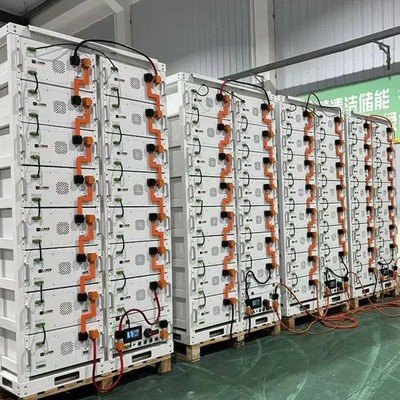
HBOWA 48V LiFePO4 Solar Storage batteries at a commercial facility became “dead” after they were kept idle for over six months. Its voltage level dropped to 2.1V per cell, which prevented normal charging. The last pack was connected to a Deye inverter in recovery mode and a solar Li-Ion battery charger. After seven hours of charging at a low, steady current, the voltage climbed to 3.3V per cell. The pack got over 95% of its usable capacity back.
This case demonstrates a method for safely recharging a lithium-ion battery system using solar recovery methods rather than forcing it directly with current. This case also demonstrates the use of an advanced Battery Management System to control current flow and voltage limits of an HBOWA battery that helps increase useful life even in large solar applications.
When to Stop and Replace the Battery
A lithium-ion battery can often be restored and save some money, but there are times when reviving a lithium battery and its restoration can be dangerous. Knowing when a battery is NOT fixable and needs to be replaced will help prevent further damage to your device and protect you from injury. Swelling is one of the very first signs that a lithium-ion battery cannot be fixed. This swelling is a sure indication that the battery has internal damage, such as too much gas or overheating of the battery. If your battery is swollen, do not use it or charge it. Trying to repair a battery in this condition can cause it to break or even explode.
Leaking is another serious problem, as a lithium-ion battery that leaks typically indicates that the battery is dead. The leaking chemicals from a lithium battery can be very harmful to the environment and can also be toxic to your body. Dead or dying batteries are a significant safety hazard and should be disposed of properly. There are some techniques you can try to rebuild a lithium battery pack. Still, if a lithium-ion battery doesn’t hold a charge long enough to be useful, you will need to replace the entire battery. The device a lithium battery powers may also suffer damage from a leaking battery and need to be replaced as well.
How to Prevent Lithium-Ion Batteries from Dying Again
- Store lithium-ion batteries in a cool, dry place.
- Avoid full discharge during long-term storage.
- Do not leave batteries near heat sources or direct sunlight.
- Use the correct charger for the battery chemistry and voltage.
- Check stored batteries periodically and follow the manufacturer’s storage voltage recommendations.
- For solar storage batteries, make sure the BMS, inverter, and charge controller settings match the battery specifications.
Conclusion
In this article, we explained how to revive lithium-ion batteries. These batteries are used in every electronic device now, but people often do not know how to extend their life. After reading this article, you might have gotten the answer you were looking for. We first talked about why lithium-ion batteries fail and then we discussed how we can revive a lithium ion battery and what safety measures to consider while reviving a battery, hope this article can help you understand better about this issue.
HOBWA is the leading lithium battery manufacturer in China, we produce home lithium storage batteries, commercial energy storage lithium batteries, and industrial power storage battery containers for a wide range of applications. In the great journey of the world’s striving towards carbon peaking and the construction of a sound carbon cycle, we sincerely invite every like-minded person to join us. Whether as a partner to jointly explore the market or to work together in technological research and development and exchanges, let’s contribute our strength to the early achievement of the world’s carbon peaking goal and the stable construction of the carbon cycle system.
Solar Products for Your Project
 Solar Panels |  Solar Inverter |  C&I Battery Storage |
Frequently Asked Questions
Sometimes yes, dead lithium-ion batteries can be revived. It depends on the cause (of battery failure). If the battery is not physically damaged, or not moisture infected, and hasn’t aged excessively, The lithium-ion battery can be restored using several techniques like slow charging, parallel charging, using a battery repair device et cetera. If the battery has swollen, leaked, or is not charging even after you have tried to fix the lithium-ion battery, then consider replacing it.
No. Not supported by any cell manufacturer; risks irreversible degradation. Say plainly: don’t do it.
If, after several attempts, you have not been able to revive a dead lithium-ion battery, it might be time to twirl it into a professional to repair the lithium-ion battery safely. Do not constantly try to revive a failing battery. If you find it dangerous and signs of failure are still on, it is better to stop. Have a look at the battery before you start trying.” In case of any physical damage to the battery, it is better to stop using it and dispose of it.
Some battery packs can be reset if the BMS has entered protection mode. Always follow the manufacturer’s instructions and use the correct charger.
Jump starting is risky and should not be attempted by general users. It should only be handled by trained technicians with current-limited equipment and proper safety controls.
Replace the battery if it is swollen, leaking, damaged, overheating, repeatedly failing to charge.
Do not put damaged lithium-ion batteries in regular recycling bins. Take to a certified recycling point, insulate terminals with tape.
Solar LiFePO4 battery packs often include a BMS and should be checked according to the manufacturer’s instructions. Follow the manual and contact the supplier.
Depending on size, technology, and charger type, a battery usually takes 4to6 hours. For instance, in a solar lithium-ion battery charger may take longer, but make sure to provide a stable, gentle charge and which is best for prolonging the age of the battery.
Below 2.5V per cell is considered deeply discharged, and below 2V it’s a dead cell and goes into an irreversible phase.
No, degradation cannot be reversed, and everything has a life cycle, but newer battery technology provides longer life, and brands such as HBOWA provide LiFePO4 batteries that provide 6,000-plus battery cycles.