
Assumes a steady average load. Actual warning time can change with power peaks, inverter limits, temperature, BMS logic and battery voltage behavior.
Introduction
Solar electricity has become a trend globally, and energy storage has become the crux for a reliable solar setup. The battery discharge warning is more than an alert system; it is a warning system that can tell the energy storage is either discharging more quickly than expected or is operating at a lower voltage. Neglecting the warning will result in fewer power outputs or may affect battery life, causing safety threats. The article will explain what the battery discharge warning is, why it occurs, and how users can maintain their safe and efficient usage with advanced systems like HBOWA LiFePO4 Batteries, Deye, and Growatt inverters that ensure guaranteed solar reliability for the long term.
What is a Battery Discharge Warning?
Battery discharge warning is the warning that comes when the inverter or the battery management system issues it to indicate that my battery is drawing energy more quickly than it can handle or that voltage has dropped too far below the level it cannot bear. Or, in layman’s terms, it means that the system is drawing more power than it can sustain for its current state of charge. It can also occur in hybrid systems and electric vehicles, or solar storage systems that require a consistent voltage.
What Does Battery Discharge Mean in Solar?
So, what does battery discharge mean in solar? That directly relates to how rapidly energy can be drawn out of the battery storage when it needs to supply power when there is no or very low sunlight. The inverter might display a battery discharge warning to prevent deep discharge of the battery, which can sometimes render batteries damaged and dangerous. The smart BMS (Battery Management Systems) of the HBOWA LiFePO4 batteries monitor the level of voltage, current, and temperature to avoid unsafe levels of discharge.
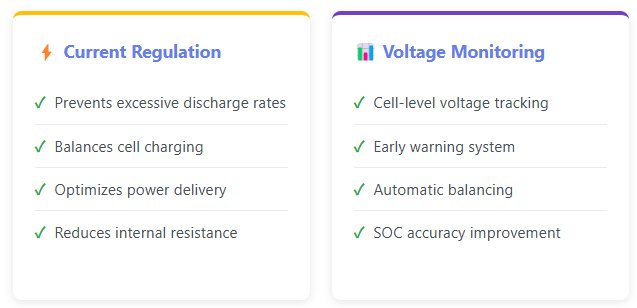
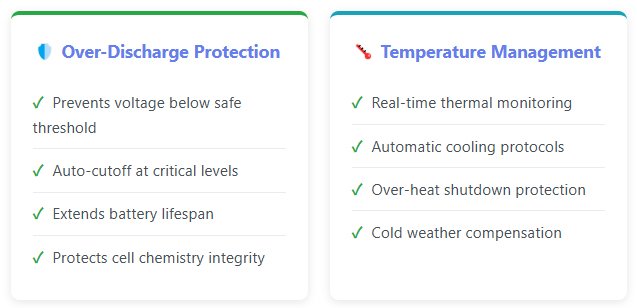
Modern solar systems incorporating solar inverters like Deye and Growatt can automatically balance the discharge and charge cycles. This automatically reduces the overcharge to the bare minimum but improves the overall battery discharge capabilities. This, in turn, reduces the system’s chance of early degradation, which ensures a longer life and stable operation in residential and commercial applications.
The Science Behind Battery Discharge: How Solar Batteries Work
The science behind a battery discharge warning on a deeper-discharge battery solar system is clear if we understand how a solar battery stores and discharges power. In a solar setup, the panels build up DC power, which is stored in a battery through an inverter or charge controller. During the discharge period, this stored power is released back to power your gadgets when there is no sunlight. The speed at which this power flows is also called the battery discharge rate.
The efficiency of this power discharge depends on the type of battery chemistry that has been used and the inverter pairing. For a battery to be counted on for attaining optimal battery discharge, its cells should be handled no matter of the intensity of battery discharge.
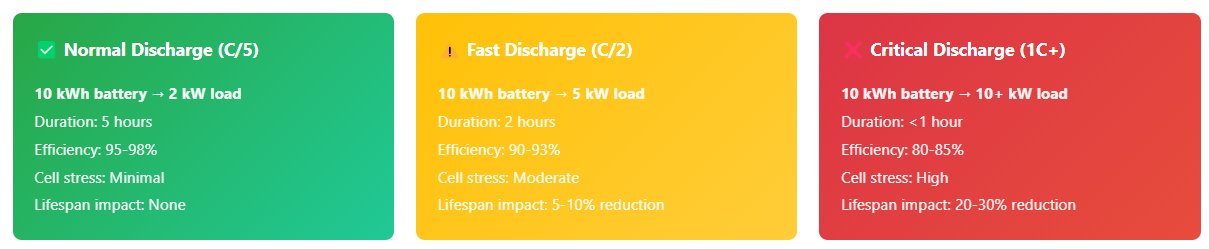
Note: C-rate indicates discharge speed relative to capacity. C/5 = 5-hour discharge, 1C = 1-hour discharge. LiFePO4 batteries handle higher C-rates better than lead-acid alternatives.
Advanced batteries nowadays use a very stable chemical reaction that allows deeper discharge without affecting the cells of the battery. Unlike other lead-acid units or devices, these deep-discharge batteries let you use up most of the stored power and charge it again. The LiFePO4 Battery solar system, which is paired with Deye or Growatt inverters, gives the most potent charge to the battery. These inverters optimize the current flow in the solar panels of the battery and thus have better battery efficiency.

Modern solar energy battery storage systems prefer LiFePO4 for its long cycle life, stable voltage curve, and high discharge safety margin.
Why Battery Discharge Warnings Occur: Common Technical and User-Based Causes
Battery discharge alerts mainly happen because of the patterns or unexpected loss of energy by the source of voltage. The pressure of a battery may fall to an undesired rate, or there may be any distinction estimated, and its rate of charge and discharge do not coordinate.
Battery Aging or Capacity Decline
A decrease in capacity takes place in all the cells. Lithium-based batteries experience a decrease in capacity in hot regions by 8-10% every year, as per the forecast for 2025 given by BloombergNEF. As Lithium-Ions degrade, eventually, the usable voltage range narrows due to chemical wear and due to extreme electrode stress. LiFePO4 battery systems (like HBOWA systems) remember cells retain capacities of nearly up to 80% after 4000+ cycles, as observed by IHS Markit.
Whenever the aging accelerates, you often see discharge warnings regularly since the usable voltage range reduces with an increase in age.
Charging or Inverter Malfunctions
Excessive charging or an incapable Inverter system malfunctions may cause irregular charge/discharge rates. If the Inverter system does not regulate voltage properly and ideally, it may display a fault, and a battery is discharged warning. Using Deye and Growatt Inverter system alerts allows for efficient charge/recharge curves and ends a battery discharge due to voltage Imbalance warning.
Excessive Load or Parasitic Drain(Battery discharging due to external devices)
Often, an energy quick rise and fall is when the user’s battery is getting drained continuously due to some external load. Sometimes, when too many devices/appliances are powered at a single point in time, like a mini fridge and the air conditioner/water heater are working on a single 5 kWh setup, the system’s discharge is faster than what can recharge. Another reason behind the quick draining of the battery is Parasitic Drain, like stand-by electronics devices or during the use of the grid, especially at night. Careful usage and programming of the inverter are required to avoid unnecessary energy loss.
Very Low and Very High Temperature
Battery performance is linked to the concern of temperature. In the tropical areas of Asia, heat causes batteries to discharge faster. Here, the warmer environment speeds up the internal chemical reactions. In the colder settings of northern Europe, the ion flow slows down, leading to a lower available capacity.
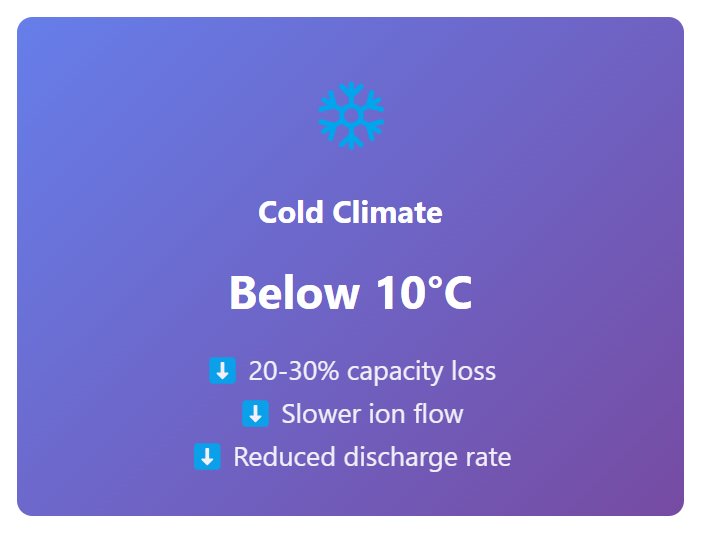
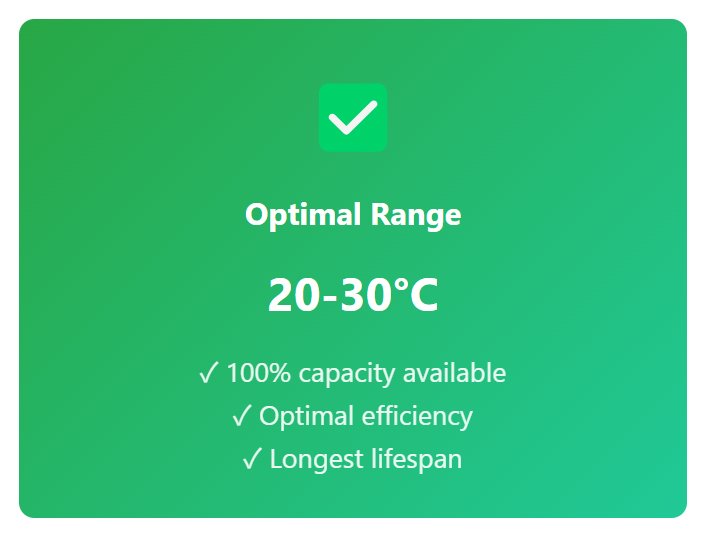
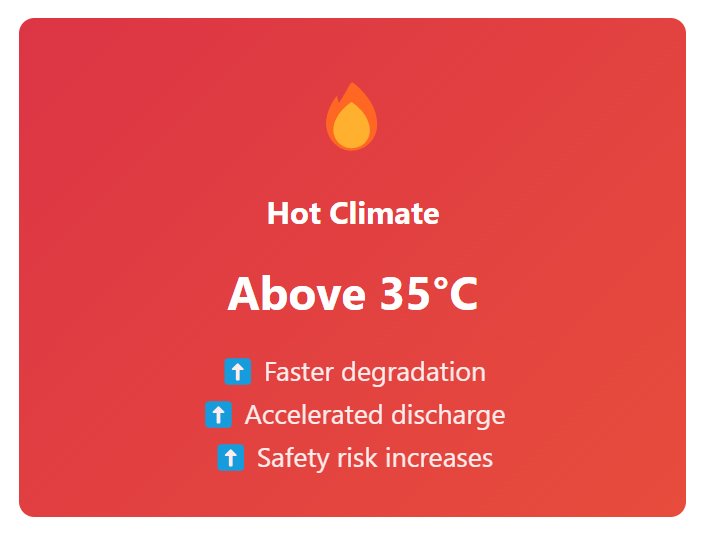
Both conditions will prompt a system alert if the battery’s discharge rate does not fall within the battery safe window.
Poor Maintenance or Loose Terminals
Simple maintenance can also lead to discharge issues. Accretion of grime and dirt, oxidized terminals, or if the cables are loose, then these will cause voltage drops, which can be mistaken for internal faults. The inverter detects an unstable flow of current and points out that the battery doesn’t hold a charge. If the batteries are checked regularly and the terminals are tight, there will be no use of warnings, and hence, prolong the battery life.

Diagnosing Battery Discharge in a Commercial Solar Setup: Real-World Case Study
The battery discharge warning declared by a manufacturing industry from Southeast Asia was disturbing the battery sector. The industry utilized a 232 kWh HBOWA Commercial Solar Battery alongside a hundred kW Growatt inverter. The battery would provide continuous power backup to the machines and lights for the what operations of the industry. However, the team of tech members found that the unequal distribution of load and consistent need for the battery-driven backups were pulling out of the battery quickly.
The inverter settings were adjusted and modified, and the battery BMS firmware was updated to manage the syncing of charge and discharge cycles. The backup lasted about 18% more extended, and all the module’s discharge was steadier than it used to be. The above case study shows how it is essential to make a proper adjustment to the inverter and the BMS and calibrate it to improve the use of the battery for the solar power system and other relevant operations in the large-scale industrial sectors.
Proven Practices: How to Prevent Battery Discharge Warnings
Preventing a battery discharge warning requires maintaining a balance between how a system charges, discharges, and operates within its designed limits. Even with advanced components, improper charging habits, unbalanced loads, or severe environments can shorten a battery’s life and performance.
Improve Charging Behavior
To enhance energy storage batteries by optimizing recharging behavior in Solar batteries. Batteries, especially LiFePO4, outperformed while having maintained between 20 % to 80% range of their charge percentage.

Higher recharge to 100% and zero discharge below 0% stresses internal cells, leading to their wear and tear. There are different charging curvatures used by the Deye and Growatt smart inverter systems, like adaptive charging cut based on the temperature and load conditions. So, lower chances of deep discharge also ensure a consistent flow of energy for every unit of power consumption. Along with this, users get to spot irregular patterns early when monitoring solar recharge batteries.
Balance Power Load
Understanding one’s everyday energy utilization is indispensable for the life span of the system. In the event that the energy demand and supply surpass the limit, overhauling/charging the battery becomes an option, going through release as quickly or speedily as we charge the battery. Compute the Watt-hour requirement for the greatest day and don’t release the battery more than multiple times, rather than the full limit.

Environmental and Installation Tips
The Ambient temperature and the humidity are essential for the batteries’ optimal performance. It is advisable to keep the batteries charged by solar panels parked between 20-30 degrees Centigrade (68-86 Fahrenheit) in shaded and ventilated spaces. As areas like South-Eastern Asia are prone to being tropical, it is essential to control the moisture to prevent the corrosion of the batteries/ and for countries with cold climates like Canada, insulated enclosures protect the batteries from low-temperature discharge loss. Moreover, a uniform temperature inside the battery reduces the internal resistance, which could otherwise lead to the occurrence of unwanted warnings.
Routine Maintenance
The simple maintenance prevents complexity. Monthly tightening of the terminals and cleaning the oxidized contacts, checking the voltage stability, results in the best performance. Make a quick system scan through the solar quick system by manufacturer diagnostic applications to find abnormal discharge behavior. Maintenance documents are also helpful in improving warranty claims and safety in the long run.

Adopting these preventive strategies ensures that solar systems operate within safe voltage limits, avoiding unnecessary battery discharge warnings while extending the life and reliability of HBOWA’s advanced LiFePO4 storage solutions.
Troubleshooting a Battery Discharge Warning: Step-by-Step Guide
Quick and systematic troubleshooting of the battery discharge warning prevents any downtime.

First of all, check the inverter or charge controller display. Both Deye and Growatt provide clear discharge indicators, most often related to the voltage or temperature. Always note the status displayed to decide further.
Check all the wiring and the fuses. Many times, loose or oxidized terminals will interrupt the current flow. After all, if the connections are proper, then measure the voltage under load. Use a digital multimeter for this purpose. A LiFePO4 cell below 3.0 V means deep discharge or imbalance across the cells.
Even if the voltage reading remains stable, yet the alert hasn’t vanished, reboot the inverter or perform a soft reset using the system’s interface. Issues that continue, frequent “FRT out of battery discharge” messages, or irregular charging from the grid indicate an internal BMS calibration error. In such a case, always refer to a certified technician or expert.
| Symptom | Likely Cause | Recommended Fix |
| Rapid voltage drop | -Deep discharge or imbalance | -Partial recharge -Equalization cycle |
| Inverter alarm during the night | -Grid charge disabled | -Enable grid-assisted recharge |
| “Battery discharging too fast” | -Overload or parasitic drain | -Reduce connected loads |
| Warning persists after reset | -BMS/inverter sync fault | -Contact a certified professional or a technician |
Cost, Performance, and Safety Outlook for 2025
The future cost of a solar battery storage system and the plans of companies have become quite visible with the global trends of 2025. The price of the solar battery storage system is expected to go down in 2025, according to BloombergNEF. This price drop is to be attributed to one of the key global technologies, which is LiFePO4.

LiFePO4 is anticipated to capture the major global market share due to its \thermal resiliency (more significant than NMC cells) plus extended battery life. According to NREL prediction, for a typical commercial solar battery storage for a utility-scale project, the average cost will be around less than US$150 per kWh in 2035.
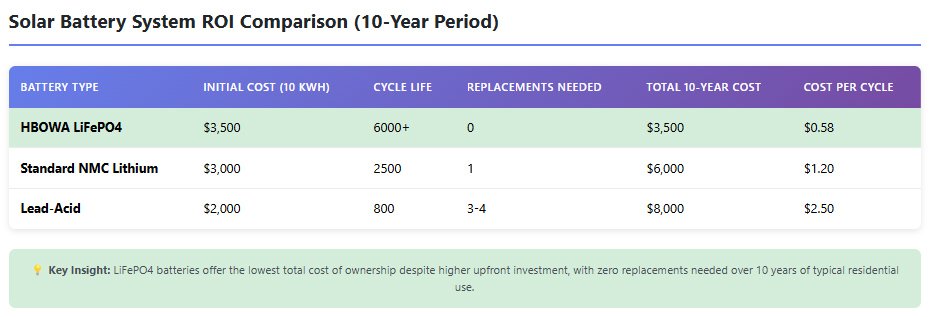
Safety has improved thanks to advanced Battery Management Systems (BMS) and inverter communication becoming operationally synchronized. Even in HBOWA’s commercial-grade storage systems – 200 kWh, 215 kWh , and 232 kWh energy storage cabinet – efficiency was maintained with customer protection, enhanced features alike.
With the notable cost reduction of solar energy storage and improved safety, knowing “What is battery discharge warning” is essential for ensuring long-term performance and operational safety of residential and commercial power systems.
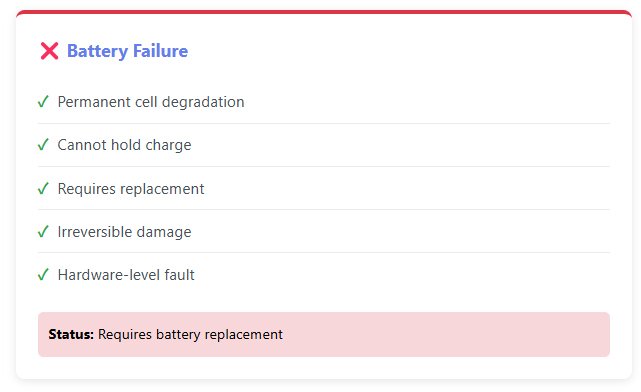
Quick Comparison Between Battery Warning vs Actual Battery Failure
A battery discharge warning is not the same as a system failure. It actually means a temporary power imbalance or drop in voltage output, which can typically be restored through proper charging or load adjustment. However, if the battery fails, then it will not hold any charge anymore.

Conclusion:
Understanding the battery low-voltage cut-out and its causes is necessary for maintaining safe, reliable, and efficient solar power systems. It is only prevented by monitoring batteries regularly, carrying out routine maintenance, and pairing it with the right kind of inverters, like Deye and Growatt. This quality HBOWA LiFePO4 battery system has advanced BMS protection and stable performance, the major reason for consistent energy storage and application in residential, commercial, and industrial sectors. Appropriate planning of load, taking care of the environment, along with using a smart way of managing the battery, helps maximize ROI (Return On Investment), security of the system, and its other respective performance in 2025 and beyond.
Frequently Asked Questions
This usually happens when backup systems or standby appliances continue drawing power after sunset, so check your inverter’s night-mode settings and reset the discharge limits.
Yes, in some cases. When the cause is a temporary surge or load fluctuation, the system may self-correct once the battery recharges.
HBOWA LiFePO4 batteries integrate smart BMS controls that balance charge levels across cells and work efficiently with Deye and Growatt inverters.