

15kW Solar System for Large Homes & Small Businesses
A 15kW solar system is typically suitable for large homes, high-consumption households, and light commercial sites. The right setup depends on your property type, electrical service, installation space, and whether you need battery backup.
Is a 15kW Solar System Right for Your Home or Business?
15kW is not a standard small size. It is usually chosen by larger households and light commercial users who need stronger daily production and more flexible system design options. Use the comparison below to decide whether this 15KW solar system size matches your energy demand, available space, and usage goals.
Quick Product Navigation
Use these quick links to jump to the right section.
15KW Hybrid Solar System
We offer 15kW hybrid solar systems according to your detailed tailored needs, low voltage and high voltage batteries available. And our batteries are compatible with brand hybrid solar inverters, such as Growatt, Deye, Solis, Afore, etc. We provide roof-top and ground-mounted installation types for you to meet diverse application requirements. If you want a tailored hybrid solar system or wonder how to select one, welcome to contact us anytime.
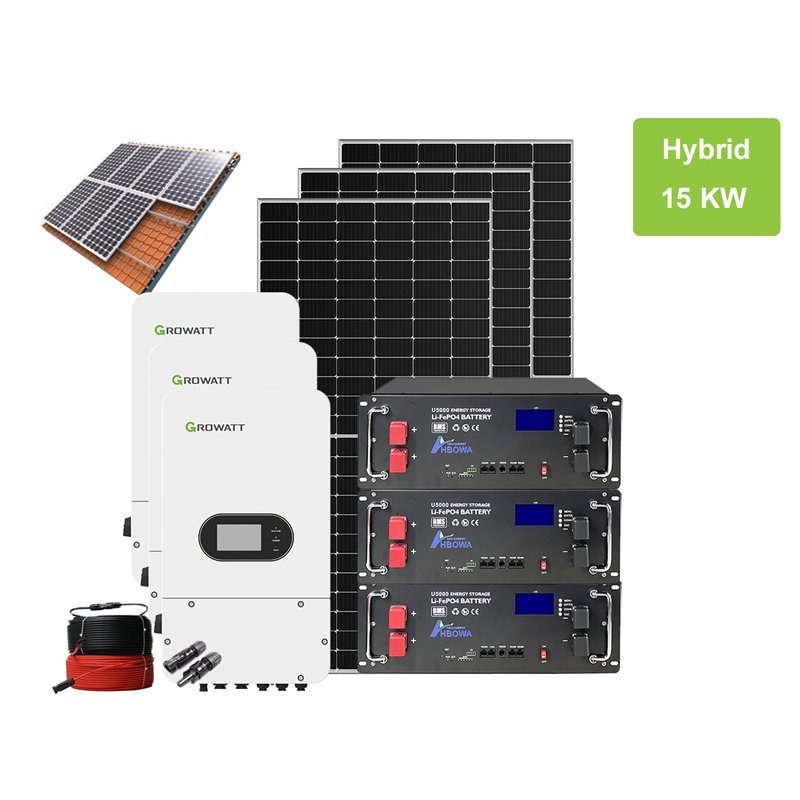
Single-Phase Low Voltage
Installation: Rooftop
MOQ: 1 Set
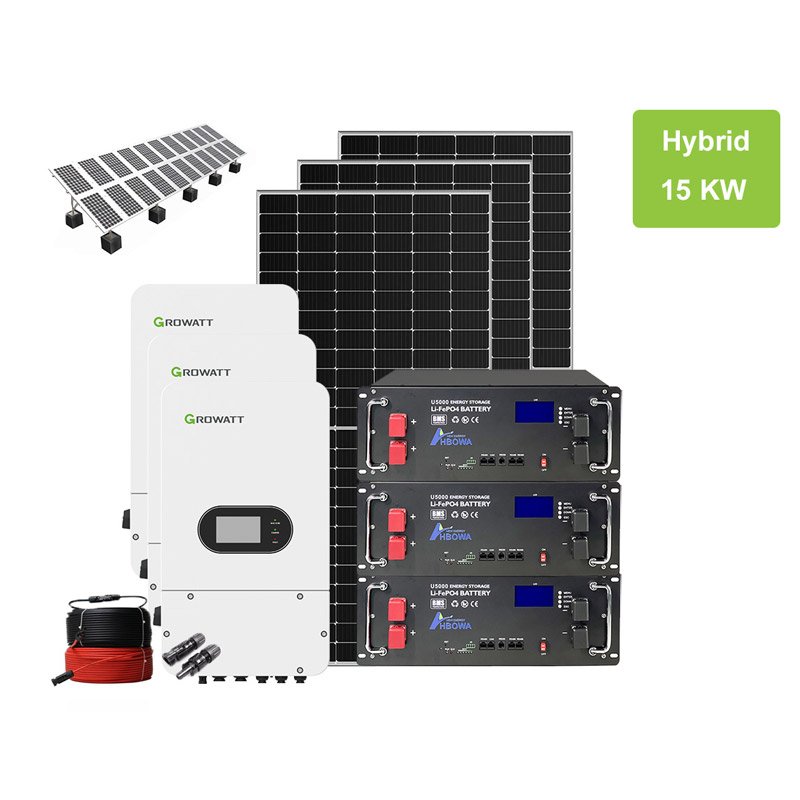
Single-Phase Low Voltage
Installation: Ground-Mounted
MOQ: 1 Set
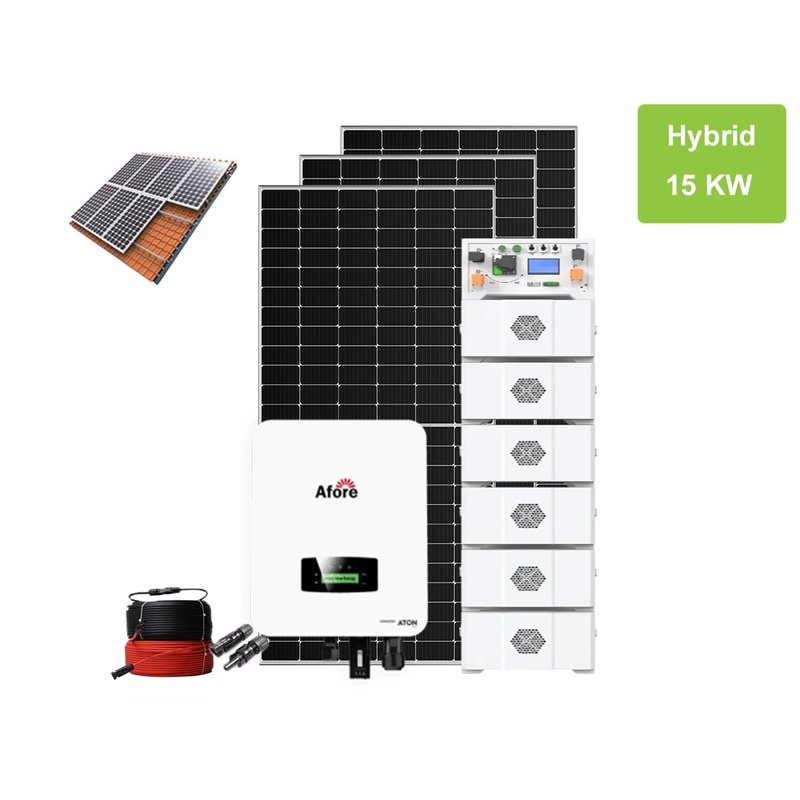
Three-Phase High Voltage
Installation: Rooftop
MOQ: 1 Set
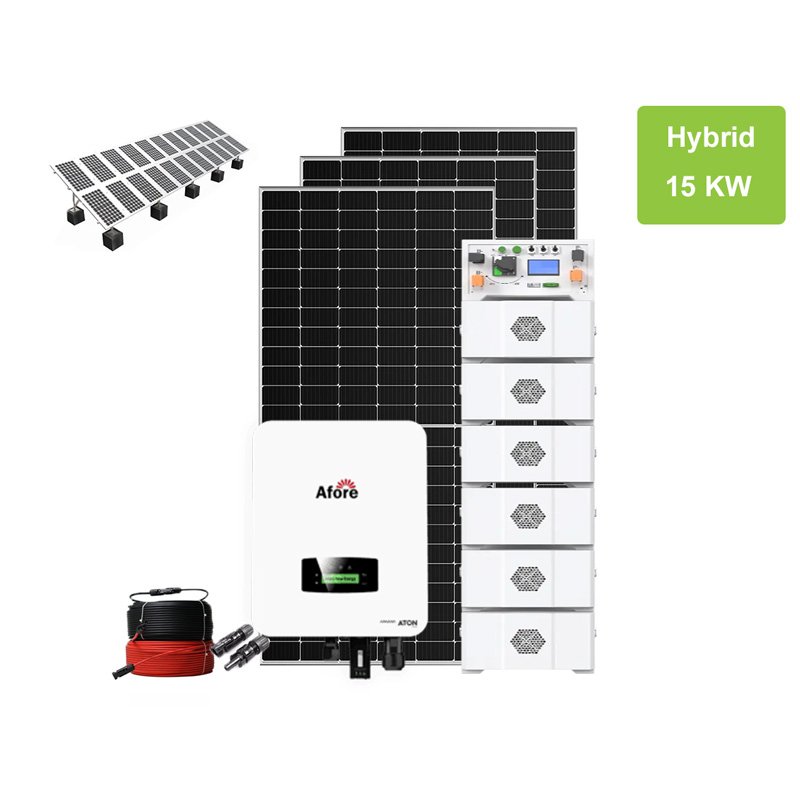
Three-Phase High Voltage
Installation: Ground-Mounted
MOQ: 1 Set
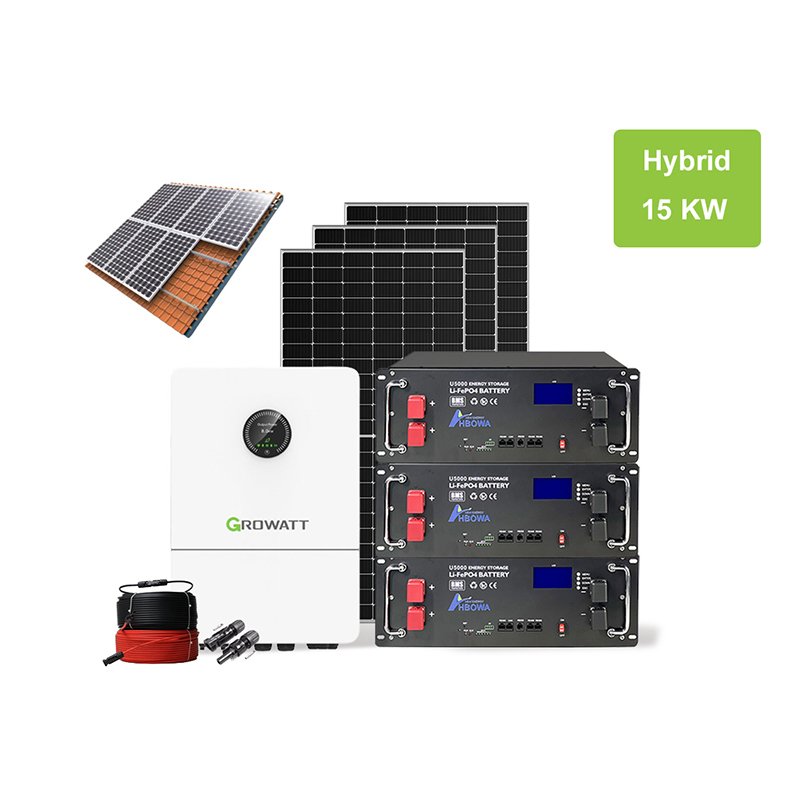
Three-Phase Low Voltage
Installation: Rooftop
MOQ: 1 Set
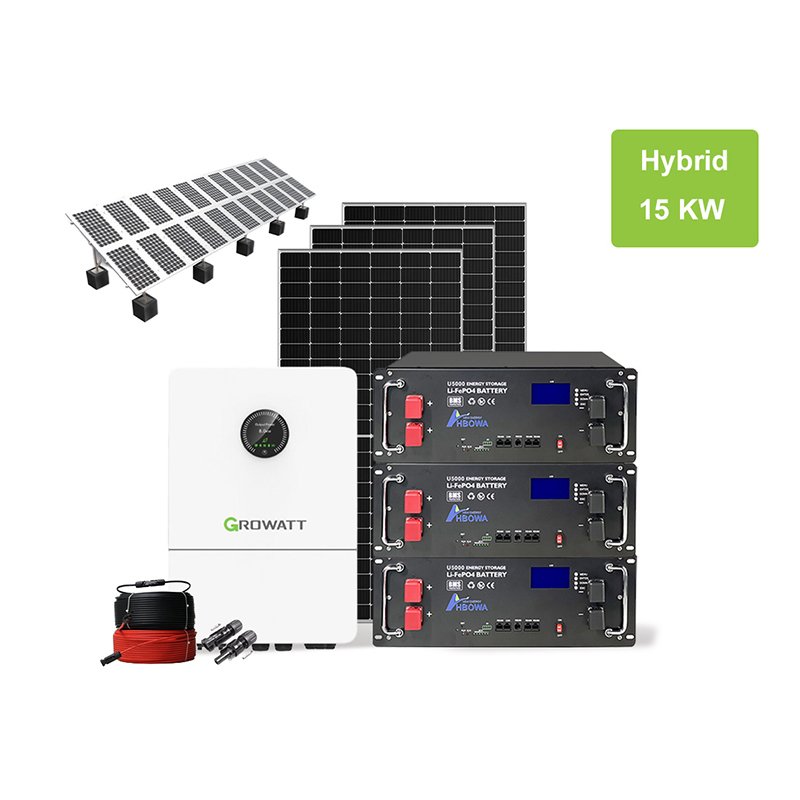
Three-Phase Low Voltage
Installation: Ground-mounted
MOQ: 1 Set
15KW On Grid Solar System
We offer 15kw on grid solar systems with tier-1 solar panels and brand on grid solar inverters, such as Growatt, Deye, Solis, Afore, etc. Our on grid solar system solutions are flexible according to your actual requirements. Welcome to send your inquiry anytime.
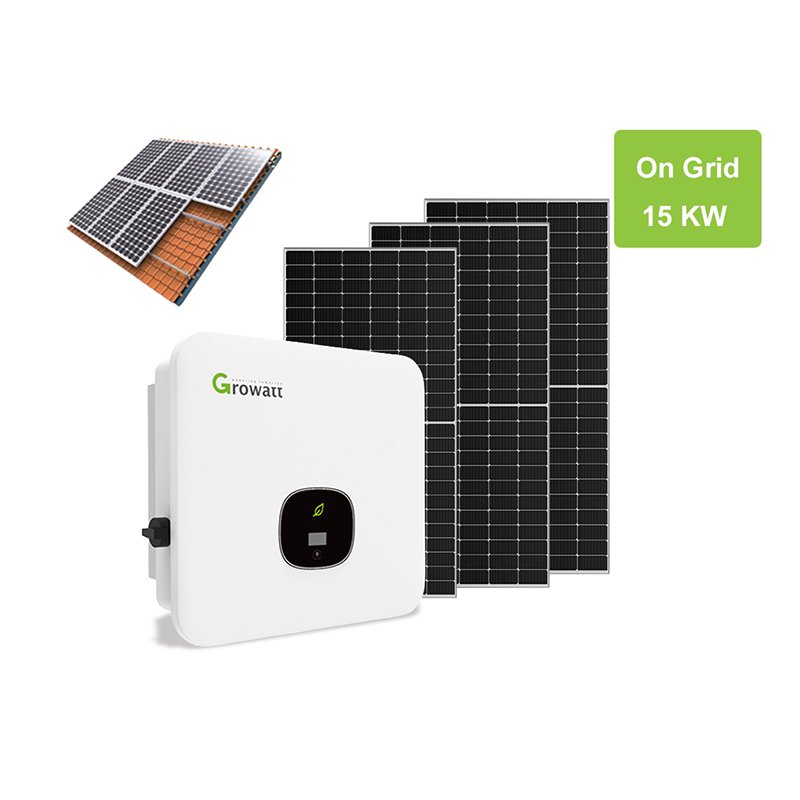
Growatt Three-Phase
Installation: Rooftop
MOQ: 1 Set
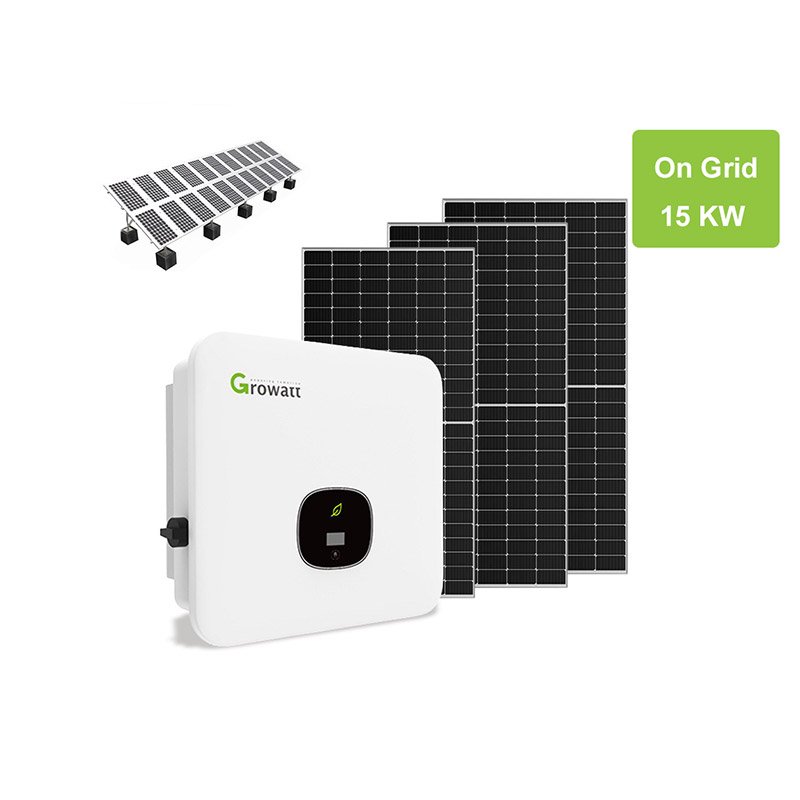
Growatt Three-Phase
Installation: Ground-mounted
MOQ: 1 Set
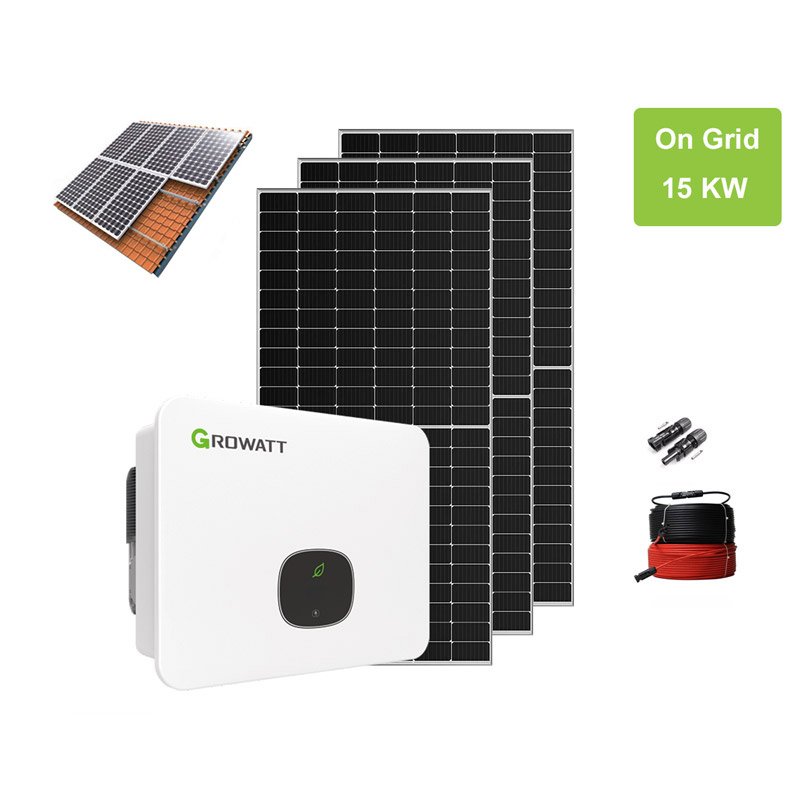
Growatt Three-Phase
Installation: Rooftop
MOQ: 1 Set
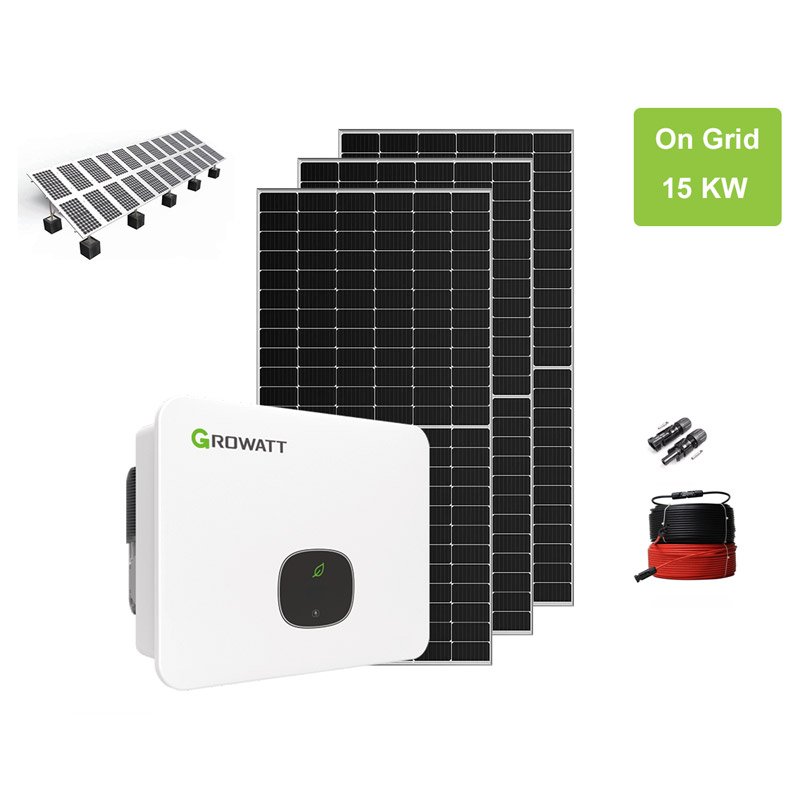
Growatt Three-Phase
Installation: Ground-mounted
MOQ: 1 Set
15KW Off Grid Solar System
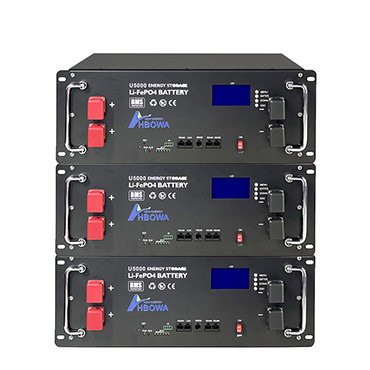
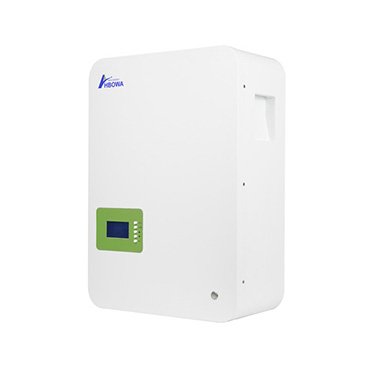
We off 15kW off-grid solar system with LFP batteries, including rack-mounted batteries, wall-mounted batteries, and stackable batteries. And our batteries are compatible with brand 15kW off-grid inverters, such as Growatt, Afore, etc. All installation accessories are included as a set. Feel Free to send your inquiry anytime.
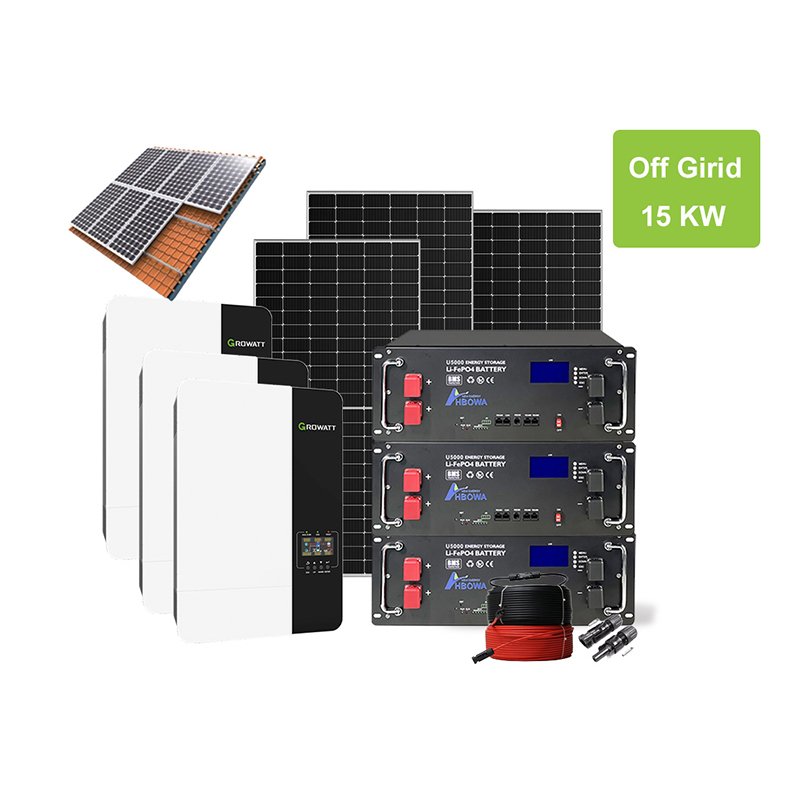
Single-Phase Low Voltage
Installation: Rooftop
Battery: 30KWh
MOQ: 1 Set
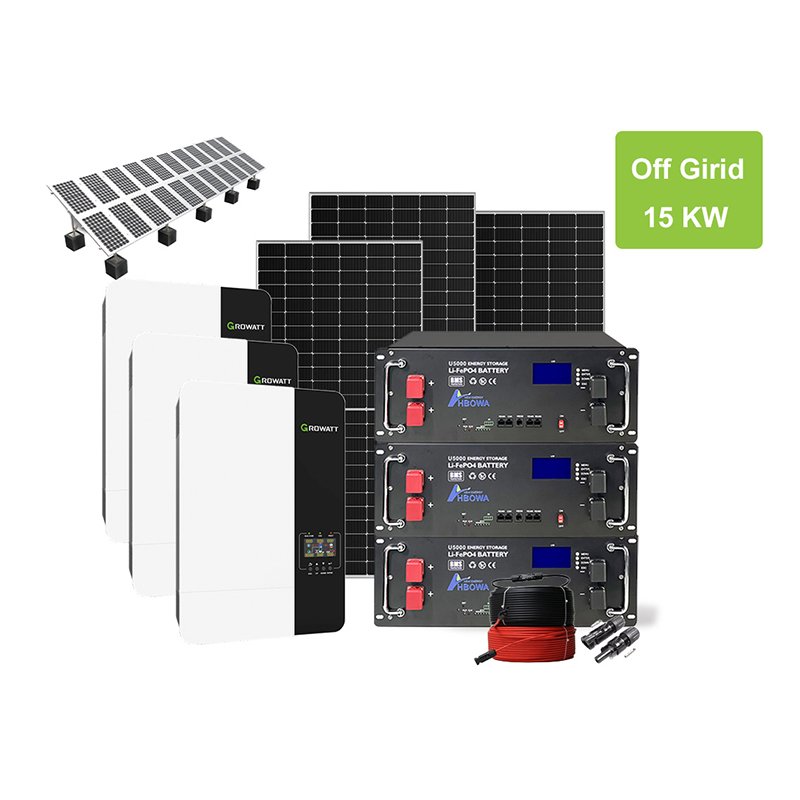
Single-Phase Low Voltage
Installation: Ground-mounted
Battery: 30KWh
MOQ: 1 Set
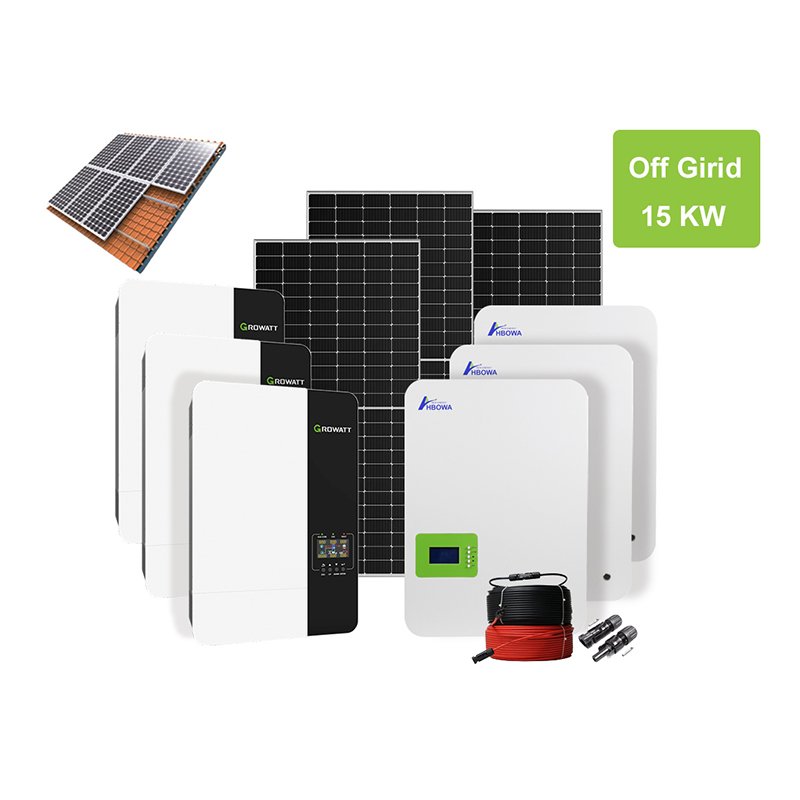
Single-Phase Low Voltage
Installation: Rooftop
Battery: 15KWh
MOQ: 1 Set
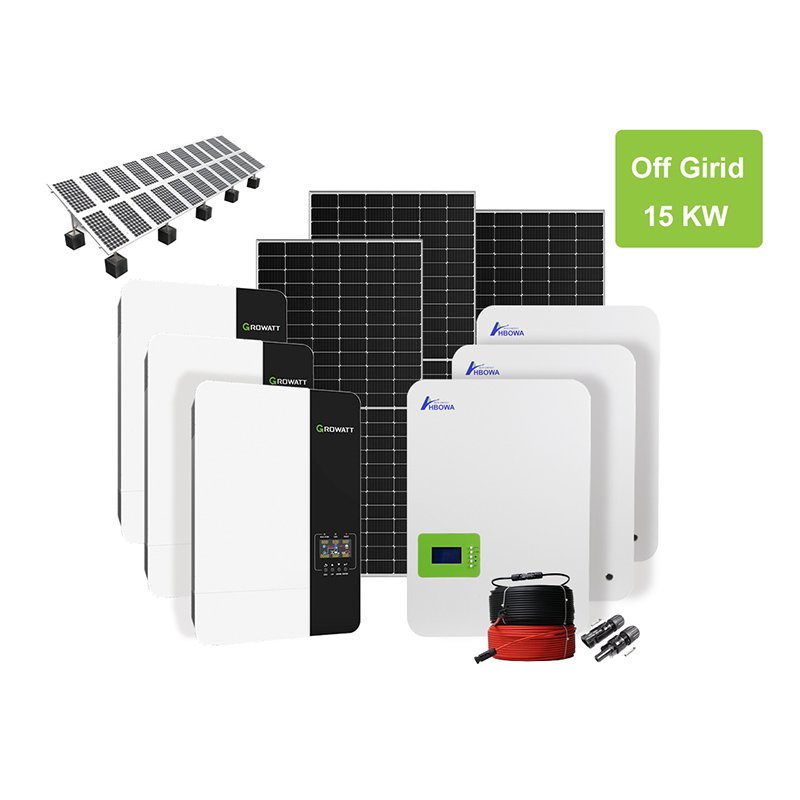
Single-Phase Low Voltage
Installation: Ground-mounted
Battery: 15KWh
MOQ: 1 Set
15KW Solar System Applications
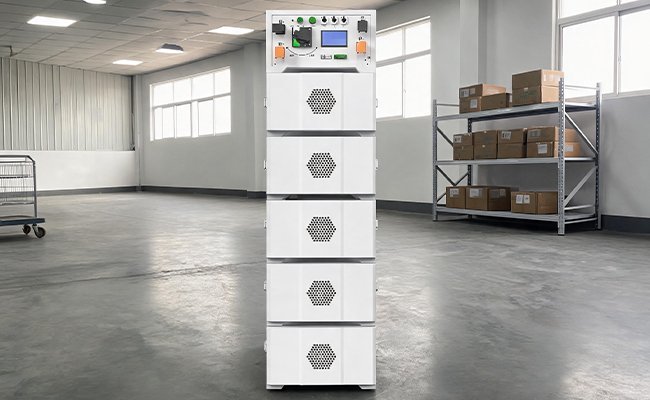 15kW Solar Systems for Factory
15kW solar systems are suitable for small factories, as they need important loads to work normally at night.
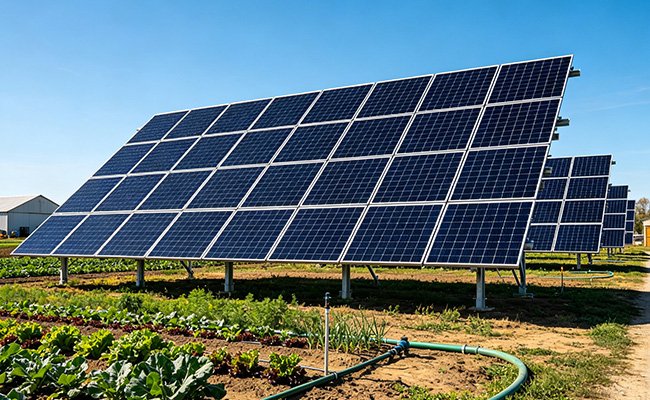 15kW Solar Systems for Farms
15kW solar systems are suitable for farms, as there is no stable electricity on site, and they do need energy to power essential equipment.
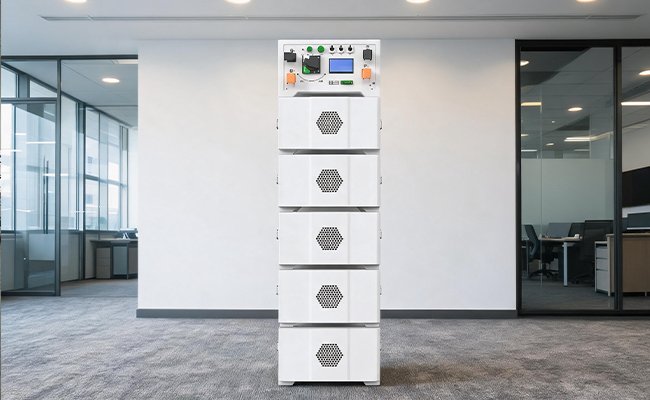 15kW Solar Systems for Office Building
15kW solar systems are suitable for office buildings, as this can help cut demand charges and keep critical loads running during outages.
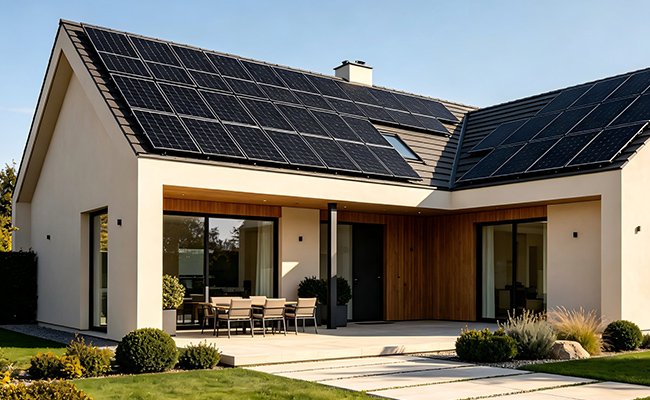 15KW Solar Systems for Residential
15kW solar systems are suitable for residential use, such as villas, for total energy independence without compromise as battery backup power.
 15kW Solar Systems for Retail Stores
15KW solar systems are suitable for retail stores, for protecting sales and saving power as a stable energy power source.
What Can a 15kW Solar System Run?
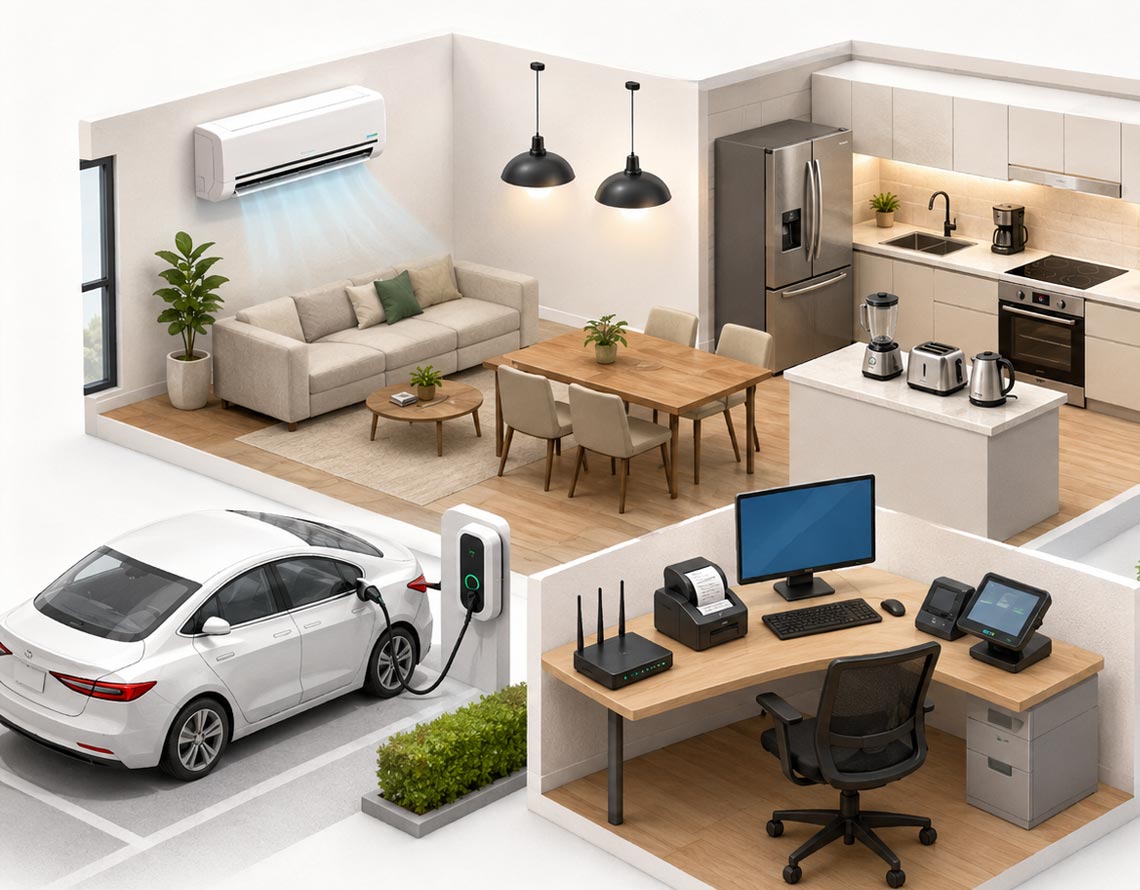
A 15KW solar system is often used to support high daily electricity demand in larger homes and commercial properties, it can run multiple air conditioners, lighting, kitchen appliances, water heating, pool pump, EV charging, oven, refrigerator for homes, and POS systems, computers, networking equipment, AC, printers, pantry appliances for business offices.
How Many Panels and How Much Space Needed for 15KW System
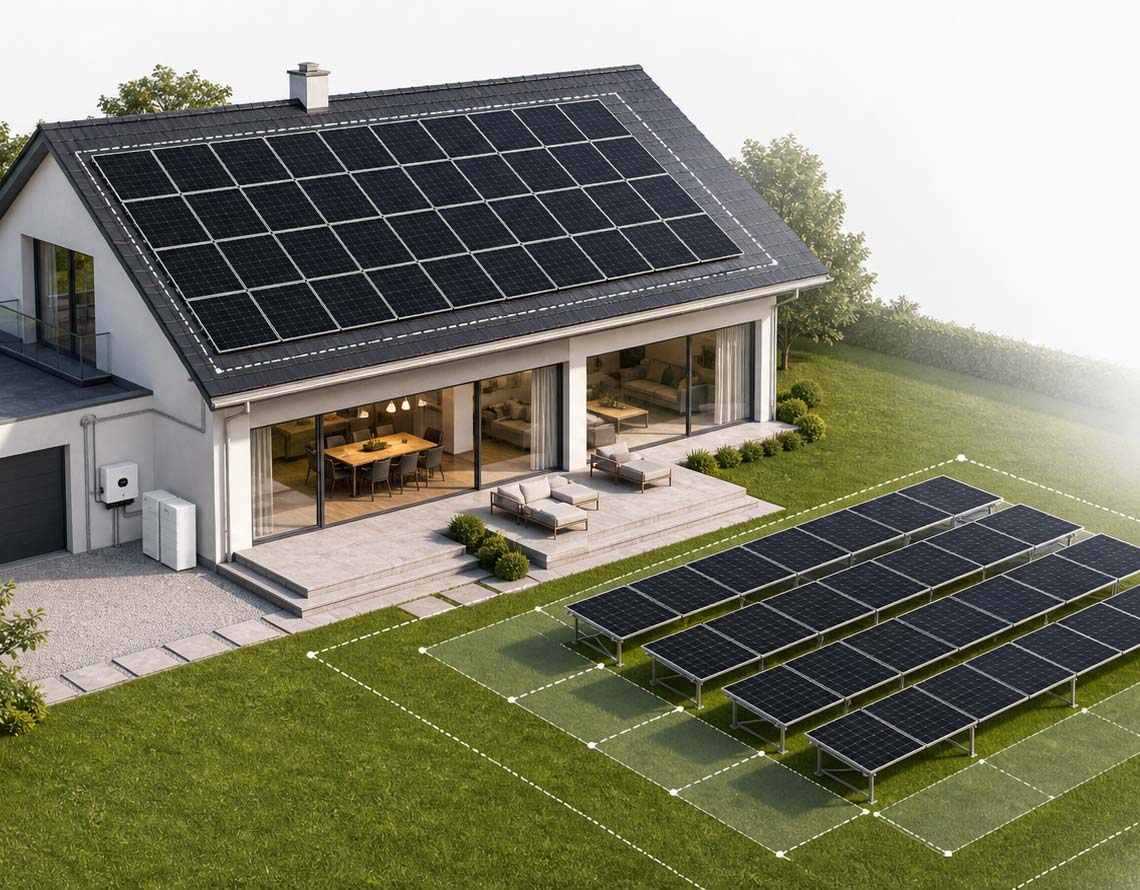
A 15kW solar system typically needs around 25 to 38 solar panels, depending on the wattage of the solar panels you choose. The required installation space can also vary, but in many cases, a 15kW system needs a relatively large roof area, about 45-60 m², and open ground space of 55-75 m² for a practical layout.
How to Choose the Right 15kW System
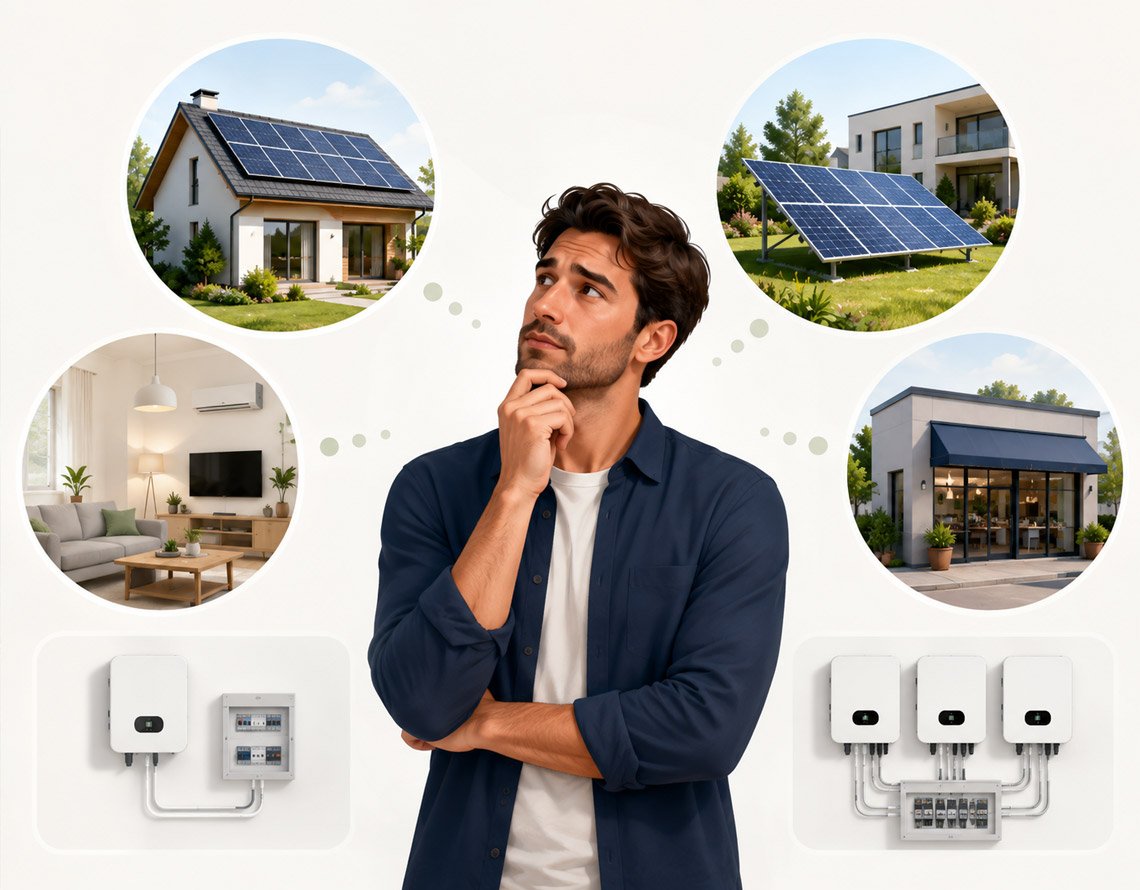
A 15kW solar system can be configured in single-phase or three-phase, and installed on a roof or on the ground. The right choice depends on your electrical service, available space, and whether the system is intended for a large home or a small business. If you wonder how to choose between them, the quick selection guide table below will help you, or feel free to contact us directly; our sales and engineers will offer you tailored solutions.
More about HBOWA 15KW Solar System
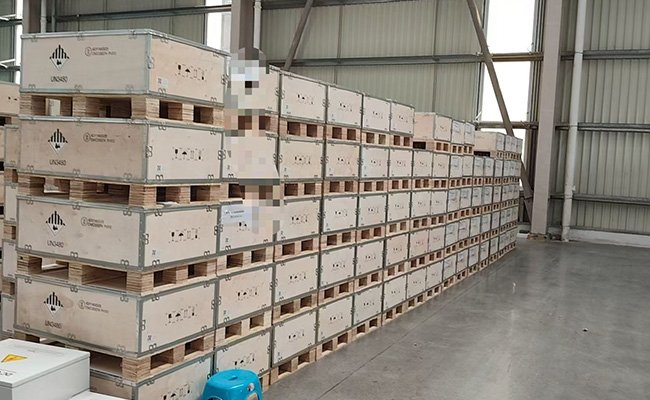
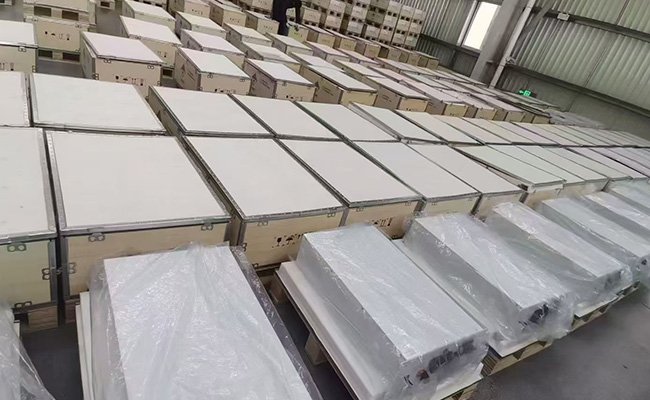
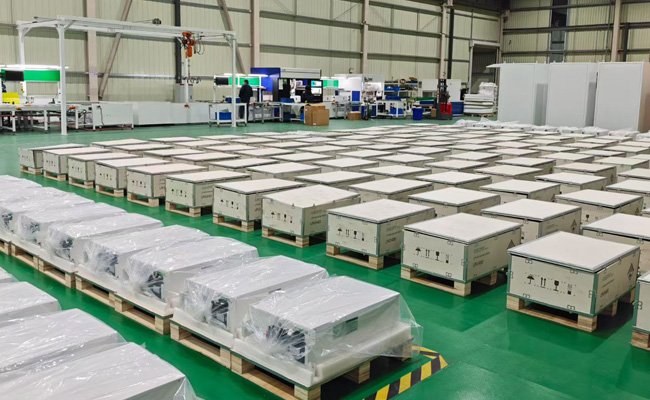
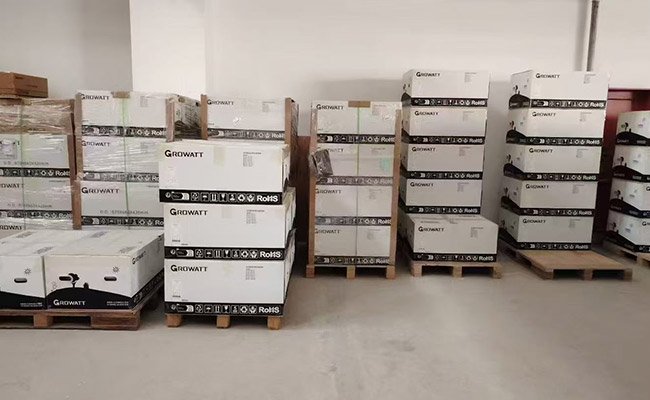
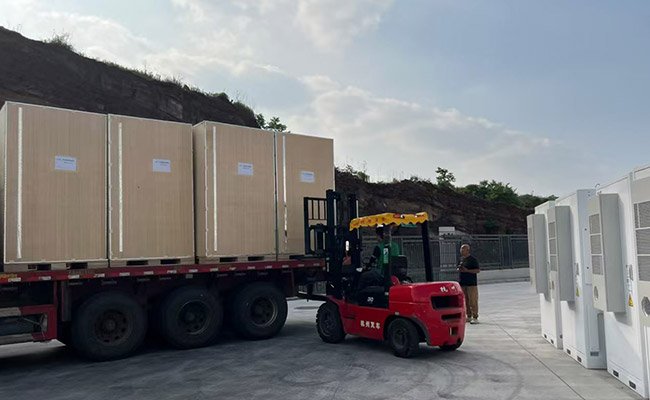
- Warehouse Show
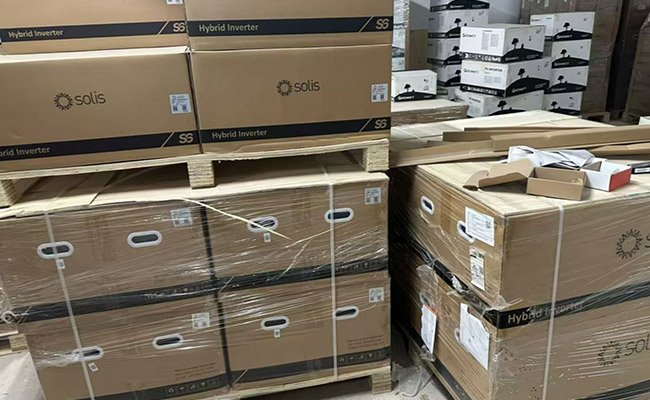
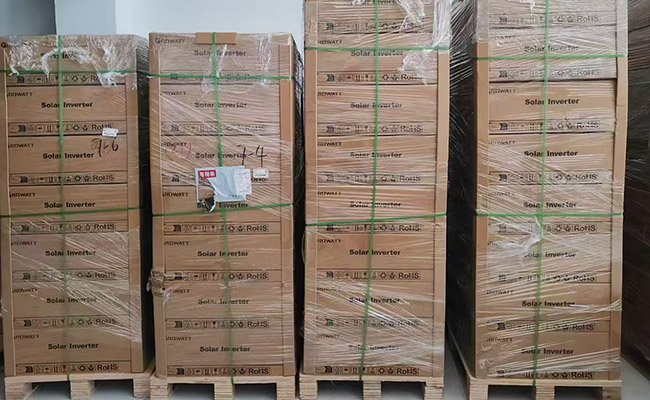
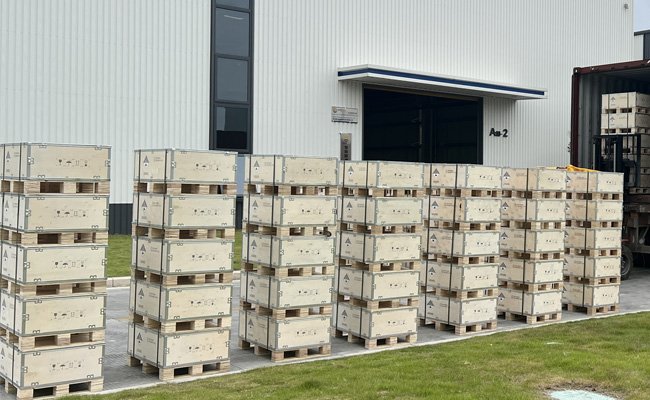
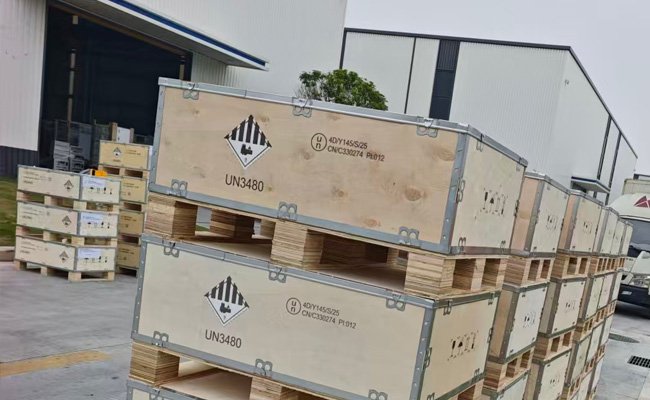
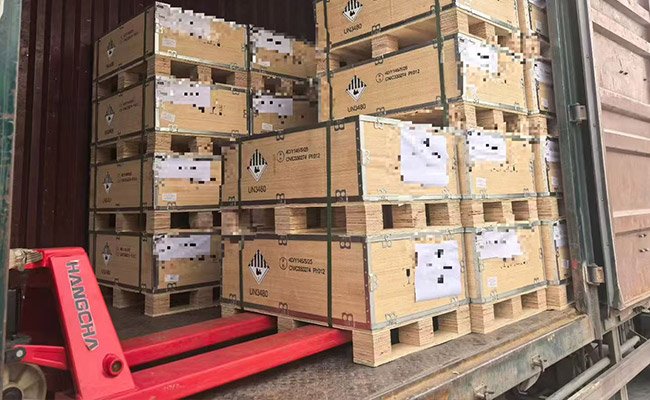
- Shipping

FAQ
Yes. A 15KW solar system is suitable for a large home, which has a large electricity demand, with heavy loads such as multiple air conditioners, EV charging, oven, computers, and so on.
Yes. A 15KW solar system can work well in many small businesses, such as cafes, retail stores, small offices, and similar light commercial sites.
A 15kw solar system can produce a strong electricity power around 20,000-27,000kwh/year, but the exact amount depends on many factors, such as local sun hours, weather conditions, panel installation orientation, shading, and system design.
You should choose the 15kw solar system type according to your electrical service and load profile. When you use residential propertities with single phase service, then choose single phase low voltage 15kw system type, and when you need more balanced load distribution and have three phase power, then three-phase 15kw systems are a better choice.
Neither option is the better choice; it depends on your property conditions. Rooftop installation is better if you have enough roof space and good solar exposure. Ground-mounted installation is more suitable if you have enough land space and roof condition is not ideal.
Not always. If you choose 15KW on grid solar system, then no need. If you want backup power during outages or need more power at night, then a hybrid system or a off grid system with battery storage is usually the better choice. So it depends on your load pattern, local grid reliability, and budget.
It is possible to expand if the inverter, electrical infrastructure, and available installation space were designed with expansions in mind. As electric power demand increases, utilities should discuss expansion plans as part of the initial design to avoid costly replacement.
Yes and No! A grid-tied system automatically shuts down when the utility goes down for safety. The operation of the backup needs batteries and compatible backup circuits. Systems that operate in hybrid mode and have a backup function always keep supplying power to selected loads when the grid supply fails.
The inverter size recommendation may depend on local regulations, system design, and oversizing. In many commercial installations, 10 kW – 15 kW inverter capacities are typically combined with 15 kW of solar modules, but local engineering requirements must always be considered.
Battery life depends on chemistry, operating conditions, and usage. For instance, an HBOWA LiFePO4 battery delivers +6000 cycles under normal operational conditions. This can mean over a decade of service in many applications.
Related Solar Product

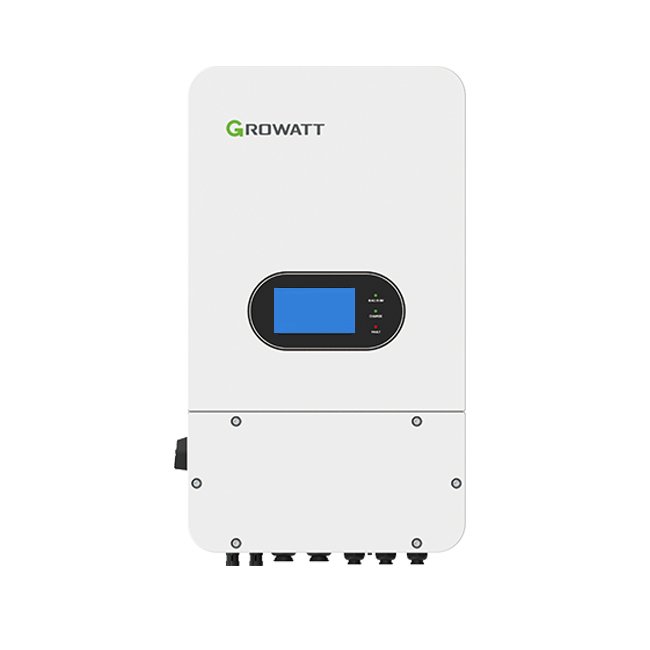

Number of Panels Needed for 15KW Solar System
| Panel Wattage | Approximate Number of Panels for 15kW |
|---|---|
| 450W | about 34 panels |
| 500W | about 30 panels |
| 550W | about 28 panels |
| 600W | about 25 panels |
| 650W | about 24 panels |
| 700W | about 22 panels |
| 730W | about 21 panels |
15kW On-Grid vs Hybrid vs Off-Grid: Which System Should You Choose?
The configuration chosen is as vital as the system size selected. It depends on their grid availability, energy independence goals, and backup requirements.
| Feature | On-grid | Hybrid | Off-grid |
| Grid connection | Required | Required | Not required |
| Battery storage | Optional | Included | Required |
| Backup during outage | No | Yes | Yes |
| Initial investment | Lowest | Medium | Highest |
| Energy independence | Low | Medium-High | Complete |
Choose On-Grid If…
A property with stable utility service and heavier daytime use of electricity can use a 15kw on-grid solar system. This configuration is the top choice for businesses, offices, and household clients requiring the shortest payback as it maximizes direct electricity savings, requiring lower initial investments.
Choose Hybrid If…
A hybrid solar power system is perfect for use when back-up power is essential. A hybrid solar inverter can help users with occasional interruptions in the grid, and combine solar generation and battery storage. This approach improves energy resilience while allowing partial grid interaction.
Choose Off-Grid If…
Most of the time, remote farms, mining sites, telecommunication places, etc., pick the 15-kw off-grid solar system that is not connected to the grid. These systems require larger battery banks and careful energy management since all the demand for electricity must be onsite.
| Scenario | Best Choice |
| Stable utility grid and lowest cost | On-grid |
| Frequent outages with grid access | Hybrid |
| No utility connection available | Off-grid |
Appliances 15kW Solar System Can Run
| Appliance | Typical Quantity | Approximate Daily Consumption |
| Air conditioners | 4-6 units | 20-35 kWh |
| Refrigerators | 2-3 units | 3-6 kWh |
| Lighting circuits | Entire building | 3-8 kWh |
| Office computers | 10-20 units | 6-12 kWh |
| Water pumps | 1-2 units | 2-8 kWh |
| EV charger | 1 unit | 7-15 kWh |
The exact appliance capacity depends on usage patterns, operating hours, and the overall solar power system size selected for the site.
How Much Does a 15kW Solar System Cost in 2026?
The installed cost of a 15 kW solar system globally in 2026 varies alot but it is expected to be around USD 10,000 to USD 45,000. Which means, the concluding investment would depend on whether the systems are off-grid, hybrid, or on-grid, the quality of equipment, battery storage capacity, etc. Also, the installation conditions locally.
Installed Cost Ranges
| System Type | Typical Installed Cost Range (USD) |
| On-grid | $10,000-$20,000 |
| Hybrid | $18,000-$35,000 |
| Off-grid | $25,000-$45,000+ |
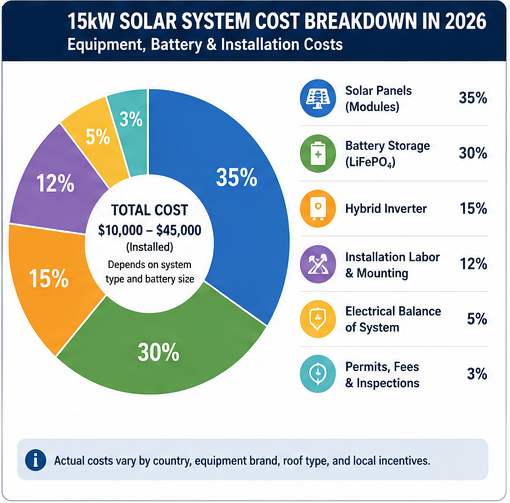
These ranges are the global average. The prices of actual projects (on a per-condition basis) may differ by market. It is because rates of labor, permission requirements, administration, and taxes differ considerably from project to project.
Why are hybrid systems more expensive?
A hybrid solar system installation includes extra battery storage, energy management controls, backup protection devices, and a hybrid inverter. New components enhance energy independence and resilience, but equipment and installation prices will also increase.
What Is Affecting 15 kW System Energy Output?
Location is the major deciding factor when assessing how much power do 15kw solar systems produce. Locations with high solar irradiation produce more electricity. The angle at which the panels are installed and the tilt also matter. This is because the closer they are to this optimum angle, the more sunlight they receive throughout the year. Higher operating temperatures, shading by neighbouring objects, dust accumulation, and lower efficiency of various components lower the solar energy output.
According to the PVWatts calculator from the U.S National Renewable Energy Laboratory, systems installed in different climates with the same characteristics may still produce significantly different annual outputs.
Daily Output by Region
| Region | Typical Daily Output |
| High solar regions | 65-75 kWh/day |
| Moderate solar regions | 55-65 kWh/day |
| Low solar regions | 45-55 kWh/day |
Real Example
A 15kW rooftop solar system was installed by a small factory in Southeast Asia to offset its daytime manufacturing loads, and due to its strong solar resources, the system generates on average 68 kWh per day. Thanks to the fact that most production equipment is used only during daytime hours, nearly 75% of the electricity generated is directly self-consumed on site, improving the project economics and exposure to rising utility prices.
N-Type TOPCon vs PERC Panels for 15kW Systems
| Feature | N-Type TOPCon | PERC |
| Efficiency | Higher | Moderate |
| Temperature performance | Better | Standard |
| Degradation rate | Lower | Higher |
| Expected lifespan | Longer | Standard |
| Typical cost | Higher | Lower |
According to a recent industry study by Fraunhofer ISE, N-type TOPCon solar panels are becoming a more popular choice for large residential and commercial projects thanks to their higher efficiency and lower degradation in the long term.
How Many Batteries Are Needed for a 15kW Solar System?
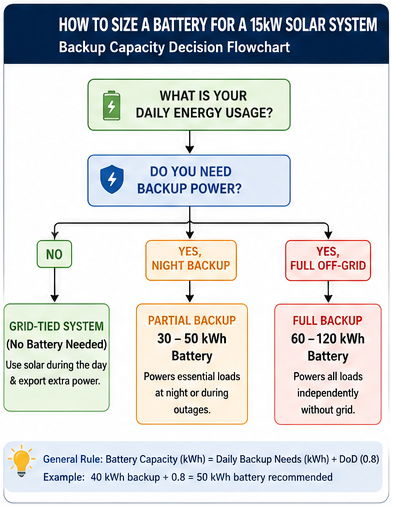
The quantity of batteries for 15kW solar system installations depends on your electricity consumption, the backup duration you desire, and the battery depth of discharge (DoD) you are allowing. Most grid-connected users need storage in the range of 20-40 kWh, while completely off-grid systems often require over 60 kWh.
Battery sizing is commonly estimated using the following formula:
Battery Capacity (kWh) = Daily Load × Backup Hours ÷ DoD
Recommended Battery Sizes
| Backup Goal | Suggested Battery Bank |
| Daytime load shifting | 15-25 kWh |
| Overnight backup | 30-50 kWh |
| Full off-grid operation | 60-120 kWh |
Example Calculations(Mini-Case Study)
Take the example of a house that consumes 45 kWh each day and needs a backup for one night. Around 56 kWh of battery capacity is advised, assuming an 80% usable DoD.
A small business that consumes 70 kWh (kilowatt-hours) daily would need approximately 88 kWh of useful storage capacity for complete overnight backup under like assumptions.
Why LiFePO4 Batteries Are Commonly Recommended
A modern LiFePO4 battery benefits large solar installations in many ways. Most quality lithium iron phosphate batteries get more than 6000 charge-discharge cycles under standard operating conditions, which is much more than lead-acid batteries. They also achieve high round-trip efficiency (typically more than 90%), require low maintenance, and have high thermal stability.
The commercial users and bulk buyers prefer a scalable solar battery storage system based on modular LiFePO4 technology. The capacity can be extended as per the demand for energy.
What affects the cost of a 15kW solar system the most?
The final cost of a 15kw solar system depends on many factors, including system type, inverter configuration, battery requirement, installation method, panel wattage, mounting structure, and project location. For hybrid systems and off-grid systems, the battery storage costs the system the most. An on grid solar system is much cheaper than hybrid and off grid solar systems, and solar panels affect the system cost the most.
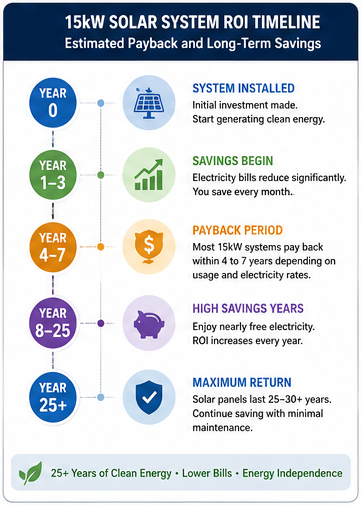
Is a 15kW Solar System Worth It? ROI and Payback Analysis
When the electricity usage coincides with solar generation, then a 15kW solar system can provide good long-term returns. The solar ROI is affected most of all by electricity prices, the share of solar energy consumed onsite, incentives, and battery use.
Payback Factors
| Factor | Effect on ROI |
| Higher electricity tariffs | Faster payback |
| Greater self-consumption | Improves savings |
| Incentives and rebates | Reduces upfront cost |
| Battery storage | May improve resilience but increase payback period |
| Premium equipment efficiency | Increases lifetime generation |
Example ROI Scenario
A business facility that uses most of its electricity during business hours might achieve a relatively short solar payback period because a large proportion of solar generation is used on-site. Take advantage of a retail business entity, which is mostly operational during day time, generally gets the benefit of high self-consumption. Such an installation has low dependence on grid electricity and improves the project economics.
Ways to Improve ROI
One of the most effective means to optimise returns is the shifting of major electrical loads to daytime operating hours. In a few cases, appropriately sized battery storage may further boost self-consumption. By choosing efficient modules and quality system components, long-term energy production and economic performance improve.
How to Choose Components for a 15kW Solar System
Choosing appropriate components can improve the reliability of the system over its long-term energy yield and maintenance costs. Because a 15kW Solar System is a big investment, purchasers should give priority to proven equipment with solid performance history and bankable warranties.
Choosing Solar Panels
Tier-1 solar panels are generally recommended for big residential and commercial projects because those manufacturers have established capacity, financial wealth, and have provided field experience.
LONGi, Risen, Trina, JA Solar, and Canadian Solar are popular manufacturers and considered best because they lie in the tier-1 solar panel category, but customers should check efficiency ratings, degradation guarantees, temperature coefficients, and product warranties while comparing modules rather than just upfront cost.
Choosing the Right Inverter
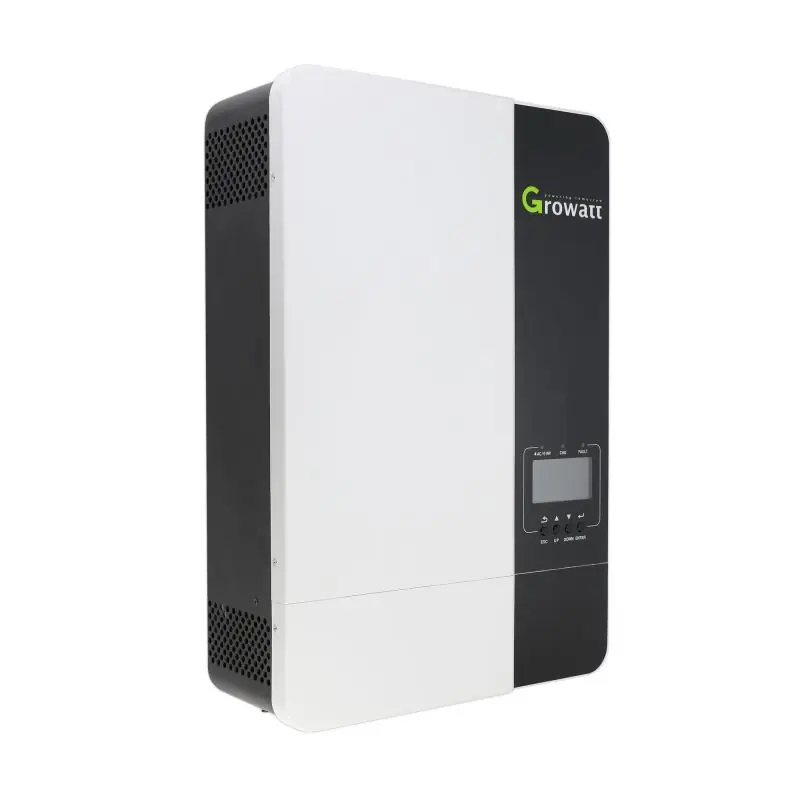
The inverter transforms the solar modules’ direct current into usable alternating current. A regular string inverter is usually adequate for grid-connected systems without battery storage. Nonetheless, projects looking to the future of energy storage should take on a hybrid solar inverter as it can manage solar generation and batteries. Systems involving reliable solutions, such as a Growatt inverter, are often chosen for residential and commercial storage applications as they allow for scalable energy management.
Choosing Battery Chemistry
| Battery Type | Pros | Cons |
| LiFePO4 | Long lifespan, high safety, low maintenance | Higher upfront cost |
| Lead-acid | Lower initial investment | Shorter lifespan, regular maintenance |
| Lithium NMC | High energy density | Higher thermal management requirements |