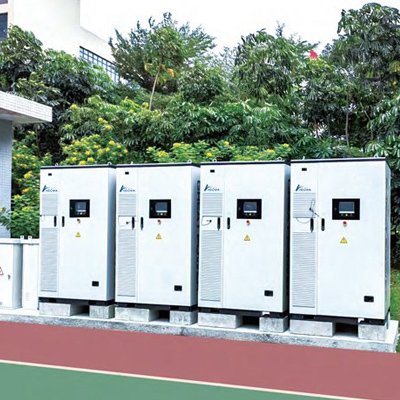
Battery Energy Density Calculator
Use measured or datasheet values for the same battery boundary. This result supports comparison and preliminary packaging estimates.
Introduction:
Battery energy density indicates how much energy a battery can hold in relation to its “weight(kg)” and “volume(L)”. Usually, we express it in Wh/Kg or Wh/L. The metric will help make clear how much storage can be contained within a mass. Just because a battery has higher energy density does not mean it is better.
What Is Battery Energy Density?
The definition of battery energy density is fairly straightforward: it describes the amount of stored electrical energy available within a battery relative to its mass. The term is used in a broad sense, but two of them are particularly useful: the specific energy in Wh/kg, and the volumetric energy density in Wh/L. The International Energy Agency refers to energy density as a general term for energy stored per unit of mass or volume and distinguishes between these two measures in its battery analysis.
The initial measurement is of gravimetric or specific energy. It indicates the amount of energy that can be stored for every kg of battery. When weight is a key constraint, such as in electric vehicles or other mobile equipment, this is important.
The second value is a volumetric energy density, which explains how much energy is stored in battery volume, usually measured in watt-hours per litre (Wh/L). It is more of a concern when there is limited space for installation.
Two batteries can provide the same nominal energy but take up different spaces or have different masses. While they could have the same capacity, their meaning for energy density is different. In terms of solar storage, comparing battery physical designs can help with understanding energy density can help, though it should always be taken in combination with capacity, power capability, safety, cycle life, and other application requirements
Battery Energy Density Formula: How to Calculate It
The formula for the battery energy density depends on whether the comparison is over the mass or over the volume. For gravimetric energy density, the stored energy in the battery is divided by the mass of the battery. It is expressed in Wh/kg. For volumetric energy density, the stored energy is divided by the corresponding volume of the battery. It is expressed in Wh/L.
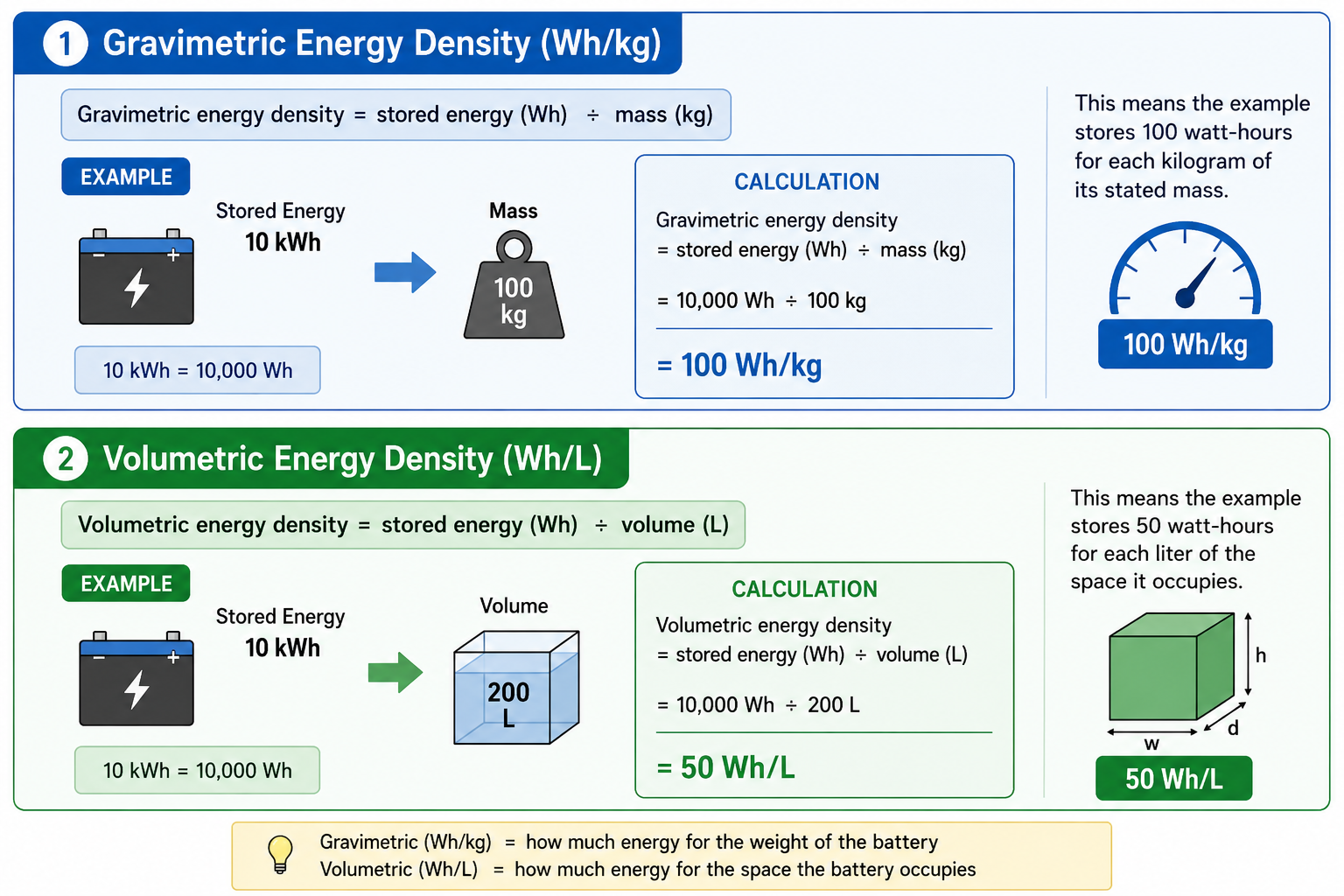
Gravimetric vs. Volumetric Energy Density
Gravimetric energy density and volumetric energy density are two ways to express the same concept. They are the ratio of the amount of energy that is stored in a system to its mass and volume, respectively. As we can see, the numerator of both indicators is the same, yet the difference is how we express the denominator.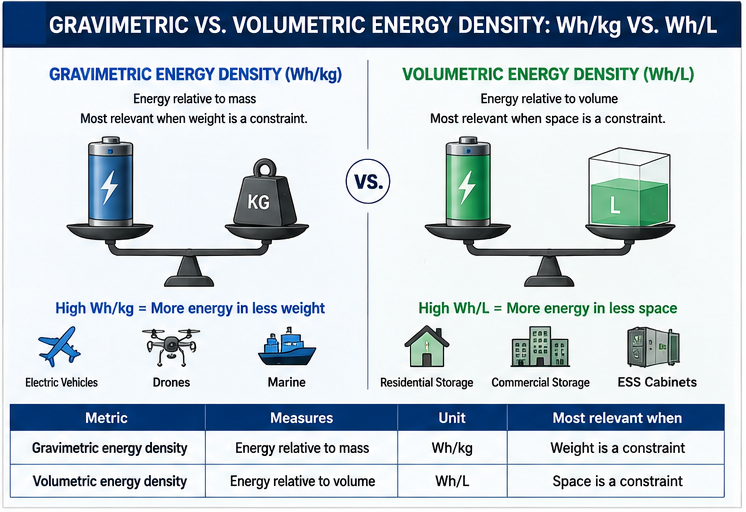
Energy density is expressed as Wh/kg as well as Wh/L. A battery with a high Energy density Wh/kg may be useful where there is a need to reduce the weight of a battery. A battery with a high Energy density Wh/L may be more useful where there is a lack of space to install a battery.
Some solar installations may prefer how much physical space a battery takes up over its weight. In some mobile applications, however, its mass is most important. Note that batteries with high Energy density Wh/kWh or Energy density Wh/m3 are desired.
Why Does Battery Energy Density Matter?
The battery energy density is significant because it determines how much energy can be stored in a given weight or physical space. When there are fixed sizes or weights, higher energy density allows storing more without regard to mass or volume, which have been increased by the corresponding proportion.
In electric vehicles, the lower mass of the battery can support better vehicle efficiency and usable payload. In installations that are constrained by space, the increased volumetric density lets us achieve more storage capacity within a smaller footprint.
When the equipment has to fit within a specific physical or structural constraint, this concern is important to have. But energy density must not be taken alone as the measure of battery quality high energy density battery might not be the right tire for many circumstances. The buyer must also consider the usable energy, power capability, cycle life, safety, thermal performance, operating conditions, cost, and system requirements.
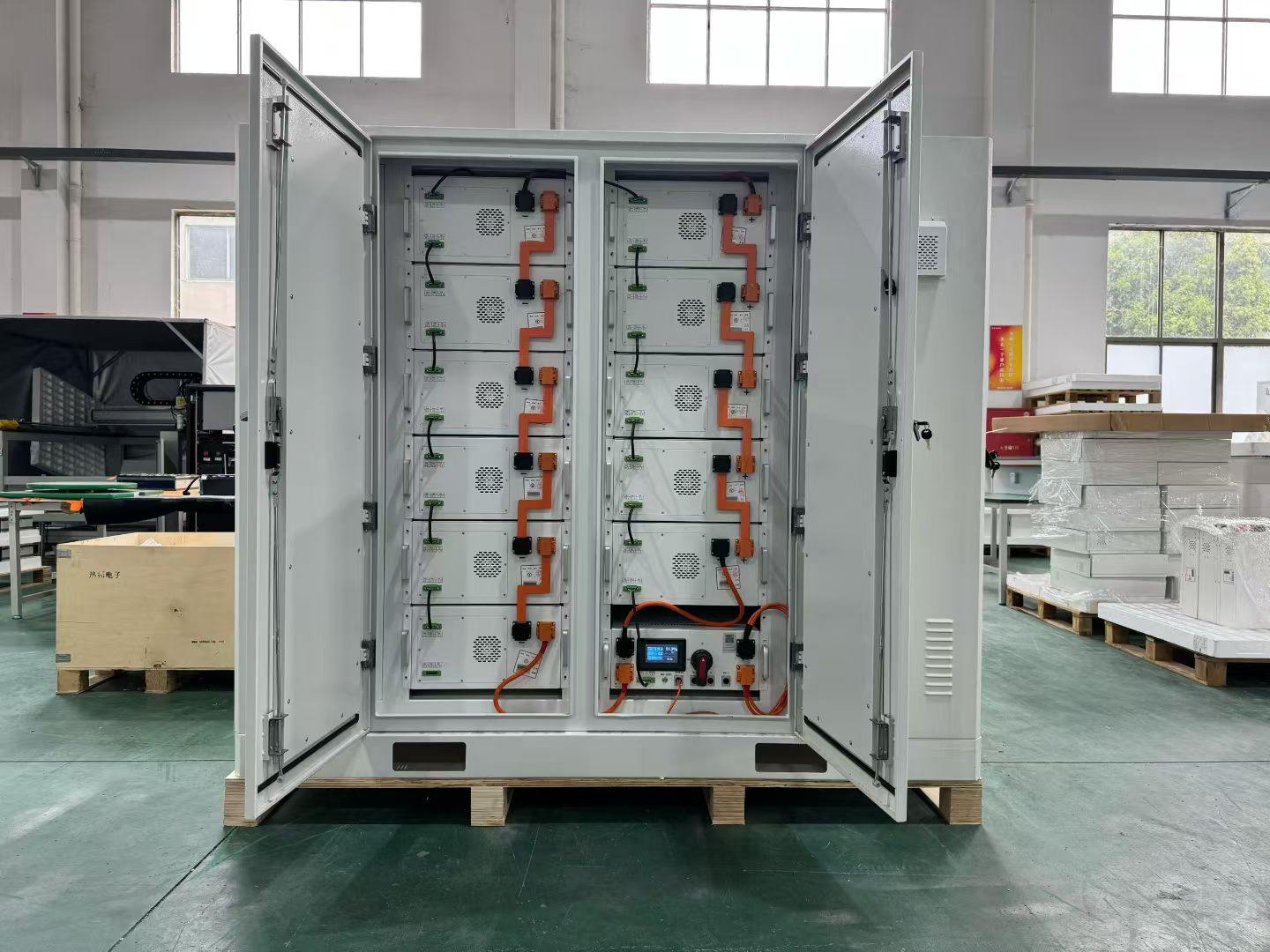
Higher energy density is an asset but not a better battery, to be sure. A stationary energy-storage system might accept a larger physical footprint if another, better-suited battery chemistry can sustain more charge-discharge cycles or has operational characteristics that better suit the project.
Energy density also does not state how long a battery takes to discharge. That is affected by stored energy and the power being drawn. Energy density is simply how compact that stored energy is by mass or volume.
Battery Energy Density by Chemistry: LFP, NMC and Others
Battery energy density depends on battery chemistry. One of the other properties that determine the choice of chemistry is the energy density. Lithium iron phosphate chemistry still has a lower energy density in comparison to nickel, manganese, and cobalt chemistry. The IEA reports examples that include one-fifth lower gravimetric energy density and about one-third lower volumetric energy density in the case of the LFP battery packs compared with the NMC battery packs.
However, LFP has a significant presence in stationary storage. For 2025, the IEA further reports that LFP made up over 90% of global stationary battery-storage capacity. LFP cannot, thus, be relegated to a back seat in spite of its low energy density when other properties and system necessities are important.
Comparing chemistry-to-chemistry figures also requires careful language because of current cell-level figures. The new LFP cells can reach 205 Wh/kg compared with NMC cells, which reach up to 265 Wh/kg, and sodium-ion cells reach 175 Wh/kg maximum. These figures are technology-level cell figures and not universal figures for an entire battery pack or energy storage system.
Therefore, LiFePO4 energy density, NMC energy density, and other chemistry numbers must only be compared when the level of measurement and the test basis are the same. A cell-level number should not be paraded as the energy density of a completed battery system.
Energy Density vs. Capacity, Power Density and Usable Energy
Battery energy density is commonly confused with battery capacity or power. These specifications describe different features that must not be interchanged. Battery capacity is the amount of energy it stores, typically measured in kWh. Energy density explains how much energy is stored in relation to mass or volume.
For instance, two batteries may be rated at 10 kWh capacity but have different physical size or weight. Although both are capable of holding the same amount of energy, they do so with different energy densities.
Power is how quickly energy can be delivered. It is usually expressed in kilowatts. The distinction between energy density and power density is important. Energy density is the ratio of energy stored to mass or volume, while power density refers to power output per unit mass or volume.
Usable energy is a different metric. A battery's nominal capacity is not necessarily what is available for normal use. The portion that can be used is a function of DoD, operating limits, system controls, and other considerations.
| Specification | Tells you | Does not tell you |
| kWh | Stored energy | Physical compactness |
| kW | Power capability | Stored energy |
| Wh/kg | Energy relative to mass | Total capacity alone |
| Wh/L | Energy relative to volume | Power capability |
| DoD | Usable portion of capacity | Energy density |
Battery Energy Density in Solar Batteries, ESS Cabinets and BESS
As one moves from a battery to an entire energy-storage system, battery energy density takes on greater importance. The physical size and weight of a home solar battery can limit the placement of the unit, while the capacity of a residential battery determines how much storage the system has.
When viewed at the system level, it is more complicated. An energy storage system may comprise battery cells and modules along with a BMS, enclosure, electrical connections, cooling equipment, protection devices, and other components. Hence, the cell-level energy density should not be treated as the energy density of the entire system.
The same principle applies to an energy storage cabinet. The usable storage capacity is to be considered along with the physical dimensions, mass, cooling arrangement, protection equipment, and other integrated components of the cabinet. For a bigger battery energy storage system (BESS), the measurement boundary can include racks, thermal-management equipment, electrical equipment, safety equipment, and the container.
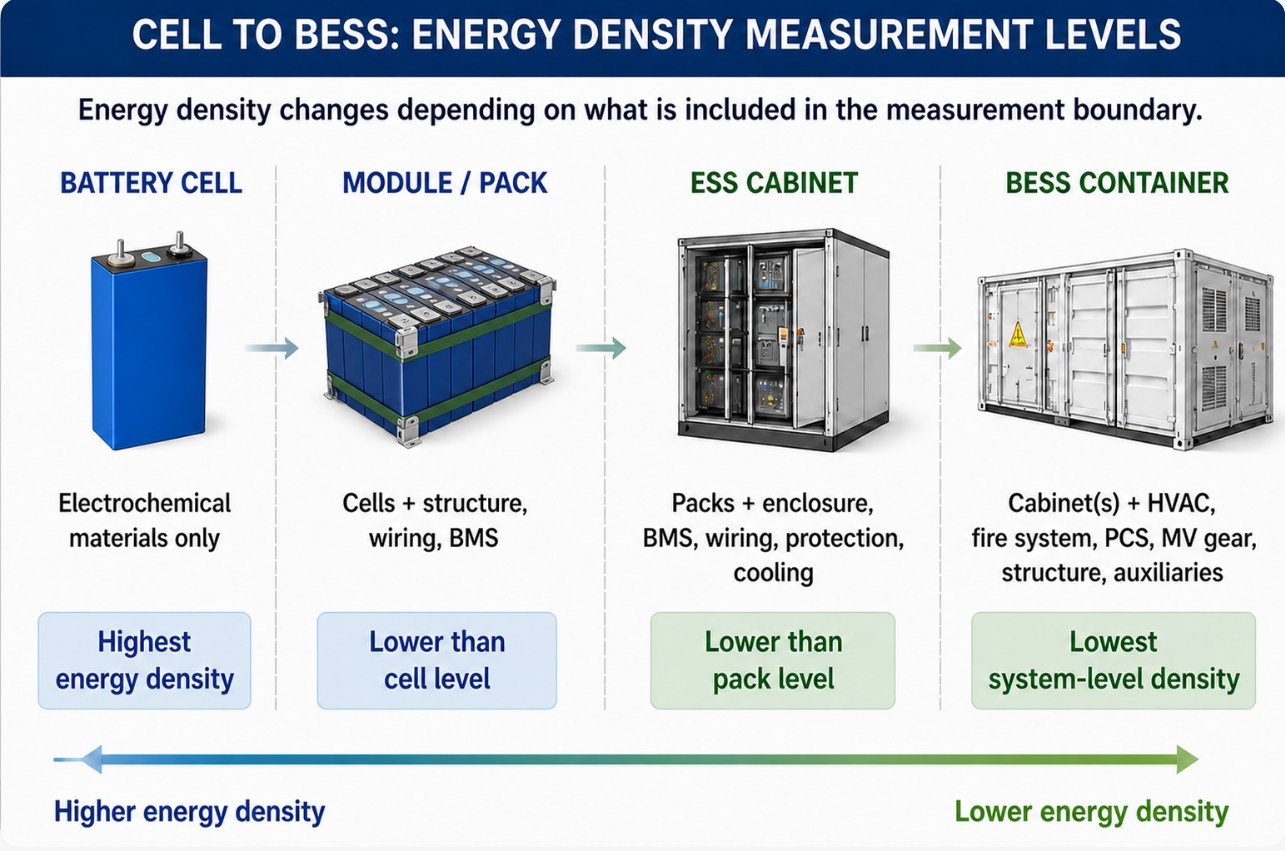
When assessing a complete solar power system, this is important. A battery with a high cell-level energy density can lead to a system installed with a different mass-to-capacity or volume-to-capacity ratio.
Real-World HBOWA Example: Why 576 kWh Does Not Mean 576 Wh/kg
A large commercial project explains why energy density and storage capacity do not mean the same thing. The energy storage system utilized by HBOWA for a project in Malaysia is a 200 kW / 576 kWh LiFePO₄ system. This system is being deployed for commercial and industrial peak shaving. According to the published project information, a 200 kW hybrid inverter, air cooling, fire protection, and an EMS system are part of the project, which includes 36 16 kWh battery packs.
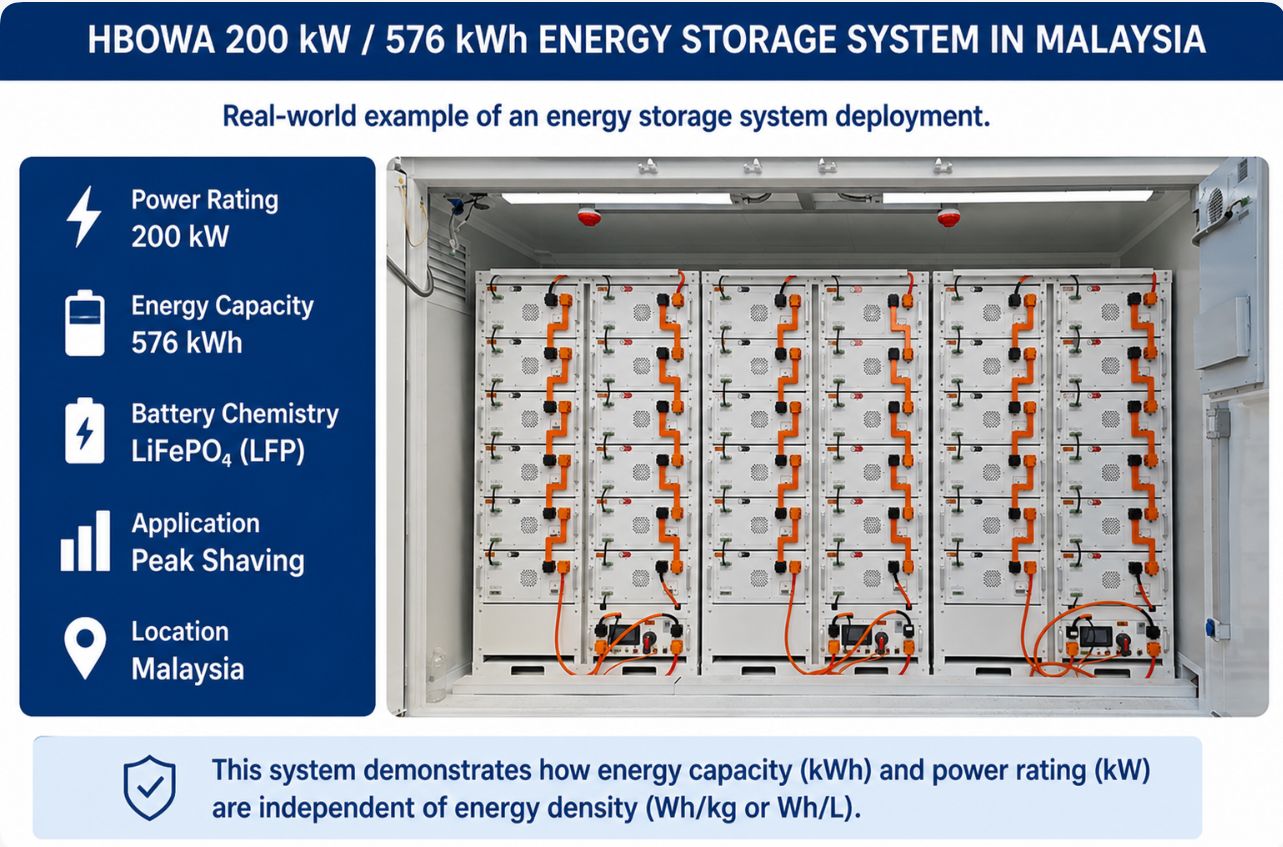
What matters is that the 576 kWh refers to energy capacity specifically, not energy density. It indicates the electrical energy on which the circuit mechanism is built. It doesn’t inform us of the energy stored per kilo or per litre or anything like that.
Determining system-level Wh/kg requires the relevant system mass. To compute Wh/L, we would also need to define the system volume. Those limits should encompass the elements pertinent to the comparison.
This example follows a simple rule. The kWh tells you how much energy the system can store. The Wh/kg or Wh/L tells you how compact that stored energy is, by mass or volume. A more massive BESS is not inherently more energy-dense.
A Second Real-World Example: Capacity, Power and Application Are Different
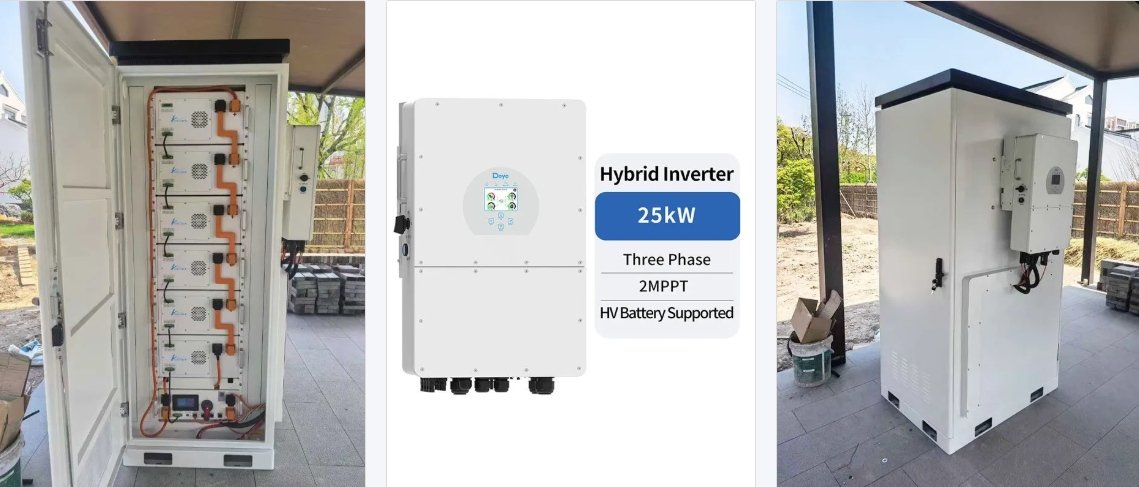
Another HBOWA project in Spain exemplifies the distinction between storage capacity and power. The energy storage system features a design capacity of 96 kWh with a Deye inverter of 25 kW for self-consumption and backup. The 96 kWh is the energy “stored”; 25 kW is the power rating of the inverter. Battery energy density cannot be described by either of them alone. It requires a mass or volume to be defined.
How to Evaluate a Battery Energy-Density Claim
When it comes to comparing a high-energy-density battery, the number, instead of the performance rating, should be looked at in context. Initially, determine whether the specification is meant for a cell, module, battery pack, or system. Check whether it is supplied in Wh/kg or Wh/L, and what mass or volume it includes in the calculation.
The comparison should use similar battery chemistries and operating conditions. Check to see if indicated capacity is nominal or usable capacity, and whether it has the power capability and cycle life, along with safety, cost, and application-intended use.
What is considered a good battery energy density? No value is universally acceptable. The right level will depend on whether the application is weight-, space-, storage capacity-, power-, cost-, robustness-, safety-, or other design-related requirements. A meaningful comparison of battery energy densities involves more than comparing just one number.
Conclusion
The Battery energy density indicates its storage capability concerning mass or volume. The answers to the design inquiries posed by Wh/kg and Wh/L differ. Achievable values are affected by chemistry. When it comes to solar storage, the energy density measure should not be considered in isolation; it also incorporates capacity, power, usable energy, safety, cycle life, cost, and the complete system.
Frequently Asked Questions
Two batteries can store a total of 10 kWh but have different energy densities. This could be because the 10 kWh battery with a lower energy density could have more mass or physical volume than the other. Energy density refers to the amount of energy stored per weight or volume, while capacity only refers to the total energy stored.
Not a single energy-density value is optimal for each and every solar battery. Residential, commercial and industrial systems need different space, weight, capacity, power, cost and operating requirements. Accordingly, consideration of a suitable battery must be made with respect to the entire application and not energy density alone.
Battery life is not directly determined by energy density. The cycle life is dependent on the chemistry of the battery, the cell design, the temperature during operation, and the charging and discharging conditions. It is also affected by the depth of discharge and the battery-management controls. A battery with a higher energy density may therefore have a different lifespan than another type depending on its design and operating conditions.
Energy density at the cell level pertains to the cells alone, while a complete battery system consists of a module, BMS, enclosure, wires, cooling, and safety equipment. With these additions, they increase system mass or volume, such that system-level energy density may be lower than cell-level.
To be sure, but only when the specifications are measured on the same basis. Examine the battery chemistry, cell or system level, Wh/kg or Wh/L unit of capacity definition, mass or volume boundary, and test conditions. Evaluating measurements made through different methods can be misleading.