
Battery Energy Storage Systems for Data Centers accumulate electric energy and supply it when there is a surge in demand in the facility. A data center battery can act as a source of backup power and more. Nonetheless, a BESS is not automatically a substitute for every UPS or generator.
Why Data Centers Need More Flexible Power Infrastructure
Growing data-center electricity demand is changing power planning
As cloud services, artificial intelligence training, inference, and other computing resources expand, so does data-center electricity demand. The International Energy Agency estimates electricity used by data centres worldwide will double from 485 to 950 TWh from 2025 to 2030 – representing around 3% of global electricity demand. More demand from this growth places strain on data centre power infrastructure, grid connections, and electrical distribution.
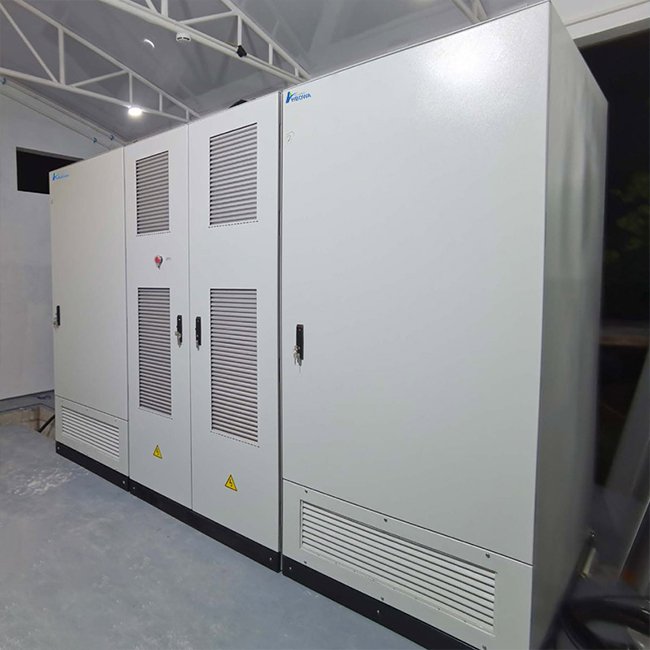
Reliability involves continuity, quality, and duration
An essential need is reliable data center backup power. Power continuity refers to whether loads that are critical are supplied at times of interruption. Power quality refers to the ability of a system to keep voltage, frequency, and rapid load changes within prescribed limits. How long can energy stored in a system support the load? The design questions are different. The ability to respond quickly may allow a system to handle a short disturbance, but not possess enough stored energy to endure a long one.
BESS is one layer of a larger power architecture
A battery energy storage system for data centers generally works within a larger electrical system. Power conversion and control systems govern the power flow through and between a facility’s grid, distribution equipment, UPS systems, generators, solar generation, and BESS. The architecture consists of grids and networks followed by BESS/PCS and critical loads.

How Battery Energy Storage Systems Work in a Data Center
The operating chain connects stored energy with the critical load
A battery energy storage system stores electrical energy in battery cells which is in the form of direct current (DC). The PCS (power conversion system) is responsible for the DC-to-AC conversion and manages the power flow going to and from the battery. The battery management system (BMS) monitors cell voltage and temperature, state of charge, etc. An energy management system allows coordinating charging, discharging, and energy decisions. Together, these BESS components determine how the data center battery responds.
What happens when the normal power source is disturbed
The event will determine the function of BESS. A properly set up battery and PCS can quickly react and assist in continuity during a small disturbance when the facility’s power source changes. In a lengthy outage, the energy that is accessible becomes the limit: a battery may support a given load only while there is usable capacity.
In the case of a prolonged outage, BESS may run in conjunction with generators and/or other generation as opposed to replacing them. According to Uptime Institute’s June 2026 research, deployment of data-center BESS is still in its infancy. Furthermore, it mentions that current large-scale limitations mean BESS usually complements (rather than displaces) generators and grid infrastructure.

Why controls matter as much as the battery
The battery does not run by itself. The BMS prevents the battery from overheating, while the EMC handles coordination of energy flow efficiencies. It becomes increasingly important as facilities incorporate high-density AI workloads, onsite generation, or multiple power sources. In real-world situations, backup power for BESS backup power depends on the entire system, not the battery capacity.
BESS vs. UPS vs. Generators: What Is the Difference?
A data center power system often uses several technologies to address different issues. A UPS preserves power uniformity by smoothing the AC power waveform. BESS offers backup stored energy that can be dispatched for load management or other services. A generator can sustain power during an outage for a longer duration when fuel is available. Analyzing them as mere replacements may obscure significant distinctions in response, duration, controls, and architecture.
| Requirement | UPS | BESS | Generator |
|---|---|---|---|
| Fast power response | Core strength | Strong with suitable PCS | Slower startup |
| Short-duration continuity | Core application | Strong | Not primary role |
| Energy storage | Limited by configuration | Core function | Fuel-based generation |
| Longer-duration backup | Limited | Depends on capacity | Strong |
| Peak shaving | Not primary | Strong potential | Not primary |
| Renewable integration | Limited | Strong potential | Limited |
| Fuel dependence | No | No | Yes |
| Power-quality support | Strong | Possible with suitable controls | Not primary |
Can BESS replace a data-center UPS?
Sometimes, but not anywhere near universally. The ability of a BESS to take on UPS functions is contingent on the PCS, transfer and distribution architecture, response requirements, redundancy strategy, controls, and applicable standards. The entire system must provide the necessary electrical behavior to the critical load. When assessing data center UPS and uninterruptible power supply data center specifications, this distinction is essential.
Can BESS replace a generator?
BESS also cannot substitute for a generator. Stored energy is finite, but a generator can produce electricity endlessly as long as fuel is available. BESS has the ability to bridge interruptions, allow transitions, reduce generator loading, and contribute towards other services. Some designs combine the BESS with generation intentionally.
According to Uptime Institute’s research, big BESS in 2026 will usually support engines and grid infrastructure instead of replacing them. Facilities’ load, outage strategy, and operating goals and architecture determine the choice.
Key Applications of Battery Energy Storage Systems for Data Centers
Backup power
Using BESS in your Data Center can provide a backup source of power and switch to another source when the electrical architecture goes down. The value is reliant on the battery’s capacity, the PCS’ response, the control strategy, and what loads are considered critical. Having batteries for data centers is an architectural decision, not just a bigger battery backup.
Power quality and fast load response
BESS ensures data center power quality is maintained by rapidly responding to voltage, frequency, or load changes. This is important: AI and GPU systems create more dynamic electrical demand. Uptime Institute highlights power balancing as an important data center BESS use case, and that storage can help manage AI infrastructure-related volatility. BESS provides fast electrical buffering in this role rather than being merely a source of outages.
Peak shaving and demand management
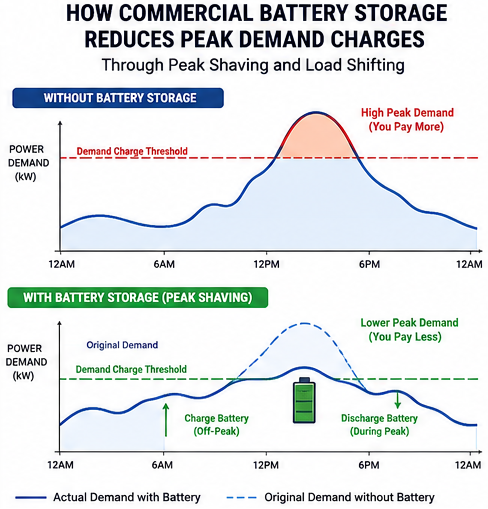
Applications with demand charges will reduce their peak load by discharging the battery during peaks. The facility can charge when demand or electricity prices are lower, then discharge when facility demand nears a defined limit. HBOWA’s commercial methodology customizes the system based on load, tariff, transformer capacity, and operating schedule, covering economics’ site-specific logic.
Renewable-energy shifting
Renewable energy can be steered towards periods with strong demand, and solar self-consumption can be increased. The Uptime Institute has identified the shifting of renewable energy to be another principal BESS use case in data centers.
Grid flexibility
Where regulations and market rules allow, BESS can provide demand response and other grid services. The power storage system can modify charge/discharge without violating its preset operating parameters. The technical rules, eligibility, and payment conditions vary geographically, so grid flexibility should be assessed on a project-specific basis.
How to Size a Battery Energy Storage System for a Data Center
Power vs. energy
The size of data center battery storage must be assessed in two dimensions: power and energy. At a certain time, the amount of electricity that the system can deliver is termed power. Power is measured in kW or MW. Energy, which is the amount available over time, is measured in kWh or MWh. A system can have enough stored energy but still not the power rating necessary for its critical load.
First-order sizing relationship
A starting point is:
Required energy ≈ critical load × required duration
This is a rough estimate. The final sizing should also include the conversion efficiency, usable capacity, degradation, reserve requirements, operating constraints, and redundancy.
Illustrative calculation
A data centre has a 2 MW critical load that requires 30 minutes of battery support. The quick calculation is:
The answer is 1 MWh of energy. That is not a final nameplate requirement. Losses, reserve capacity, usable range of state-of-charge, and system design can increase the installed capacity requirements. It is an initial energy calculation, not an engineering specification.
What changes the final size?
The dimensions of the final system depend on the percentage of the site considered critical, the reserve duration required, the power rating of the PCS, the redundancy solution, the battery degradation, the efficiency, ambient conditions, and load growth. The operating objective also plays a role, as backup, peak shaving, and renewable shifting need different power-to-energy ratios.
Real-World BESS Examples: What System Size Really Means
Here are HBOWA project examples that are in the real world, not data center case studies. They show how kW and kWh ratings are important to other operational objectives of operation.
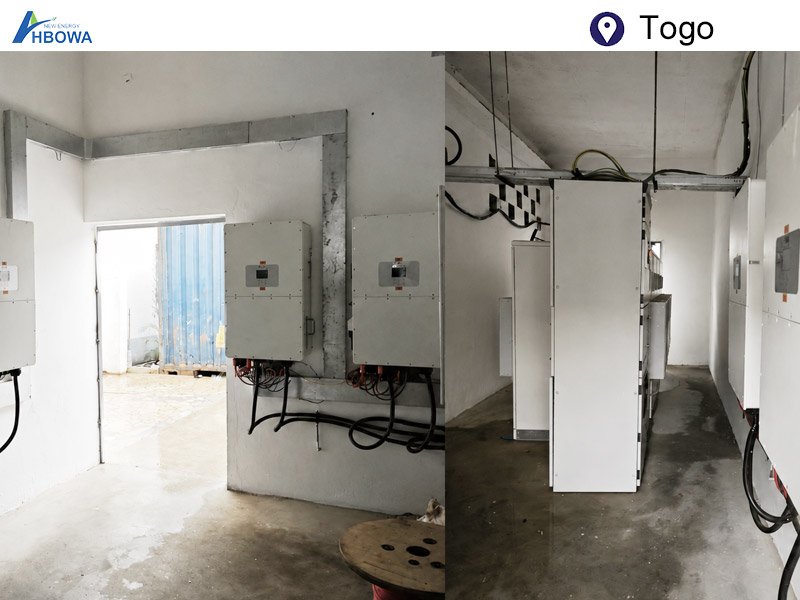
Togo: 300 kW + 400 kWh
A project from Togo is made of 300 kW of PV. It is combined with 400 kWh of battery storage thus can operate off-grid. The simple full-load calculation is 400 kWh ÷ 300 kW ≈ 1.33 hours, and itis only theoretical, so the runtime can’t be guaranteed.
Poland: 50 kW / 300 kWh
A factory in Poland also had a 50 kW/300 kWh HBOWA’s LiFePO₄ system for peak shaving, load shifting, and solar self-consumption. This demonstrates that BESS can aid in daily energy management.
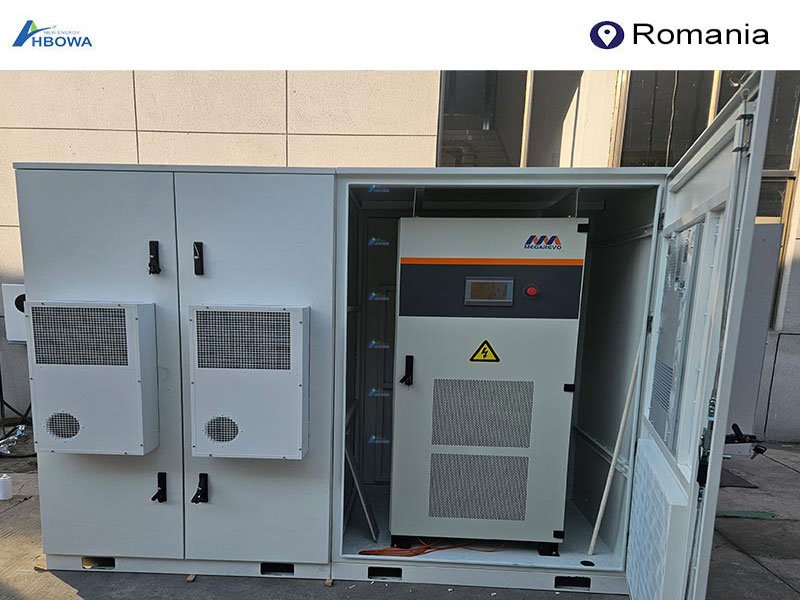
Romania: 100 kW / 200 kWh
A hotel in Romania also had 100 kw/200 kWh of storage, so it can do solar self-consumption, peak shaving, and backup as well. Its simple ratio is 2 hours, but it is theoretical once again. It can depend on load, efficiency, controls, and usable capacity.
What to Consider When Choosing a Data Center Battery Storage System
Battery chemistry and usable capacity
When choosing batteries for data centers, don’t just look at nameplate capacity. The chemical analysis, usable energy, cycle requirements, thermal behaviour, and safety characteristics. LFP (LiFePO₄) is being utilized on a regular basis; nonetheless, no chemistry is automatically best. As per the Uptime Institute, data centers mostly deploy Lithium-ion battery energy storage technology. Other alternatives differ in terms of maturity and duration.
PCS and electrical compatibility
The power conversion system refers to the stored DC energy and how it interacts with the facility’s electrical system. Note the power rating of the PCS, bidirectional operation, response, grid compatibility, operating modes, and integration requirements.
BMS and EMS
The BMS has to keep track of the cells, temperature, state of charge, and state. The EMS is stationed at the system level to deal with charging, discharging, load priorities, etc. These controls need to work with the greater electrical architecture and defined operating limits.
Thermal management and fire protection
In the complete design, assess the cooling method, temperature monitoring, fire detection, suppression, and thermal runaway mitigation. Liquid and air cooling suit different configurations. The installation must meet relevant local codes and standards.
Redundancy and scalability
A bigger battery does not necessarily mean a more resilient data center. Significance of system architecture. Look at modular expansion, with N+1 or whatever redundancy is needed, maintenance access, failure domains, and load growth. The design must indicate how to handle failure in critical subsystems.
Service and integration
Long-term performance is affected by commissioning, monitoring, maintenance, replacement strategy, controls integration, and technical support. The supplier must specify how the battery connects with the existing UPS, generators, transformers, meters, and facility controls, not just treat the battery as a product.
How Solar and BESS Can Work Together for Data Centers
A system that integrates solar power storage and battery storage using coordination to regulate different energy components. Storage of excess solar means that renewable energy can be moved to times of higher demand. This will aid in integrating higher levels of renewable energy. It can also lessen curtailment when export limitations are imposed. Simply having solar battery storage will not result in an off-grid data centre.
The performance of the system in reality is still determined by the grid connection, backup architecture, controls, and site requirements. HBOWA’ssolar plus storage solution includes new PV-storage systems and battery retrofits of existing solar plants for grid-connected operation.
Choosing a Practical BESS Configuration
Batteries should be engineered to efficiently respond to and meet the load profile of the data facility. The LiFePO₄ storage systems that HBOWA can configure for residential, commercial, and industrial applications are an integrated battery storage cabinet and containerized BESS.
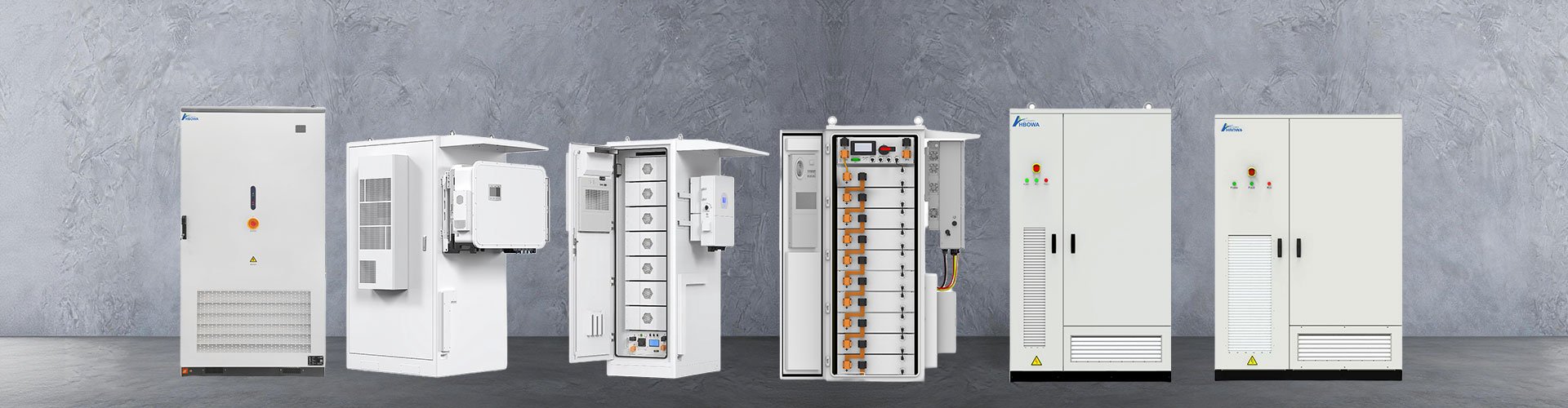
The solutions can also incorporate solar generation, PCS, BMS, EMS, cooling, and fire protection. For larger projects, energy storage systems can come in a more scalable installation format. The selection of a suitable configuration should be made based on project data, not battery capacity.
Conclusion
A data center BESS is not just a big battery. The worth of the power conversion system depends on the role played by stored energy, power electronics, and controls. Whether the storage delivers useful reliability, flexibility, and energy value depends on the application, size, and integration strategy. HBOWA can offer you BESS energy solutions for data centers; feel free to send your inquiry and discuss in detail anytime.
Frequently Asked Questions
A Battery Energy Storage System for Data Centers stores electricity to supply during an outage.
Yes, in some architectures but not universally. A BESS and data center UPS can overlap, but suitability is determined by response, duration, and redundancy.
The usable energy, maximum load, equipment efficiency, reserves, and limits determine this.
Not everyone. Battery storage systems (BESS) and generators can be hybridised while serving differing roles. According to Uptime Institute, BESS usually accompanies generators and grid infrastructure rather than replacing them.
One should start with the critical power and duration, followed by efficiency, degradation, redundancy, and operating requirements.