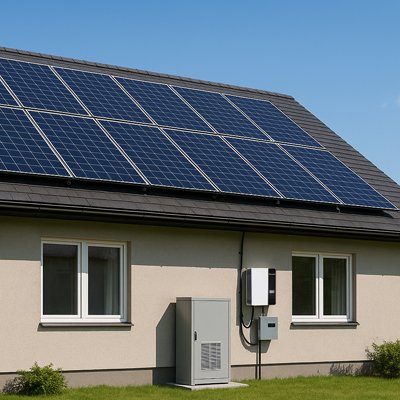
Commercial and industrial sites generate or buy electricity at one time and need it at another. Solar battery load shifting moves that energy across the day. This guide explains how a C&I BESS performs the shift, how it differs from peak shaving, and what you must confirm before procurement.

What Is Solar Battery Load Shifting?
Solar battery load shifting stores energy during one time window and releases it during another. A commercial facility may charge its battery from surplus solar generation in the afternoon, then discharge after solar output falls. It can also charge from the grid during an off-peak tariff period and discharge when electricity costs more.
To put it simply, the system changes when the site draws energy from the grid. It may not reduce the facility’s total electricity consumption. Instead, it reduces purchases during selected time periods and makes stored solar energy available when production and demand do not match.
This distinction matters when you review a proposal. The battery must hold enough energy for the required time window, while the PCS or hybrid inverter must deliver enough power for the target load. An energy-only estimate will not answer both questions.
How Does Load Shifting Work in a C&I BESS?
A C&I battery does not decide when to charge on its own. The EMS reads operating data, applies the control strategy, and sends commands to the PCS. The BMS keeps battery operation within voltage, current, temperature, and state-of-charge limits.
The process normally follows these steps:
- The site meter records the load and grid exchange at short intervals.
- The EMS checks the tariff schedule, solar generation, battery SOC, load demand, and operating priorities.
- The PCS charges the battery during a low-cost period or when the PV system produces surplus energy.
- The EMS starts discharge during the selected high-price or high-load period.
- The system stops or limits discharge when it reaches the planned SOC reserve, power limit, or another operating constraint.
The control plan should match the reason for installing storage. A site that wants higher solar self-consumption needs a different schedule from a factory that mainly wants tariff arbitrage. If backup power also matters, the EMS must keep part of the battery capacity in reserve.
| Control Input | How the System Uses It | What You Should Provide |
|---|---|---|
| Time-of-use tariff | Selects economical charge and discharge windows | Current tariff table and billing rules |
| Facility load | Estimates the power and energy to shift | 15-minute or 30-minute load data |
| Solar generation | Identifies surplus PV energy | PV size and generation profile |
| Battery SOC | Protects the operating reserve | Minimum and maximum operating SOC |
| Grid or transformer limit | Restricts import, export, or demand | Connection capacity and utility requirements |
| Backup priority | Preserves energy for critical loads | Critical-load power and required support time |
Load Shifting vs Peak Shaving
Load shifting and peak shaving often appear in the same energy storage proposal, but they solve different billing and operating problems. You can review the full peak shaving energy storage guide for more detail.
Load shifting moves energy from one period to another. Peak shaving limits the site’s highest grid demand during a billing interval. This means load shifting focuses heavily on energy in kWh, while peak shaving also requires enough discharge power in kW to catch a short and steep peak.
| Comparison Point | Load Shifting | Peak Shaving |
|---|---|---|
| Main objective | Move grid or solar energy to a more useful time | Keep grid demand below a target |
| Typical cost target | Time-of-use energy charges | Demand or capacity charges |
| Main sizing concern | Energy needed across the shift window | Power needed to control the peak, plus enough energy for its duration |
| Common trigger | Tariff period, PV surplus, or planned schedule | Real-time site demand or a preset demand threshold |
| Operating pattern | Often follows a regular daily schedule | Responds when load approaches the limit |
| Combined use | Supplies planned energy during expensive periods | Controls any remaining short demand spikes |
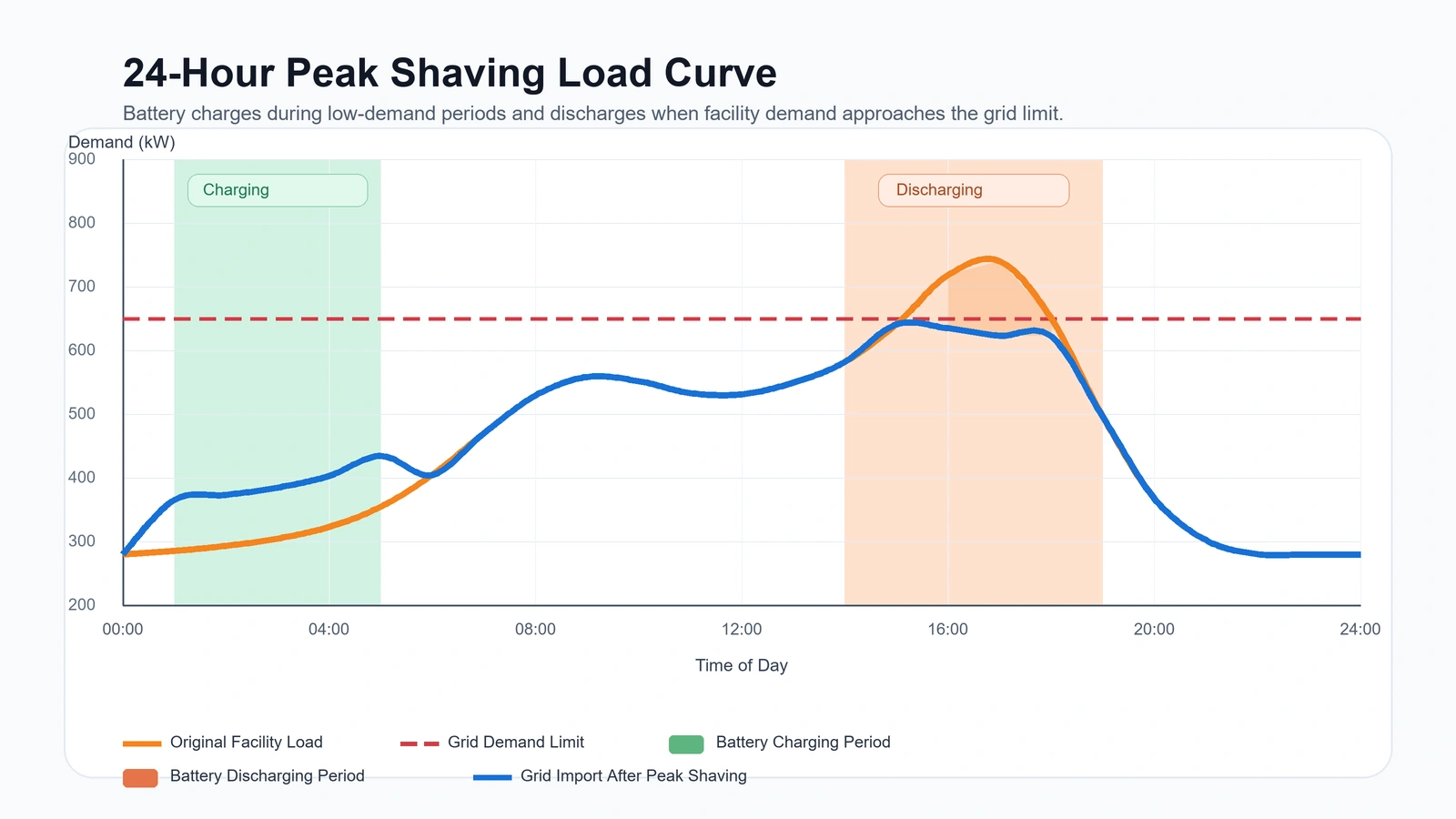
Many factories need both strategies. For example, an EMS can discharge the battery through a long high-price period and still reserve enough power to stop a production peak from crossing the demand limit. The project team must model both duties together. Otherwise, one strategy may consume the energy that the other strategy needs.
When Does Load Shifting Make Sense for a C&I Project?
Load shifting works well when the project has a clear reason to move energy. A lower off-peak tariff alone does not guarantee a good result. The price difference must cover conversion losses, battery wear, operating reserve, and other project costs.
Check these conditions first:
- A predictable load profile: Stable operating schedules make charge and discharge planning more reliable.
- A useful tariff difference: Compare the complete tariff, including energy, demand, capacity, and export rules.
- Surplus solar energy: Storage can reduce curtailment or low-value export when the site can use that energy later.
- Enough connection capacity: The transformer and grid connection must allow the planned charging power.
- A defined operating window: The project needs known charging and discharging periods or reliable control signals.
- Clear backup priorities: If the battery also supports outages, decide how much SOC the EMS must protect.
A project may still need storage when the tariff spread looks small. It may value transformer capacity support, solar self-consumption, or backup power. In that case, evaluate each value stream separately instead of presenting all benefits as one guaranteed saving.
How Do You Size a Battery for Load Shifting?
Start with the load curve, not a cabinet model. Identify the average power that you want the battery to offset and the number of hours in the target period.
Target shifted energy (kWh) = Average power to offset (kW) × Discharge time (h)
This result shows the energy that must reach the load. The nominal battery capacity must also account for the usable SOC window, conversion efficiency, temperature conditions, degradation allowance, and any backup reserve.
Next, check power. The PCS rating must cover the planned discharge power and follow the site’s grid and transformer limits. A long tariff window may require many kWh but moderate kW. A short production peak may require high kW for a much shorter time.
The energy-to-power ratio gives a useful first check:
Nameplate duration (h) = Battery energy (kWh) ÷ PCS power (kW)
Actual operating duration will be shorter when the system keeps an SOC reserve or experiences conversion losses. The nameplate ratio also does not prove that the battery can follow every load ramp. Your engineer must check PCS overload capability, motor starts, simultaneous loads, and the permitted discharge rate.
What Project Data Should You Collect?
A supplier cannot size a dependable load shifting system from a monthly electricity total. You should prepare enough detail to show when the site consumes energy and what the system must achieve.
- At least 12 months of electricity bills and the current tariff schedule
- Interval load data, preferably at 15-minute or 30-minute resolution
- Maximum demand, transformer capacity, grid voltage, and frequency
- Operating hours and expected changes in production
- Large motors, pumps, compressors, or other loads with high starting current
- Existing or planned PV capacity and the solar generation profile
- Import limits, export rules, and anti-reverse-flow requirements
- Critical loads and the required backup period, if applicable
- Installation location, available space, ambient conditions, and cable distances
These inputs also help you separate load shifting from peak shaving. Monthly kWh may show the energy volume, but interval data reveals the peaks, ramps, and time windows that control PCS selection.
How Does the EMS Manage the Shift?
The EMS turns a battery schedule into a working site strategy. It monitors the battery, PCS, grid, solar system, and facility load. It then controls charging and discharging according to the tariff, SOC limits, power targets, and backup priorities.
For parallel cabinet systems, communication matters as much as the schedule. HBOWA’s C&I user documentation calls for Ethernet communication between the PCS and EMS and between cabinets in a parallel configuration. The commissioning team must also clear BMS, PCS, and EMS alarms before normal operation.
If you need more detail about the control layer, see how a BESS energy management system coordinates battery storage. Before procurement, confirm the communication protocol, meter location, control response, alarm handling, remote access, and fallback mode if a data connection fails.
Practical Limits and Procurement Risks
Load shifting can look simple on a tariff chart. Real sites add constraints. Review them before you accept a savings model or equipment list.
| Risk or Constraint | Why It Matters | Procurement Check |
|---|---|---|
| Small tariff spread | Losses and cycling costs may absorb the value | Use the actual tariff and a stated efficiency assumption |
| Incomplete load data | The system may miss peaks or carry unused capacity | Request interval data and verify meter boundaries |
| Backup reserve conflict | Daily discharge may leave too little energy for an outage | Set a minimum SOC and define priority loads |
| PCS undersizing | The battery holds energy but cannot deliver it fast enough | Compare target kW with the PCS continuous and short-term capability |
| Battery undersizing | The PCS reaches its power target but cannot sustain it | Model the full discharge window in kWh |
| Protocol mismatch | The EMS cannot coordinate meters, PCS, BMS, or existing PV | Confirm protocols and responsibility for integration |
| Grid restrictions | Local rules may limit charging, export, or operating modes | Check utility approval and anti-backfeed requirements |
| Frequent cycling | The duty profile affects degradation and lifecycle cost | Compare the proposed schedule with product warranty terms |
Also confirm whether the system can provide backup power. A grid-connected PCS and battery can perform load shifting without supporting loads during a grid outage. Backup operation requires the correct PCS capability, switching design, protection, and system controls.
HBOWA C&I Load Shifting Project Examples
Real projects show why power and energy need separate review. They also show that two factories can use the same operating idea with very different kW and kWh configurations.
200 kW and 576 kWh Commercial BESS in Malaysia
HBOWA supplied and commissioned a 200 kW and 576 kWh C&I BESS for a Malaysian industrial facility. The page lists 36 battery packs at 16 kWh each, a 200 kW Megarevo MPS, air cooling, fire protection, and EMS control. The operating plan charges during off-peak periods and discharges during peak demand for load shifting and peak shaving.
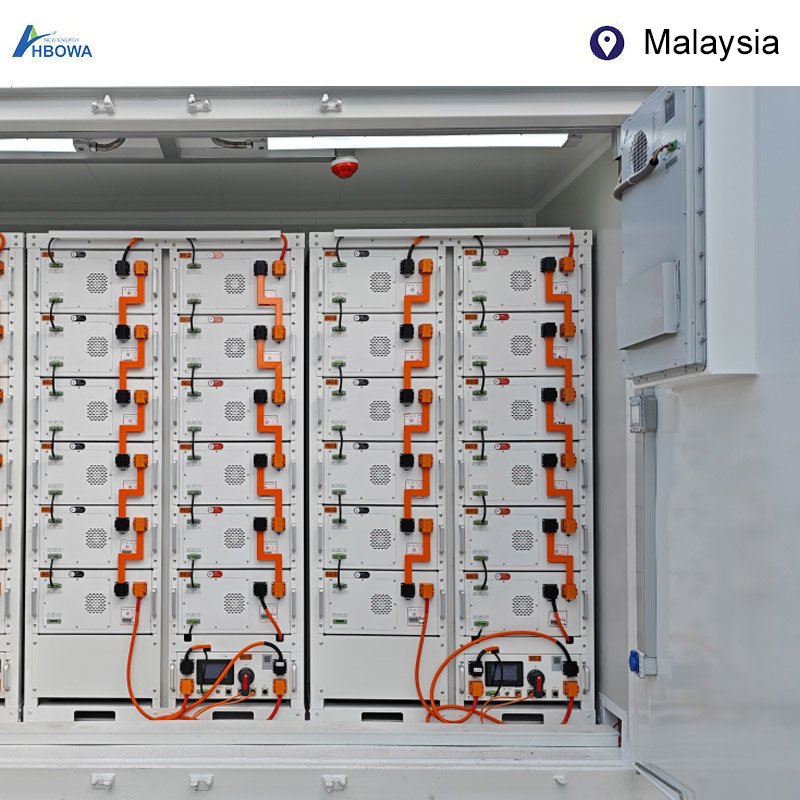
This case shows a balanced power and energy configuration for a defined industrial schedule. However, the nameplate values alone do not reveal the customer’s savings. A valid comparison still needs the local tariff, load curve, SOC settings, and operating record.
50 kW and 448 kWh Factory System in China
Another 50 kW and 448 kWh factory battery project uses a 50 kW Deye hybrid inverter, two battery clusters, and 28 battery packs at 16 kWh each. The project page identifies peak shaving, load shifting, and factory self-use as its operating modes.
Compared with the Malaysian project, this system has much more nameplate energy for each kW of inverter power. That difference does not make one design better. It shows why the duration of the load shifting window and the required discharge power must guide the configuration.
1 MWh BESS for Peak Management and Backup in Ukraine
HBOWA also supplied a 1 MWh BESS for peak shaving and backup power in Ukraine. The project combines low-load charging, peak-period discharge, and energy reserve for grid instability.
This multi-purpose duty creates a direct control tradeoff. The EMS cannot use the same stored energy twice. The project team must set the load shifting schedule and the backup SOC reserve together.
How Should You Compare Load Shifting Suppliers?
Ask each supplier to explain the proposed operating logic, not only the battery capacity. A useful proposal should show how the equipment matches your load curve and tariff.
Review these points:
- Who analyzes the load data and defines the charge and discharge schedule?
- How does the supplier calculate battery kWh, PCS kW, and the operating SOC window?
- Can the EMS coordinate the selected PCS, BMS, meter, PV inverter, and site controller?
- Which party handles the single-line diagram, protection settings, commissioning, and grid interface?
- How will the system preserve backup energy while it performs daily load shifting?
- What alarms, historical curves, user permissions, and remote controls does the EMS provide?
- Which product-specific safety documents, test reports, warranty terms, and maintenance instructions apply?
- Can the supplier support cabinet and container formats as the project grows?
For many C&I sites, an integrated energy storage cabinet reduces on-site assembly work. Larger projects may need a containerized BESS with project-specific PCS, cooling, fire protection, and EMS design. Choose the format after you confirm power, energy, installation conditions, and expansion plans.
Final Thoughts
Good solar battery load shifting starts with the tariff, load curve, and operating objective. Match battery energy, PCS power, EMS control, and backup reserve to the same duty profile. Review HBOWA’s commercial and industrial energy storage systems when you are ready to discuss a project configuration.
Frequently Asked Questions
Not necessarily. Load shifting changes when a facility buys or uses energy. The total kWh may remain similar, while the site purchases less energy during expensive periods or uses more of its own solar generation. Energy-efficiency measures reduce consumption, so evaluate them separately.
Yes. A grid-connected battery can charge during an off-peak tariff window and discharge during a higher-price period. The utility must allow the charging and operating mode, and the tariff difference must justify losses and cycling costs.
The EMS may schedule grid charging when off-peak electricity costs less, solar production cannot reach the target SOC, or the site needs a backup reserve. Check the tariff schedule, SOC limits, PV forecast or production, meter data, and current EMS mode before treating grid charging as a fault.
Load shifting moves energy across time, while peak shaving limits maximum grid power. Load shifting often targets time-of-use energy charges and solar self-consumption. Peak shaving targets demand or capacity charges. One C&I BESS can perform both when the EMS coordinates the energy and power limits.
Multiply the average power you want to offset by the discharge hours, then adjust for the usable SOC range, system losses, degradation allowance, and backup reserve. Final sizing also needs interval load data, tariff periods, PCS limits, and local grid requirements.
No. A normal grid-connected PCS may stop during an outage. Backup power needs an off-grid-capable PCS or hybrid inverter, suitable switching and protection, and a defined critical-load circuit. Confirm this function in the system design instead of assuming that every battery supports it.
Yes, but the EMS must coordinate them. It can schedule energy through a high-price period while reserving power and SOC for short demand peaks. The project model should test both duties on the same load curve so one strategy does not weaken the other.
A small tariff spread, low utilization, excessive losses, oversizing, frequent cycling, or high integration costs can reduce the value. Poor load data can also create an unrealistic model. Use the actual tariff, interval demand, operating schedule, efficiency assumptions, and equipment costs.
Request real-time and historical values for SOC, battery power, PCS status, grid exchange, solar generation, facility load, alarms, and charge or discharge commands. Also confirm user permissions, data retention, remote access, communication protocols, and the fallback response after a communication failure.
The answer depends on system scale, site layout, cooling, service access, transport, and expansion plans. Integrated cabinets suit many distributed C&I projects. Containers suit larger installations that need more battery racks and centralized auxiliaries. Compare the complete supply scope, not only kWh.