Introduction
The proper design of industrial solar power systems takes the electricity profile of the facility, not yearly consumption. PV capacity is governed by the load requirements, solar resource, usable area, electrical infrastructure, and project objectives. Battery storage should only be included when a defined operational requirement justifies its extra cost and complication, as it is optional.

What Are Industrial Solar Power Systems?
Definition of an Industrial Solar Power System
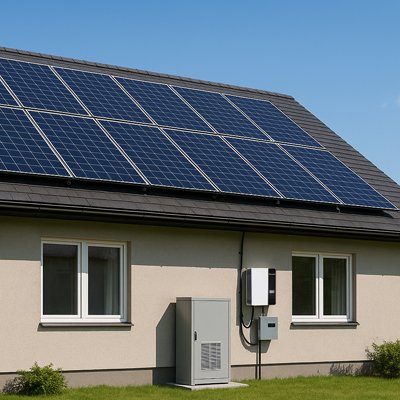
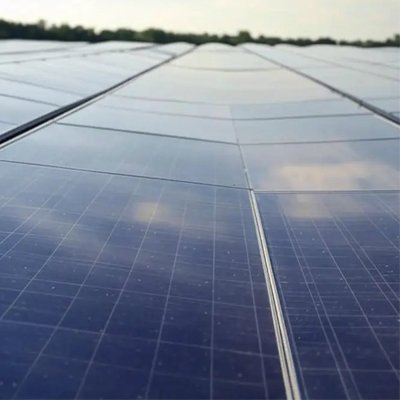
An industrial solar PV system converts sunlight to electricity to be used on factory sites, plant sites, warehouse sites, processing sites and other energy-intensive sites. A standard installation includes several components such as PV modules, mounting structure, inverters, electrical protection, and monitoring and grid interconnection equipment. You can install battery storage based on your operating requirements. The specific design choices rely on the project’s site conditions, electrical needs, and operating goals.
Difference b/w Commercial and Industrial Solar
When assessing an industrial solar project, capacity terminology is important. The amount of power used at any instant is measured in kW, defined as a kilowatt. kWh expresses electric power consumption, generation, or storage. The kWp is the measurement for the capacity of a PV array in DC under certain test conditions. The capacity of an AC inverter refers to its rated AC conversion capability and should not be regarded as equal to PV DC capacity.
A commercial solar system and an industrial solar panel system can have similar technologies, but their working conditions may be different. During the day, load assessment of retail and office sites is relatively constant.
| Factor | Commercial solar | Industrial solar |
| Typical facilities | Offices, retail, hotels | Factories, plants, warehouses |
| Load profile | Often daytime-oriented | May be multi-shift or continuous |
| Electrical demand | Project-dependent | Often larger or more variable |
| Storage applications | Self-consumption, backup | Self-consumption, peak shaving, load shifting, backup |
| Design complexity | Varies | Often greater due to load and electrical infrastructure |
How Do Industrial Solar Power Systems Work?
From Sunlight to Usable Electricity
Sunlight hits the module, the module makes DC electricity, and the inverter turns it into AC electricity for the facility. The connection of electrical protection and distribution equipment to the utility grid.

The task of monitoring involves keeping records regarding production and consumption, the status of the equipment, and faults so that the operators can assess the performance and operating conditions. When storage is available, excess energy from PV can be fed into energy storage rather than exported immediately or curtailed, depending on the project design. The battery holds the energy until it’s discharged.
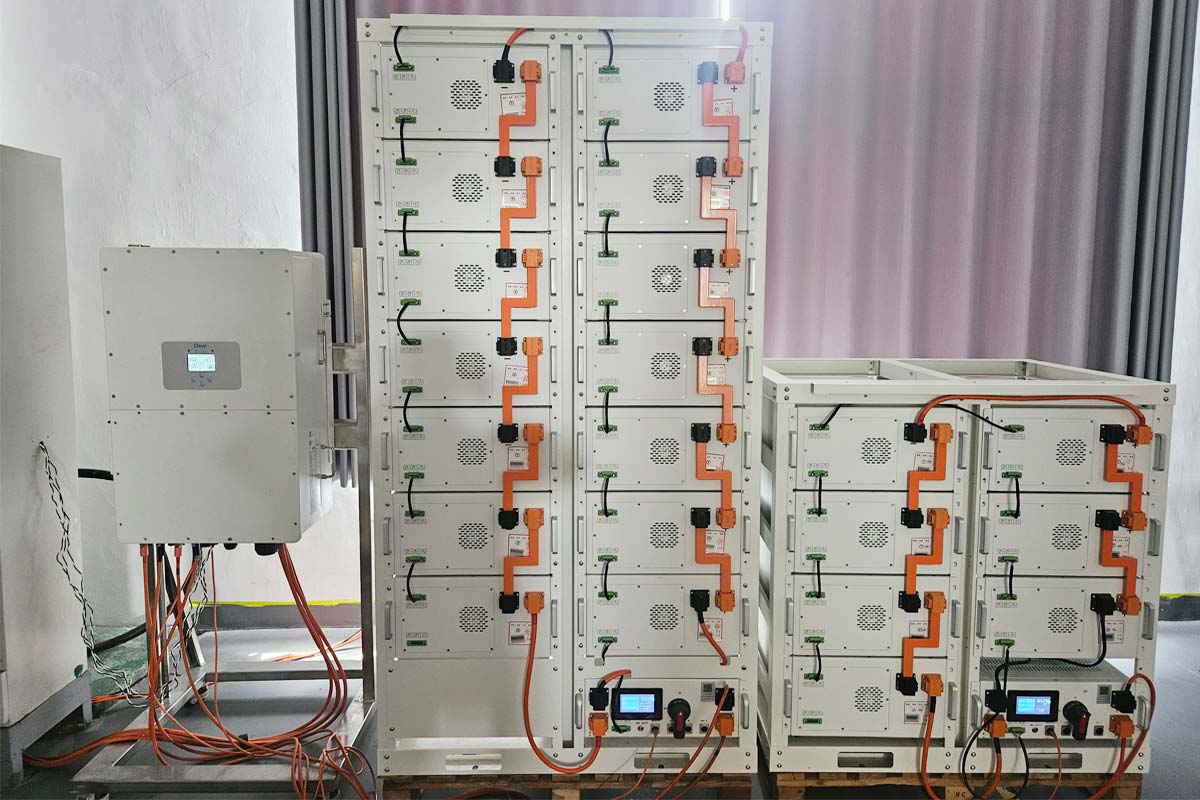
A battery energy storage system generally consists of battery modules, a battery management system, power conversion equipment, and an energy management system. It may require ancillary equipment for full operational effectiveness. Equipment for thermal management and protection ensures safe operation. The EMS can execute load switching according to programmed operating rules to better manage the grid.
How to Size an Industrial Solar Power System
Start With the Facility’s Load Profile
The facility’s load profile is the first sizing input. Annual electricity consumption indicates the energy use of the site but does not indicate when that energy is required. Two factories with the same annual consumption may need different PV designs if one has a strong daytime demand while the other mainly operates at night.

Evaluate utility bills, interval or hourly data where applicable, operating hours, shift patterns, seasonal demand, peak demand, weekends, holidays, and expected future load growth. The dataset is utilized to define the timing and amount of electricity demand before a target PV capacity is selected.

Evaluate Usable Installation Area and Select Appropriate Modules
After understanding the demand, assess how much area can actually accommodate the PV. The usable area of the roof or ground, orientation, tilt, shading, spacing between rows, access for maintenance, structural capacity, safety requirements, and electrical routing should be reviewed.
Reducing module count by using higher wattage modules does not necessarily upgrade the project. HBOWA provides N-type TOPCon and PERC Tier-1 modules for B2B buyers from Risen, LONGi, Jinko, Trina, JA Solar, Canadian Solar, Tongwei, and GCL.
Estimate Actual PV Generation Instead of Assuming Nameplate Output
The actual energy produced is not the same as the installed capacity. The performance of the output relies on the resources available from the sun, along with other factors relevant to the system. The PVWatts model of NREL is more realistic since it includes these loss mechanisms.
These documented default assumptions allow for separate loss inputs for soiling, shading, mismatch, wiring, connections, availability, and inverter performance; field results are not universal values, and modelling default values are.
Match PV Capacity to the Facility’s Operating Objective
For early planning, PVWatts can provide a production estimate based on location. For detailed engineering, site and electrical data should be input. The PV capacity resulting from this analysis must meet the operating objective of the facility. A property with strong daytime demand may optimize for direct solar use. A location with less daytime demand may contemplate storage or managed export.
When Should an Industrial Solar System Add Battery Storage?
Not all industrial solar setups require a battery. Storage can aid when solar generation and a facility’s electricity demand do not coincide, when peak demand necessitates management, when selected loads require backup power, and when the grid and export conditions render the usefulness of storing rather than exporting better.
When Solar-Only May Be Sufficient
A PV-only system may be appropriate if the facility uses most of its electricity when the solar PV system is generating electricity. In this instance, there will be a use of solar generation directly on site so that electricity won’t have to be bought from the grid during this time. If the grid is reliable and the export arrangements are appropriate, a battery may be of limited value as long as the facility does not need backup and peak power management is not needed.
Before adding battery storage, a business must compare its daytime demand, expected generated PV, and electricity tariff benefits. You also need to consider the local interconnection rules and export limits, which affect the treatment of excess solar electricity.
When Battery Storage Can Add Value
Storage batteries can improve the usefulness of solar energy when generation and demand occur at different times. Surplus photovoltaic power in the middle of the day can be stored and discharged later to increase solar self-consumption. The very same energy storage system can aid in peak shaving by supplying part of the facility’s demand during heavy load periods, although the dollar value will depend on the tariff that applies and demand-charge structure.
Another application is load shifting. Electricity could be stored during a cheaper period or at the time of solar production and discharged back during the time of demand or high electricity prices. When designed and configured for such a function, storage can provide backup power to selected loads during interruptions of the grid. According to the U.S. Department of Energy, storage can help transfer solar energy to times of higher demand and provide resilience during blackouts.
New Solar-Plus-Storage Systems vs. Battery Retrofits
Integrating a renewable energy generation system and the related energy storage system and controls into a single system solution. With a PCS, an existing PV installation can add storage while keeping its current PV inverter. A proper architecture decision will depend on the PV capacity and HBOWA are expert in both approaches. They help you determine which help you the best.
How to Size Battery Storage for an Industrial Solar System
Size the Battery According to Its Job
The application should start with battery sizing. A solar self-consumption system needs to have enough energy capacity to shift relevant surplus PV. To shave the peak in demand, a customer needs enough power to cover this peak.
| Main objective | Primary sizing question |
| Solar self-consumption | How much surplus PV needs to be shifted? |
| Peak shaving | How many kW must be reduced and for how long? |
| Backup | Which loads need power and for what duration? |
| Off-grid operation | Can PV and battery cover demand during low-generation periods? |
Understand the Difference Between Battery Power and Energy Capacity
Think of a power system with a battery of 100kW / 200kWh. To clarify, the term “kW” refers to power, while the term “kWh” refers to energy. The 200kWh divided by 100kW gives two hours as a simple nameplate relationship, but should not be represented as a guaranteed real-world runtime. The actual operation is influenced by various factors, including the usable state of charge, discharge limits, and efficiency.
According to the U.S. Department of Energy, both storage power capacity and storage energy capacity are different and unique for multiple applications.
For the calculations, we refer readers to a solar system battery sizing methodology, as we won’t repeat the full calculation here.
Why There Is No Universal Battery-to-PV Ratio
There is no technically reasonable guideline that every industrial solar project should allocate a specific fixed number of kWh for each kW of PV. A battery that provides short peak shaving services will have a different power-to-energy ratio than one that shifts several hours of solar generation or provides longer backup.
The current market statistics show that storage length is not constant. Although many projects are still clustered around the two-hour mark, the IEA’s latest report indicates that four-hour or longer projects are increasingly taking shape as the value of flexibility rises.
Energy Storage Cabinet vs. BESS Container for Industrial Solar
When an Energy Storage Cabinet Is Appropriate
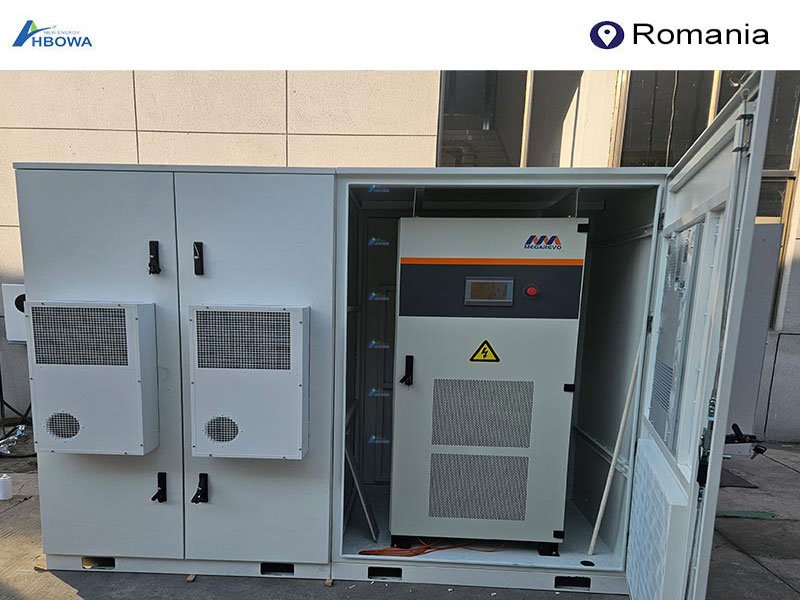
A battery energy storage cabinet contains battery modules and auxiliary equipment in a compact package. This can comprise a PCS (or hybrid inverter), BMS, EMS, plus distribution AC/DC, cooling, and fire protection, depending on configuration. Determine electric requirements relevant to your project or work. The first step to cabinet selection involves identifying the electrical requirements for the project.
For example, the BMS, EMS, cooling, fire protection, AC/DC distribution, and other items included in HBOWA’s 125kW/241kWh cabinet integrate a 125kW hybrid inverter with a 241kWh LiFePO4 battery. As per the specified applications include peak shaving, solar storage, backup power, EV charging, and microgrids.
When a BESS Container May Be the Better Configuration
A BESS container is a larger enclosure that integrates the battery racks and supporting systems like PCS, BMS, EMS, thermal, fire, and electrical distribution. When storage needs, expansion plans, or site configuration call for a larger installation, a modular installation can be suitable.
| Factor | Energy storage cabinet | BESS container |
| Form factor | Compact cabinet | Containerized enclosure |
| Typical application | C&I and smaller projects | Larger C&I and industrial projects |
| Footprint | Generally smaller | Generally larger |
| Capacity | Project-specific | Often suited to larger energy capacities |
| Selection basis | Load, objective, site | Load, objective, site, grid and expansion requirements |
What Real Projects Tell Us About Solar + Storage Sizing
Real Project Configurations Show Why There Is No Standard Battery-to-Solar Ratio
Experiential projects show reasons why industrial solar power systems with batteries are never designed with a fixed ratio. HBOWA provided a 50kW/301kWh LiFePO₄ system for a factory in Poland that is designed for solar self-use, peak shaving, and load-shifting. A hotel project in Romania utilizes 100kW/200kWh storage for PV self-consumption, peak shaving, and backup. To operate off-grid, a 300kW PV system is combined with 400kWh of storage in Togo.
These configurations have different operating objectives; therefore, their power and energy relationships are not interchangeable. According to the Poland project, a battery could more effectively be configured around demand management rather than simply matching PV capacity.
The project in Romania integrates several storage functions in one unit. The Togo initiative should provide for times when the grid is not supplying and accumulate solar energy generated in excess. These are examples of projects; sizing is not universal. The configuration that works best depends on the load profile, operating schedule, solar resource, grid conditions, and role of storage.
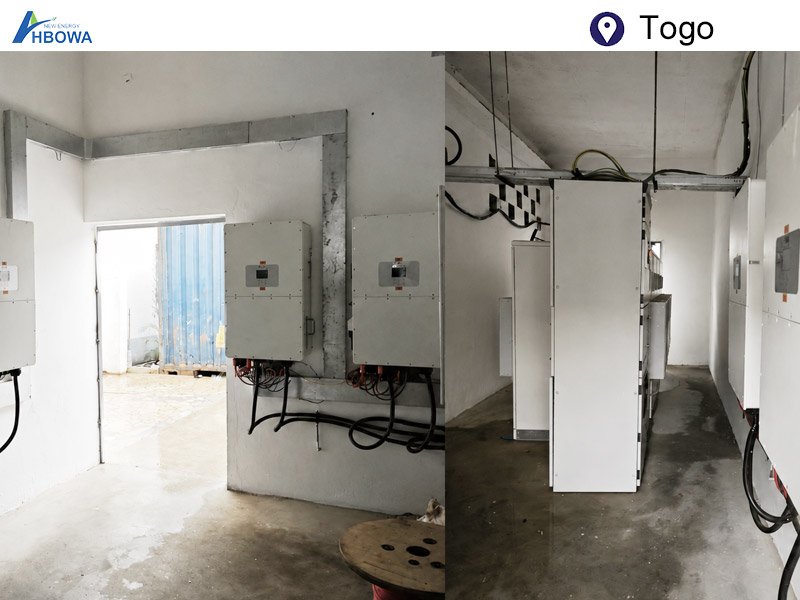
| Project | Configuration | Primary application |
| Poland factory | 50kW / 301kWh | Peak shaving, load shifting |
| Romania hotel | 100kW / 200kWh | Self-consumption, peak shaving, backup |
| Togo off-grid project | 300kW PV / 400kWh | Off-grid solar and storage |
What to Check Before Installing an Industrial Solar Power System
Check the Electrical Infrastructure Before Selecting Equipment
Before equipment selection for each given industrial solar project, it has to be assessed against the existing electrical infrastructure of the facility. The feasible design of the system may be affected by transformer capacity, service voltage and three-phase configuration, switchgear, protection settings, cable routes, and grid-interconnection requirements.
According to the Department of Energy, the cost of electricity depends on not just the amount of load but also the shape of the load. Demand charges, on the other hand, may be based on maximum kW during the billing period.
Evaluate the Site, Solar Equipment, and Battery Conditions Together
We also need to review the physical site. Factors that can influence system design include roof capacity or ground capacity, shading, temperature, and dust. When selecting solar panels, compare module technology and efficiency and warranty terms rather than choosing panels based on wattage.
When battery storage is included, become familiar with the usable capacity, power rating, BMS, thermal management, fire protection, warranty, and operating temperature. It is recommended that the above factors be assessed together.
Verify Tariffs, Export Rules, and Project Economics Before Installation
The determination of financial feasibility should be based on the actual site and not a generic one based on the payback period. This task involves reviewing electricity price, demand charges, time-of-use price, export compensation, grid-interconnection rules, and applicable permits and incentives.
Advantages and Limitations of Industrial Solar + Storage
Industrial solar power systems can help offset grid electricity purchases, bring on-site use of solar generation, and give greater control over stored energy use timing. Storage can also help with peak management or backup of certain loads. But these benefits do not extend everywhere and to all.
| Potential advantage | Limitation or consideration |
| Lower grid electricity purchases | Upfront investment |
| Greater solar self-consumption | Solar output varies |
| Peak-demand management | Value depends on tariff structure |
| Backup capability | Requires appropriate system design |
| Greater energy flexibility | Battery degradation and operating limits |
Not every facility automatically has the lowest cost of solar, and batteries are not automatically economical. Decision to be made based on the site load profile, tariffs, grid conditions, technical constraints, and project objectives.
Facilities may not automatically have solar as the lowest-cost option. Similarly, batteries may not automatically have economic justification.
Conclusion
The biggest industrial solar power system isn’t necessarily the right one. The facility’s load profile, solar resource, available space, electrical infrastructure, and operating objectives must be aligned. When the application warrants additional cost and complexity, battery storage should be added. HBOWA is capable of supporting projects that use PV modules, inverters, accessories, and LiFePO4 storage solutions.
Frequently Asked Questions
An industrial solar energy system is a photovoltaic installation that provides electricity to installations like factories, plants, warehouses, and processing sites. It usually consists of PV modules, an inverter, electrical equipment, monitoring, and grid connection. When energy shifting, peak management, or backup is needed for a facility, battery storage can be added.
Sizing an industrial solar power system involves more than the yearly electricity use. The study should look at the load profile of the facility, the solar resource, usable roof or ground area, electrical infrastructure, operating regime, and project objective. The capacity of the system should also consider grid conditions, future load growth, and expected PV generation.
Nah. An industrial solar system can work battery-less when the facility itself can consume most solar generation directly, and the grid or export conditions warrant this. Battery storage is useful any time the site requires solar energy to be deployed at later hours, peak shaving, load shifting, backup power, or more control over our energy flows.
The kW indicates the speed at which a battery can utilize or absorb electricity. kWh refers to energy capacity, or how much electricity the battery can store. A 100 kW / 200 kWh system has a rated power of 100 kW and a rated energy capacity of 200 kWh, but will actually operate within limits and controls.
The selection of an energy storage cabinet or a BESS container should take into account: power and energy capacity requirements, site circumstances, load profile, operating objective, expansion plans, and electrical infrastructure. Compact commercial and industrial applications can accommodate cabinets, while containerized systems can support larger installations. No kW threshold applies universally for better options.