

Formula: W = (kWh × 1000) ÷ Hours
A kWh to watts calculator calculates the power in watts ( W ) depending on the energy used in kilowatt hours ( KWh ) during time t in hours. The calculator is for users who already measured their energy use in KWh, like used in the electricity bill, battery capacity, or solar production metrics, and want to know the power level. The kWh to watts calculator is productive for homeowners, solar system designers, electricians, engineers, and students looking for a quick and accurate conversion of kWh to watts instead of involving complex theoretical calculations.
Formula & Variable Definitions
Formula:
W = (KWh x 1000) / Hours
Where:
W = Watts
KWh = Kilowatt-hours
Hours = Time period
Kilowatt-hours (kWh) is the amount of energy consumed or generated, and a kilowatt-hour is a measure of energy equivalent to 1000 watt-hours, whereas time, measured in hours, describes the duration of that energy transfer. Watts are the unit of average power. It shows how much energy is being used or received during the time period.
This equation assumes averages to be constant over the chosen time span. This can estimate electrical loads, appliance demand, and the sizing of the system. This does not mean the power does not vary at any point in time. It only means that total energy divided by time gives you an equal average wattage value that is good for planning and comparison.
Example Calculation
Consider a house that got a total of 8.4 kilowatt-hours of energy when the power was out for a little over 6 hours. It’s common for a home battery backup system to run essential items only, such as lights, refrigerator, internet/phone gear, and occasionally a small appliance or two in a blackout.
To determine the amount of power the home uses on average, the total energy must first be expressed in watt-hours (power is measured in watts). The energy conversion is done, and then uniformly distributed over the total outage period. Essentially, this gives us the average power demand at home at any point in time, throughout the backup period.
The outcome reveals that the house needed less than 1.3 kilowatts of energy during the blackout. The most important value for the designers is represented by the actual average electrical household power use. This inverts 2-kilowatt capacity, which allows you to know how comfortable the battery would be at full load, estimate how long the battery would last at various load levels, and allows you to compare actual energy usage with the energy used when designing the battery.
When to Use This Calculator
This kWh to watts calculator is most useful for turning energy usage information into useful power information. Typically, it is used to estimate the average household load for specific periods when reviewing utility bills. Solar installers depend on this to convert daily or hourly solar energy production statistics into average array output. Battery system designers utilize this to assess discharge rates and verify that inverter power ratings correspond with anticipated demand. Likewise, it is good for electrical troubleshooting, such as whether a circuit is overloaded relative to the energy used over time.

5KWh Battery – How Time Changes Power Output
| If Used Over… | Average Power Needed | Practical Example | Inverter Requirement |
|---|---|---|---|
| 30 minutes | 10,000 W | High-power tools, electric heating | 10+ kW inverter needed |
| 1 hour | 5,000 W | Multiple major appliances | 5+ kW inverter needed |
| 2 hours | 2,500 W | Microwave + fridge + lights | 3 kW inverter sufficient |
| 5 hours | 1,000 W | Essential loads only | 1.5 kW inverter sufficient |
| 10 hours | 500 W | Minimal overnight loads | 1 kW inverter sufficient |
Reference Table (Typical Values)
The table below shows realistic, non-rounded examples of kWh to watts conversion using different time periods:
| Energy (kWh) | Runtime (hrs) | Avg Power (W) | Power Level | Typical Use Case |
|---|---|---|---|---|
| 1.5 | 1.0 | 1,500 | ●●●○○ High | Emergency backup: lights, Wi-Fi, phone charging |
| 2.75 | 1.5 | 1,833 | ●●●●○ Very High | Short outage: fridge + lighting + router |
| 4.2 | 3.25 | 1,292 | ●●●○○ Medium-High | Evening backup for apartment loads |
| 6.6 | 5.0 | 1,320 | ●●●○○ Medium-High | Nighttime essentials in off-grid cabins |
| 9.8 | 7.0 | 1,400 | ●●●○○ Medium-High | Half-day backup for small home |
| 12.3 | 10.5 | 1,171 | ●●○○○ Medium | Overnight backup with efficient appliances |
| 18.5 | 14.0 | 1,321 | ●●●○○ Medium-High | Full-night + morning solar overlap |
| 24.6 | 18.0 | 1,367 | ●●●○○ Medium-High | Nearly 24-hour autonomy with PV support |
| 30.0 | 22.0 | 1,364 | ●●●○○ Medium-High | Weekend camping with multiple devices |
| 35.5 | 26.5 | 1,340 | ●●●○○ Medium-High | Remote worksite power (tools + lighting) |
| 42.2 | 30.0 | 1,407 | ●●●○○ Medium-High | RV full-day off-grid operation |
| 48.8 | 34.0 | 1,435 | ●●●●○ Very High | Small business emergency backup |
| 55.0 | 38.5 | 1,428 | ●●●●○ Very High | Mobile medical clinic (fridge + equipment) |
| 60.5 | 42.0 | 1,440 | ●●●●○ Very High | Outdoor event power (sound + lighting) |
| 68.0 | 46.0 | 1,478 | ●●●●○ Very High | Construction site temporary power |
| 75.5 | 50.0 | 1,510 | ●●●●○ Very High | Off-grid tiny home (all essentials) |
| 82.0 | 54.5 | 1,505 | ●●●●○ Very High | Telecom tower backup (5G equipment) |
| 89.5 | 58.0 | 1,543 | ●●●●● Critical | Hospital emergency ward backup |
| 95.0 | 62.0 | 1,532 | ●●●●● Critical | Data center UPS system (small rack) |
| 102.5 | 65.5 | 1,565 | ●●●●● Critical | Research lab refrigeration backup |
| 110.0 | 70.0 | 1,571 | ●●●●● Critical | Remote weather station (24/7 monitoring) |
| 118.5 | 74.0 | 1,599 | ●●●●● Critical | Marine vessel navigation systems |
| 125.0 | 78.0 | 1,603 | ●●●●● Critical | Military field operations base |
| 132.5 | 82.5 | 1,606 | ●●●●● Critical | Emergency response command center |
| 140.0 | 86.0 | 1,628 | ●●●●● Critical | Microgrid primary storage (small community) |
| 148.5 | 90.0 | 1,650 | ●●●●● Critical | Industrial automation backup |
| 155.0 | 94.5 | 1,640 | ●●●●● Critical | Solar farm overnight storage |
| 162.5 | 98.0 | 1,658 | ●●●●● Critical | Electric vehicle charging station buffer |
| 170.0 | 102.0 | 1,667 | ●●●●● Critical | Utility-scale peak shaving storage |
| 180.0 | 108.0 | 1,667 | ●●●●● Critical | Disaster relief mobile power hub |
Accuracy & Limitations
This calculator converts kWh to watts based on total energy and time, and gives the average power. Real electrical systems are rarely under a constant load. Appliances turn on and off; solar output depends on the irradiance; battery discharge rate is associated with voltage and state of charge. Inverter performance efficiency, wiring resistance, and thermal effect losses are excluded from analysis. The detailed load profiles and system specifications should be used together with this calculator for design-critical decisions.

Solar Products for Your Project
 Solar Panels | 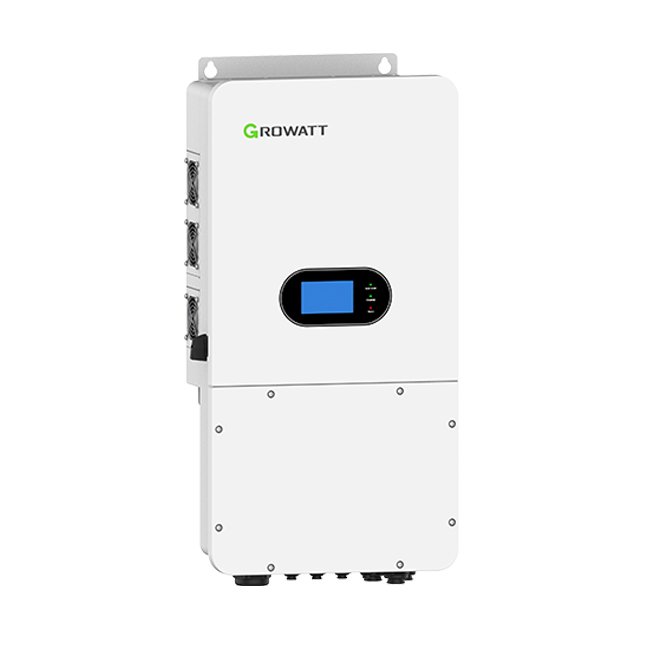 Solar Inverter |  C&I Battery Storage |
Case Study
A battery backup system allows a small office to keep running during grid outages. The system leverages a LiFePO4 battery provided by HBOWA as energy storage and a switchboard inverter, Growatt, for powering office equipment during office hours. The office runs during the day and till early evening; it powers the computers, lighting, networking devices, and other vital loads.
The total energy taken from the battery is known over the full operating window. By using a kWh to watts calculator, the energy is distributed evenly across the working hours to work out the average power demand of the office. This technique reveals how much power the office is drawing at any point in time during normal operation. Not only total energy use.
The outcome shows that the average power demand of the office is well below the continuous capacity of the Growatt inverter. It has been confirmed from a system-planning perspective that the Hbowa LiFePO4 battery makes the inverter suitably sized for daily operation. The system can bear a continuous load without putting in excess stress.
Furthermore, the analysis uncovers useful information beyond average usage. Office equipment such as printers, heating or cooling systems starting up, or kitchen appliances can briefly require a power demand that is above normal. Though these brief spikes have little impact on total energy consumption, they are useful when assessing inverter headroom. Consequently, this case study recommends the present system design but indicates that a review of peak power demand should be carried out before any new additions.
So the kWh to watts conversion serves as a practical tool for verification. This approach helps ensure that the battery storage and inverter capacity combination is well matched to actual use, which promotes safe, stable, and predictable operation, not just based on nameplate ratings.
Conclusion
The Kilowatts to Watts Converter is a useful tool that converts the energy details into clear, effective power data. This method also shows how much power is being used on standard rather than just how much energy is being expended over time. This is also an easier method for understanding the actual electricity demand since the insights may not always be the correct rating or false drawing assumptions.
The calculator helps us decide whether the components, like the inverter, batteries, and wire, are oversized or undersized for the user. Users may also prefer to compare the intended use of energy with the real-world insights. This is the cashier when it comes to designing the system, troubleshooting, or future growth. This calculator provides better information on the relationship between kilowatt-hours and watts. And it helps the user to use power with the proper information and also to make electronic choices.

