
Introduction
BMS meaning is simple: BMS stands for Battery Management System, and it is an electronic layer that monitors the battery condition and estimates the state of the battery, manages the protection-defined limits, and exchanges battery information with the connected equipment. The BMS is necessary in lithium-ion batteries because, in these batteries, controlled electrical and thermal conditions are a must.
1. What Does BMS Mean?
BMS Meaning in Simple Terms
BMS means Battery Management System, a vital electronic control and monitoring layer connected to the battery. Defining what is BMS doesn’t include just monitoring. It collects data related to the battery and monitors the operating conditions to let the battery operate within the parameters of the design.
What Does a Battery Management System Do?
The BMS definition includes several core responsibilities. A battery management system BMS monitors the condition of cells as well as the pack, detects any electrical or thermal abuse and imbalance, supports balancing of cells or packs, predicts SOC and SOH, and communicates any information or constraints related to battery status to the rest of the equipment. Hence, the battery management system has more significant work than mere battery monitoring.
Why Is a BMS Important?
Lithium-ion cells must function within given temperature, current, and voltage conditions, and cells connected within the same battery can behave differently as the cells age or operate. BMS provides the monitoring and control layer that can measure any differences and keep the battery operating within the defined limits of the system.
2. What Does a BMS Monitor?
Electrical Parameters: Voltage and Current
No single measurement can describe a battery condition. A Battery Management System (BMS) monitors several electrical parameters. The cell voltage helps to identify cells with a significant voltage difference. Pack voltage shows the electrical condition of the battery as a whole. The measurement of the current also, to calculate the battery is charging or discharging. The charge for other BMS calculations.
Temperature and Thermal Conditions
Temperature is another major input for BMS monitoring. Temperature sensors measure temperature at different relevant points within the battery. Sensors help identify the battery operating temperature outside the permitted range. During charging, discharging, or abnormal operation, this temperature information is evaluated with the voltage and current as the electrical and thermal conditions that can change together.
SOC and SOH Are Estimated Values
A battery monitoring system BMS also works with values that are not directly measured. SOH state of health) and SOC state of charge of the battery is estimated using the measured battery, the model, and the algorithms. The Fraunhofer ISE noted that these indirect parameters may require complex estimation methods dependent on voltage, current, and temperature.
3. How Does a BMS Work?
A Battery Management System (BMS) is required to do the processing of battery data that keeps the understanding of the battery’s operating or working condition, estimates the battery state, applies protection limitations whenever needed, and communicates with connected devices. The operation of BMS can be observed or described as a continuous flow of conditions as:
Measure → Evaluate → Estimate → Check Limits → Respond → Communicate → Record
Measure and Evaluate Battery Conditions
The first step is the collection of data from the sensors and the measurement circuits. A battery management system can monitor the individual cell voltages, pack voltage, current, and temperature at the required points of the battery. These measurements are the raw information that is provided to understand the working of the battery
The BMS further evaluates these measurements based on the configured operating limitations of the battery. For example, it is the identification by the system of approaching or exceeding a specified limit of cell voltage, pack current, or temperature, etc. This evaluation is carried out to determine how the battery is working and how it should be operated in the safest manner.
Estimate Battery State and Check Limits
Not every significant battery parameter can be directly measured. A BMS uses sensors to measure battery voltage, current, temperature, and battery characteristics, and through some mathematical calculation methods, the BMS can estimate state of charge (SOC) and state of health (SOH), and so on. These estimates give an idea of the energy that can still be used and the condition of the battery.
Through the dissimilarity between the measured and estimated states, the BMS assesses whether these states are within limits defined by configuration. These limits may address overvoltage, undervoltage, overcurrent, temperature, and more as defined by battery design in use. This means that one can evaluate differences in cell voltages to determine if balancing is needed or another response.
Respond, Communicate, and Record
A BMS will respond differently depending on system design and configured protection strategy when operating beyond permitted limits. The battery management system may set off an alarm and limit charging or discharging. This BMS may enable a protection system or prevent the battery from being penetrated by connected devices. The battery and BMS specifications should always be referenced for the exact response.
The BMS sends battery information to connected devices and services over supported interfaces and protocols. Such information may include battery status, alarms, operating limits, and other data required by an inverter, PCS, or higher-level system. Events are happening, and faults can also be logged for monitoring and diagnostics.
In short, a lithium battery management system does more than monitor a battery. Its constant conversion of values into select decisions maintains the battery operating within its intended electrical and thermal conditions
4. What Are the Main Functions of a BMS?
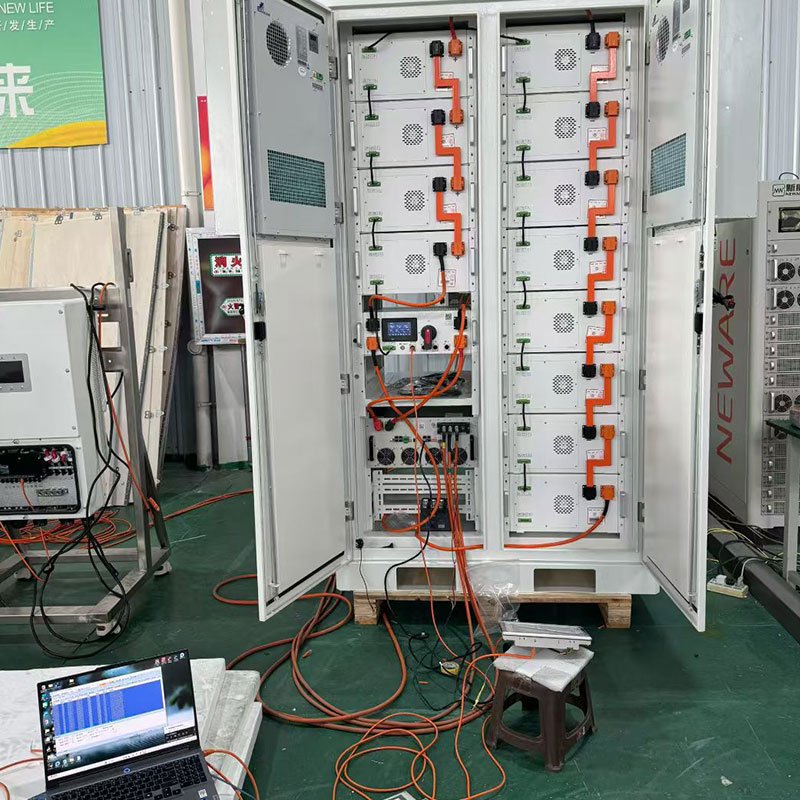
The battery management system BMS has several related functions that it performs. For BMS batteries, these functions help in controlled operation, fault response, cell consistency, and communication with other devices.
| BMS Function | What It Does |
|---|---|
| Monitoring | Tracks voltage, current, and temperature |
| Protection | Responds to defined electrical and thermal limits |
| Cell balancing | Reduces differences between cells |
| SOC estimation | Estimates remaining charge |
| SOH estimation | Estimates battery condition |
| Current limiting | Keeps operation within configured limits |
| Fault detection | Identifies abnormal conditions |
| Communication | Exchanges battery data and limits |
| Event logging | Records relevant events and faults |
Cell Balancing
One of the main functions of a lithium battery management system is cell balancing. The cells in a single battery may develop different voltage and state characteristics during its operation and aging. The passive cell balancing method allows excess energy from the cells of higher voltage to dissipate. The active cell balancing method, in contrast, allows the energy to be transferred between cells or sections of the battery. However, which method will be suitable depends on the battery’s design, any efficiency requirements, the budget or cost, and the control strategy of the battery. Balancing helps maintain cells within their intended working range in battery management system lithium-ion applications.
The point to note is that monitoring, protection, balancing, and energy management are different functions. The battery management system handles the battery-level functions, while the decisions related to energy management run on a broader level of the system.
5. BMS Architecture: From Cell to Battery Pack
The architecture of a BMS explains the sequence in which battery measurements, control electronics, protection devices, and communication are arranged. A typical BMS architecture is:
Cell → Module → Pack/Rack → BMS Controller → System Interface
Here, the Cells behave as the measurement points. Modules are groups of cells. The Packs or Racks are groups of Modules.
Common BMS Architectures
A Centralized BMS uses one main controller for the measurement of the battery. A distributed BMS uses monitoring electronics closer to individual modules. A Modular or hierarchical BMS combines local module control with higher-level coordination. Fraunhofer ISE states that BMS requirements differ with sensor count, current range, measurement accuracy, sampling rate, communication interfaces, and application.
Therefore, for a B2B buyer, a BMS battery is to be evaluated as part of the complete design. The sensors, firmware, protection hardware, battery configuration, and inverter or PCS communication must be compatible. For example, as a first party, a 51.2V 280Ah LFP battery from HBOWA, New Energy specifies a built-in BMS and CAN/RS485 communication.
6. BMS vs EMS vs PCS: What Is the Difference?
BMS vs EMS both control and manage the system for different purposes and at different levels. The control in the BMS and EMS is different. The BMS is responsible for controlling the status and operational limits of the battery system. EMS handles the control of the energy management strategy of the system attached to it. PCS controls the electric power conversion and regulation.
| System | Main Responsibility |
|---|---|
| BMS | -Battery monitoring -Protection -Limits -Battery data |
| EMS | -System-level energy management -Operating strategy |
| PCS | -Electrical power conversion -Regulation |
Battery management system vs EMS distinction matters when evaluating a storage system.. BMS manages the status and operational limits of the attached battery system. EMS uses this information to control the attached system with the other information from the wider system, and PCS carries out the electric power conversion and regulation.
In simple words, BMS manages battery condition and limits; EMS coordinates energy strategy; PCS manages power conversion. and management of electric power. To understand the full, detailed process of how EMS works, have a look at the battery energy management system guide by HBOWA.

7. How BMS Requirements Change by Battery Application
The BMS battery requirements would change with the application. A residential battery will not require the same scale or any communication as a containerized BESS. The things that would affect the BMS design would be as follows: battery chemistry, cell configuration, voltage, current, temperature, system scale, and equipment connected to it. Fraunhofer ISE also states the application-specific requirements for sensors, current range, measurement accuracy, sampling rate, and communication.
| Application | BMS Considerations |
|---|---|
| Residential battery | -Inverter Compatibility -Protection -Communication -Compact Design |
| C&I battery cabinet | -Multiple Modules -Thermal Monitoring -Communication -Fault Handling |
| Containerized BESS | -Higher voltage/current -Hierarchical Architecture -System Communication |
| Off-grid storage | -Battery/Inverter Compatibility -Variable Operating Conditions |
When the BMS batteries are larger, there is a requirement for modules, and the system communication should be reliable. The battery management system lithium ion design should also suit the selected chemistry and the operating limits.
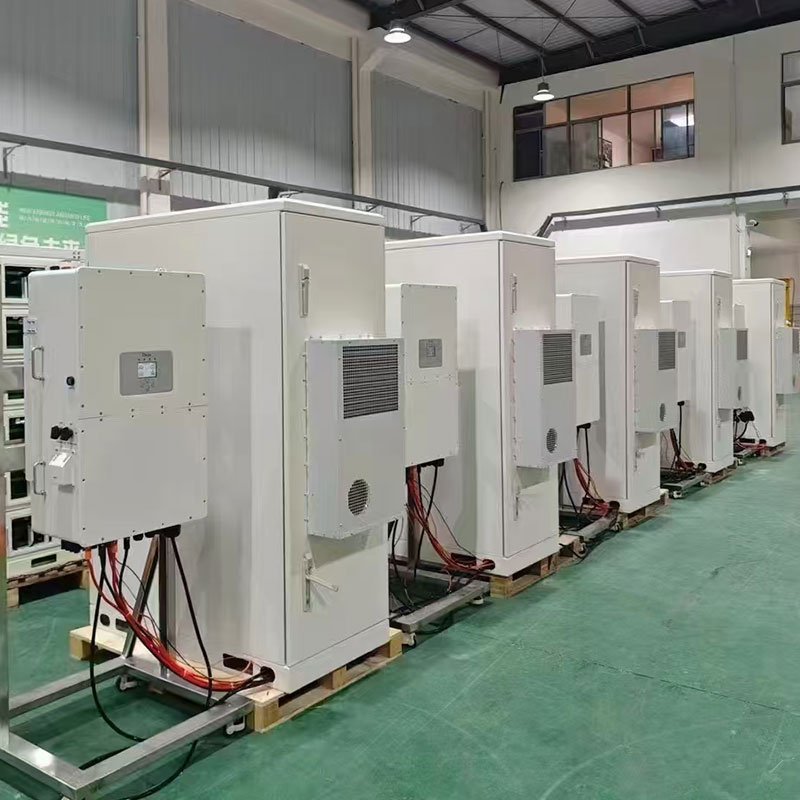
When you evaluate a battery storage cabinet or Battery storage container, you should evaluate the BMS components, battery, inverter, or PCS that it comes with, and the system controls and the communication protocol for the system. There is no single BMS architecture that would be right for every battery system.
8. BMS Safety: What It Can Do and What It Cannot Do
A lithium battery management system can detect the condition out of configured limits. The BMS protection could respond to such conditions as overvoltage, undervoltage, overcurrent, abnormal temperature, cell imbalance, or a defined fault. Alarms, or charging or discharging “clamp” or battery isolation, can be responses of the BMS protection mechanism.
What a BMS Can Do
BMS: The above layer of safety takes the first action by detecting the electrical and thermal conditions and triggering the configured response by the BMS. The threshold of protection is based on the chemistry, manufacturer specifications, and BMS architecture too.
What a BMS Cannot Replace
A Battery Management System (BMS) will not replace thermal management, electrical protection, isolation, fire detection or suppression, enclosure design, or any other safety measures. Therefore, the overall safety of a complete BESS means protection will have to be implemented at a variety of levels. It should be noted that lithium-ion protection in a battery management system lithium ion is just a part of the overall protection design.
Relevant Standards
IEC 62619 provides the general requirements for industrial lithium batteries, including stationary applications. IEC 63056 adds requirements for lithium batteries used in electrical energy storage. IEC 62933-5-2: Integrated electrochemical EES Safety. UL 1973 and UL 9540 for Immovable battery and energy storage systems
9. How to Choose a BMS for a Battery or BESS
Choosing the right BMS for your battery is not simply about checking to see if the battery comes with a small battery management system (BMS) board. You need to look into more details for the same. You will have to match the cell chemistry, cell configuration, operating voltage, continuous and peak current, temperature sensing, protection functions, balancing method, and SOC/SOH capability against the requirements of the battery design.
BMS Selection for Integration
For BMS batteries, you will need to check for communication interfaces, PCS/inverter compatibility, EMS integration, the rules for the alarms, documentation and certification requirements, and the behaviour of the system when the communication is interrupted. The safe behaviour may not be the same for all equipment, based on the design and fallback logic.
A common B2B mistake is to assume that CAN or RS485 means that the devices are in compliance. This is not true. Two devices can have the same physical interface and still not be compatible in the following areas: message structure, register mapping, control commands, firmware behaviour, voltage limits, current limits, etc. This can also be the case for the BMS battery since the devices will be rated for a different region, a different time spectrum, and a different control logic.
10. BMS Example: What a Battery Specification Tells You
If there is a real Battery Management System (or BMS) Specification behind the battery pack, then that tells you what “BMS protection” means in specific terms. For instance, the specification of an HBOWA 51.2V 200Ah LiFePO4 battery pack lists overcharge and release, over-discharge and release, charge and discharge overcurrent protection, temperature detection, and cell balancing in front of the column of BMS as well as in the specification.
Reading a BMS Specification
Keep in mind that these are the conditions the battery would take if it were started. This is not the same as the BMS of the cells themselves. This can be whatever the manufacturer wants it to be if they have chosen a 24V 300W Smart BMS at the top of the specification of the batteries. But the datasheet should tell me the actual operating and protection parameters rather than just saying the battery pack has a “smart BMS.”
Conclusion
The BMS, meaning battery management system, will measure, monitor, estimate state, protect, balance, and communicate at the battery level. These require the correct BMS to match the battery chemistry, battery electrical configuration, and protection requirements of the connected equipment. HBOWA supplies the batteries and integrated energy storage systems designed based on these requirements.
Frequently Asked Questions
A battery management system (BMS) can communicate battery status, operating limits, and protection status to connected devices. But a battery management system (BMS) does not convert power into a form suitable for use by a device, like it does not convert solar panel electricity into alternating current used to power lights. Battery management systems(BMS) are used as a safety measure for a battery by charging and discharging.
Yes, a battery management system(BMS) consists of a battery monitoring system(BMS) connected to devices that perform other BMS functions like protection, cell balancing, state estimation, fault handling, and so on. The term battery monitoring system (BMS) refers to equipment that is primarily used to monitor the aspects of a battery.
Yes, a complete BMS may not be a battery monitoring system BMS solely. A battery monitoring system (BMS) provides information on individual cell voltages and the summation of these cell voltages. An array of similar cells creates a battery block, and the combination of these blocks makes up the battery stacks.
A Battery Management System (BMS) is very useful in the development of battery cells. The life of a battery is prolonged when it is operated within certain voltage, current, and temperature limits that are set by the BMS. It also balances the cell differences. But the normal chemical aging of the battery, cell quality variations, unsuitable operating conditions, erratic thermal management, and system design faults cannot be improved by the BMS.
The BMS’ compatibility is not just a CAN or RS485 connection. It has to exchange data messages, registers, commands, and the operating limits provided by the manufacturer. Its firmware and how it behaves in communication should be compatible. For this reason, a BMS battery should be tested against the intended inverter, PCS, and control system.
A good BMS datasheet should include the relevant monitor parameters, protection thresholds, balancing characteristics, operating limits, communication interfaces, and supported battery configurations. For a B2B project, it should also include enough technical information to determine if a selected inverter, PCS, EMS, etc., are compatible.