Introduction:
Selecting the right size for a commercial solar system involves more than just looking at your monthly power bill; it often must consider your physical limitations. Solar systems for commercial use will have to account for electricity demand, operational patterns, installation area, solar resource, and grid conditions. This guide outlines how to assess a system’s capacity, panel requirements, and storage provisions for different businesses.
What Is a Commercial Solar System?
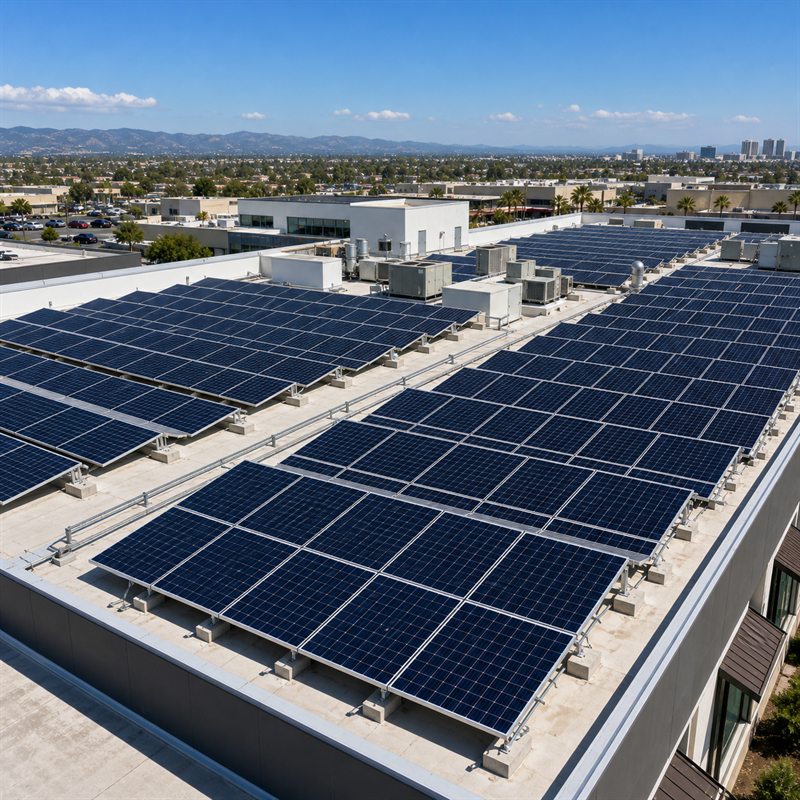
Solar systems for commercial installations that convert the sun’s rays into electricity for business units, factories, warehouses, offices, farms, hotels, etc. These installations can be done either on rooftops, in any ground-mounted area, or with batteries and other commercial energy infrastructure.

The kW capacity is the power rating of the system, while kWh is the electricity that has been produced or used. The size of the building alone does not dictate the correct commercial solar system. It depends on electricity consumption, peak demand, solar resource, usable site area, system losses, grid constraints, and the facility’s operating profile. Various sizes of commercial systems exist.
How Commercial Solar System Sizing Works
What Information Do You Need Before Sizing a Commercial Solar System?
The electricity data of the facility is used for commercial solar system sizing rather than the available roof area. The main inputs include annual or monthly load data, peak demand, location, solar resource, availability of installation area, electrical/grid constraints, and others. The amount of photovoltaic capacity to be installed and how it can usefully serve the actual loads of the business are essentially determined by these inputs.

Start With Electricity Consumption
The units of electricity consumption are kWh, and the instantaneous power demand is in kW. Although a monthly electricity bill contains useful information, it does not fully define the PV capacity required. Two businesses can consume the same amount of electricity each month and still require a different solar power systems for commercial buildings because of their different operating schedules and peak loads.
As an example, a factory that places its machinery mostly during daytime would be able to directly use a greater proportion of its solar generation than a facility whose biggest loads take place at night. Refrigeration, HVAC, motors, production equipment, and other industrial loads can create different demands. Therefore, only looking at annual or monthly kWh can produce an inadequate sizing decision.
Examine the Load Profile
An hourly or interval load profile displays the occurrence of actual electricity consumption. The solar generation is not constant throughout the day. A business that receives strong demand during the day may be able to use a large share of its PV generation directly. A business with a lot of evening or overnight demand may need grid electricity or battery storage to use more of its solar generation later.
Production also varies based on seasons. A factory may not operate at its peak during busy production times, while the commercial buildings change their HVAC Load during the year. By analyzing the models, we can assess whether the suggested commercial solar panels would primarily offset daytime usage, reduce grid purchases, or be paired with storage.
Estimate Solar Production
A preliminary energy estimate can be expressed conceptually as:
Estimated PV energy ≈ PV capacity × solar resource × performance factor
The solar resource should be defined at the project site rather than a uniform peak-sun-hours value. The PVWatts calculator, created by NREL, uses a location and system-design inputs to estimate PV production with adjustable system losses. According to its current interface, the estimated system-loss value by default is 14%, but this is a modeling default, not a standard loss rate to be applied to all commercial installations.
How Many Solar Panels Does a Commercial Building Need?
How to Calculate the Number of Solar Panels Needed for a Commercial Building
A basic commercial solar panel calculator starts with the desired PV capacity and the rated power of the selected module:
Panel count = Required PV capacity ÷ Panel wattage
An individual example: if you wish to install a solar array with an output of 100 kW using 550W modules. So, to arrive at around 100 kW DC module capacity may require about 182 of these modules, on account of 100,000 watts/550 watts = 181.8 approx. The module count may indeed work out to be about 100.1 kW DC, meaning that the result is a capacity calculation rather than an anticipated annual power delivery.
The ultimate panel count may vary due to string configuration, inverter operating limits, roof geometry, available combination of models, shading, access requirements, and electrical design. It is also useful to know the difference between DC PV capacity and AC inverter capacity.
HBOWA’s 100 kW system is a useful first-party example: it specifies 180 x 550 W modules, giving 99 kW of nominal DC module capacity, with a 100 kW Growatt inverter. The specified inverter has a nominal power rating of 100 kW AC
So, when we are to calculate the number of solar panels needed for commercial projects, we cannot use just the panel wattage. The total number of modules must be appropriate for the complete PV array and inverter design.
Commercial Solar Panel Size, Wattage and Roof Space
How Big Are Commercial Solar Panels?
The size of a standard solar panel varies greatly. The module’s dimensions, wattage, weight, and electrical characteristics vary by manufacturer and model. Thus, the precise commercial solar panel dimensions should always be extracted from the actual datasheet of the selected module.
The requirement for the number of panels for a given PV capacity can be reduced using higher wattage modules. However, the size of the panels has an effect on their handling and mounting, the roof layout and structural loading, and installation access. The power rating and efficiency should be considered together with the size of commercial solar panels, rather than individually.
What Matters When Selecting Commercial Solar Panels?
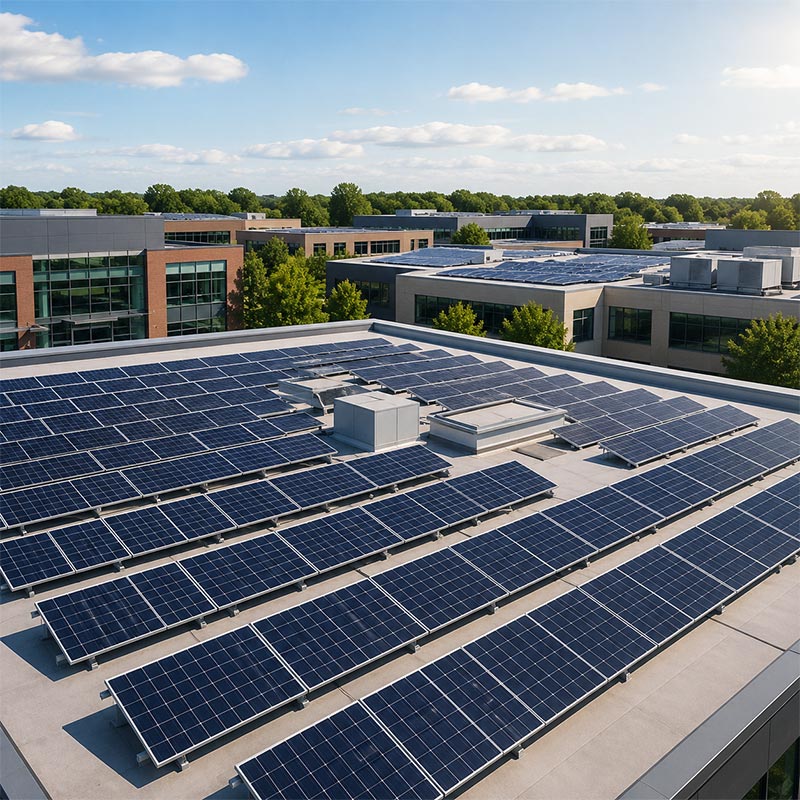
The commercial solar panel sizes to be aware of include the specifications for module wattage, efficiency, size, weight, mechanical-load ratings, and mounting requirements. Site limitations such as roof obstructions, access routes, building setbacks, HVAC devices, and more can reduce commercial solar panel area.
Development of technology, too. Fraunhofer ISE’s July 2026 Photovoltaics Report found a TWA efficiency for crystalline-silicon modules of 22.7% for Q4 2024, with the maximum value of the analyzed sample reaching 24.8%. It also claims that heterojunction and n-type TOPCon replace p-type PERC.
50kW to 150kW Commercial Solar System Sizes Compared
Which Commercial Solar System Size Is Right for Your Business?
Business size has no universal correlation with PV capacity. A 50kW solar system may be ideal for one facility but unsuitable for another with a different load profile. The same considerations apply for a 60 kW solar system, an 80 kW solar system, a 100 kW solar system, and a 150 kW solar system.
| System size | What it represents | Main sizing considerations |
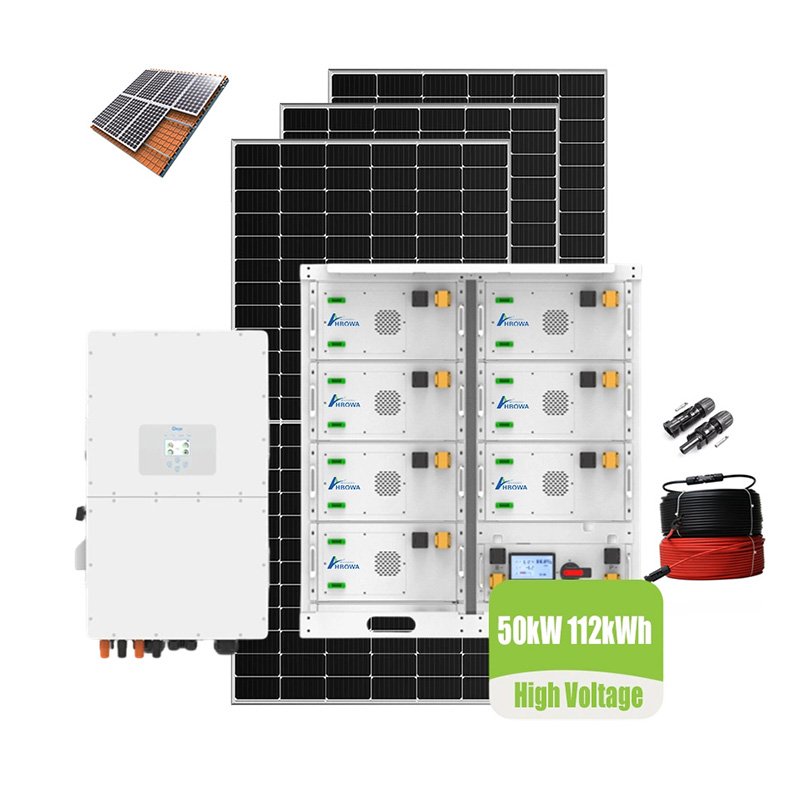 50kW solar system | Lower commercial PV capacity | Daytime load, usable roof area, grid connection |
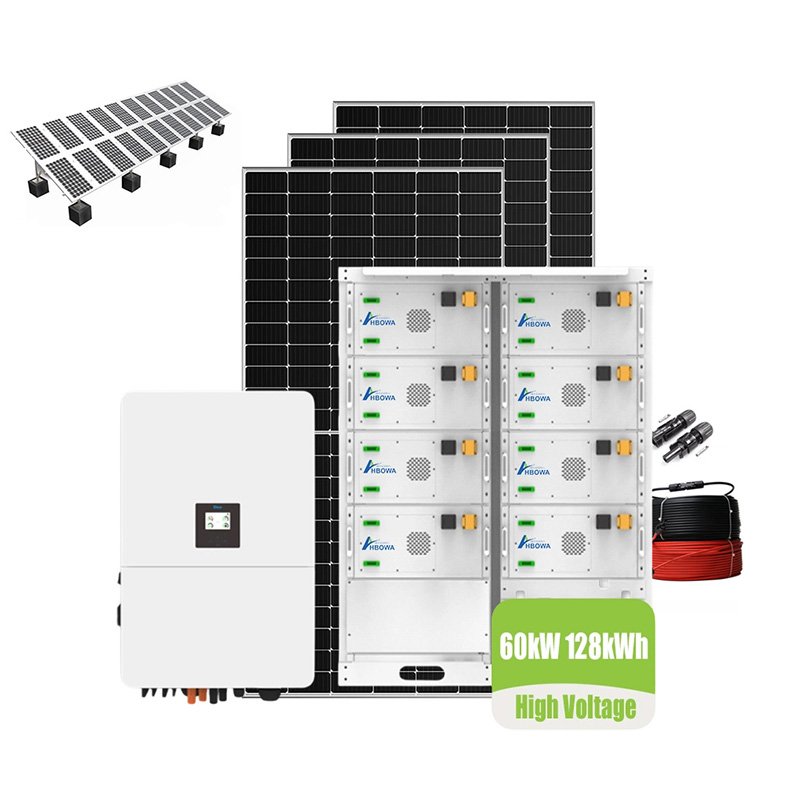 60kW solar system | Mid-range commercial capacity | Consumption profile, inverter configuration |
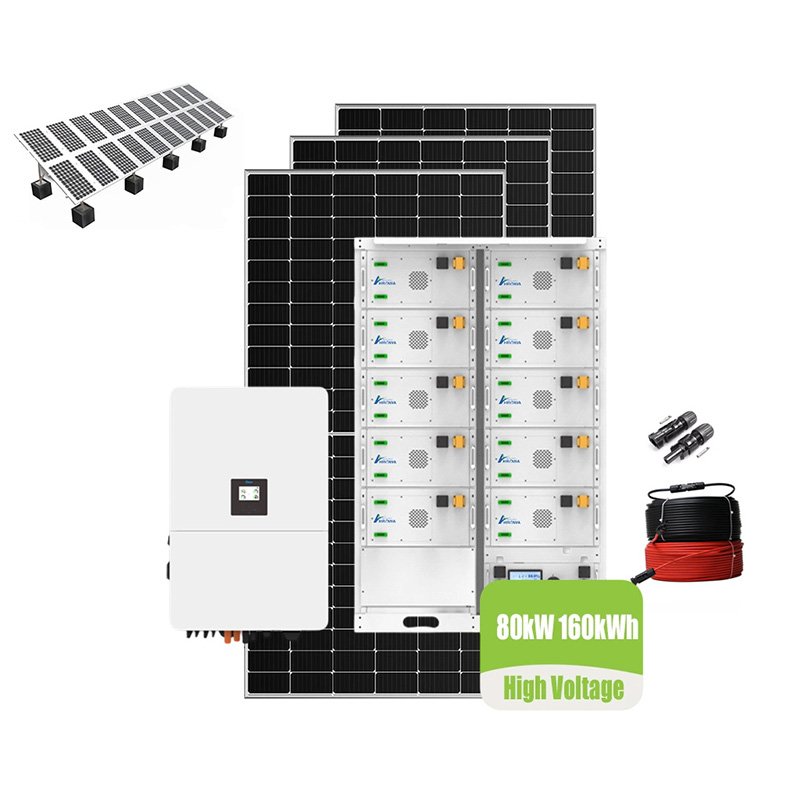 80kW solar system | Larger commercial capacity | Roof utilization, daytime demand, grid limits |
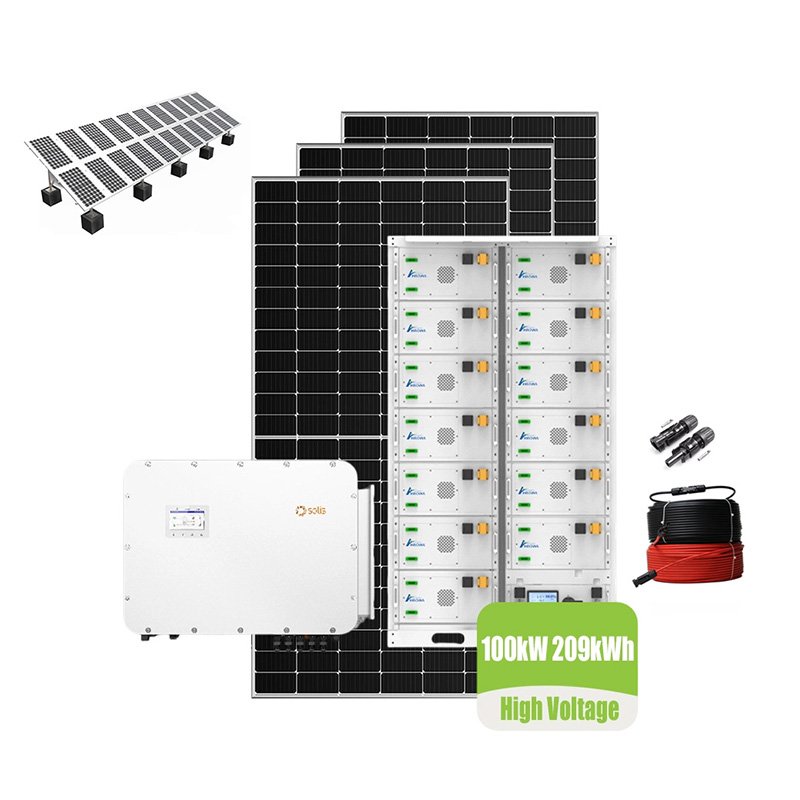 100kW solar system | Larger commercial or industrial capacity | Peak demand, electrical infrastructure, PV output |
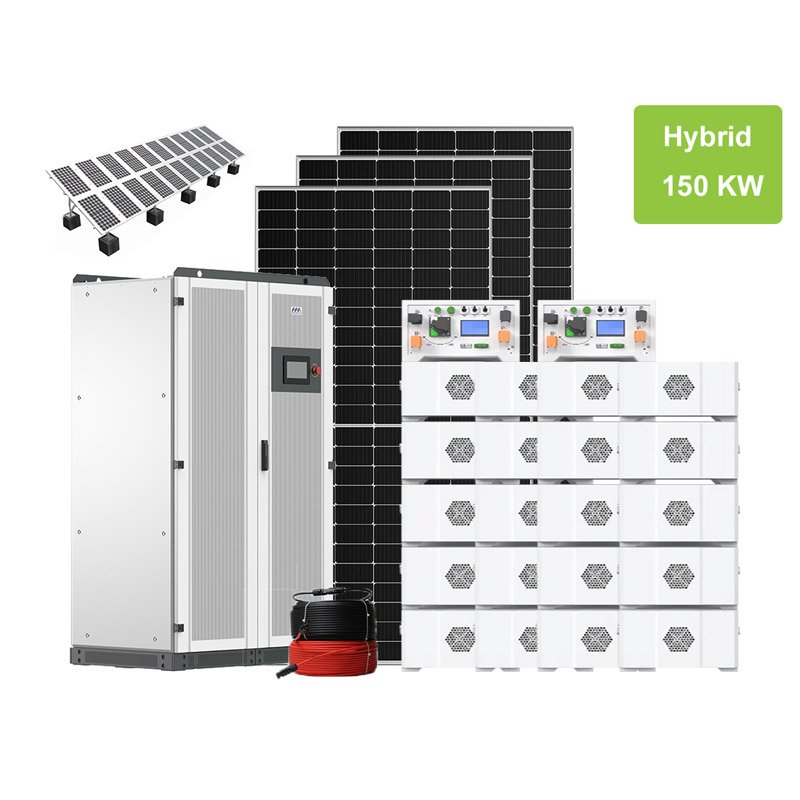 150kW solar system | Higher commercial or industrial capacity | Load profile, interconnection, space, expansion plans |
These numbers are reference system capacities, not business-size classifications. The starting point should be the measured electricity demand and the economically exploitable solar generation at the facility.
A documented HBOWA project in Poland uses a 50kW system coupled with roughly 300kWh of battery storage for a factory application. A hotel project in Romania uses 100kW of power capacity with 200kWh of storage. These configurations are for the project and not for size standards.

If you are looking at specific configurations, the relevant HBOWA pages are 50kW solar system, 60kW solar system, 80kW solar system, 100kW solar system, and 150kW solar system. These are at the product level and should also be checked against your site.
What Else Affects Commercial Solar System Sizing?
7 Factors That Can Change the Right Commercial Solar System Size
- Solar resource. The expected PV outputs are based on location, irradiance, weather patterns, and seasonality. Consequently, production estimates should be made using site-specific solar data rather than a fixed number of peak sun hours.
- Roof orientation and shading. A PV array’s usable output can be altered by azimuth, tilt, nearby structures, rooftop equipment, and shading. Separate design approaches may be needed for different roof sections.
- Usable roof area. Total upstairs area must not be interpreted as installable area. When the setbacks, walkways, skylights, HVAC equipment, structural restrictions, and safety requirements encroach on your panels, you lose panel area.
- Panel technology. The wattage and efficiency of modules affect how much capacity fits in a given area. According to the Fraunhofer ISE, commercial crystalline-silicon panel efficiency continues to grow, with n-type TOPCon increasingly replacing p-type PERC.
- Inverter configuration. Compatibility of the PV array with the inverter’s DC input range, MPPT configuration, AC rating, voltages, and string design must be ensured. Thus, the commercial PV system shall be designed as an integrated DC and AC system.
- Grid and export restrictions. The limits of utility interconnection, export controls, zero-export requirements, and local approval procedures can limit the maximum practical system capacity.
- Future expansion. Changes to future electricity demand include planned production increases, EV charging, new refrigeration, HVAC upgrades, and new machines. By taking these loads into account early on, an undersized system may be avoided shortly after installation.
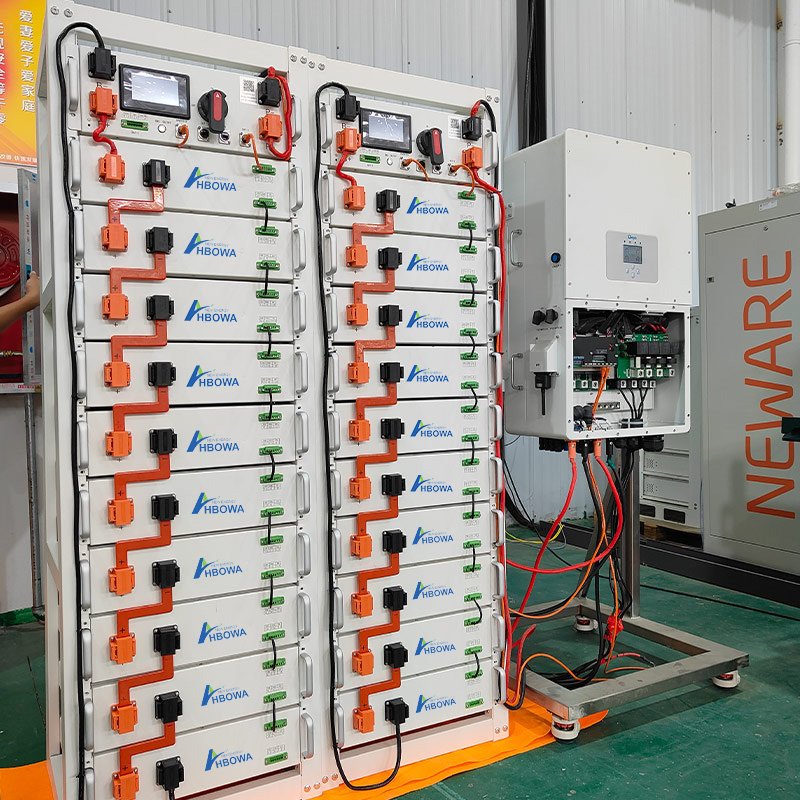
When Should a Commercial Solar System Include Battery Storage?
Where a commercial solar project also needs peak management or backup capability, an outdoor battery storage cabinet is one system format to evaluate against the site’s load profile and installation conditions.
Do Commercial Solar Systems Need Battery Storage?
Yes and No! It all depends on the situation. PV installations in a commercial context don’t always need battery storage. If the facility’s need arises to shift solar to evening hours, avoid peak demand, enhance solar self-consumption, comply with export limits, and maintain certain loads during outages, it becomes more useful.
When the demand for electricity in the daytime is similar to the PV production, and export to the grid is permitted, a solar-only system can work well. A battery addition becomes more relevant when loads continue after sunset or a solar surplus would otherwise be curtailed.
A solar plus storage device stores excess electricity generated by a photovoltaic (PV) system and uses it shortly after. When employing an AC-coupled configuration using a PCS for an existing PV installation, one may add storage without replacing the existing PV inverter. A LiFePO4 battery is a technology that is used in commercial storage applications.
A Togo project illustrates a different use case: a 300-kW PV system with 400-kWh battery storage was deployed for off-grid power, using stored solar energy to support loads when there was no PT production. This should not be the benchmark for typical grid-connected commercial sizing.
How to Evaluate a Commercial Solar Proposal
What Should You Check Before Buying a Commercial Solar System?
Before you approve a commercial PV proposal, check that it makes the annual electricity consumption of the facility clear. Also, check if 15-minute interval load data is available. Then check the peak demand, proposed DC PV capacity, AC inverter capacity, and selected module model. Module efficiency, dimensions, expected annual generation, and the assumptions made for system losses must also be clear.
For the proposal, the usable installation area shall account for shading, structural conditions, electrical infrastructure, grid/export limitations, monitoring, warranties, and future expansions, if any. Battery storage should be separately identified in terms of its power rating in kW, energy capacity in kWh, operational strategy, and backup loads if applicable.
A commercial solar panel calculator or preliminary yield model is useful for initial screening purposes but cannot substitute for site-specific engineering. The design will be finalized based on the electrical measurements, structural conditions, local grid requirements, equipment compatibility, and operations of the facility.
Real-World HBOWA Commercial Energy Examples
What Real Commercial Projects Show About System Sizing
The documented project of HBOWA indicates that sizing solar systems for commercial applications must not be informed by building type alone. A factory in Poland utilizes a 50kW / 301kWh LiFePO4 storage system for peak shaving, load shifting, and solar self-use.
A 100kW / 200kWh storage system is being utilized in a Romanian hotel project for PV self-consumption, peak shaving, and backup.
A cafe in Vietnam has a Deye inverter of 80kW and a storage system of 241kWh. The coffee shop uses these solutions for the cooling system, refrigeration, lighting, coffee equipment, and payment systems.
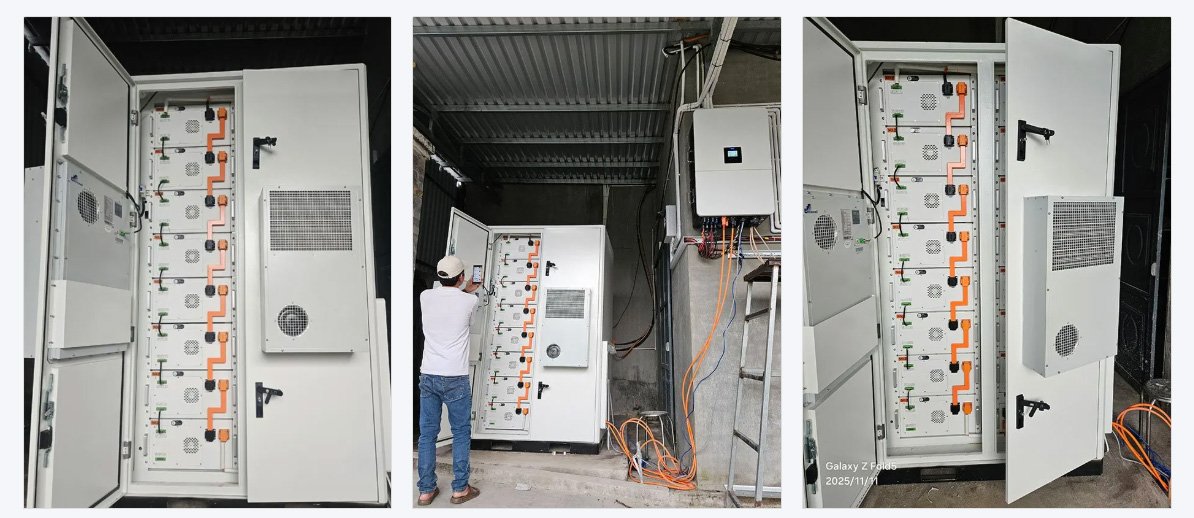
These projects are examples, not rules for sizing. According to them, system capacity should start from the actual load profile of the site, operating objective, and power requirements.
Conclusion
The right solar systems for commercial applications are sized based on the facility’s actual requirements, not a generic business category. Start with the load profile, then evaluate solar resource, usable area, PV and inverter design, grid conditions, and storage needs. Pretapower’s commercial systems and project examples can provide useful reference points, but final sizing requires site-specific engineering. If you still have concerns about commercial solar systems, welcome to contact HBOWA for more detailed suggestions and solutions.
Frequently Asked Questions
It certainly can; however, economics depend on how the excess generation is dealt with. The profitability of adding PV capacity can be influenced by export limits, electricity tariffs, curtailment, and battery storage.
The rated output of the solar modules gives us the DC capacity. The output rating of an inverter in the electrical circuit is called AC capacity. A well-designed system can allow for differential ratings.
It is possible to expand if the roof, electrical system, inverter setup, interconnection to the grid, and structural capacity can accommodate extra generation. The original design should consider future expansion.
The facility’s electricity profile and tariff design determine the answer. Firms with significant daytime demand may emphasize self-consumption, but the rules for export and storage can steer design towards the optimum in best practice.
Electricity bills, interval load data (where available), peak demand, site location, usable roof area, hours of operation, and planned changes to major electrical loads are useful pieces of information.
Certain designs could use these, but we had to assess compatibility. Before mixing different panel models, you must consider the module electrical characteristics, string configuration, inverter limits, orientation, and shading.