Preliminary estimate only. Confirm load profile, PCS limits, temperature derating, auxiliaries, redundancy and local codes before final design.
Introduction
The appropriate battery size for the solar system must start with energy delivery and not the size of the solar array alone. The solar battery capacity that you require essentially depends on the load profile, backup time, usable capacity, system losses, and the power required at a given time.
What Battery Size Do You Need for a Solar System?
When it comes to battery storage, sizing has two dimensions: power and energy. The kilowatts (kW) rating of a battery system describes the maximum power that can be delivered instantly, while the kilowatt-hours (kWh) rating describes the amount of energy it can store. The first question investigates whether the system’s capacity can support the load, while the aim of the second question is to ascertain how long it can run.
A 100 kW / 200 kWh system, for instance, has a nominal 2-hour duration when discharged at 100 kW. This doesn’t mean that it will supply a 100 kW load for precisely a couple of hours. Due to limits related to state-of-charge, conversion losses, temperature, power performance, and controls.
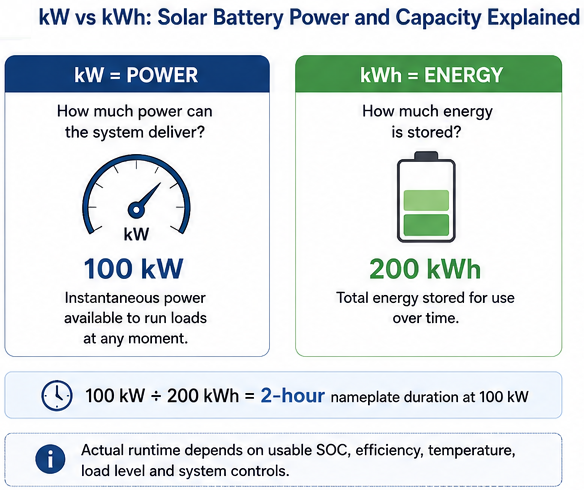
This difference is important in solar battery evaluation. Even if a battery has enough storage capacity (kWh) it may lack power (kW) to service high-demand loads. On the other hand, it may have a sufficient capacity for generation but an insufficient capacity for storage for the backup period.
According to NREL, the power capacity of storage differs from the energy capacity, and usable capacity is that which observes practical limits for operational use. For instance, a battery that is 10 kWh. When operated at a depth of discharge of 90%. This gives 9 kWh of storage that can be used. Hence, it is important to base the battery capacity for a solar system design on its usable energy and power requirement, rather than its nameplate kWh value alone.
How to Calculate Battery Sizing for a Solar System
A practical battery sizing calculation for a solar system begins with the energy the battery must actually supply. The basic relationship is:
Required battery energy = battery-served load × required backup duration
The load served by the battery is not always equal to, or even misleading about, the daily energy consumption. In the case of a grid-connected home, some of the electricity will be used directly from solar during the day, while the battery may just need to cover evening loads or selected critical loads during an outage. A commercial system could also be designed based on peak shaving, solar self-consumption, or a different objective. This is why one hourly load profile is better than a daily average alone.
Then convert the required usable energy into nominal battery capacity. A simple relationship is:
Nominal capacity = required usable energy ÷ permitted DoD
The depth of discharge is specific to the product. Not all LiFePO4 batteries can operate at the same DoD, as commonly assumed. The permissible range of operation should be determined by the manufacturer’s datasheet and warranty conditions. NREL demonstrates the concept of depth of discharge (DoD), using an example of a 10 kWh battery with a DoD of 90% that will give 9 kWh of usable capacity.
System losses must be taken into consideration. The components can also include inverter or PCS conversion losses, battery losses, wiring losses, other components, and auxiliary consumption. According to NREL’s PVWatts documentation, PV-system losses occur due to a number of different mechanisms and should not be assumed to all be one single percentage. Use efficiency data for real equipment and configuration in a real job rather than inserting an arbitrary loss factor.
In a nutshell, solar battery sizing needs to have enough kWh to supply the required energy for the required duration and enough kW to deliver the load when that power is required. According to research by IEAPVPS, the Performance of PV-plus-storage systems in the real world is dictated not just by battery chemistry but also by other parameters.
Battery Sizing Example
Imagine a house with a critical evening energy demand of 6 kWh and a one-night backup objective. As an example only, suppose the battery(LiFePO4) used allows 90% depth of discharge (DoD) and the full discharge pathway operates at 90% efficiency.
Required nominal capacity = 6 kWh ÷ (0.90 × 0.90) = 7.41 kWh
In buying practice, a buyer may look at products in the 7.5-8 kWh range. However, that does not make 7.5 or 8 kWh a recommended number as such. The ultimate choice is determined by specifications, functional limitations, inverter compatibility, and design specifications from the manufacturer.
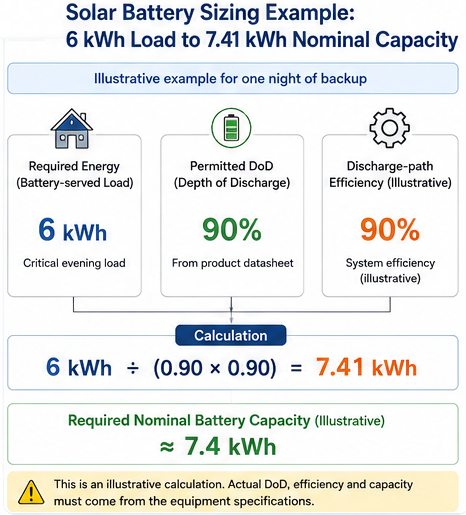
The energy that the battery must actually deliver should be what you start your solar battery sizing calculation with. The total daily consumption of the home is not equal to 6 kWh.
A professional battery sizing for solar system assessment will also assess the hourly load profile, inverter power, minimum state of charge, battery charge and discharge limits, operating temperature, and available PV generation for recharging. While a battery capacity calculator is helpful, it will not perform these checks for you.
What Changes Battery Size? 5 Factors to Check
The required battery storage sizing changes when the operating conditions change. Five factors are especially important:
| Factor | Effect on sizing |
| Load profile | Shows when energy is required and how much must be supplied |
| Backup duration | Longer backup requires more usable kWh |
| Battery DoD and usable SOC window | Determines how much nominal capacity can be accessed |
| Power demand | Determines the required battery and inverter kW |
| PV production and recharge window | Determines whether stored energy can be replenished adequately |
The battery size will also depend on future load growth. An electric car, a heat pump, an air-conditioning plant expansion, or an increase in the production of vehicles can move the load profile and the peak demand.
According to an IEA PVPS 2026 report, topologies, inverter behaviour, control logic, operating profile, temperature, and firmware influence the field performance of PV-plus-BESS systems, apart from battery chemistry. It also shows measurable differences between nominal and real performance.
Battery Sizing for Commercial Solar Systems: kW, kWh and Duration
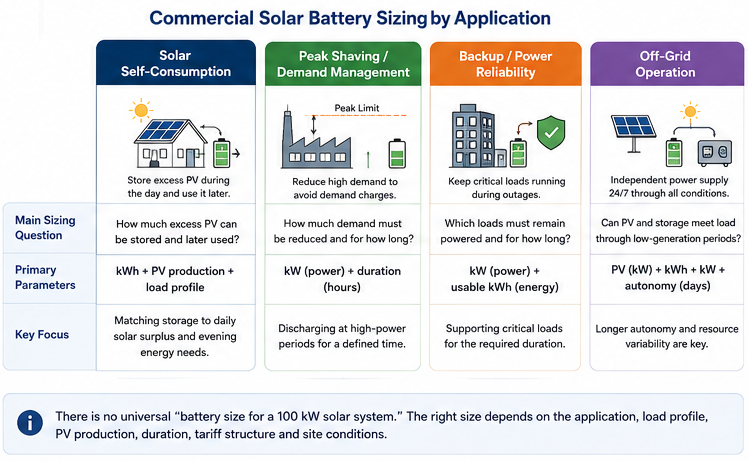
Commercial battery sizing for a solar system must start with the application, rather than a set battery-to-solar ratio. Peak shaving will take up a large amount of power for a small time period; however, solar self-consumption would take up more energy capacity. Low-generation periods matter for off-grid systems.
| Application | Main sizing question | Primary parameter |
| Solar self-consumption | How much excess PV can be stored and later used? | kWh + PV/load profile |
| Peak shaving | How much demand must be reduced, and for how long? | kW + duration |
| Backup | Which loads must remain powered, and for how long? | kW + usable kWh |
| Off-grid | Can PV and storage cover demand through low-generation periods? | PV + kWh + kW + autonomy |
Due to the site load curve, tariff structure, backup requirement, and operating strategy, the same solar array can require different storage systems. A peak shaving project may prioritize discharge power, while solar self-consumption depends on when there is surplus PV production and when electricity is consumed.
According to the IEA, battery storage is being increasingly deployed for energy shifting and renewable integration. A 2026 review of the sector states that most projects still fall around two hours, while an increasing number are of a four-hour duration or more as needs for flexibility grow. The market deployment is not a universal design goal.
Thus, there is no standard “battery size for a 100 kW solar system”. The right solar battery size is a result of the site’s load, operation objective, PV output, required time duration, and equipment limitations.
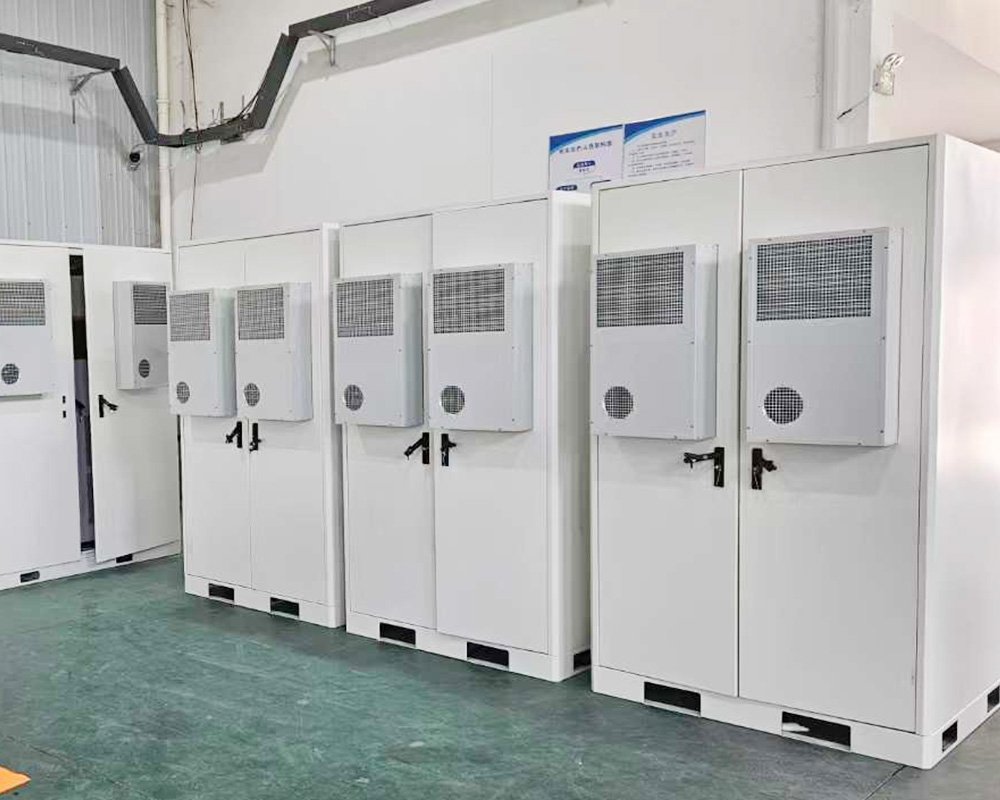
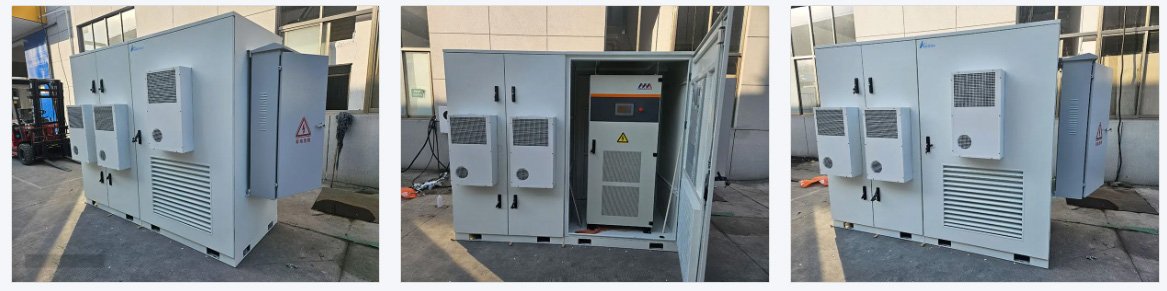
After power, capacity, and duration are defined, a commercial energy storage cabinet can be configured around the project’s verified kW and kWh requirements.
Real-World Commercial Battery Sizing Examples
Real-life projects demonstrate why the battery sizing of a solar-powered system cannot be fixed to a battery-to-PV ratio. A 50kW/301kWh LiFePO₄ battery storage system was supplied by HBOWA in Poland. The project integrates solar self-use, peak shaving, and load shifting. The polarization effect, as the field energizes and loops back toward the grounded anode, is useful.
Romania:
In Romania, a hotel project implemented a 100 kW / 200 kWh energy storage system with a 100 kW Megarevo inverter. The hotel is using PVT-ER to supply hot water and make energy savings. The project shows that the same kW and kWh ratings can fulfil different roles if the operating philosophy is defined correctly.
Togo:
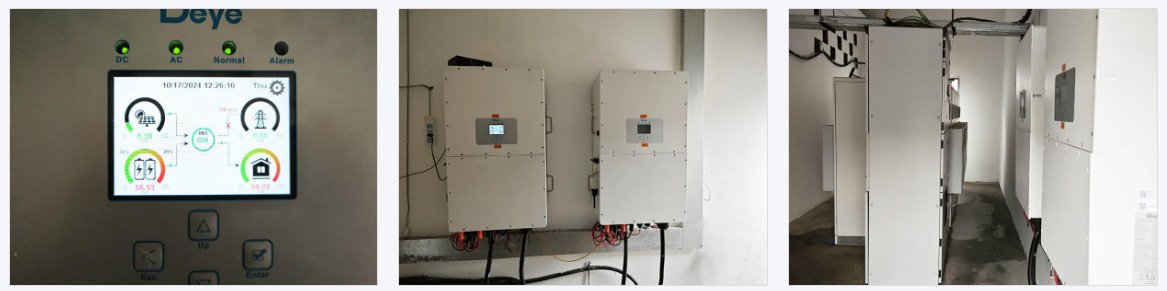
In Togo, HBOWA installed a 300kW PV system with 400kWh battery storage for off-grid use. During the day, solar energy is generated, and stored energy support at night and when the supply is lower. In addition, the project involves high-temperature, high-radiation environments.
In these cases, a key sizing principle was demonstrated: the battery storage capacity must match the site load, operational schedule, PV production, and application. Designs for off-grid systems are distinct from those for grid-connected peak shaving or solar self-consumption.
Which Battery Capacity Fits the Project? A Practical Commercial Comparison
Commercial storage cabinets can serve different projects with similar power-to-energy ratios. The next HBOWA configurations represent the range. The runtime numbers are simply nameplate calculations and not guaranteed operating times.
| Configuration | Nameplate power | Listed battery energy | Nominal duration at rated power* |
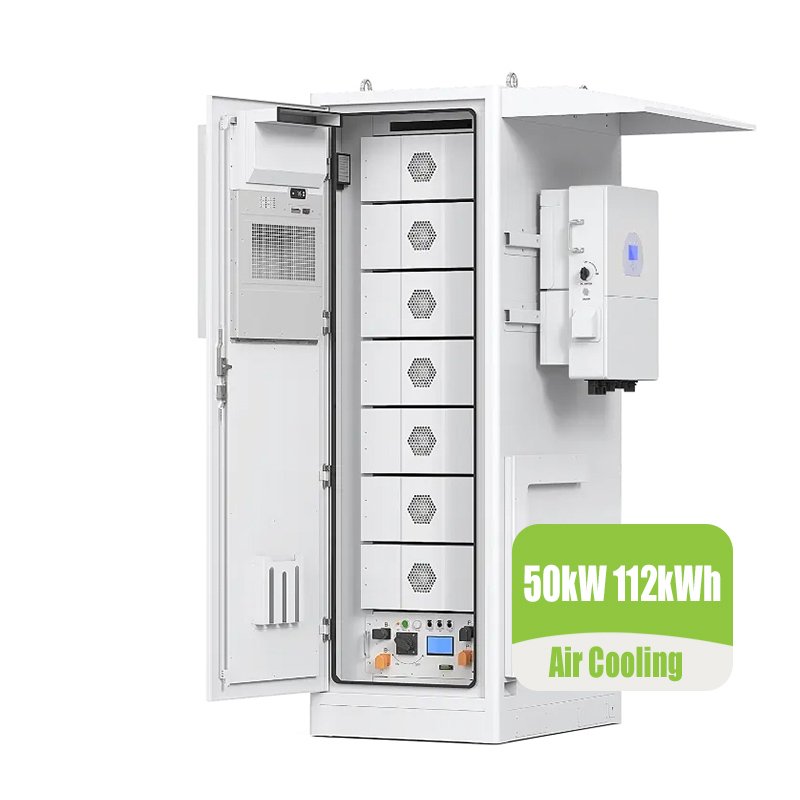 50kW 100kWh battery cabinet | 50kW | 100.35kWh | ~2.0 h |
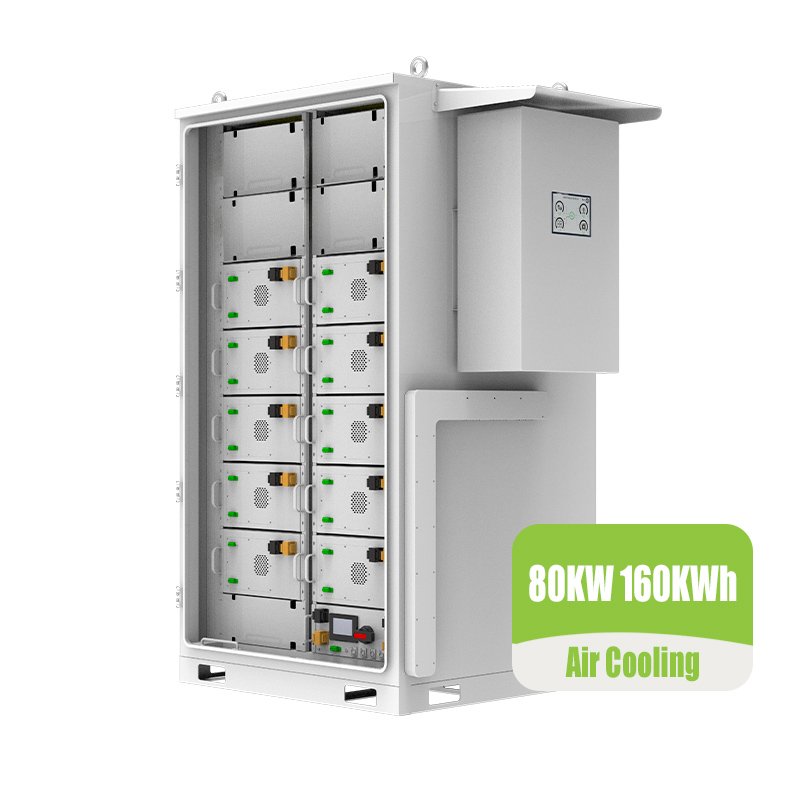 80kW 160kWh battery cabinet | 80kW | 160kWh | 2.0 h |
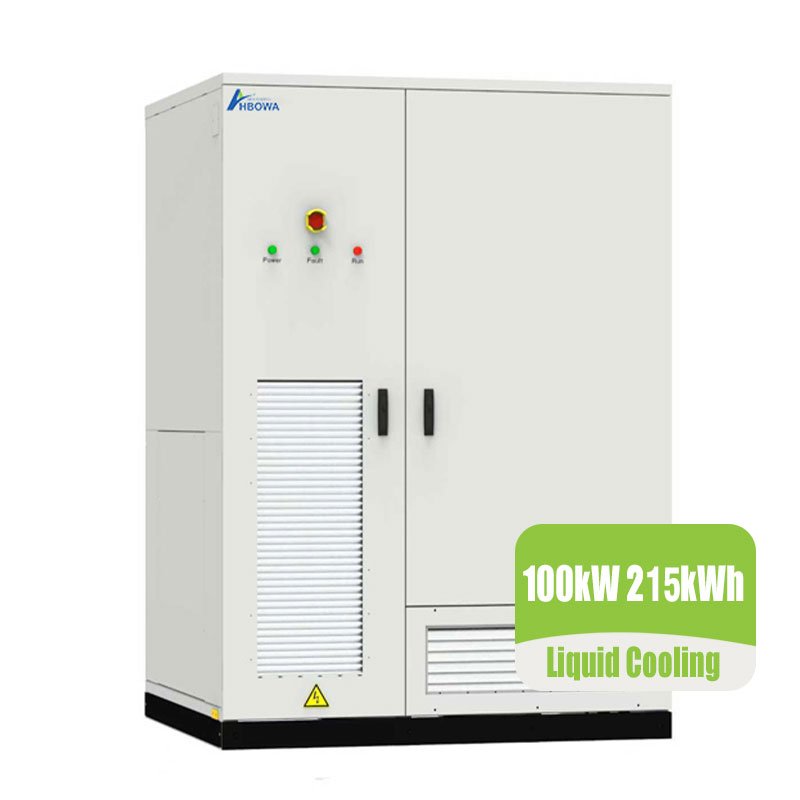 100kW 200kWh battery storage | 100kW | 215kWh** | ~2.15 h |
 100kW 215kWh battery storage | 100kW | 215kWh | ~2.15 h |
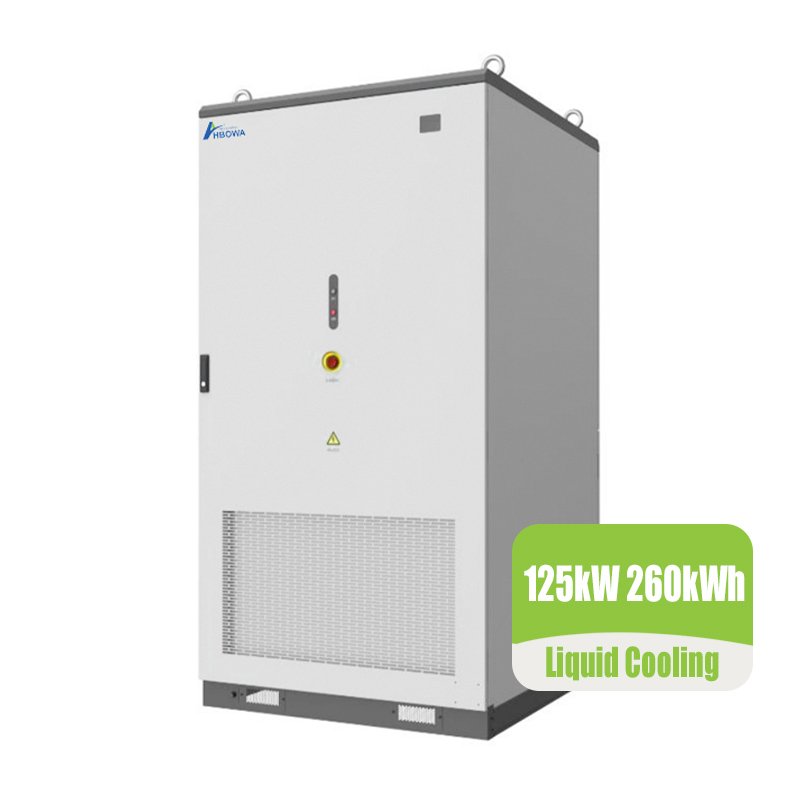
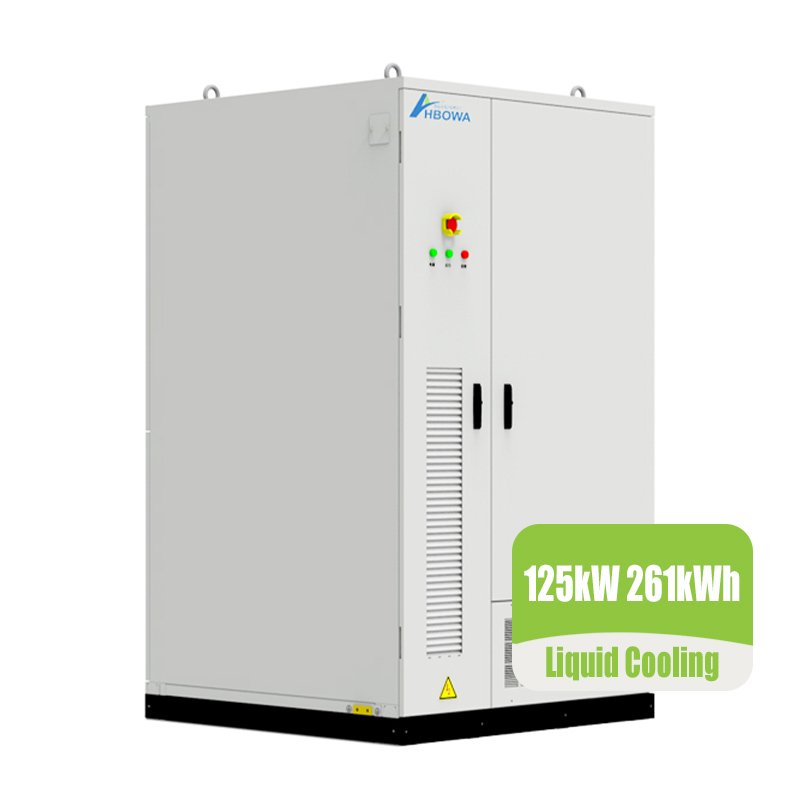 125kW 261kWh battery storage cabinet | 125kW | 261kWh | ~2.09 h |
*Only nameplate duration. The actual runtime depends on the usable SOC, discharge limits, efficiency, temperature, load, and controls. HBOWA’s current technical table for the page marketed as a 100kW/200kWh system lists 215kWh rated battery capacity, so the final datasheet should be checked before specifying the system.
The best practice of selecting the solar battery capacity required for a project from the load profile and operating objective rather than a product label is demonstrated through these examples.
How Many Batteries Do I Need for My Solar System?
The answer to how many batteries I need for my solar-powered system depends first on the required nominal storage and then on the usable capacity of each battery or module. The calculation is fairly simple:
Number of batteries = required nominal storage ÷ nominal capacity per battery
This must then be checked for voltage compatibility, inverter or PCS specifications, permissible series and parallel combinations, BMS communication, charge and discharge current, and installation conditions. Don’t mix battery modules just because their kWh ratings seem compatible.
HBOWA’s solar battery sizing calculator resource explains the standard relationship between kWh, voltage, and Ah and provides a conversion tool for voltage-based calculations.
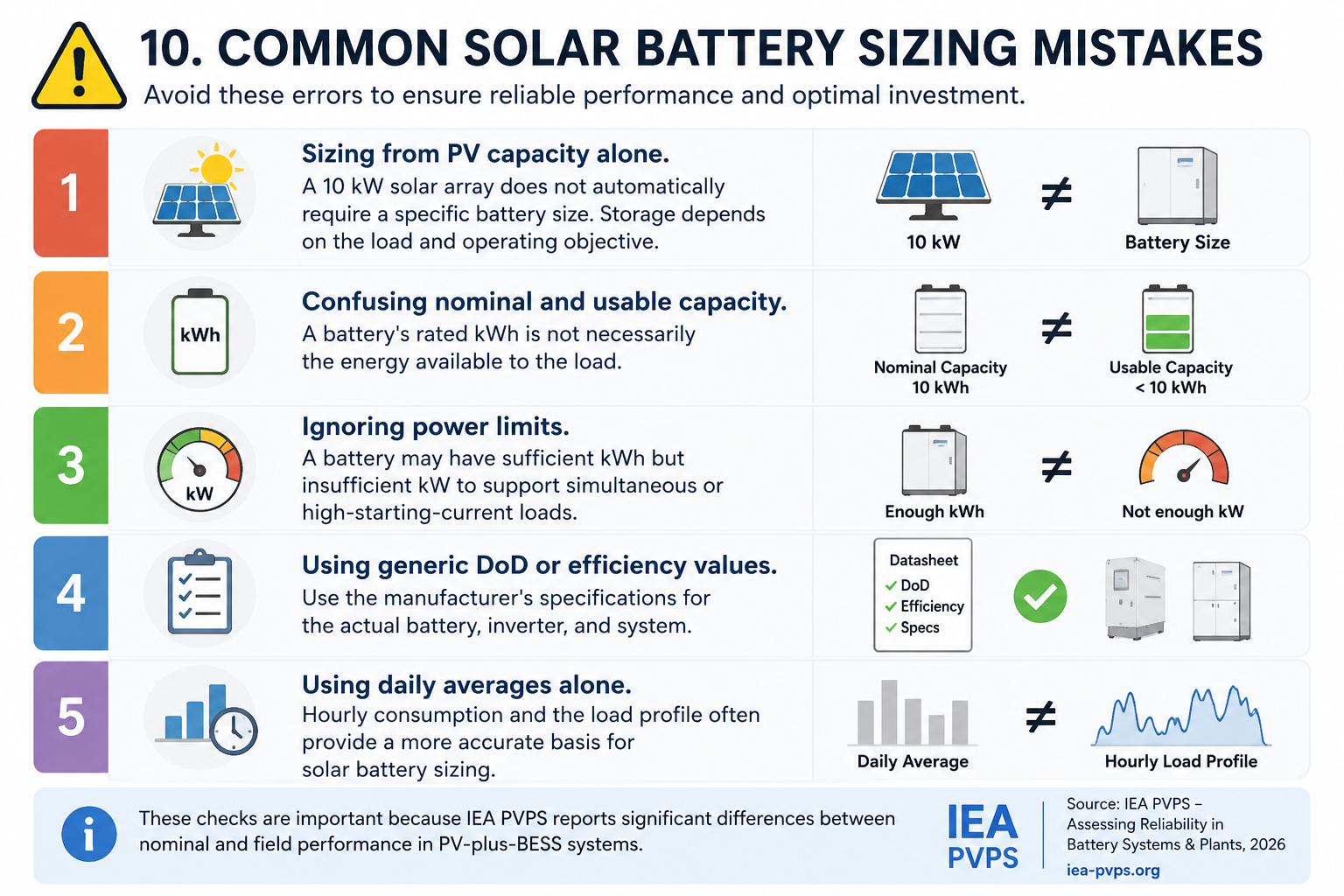
Common Solar Battery Sizing Mistakes
What Data Do You Need Before Sizing a Solar Battery?
Reliable battery sizing for solar system assessment starts with actual project data. For a residence, it includes the energy consumption in kWh, hourly(TOU demand), critical loads, preferred backup duration, PV capacity, inverter rating, and battery datasheet.
Commercial projects demand further details regarding peak demand, operating hours, tariff structure, grid/transformer limits, PV generation, load profile, planned expansion, and backup loads needed.
Conclusion
Correct battery sizing for a solar system starts with determining the amount of energy the solar energy system must deliver. To select the battery, the first step is to calculate the required kWh, which takes into account usable capacity and system losses. Then check the required kW. Next, verify PV production, inverter limits, and site conditions. If you still have concerns about battery sizing, feel free to contact the HBOWA Team for detailed suggestions and solutions.
Frequently Asked Questions
The service-life requirement of a project is developed for the expected retention of capacity rather than the sizing of batteries for initial performance alone. The suitable allowance varies with the battery tech, operating circumstances, warranty, and the producer’s degradation model.
They are both essential, but they answer different questions. The battery’s energy capacity is defined by the energy that it must provide over time. Similarly, the power ratings of a battery and inverter must take into account the relevant peak or simultaneous load.
The energy stored in the battery is determined by the PV production. A bigger battery doesn’t necessarily mean more useful energy storage if the solar system can’t regularly recharge it during the available charging window.
An off-grid sizing must consider the demand of the load, production of PV, capacity of the battery, output of the power, and autonomy required during periods of low solar generation. Generator support and critical-load prioritization need to be accounted for in design.
Certainly, when impending burdens can be anticipated with a fair degree of certainty. Changes to energy and peak-power requirements occur from EV charging, HVAC changes, heat pumps, or business expansion. Allowances should be based on anticipated load growth rather than a random percentage of oversizing.