
The Correct Formula: How to Convert Watt Hours (Wh) to Milliamp Hours (mAh)
The standard process for transforming energy into charge revolves around Volts.
The method is as follows:
mAh = Wh / Volts x 1000
It will help consumers translate stored energy into usable current capacity. Wh to mAh calculations also have the most accuracy when performing with this method. It’s because this allows all chemistries’ different offerings in voltage. An example below clarifies more why we need the conversion :

Users ever finding how many mAh is 100Wh, or using a wh to mah calculator should it. To achieve precision, one must verify volts before applying. Generic calculators, mainly those offered by sites, fail to perform the checks of these multi-voltage (say 4.35V now) applications. For a multi-voltage application, the Watts to mAh themselves change significantly.
Wh to mAh Conversion Tables
Voltage, watt-hours to milliamp-hours conversion tables are necessary to find the exact sizing of the system. Therefore, we have made special multi-voltage charts to fulfill the gap that gets missed by our competitors. If you are willing to go through those unique tables with tables included in them to understand well our multi-voltage charging of the battery, which is commonly used in LiFePO4 cells, consumer Li-ion packs, solar energy storage, and mobility systems.
| Watt Hours (Wh) | @ 3.7V (mAh) | @ 12V (mAh) | @ 48V (mAh) | Common Use |
| 1 Wh | 270 | 83 | 21 | Small devices (sensors, wearables) |
| 2 Wh | 541 | 167 | 42 | Bluetooth accessories / small gadgets |
| 5 Wh | 1,351 | 417 | 104 | LED lights, small electronics |
| 10 Wh | 2,703 | 833 | 208 | Phone batteries / small power packs |
| 20 Wh | 5,405 | 1,667 | 417 | Tablet batteries, compact power banks |
| 37 Wh | 10,000 | 3,083 | 771 | Small power banks (common rating) |
| 50 Wh | 13,514 | 4,167 | 1,042 | Laptop battery (entry level) |
| 75 Wh | 20,270 | 6,250 | 1,562 | High-capacity laptop battery |
| 100 Wh | 27,027 | 8,333 | 2,083 | Airline limit (often <100Wh preferred) |
| 150 Wh | 40,541 | 12,500 | 3,125 | Portable workstation / pro laptop packs |
| 200 Wh | 54,054 | 16,667 | 4,167 | Large power bank / field power |
| 300 Wh | 81,081 | 25,000 | 6,250 | CPAP backup, small DC loads |
| 500 Wh | 135,135 | 41,667 | 10,417 | Solar generators (small class) |
| 750 Wh | 202,703 | 62,500 | 15,625 | Portable power station (mid-size) |
| 1,000 Wh (1 kWh) | 270,270 | 83,333 | 20,833 | Home backup (lights + router + fans) |
| 1,500 Wh (1.5 kWh) | 405,405 | 125,000 | 31,250 | Off-grid cabin essentials (short duration) |
| 2,000 Wh (2 kWh) | 540,541 | 166,667 | 41,667 | RV / camping power station (extended use) |
| 3,000 Wh (3 kWh) | 810,811 | 250,000 | 62,500 | Small off-grid system buffer |
| 5,000 Wh (5 kWh) | 1,351,351 | 416,667 | 104,167 | Residential ESS (entry level) |
| 10,000 Wh (10 kWh) | 2,702,703 | 833,333 | 208,333 | Whole-home battery backup (common size) |
A. 3.2V LiFePO4 Cells
This chemistry is standard in solar storage and industrial batteries.
1 Wh → 312 mAh
5 Wh → 1,562 mAh
50 Wh → 15,625 mAh
100 Wh → 31,250 mAh
200 Wh → 62,500 mAh
B. 3.7V Lithium-ion Cells
Low-voltage cells are used in phones and compact electronics.
1 Wh → 270 mAh
10 Wh → 2,702 mAh
50 Wh → 13,513 mAh
100 Wh → 27,027 mAh
150 Wh → 40,540 mAh
C. 12V Batteries
Used in RVs, telecom boxes, UPS units, and small solar systems.
50 Wh → 4,167 mAh
100 Wh → 8,333 mAh
160 Wh → 13,333 mAh
256 Wh → 21,333 mAh
500 Wh → 41,667 mAh
D. 24V Batteries
Common in commercial mobility systems and mid-size solar storage.
100 Wh → 4,167 mAh
192 Wh → 8,000 mAh
374 Wh → 15,583 mAh
750 Wh → 31,250 mAh
1,070 Wh → 44,583 mAh
E. 48V / 51.2V LiFePO4 Systems
These voltages are used in residential and commercial ESS units. HBOWA provides high-capacity packs in this class.
500 Wh at 48 V → 10,416 mAh
1,000 Wh at 48 V → 20,833 mAh
2,000 Wh at 51.2 V → 39,062 mAh
5,000 Wh at 51.2 V → 97,656 mAh
10,000 Wh at 51.2 V → 195,312 mAh
Conversions at this range support evaluations for mah to kWh, kWh to mAh calculator, and users needing to convert kWh to mAh for whole-home or business-level systems where precision matters.
What Are Watt Hours (Wh)?
A watt-hour measures how much energy a battery can give over time. You determine this by multiplying the voltage by the amp-hours, and it shows total energy. Wh has become the standard reference for power banks, LiFePO4 batteries, solar generators, e-bike packs, and marine energy systems. Watt-hours define how much usable energy the battery can deliver under rated conditions.
| Application Type | Typical Wh Range | Common Use Cases | Runtime Example |
|---|---|---|---|
| Smartphones | 10 – 20 Wh | Daily mobile use | 1-2 days typical use |
| Power Banks | 37 – 100 Wh | Travel, backup charging | 2-4 phone charges |
| Laptops | 40 – 100 Wh | Portable computing | 4-12 hours work |
| E-bikes | 300 – 750 Wh | Urban commuting | 30-80 km range |
| Solar Generators | 500 – 2,000 Wh | Camping, emergency backup | 1-3 days off-grid |
| Home ESS | 5,000 – 15,000 Wh | Residential solar storage | 12-24 hours backup |

The Wh figure for PV applications indicates how long the inverter or load will run before recharging. Portable electronics can accurately compare different battery chemistries and voltages thanks to this feature. Most datasheets mention Wh as it gives a direct indication of energy content. Companies use watt-hour calculator tools or internal measurement systems to get the right wh calculation. When users are checking capacity specs, understanding what watt-hours are, battery watt-hours are, or what wh battery means helps assess real-world performance rather than just guessing.
What Are Milliamp Hours (mAh)?
The level of electrical charge given by milliamp hours indicates current consumption over time by a battery or battery-powered device. Many consumer electronic devices usually run on lower voltages. For this reason, mAh is a common sizing in the market. But what does mAh mean on batteries is vague when comparing different voltage platforms of products. Two batteries with the same mAh rating can store different amounts of energy if the voltage varies. Users often calculate the milliamp hours and the voltage together to get the actual energy content. Converting milliamp hours into watt hours can assist in finding mAh in watt hours.
| Battery Type | Capacity (mAh) | Voltage (V) | Actual Energy (Wh) | Energy Difference |
|---|---|---|---|---|
| Smartphone Battery | 5,000 mAh | 3.7 V | 18.5 Wh | Baseline |
| 12V RV Battery | 5,000 mAh | 12 V | 60 Wh | 3.24× more energy |
| 48V E-bike Battery | 5,000 mAh | 48 V | 240 Wh | 13× more energy |

This is especially useful when one analyzes the wearable run time or capacity of IoT devices, drones, and small backup batteries. This means that as energy densities get higher, knowing mAh versus watt hours gives a more realistic look at a device’s actual performance.
Solar Products for Your Project
 Solar Panels | 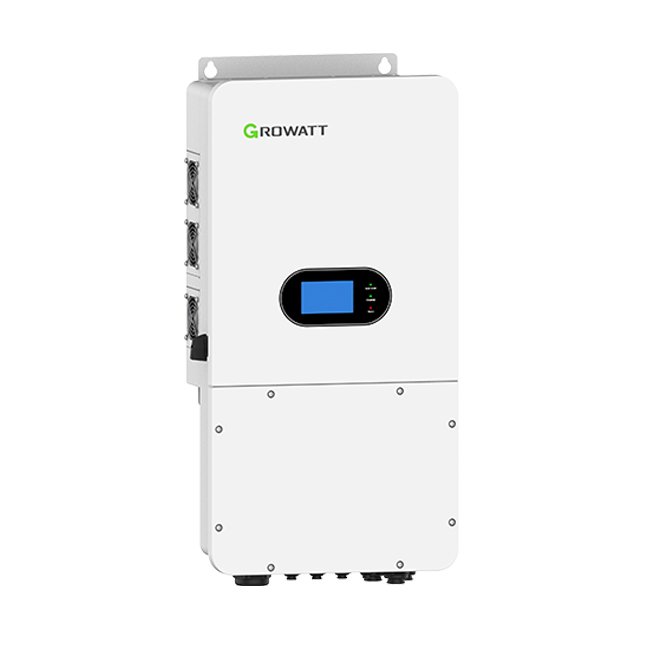 Solar Inverter |  C&I Battery Storage |
Wh vs. mAh: Why the Conversion Matters
It’s not enough just to compare mAh between different batteries. Wh indicates stored energy and is therefore a more reliable metric across different chemistries and voltages. Airlines regulate capacity using this value, so power banks, travel batteries, and solar generators list their wattage (Wh). Aviation rules in the US, EU, and UK consistently set the carry-on limit at 100 Wh for passenger devices. That is why consumers often search for 100Wh to mAh power bank capacity—understanding the relationship between Wh and mAh and the proper use of watt-hours to mAh conversion to size your system correctly for solar kits, e-bikes, and LiFePO4 storage. When users convert mAh to Wh, or check Wh in mAh, they are better able to compare product A against product B, especially when looking at packs with different voltages and different discharge rates, etc., and use environments.
| Comparison Factor | Watt Hours (Wh) | Milliamp Hours (mAh) |
|---|---|---|
| What It Measures | Total energy stored | Electrical charge capacity |
| Voltage Dependency | ✅ Voltage included | ❌ Voltage NOT included |
| Accuracy for Comparison | ✅ Reliable across all batteries | ⚠️ Only accurate at same voltage |
| Best Use Case | Comparing different battery types | Comparing same voltage devices |
| Airline Regulations | ✅ Used (100 Wh limit) | ❌ Not used |
| Runtime Calculation | ✅ Direct calculation possible | ⚠️ Needs voltage first |

Converting kWh to mAh
Kilowatt-hours is the way large battery systems are measured, and the best way to convert the stored energy to charge is to scale the formula Wh. The right equation comes to be
mAh = (kWh ÷ Voltage) × 1,000,000
A simple calculation helps people compare all kinds of batteries, rack-mounted LiFePO4 storage, or off their grid LiFePO4 battery solutions, for example, if there is a 1 kWh battery at 12V, the calculation will provide users 83,333 mAh, which demonstrates how energy gets distributed across higher voltages and similarly a 1 kWh pack at 48V is equal to 20,833 mAh, and a 1 kWh system at 51.2V delivers 19,531 mAh. Solar system installers and other personnel who are looking for the kWh to mAh, kWh mAh calculator, or convert kWh to mAh solutions generally tend to deal with solar installations where accuracy is the main reason. Packs like 1536Wh to mAh use the same formula, although the system size gets measured accurately.
| Energy (kWh) | @ 12V (mAh) | @ 24V (mAh) | @ 48V (mAh) | @ 51.2V (mAh) | Typical Application |
|---|---|---|---|---|---|
| 1 kWh | 83,333 | 41,667 | 20,833 | 19,531 | Small off-grid cabin |
| 2 kWh | 166,667 | 83,333 | 41,667 | 39,062 | Backup power system |
| 5 kWh | 416,667 | 208,333 | 104,167 | 97,656 | Residential solar |
| 10 kWh | 833,333 | 416,667 | 208,333 | 195,312 | Full home ESS |
| 20 kWh | 1,666,667 | 833,333 | 416,667 | 390,625 | Commercial storage |
Real-Life Case Studies
Case Study 1: Airline-Approved 100 Wh Power Bank.
The regulations for air travel make it clear about a limit of 100 Wh for batteries in carry-on. When we want to learn about the energy content of a battery, we often convert 100 Wh to mAh by considering 3.7V, and the formula turns out to be 27,027 mAh. It is for this reason that whenever we do a 100 Wh power bank to mAh translation, we always get high values. However, airlines consider only Wh and do not consider mAh. Therefore, before traveling, we should always check the voltage and the label correctly so that there is no confusion or misinterpretation, and we can save our device from being rejected at the international cabin.

Case Study 2: 500 Wh LiFePO4 Solar Generator
Converting 500 Watt-hours to charge with output behavior will help evaluate a lithium-iron-phosphate power pack. At nominal 12.8 Volts of a pack, there is about 39,062 milliamperes of charge. In real use, a lap runs for about 8 hours and a minute fridge with a compressor that cycles runs for nearly ten hours of 50W and year series of 5 Watt LED lights, which accumulates for about a hundred hours. Real energy availability depends on this given real-life use period, which gives an actual lifespan of a battery, not a simple mah to watt-hours conversion or long estimates having used a generic watts to mah calculator.

Case Study 3: 5 kWh Home Solar Battery (48 V LiFePO4)
A 5kWh home battery at 48V equals 104,167mAh following inverter conversion, and the charge gets compressed at higher voltages. The user of our 5kWh ESS units from HBOWA at 48V stable discharge discharge suitable for daily cycling. Based on verified discharge curves, a home running a 300W continuous night load can run for over sixteen hours. There is a general way for these users to convert kWh to mAh or check 50000 mAh to Wh or determine volt mA relationships for whole home backup applications to properly size a system and understand their real consumption patterns.

Common Mistakes When Converting Wh to mAh
There are a few mistakes and missing values that people use for calculating the value of Watt Hours to mAh. The most common fault or error that people end up making is not considering the voltage. People often make this mistake because of their lack of knowledge of the relationship between energy and charge. The second common fault is that people end up comparing the mAh ratings of batteries with different voltages. When people do this, they come up with the wrong conclusion because the value of charge doesn’t mean that the amount of energy is stored.


One more common mistake is people confusing nominal voltage and that of rated voltage, especially in the case of lithium cells. This confusion leads to a lack of accuracy because the actual operating voltage can vary depending on the chemistry.

Some other factors that are also taken care of are the watt-hours usable energy of the battery and the discharge rate of the battery. To avoid such mistakes, people usually prefer Wattage to mAh to volts calculator.

Conclusion
Once you know about watt-hours (Wh) and milliamp-hours (mAh), you can compare all kinds of batteries, no matter the voltage or application. However, because power is what it’s all about, not charge, there is a need to have voltage in the picture. Whether you are sizing a solar system, making battery choices for an electronic product, or need to plan run times for backup power, contact HBOWA’s experts, and we will answer your queries promptly and also provide the best solutions for your solar systems and fulfill your electric needs.
More Calculators
1. Watts to Volts Calculator
2. mA to Watts Calculator
3. DC to AC Calculator
4. Watts to kVA Calculator
5. Ah to kWh Calculator
Frequently Asked Questions
At 3.7 V, 100 Wh equals 27,027 mAh, based on the basic conversion Wh-to-mAh formula.
At 12 V, 160 Wh equals 13,333 mAh, it depends on the system voltage.
At 3.7 V, 88 Wh equals 23,784 mAh, based on the basic conversion.
3.7 V, 1 Wh equals 270 mAh, a common reference value.
At 3.7 V, 37 Wh equals 10,000 mAh, used in many mid-size power banks.
At 3.7 V, 5000 mAh equals 18.5 Wh using the mAh-to-Wh equation.
mAh measures charge, whereas Watts measure power; for this particular reason, they are not interchangeable without voltage.
At 3.7 V, 10,000 mAh equals 37 Wh, and thus its airline-safe power banks in almost all big airlines and airports of major cities.